
If You're Going Fluoride-Free, Here's What Your Routine Is Missing
Millions are switching to fluoride-free oral care. Most do it passively, swapping their toothpaste and changing nothing else. That leaves three specific protection gaps unaddressed, gaps that accumulate silently and show up as cavities months later. This guide identifies exactly what fluoride does in your routine, what each function needs replacing with, and how to build a deliberate fluoride-free protocol that the evidence actually supports.

Going fluoride-free is a legitimate personal choice with real evidence-backed alternatives. The risk is not in removing fluoride itself: it is in removing fluoride and replacing it with nothing deliberate. Fluoride does three things in your routine: it remineralizes enamel surfaces, converts enamel into a more acid-resistant form, and creates a residual protective effect in saliva. Without it, your routine has three specific gaps that need filling. The evidence-backed fluoride-free strategy closes all three: nano-hydroxyapatite toothpaste replaces the active remineralizing step at brushing; xylitol addresses the bacteria that generate the acid attacks; and a nano-HAp remineralizing gum chewed after meals covers the 20-to-40-minute post-meal acid window that no toothpaste, fluoride or otherwise, reaches. A tighter diet around snacking frequency completes the picture. Done deliberately, fluoride-free oral care is achievable for healthy adults. Done passively, it is a risk that accumulates silently and shows up as cavities.
Millions of Americans are switching to fluoride-free oral care in 2026. Some are responding to the water fluoridation bans in Utah and Florida. Some made the switch because of concerns about what their children are swallowing. Some simply prefer to avoid a synthetic mineral when credible alternatives now exist. All of these are understandable reasons.
The problem is not the decision to go fluoride-free. The problem is the way most people make the switch: they swap their fluoride toothpaste for a charcoal or "natural" brand, keep everything else the same, and assume the new product will carry the same protective load. It usually does not. The result is a silent protection gap that does not feel like anything for months, until a dentist finds early decay that was not there before.
This article explains precisely what fluoride does in a standard oral care routine, which of those functions a fluoride-free routine needs to replace and how, and how to build a protocol that genuinely closes the gap rather than just avoiding one ingredient.
1. What Fluoride Actually Does in Your Routine
Before you can replace fluoride intelligently, you need to know exactly what it is doing. Most people have a vague sense that it "strengthens teeth" or "prevents cavities," but the mechanism is more specific than that, and the specificity matters when you are choosing what to substitute.
Fluoride in toothpaste operates through three distinct functions.
Surface enamel conversion. When fluoride ions contact demineralized enamel during the remineralization phase, they substitute into the hydroxyapatite crystal structure to form fluorapatite. Fluorapatite dissolves only at a pH of around 4.5, compared to hydroxyapatite's threshold of 5.5. This means fluoride-treated enamel can withstand more acidic conditions before losing mineral. This is the core of what makes fluoride toothpaste more protective than no active ingredient at all, and it happens during the two minutes you brush.
Accelerated remineralization. Fluoride ions in saliva speed up the process by which calcium and phosphate ions recrystallize onto enamel after an acid attack. Saliva is the body's natural remineralizing fluid: it carries calcium, phosphate, and bicarbonate that repair enamel between eating events. Fluoride in the saliva (from residual toothpaste) enhances this process and extends the protective window after brushing.
Bacterial metabolism disruption. At higher concentrations, fluoride inhibits the enzymatic activity of S. mutans and other acid-producing bacteria, reducing the amount of acid they generate from carbohydrates. This is a secondary mechanism compared to its surface chemistry, but it contributes to fluoride's overall cavity-prevention performance.
None of this means that going fluoride-free is impossible. It means that each of these three functions needs a deliberate replacement strategy rather than simply being abandoned.
2. The Three Gaps a Fluoride-Free Routine Creates
When you remove fluoride without replacing its functions, you create three specific vulnerabilities in your oral health routine. Most fluoride-free switches address none of them.
Gap 1: You no longer have an active remineralizing ingredient at the brush moment. If your fluoride-free toothpaste contains no evidence-backed remineralizing active such as nano-hydroxyapatite, you are brushing with a product that cleans but does not repair. Mechanical plaque removal is still happening, which matters, but the mineral delivery that makes toothpaste protective rather than merely hygienic is absent.
Gap 2: You lose the residual fluoride protection in saliva between brushing sessions. Fluoride in saliva after brushing continues to enhance remineralization for hours. Without it, the post-meal acid windows, the 20-to-40 minutes after every meal when your oral pH is below the 5.5 enamel dissolution threshold, have no active remineralizing support. These windows are where most enamel damage actually happens, and they are unaddressed by brushing twice a day regardless of which toothpaste you use.
Gap 3: You lose fluoride's modest bacterial-suppression effect. This alone is manageable if you replace it with something that addresses S. mutans more specifically, but "natural" toothpastes that omit fluoride and contain no proven antibacterial active leave this gap entirely open.
3. Gap 1: Active Remineralization at the Brush

The first thing your fluoride-free routine needs is a genuine remineralizing active in your toothpaste. This is where most people go wrong: they choose a fluoride-free product based on what it does not contain rather than what it does.
The options, ranked by evidence:
Nano-hydroxyapatite: the strongest evidence. Nano-HAp is the mineral enamel is primarily made from, Ca10(PO4)6(OH)2, produced at particle sizes of 20 to 100 nanometres that allow active mineral deposition into enamel microporosities and early subsurface lesions. Three independent randomized controlled trials have found fluoride-free nano-HAp toothpaste non-inferior to standard 1,450 ppm fluoride for cavity prevention, including an 18-month double-blind multicenter RCT published in Frontiers in Public Health in 2023. A separate in vitro study found nano-HAp produced the highest surface microhardness improvement of all tested fluoride-free and fluoride-containing agents. Figures from ingredient research. If you are going fluoride-free, nano-hydroxyapatite toothpaste is the replacement with the strongest direct evidence behind it.
What does not substitute adequately: Charcoal is an abrasive with no remineralizing mechanism. It polishes surfaces, which can temporarily make teeth feel smoother, but it removes no mineral-depleted enamel and deposits no mineral. Baking soda is similarly abrasive with no remineralizing function. Clay-based products clean through adsorption but do not deposit mineral. Herbal extracts have various antimicrobial properties but are not enamel remineralizing agents. Bentonite clay, coconut oil, and essential oils do not close Gap 1. A toothpaste that contains nano-HAp as an active ingredient does.
When choosing a nano-HAp toothpaste, look for nano-hydroxyapatite specifically stated on the label, not just "hydroxyapatite" or "calcium." Standard hydroxyapatite particles are 50 to 500 times larger than nano-HAp and sit on the enamel surface without penetrating into lesions. The nano designation refers to a specific, clinically meaningful particle size range with its own distinct evidence base. You can read more in our full guide to everything you need to know about nano-hydroxyapatite.
4. Gap 2: The Post-Meal Acid Window

This is the gap that matters most and that almost no one switching to fluoride-free addresses. It is also the gap that matters regardless of which toothpaste you use, because the standard twice-daily brushing routine was never designed to cover it.
Every time you eat or drink something other than water, the bacteria in your mouth metabolize the sugars and fermentable carbohydrates and produce lactic acid as a byproduct. Within minutes, oral pH drops below 5.5, the threshold at which enamel begins to demineralize. This acid window persists for 20 to 40 minutes after eating, during which enamel is actively losing mineral to the acidic environment. Oral pH then gradually recovers as saliva buffers the acid and the pH returns to its neutral resting state of around 7.0. This is the Stephan Curve, first described by Robert M. Stephan in 1943 and since confirmed across decades of clinical observation.
Standard brushing happens in the morning before breakfast and at night before bed. It does not cover the post-breakfast window, the post-lunch window at work, or the post-snack window in the afternoon. Three to five acid attacks per day, each lasting 20 to 40 minutes, with no active remineralization support during any of them.
With fluoride, there is some mitigation: residual fluoride ions in saliva after brushing continue to enhance remineralization capacity for a period. Without fluoride, this residual effect is absent. The post-meal window gets longer and more damaging, not because the acid production changes, but because the natural recovery mechanism is less efficient.
The evidence-backed solution is sugar-free gum containing nano-hydroxyapatite and xylitol, chewed for 20 minutes after meals. The chewing mechanism itself is part of the solution: mechanical stimulation raises salivary flow from its resting rate to as much as 10 to 12 times that level, accelerating pH recovery and flooding the oral environment with the calcium and phosphate ions enamel needs to remineralize. The xylitol kills S. mutans through its targeted PTS metabolic mechanism, reducing the acid production during the next eating event. And the nano-HAp delivers enamel mineral directly to the softened surface at the moment of maximum receptivity, the point immediately after an acid event when the enamel is most open to mineral uptake. The ADA endorses chewing sugar-free gum for 20 minutes after meals specifically for this mechanism. You can read about the post-meal acid window in more detail in our article on what happens during enamel demineralization.
With fluoride toothpaste, the residual fluoride in saliva after brushing continues to enhance remineralization during subsequent acid attacks. Without fluoride, your saliva still carries calcium and phosphate, but remineralization is slower and less efficient, and the post-meal window becomes more consequential. A fluoride-free routine that does not address the post-meal window is more vulnerable than the equivalent fluoride routine, not because enamel is more fragile, but because the recovery mechanism between acid attacks is less enhanced. Covering the post-meal windows is the highest-return action in a fluoride-free protocol.
5. Gap 3: The Bacterial Load That Creates the Acid
Fluoride has an antibacterial dimension that is less prominent in consumer conversation but real in the clinical evidence. At higher concentrations, fluoride ions inhibit bacterial enzymes that S. mutans and other cariogenic bacteria use to process carbohydrates, reducing their acid output. This is a secondary effect relative to its surface chemistry, but it contributes to fluoride's overall performance in high-frequency brushing studies.
When you remove fluoride, you lose this modest bacterial suppression and need to replace it with something that works against S. mutans specifically. The best-evidenced fluoride-free antibacterial option is xylitol.
Xylitol's mechanism is highly specific. S. mutans uses a phosphoenolpyruvate phosphotransferase system (PTS) to transport sugars into its cells for energy. Xylitol enters this system, but the bacterium cannot metabolize it. The cell expends energy importing and then expelling xylitol in a futile cycle, depletes its ATP reserves, and eventually dies. Because beneficial oral bacteria do not use the same transport system, xylitol kills S. mutans selectively without disrupting the broader oral microbiome. This is the opposite of a broad-spectrum antimicrobial approach.
The dosing evidence is specific. Reviews and meta-analyses consistently point to a total daily xylitol intake of 5 to 10 grams delivered across three or more exposures per day, with after-meal timing producing the greatest effect. This is why the delivery vehicle matters: a single large xylitol dose does less than the same total amount divided across three post-meal exposures. Chewing gum after each meal delivers xylitol at the optimal timing and frequency for S. mutans suppression. PMC evidence confirms that xylitol consumption for three or more weeks produces both short-term and long-term reductions in salivary and plaque S. mutans counts. Figures from ingredient research.
Figures from ingredient research. The deliberate fluoride-free column assumes nano-HAp toothpaste and xylitol/nano-HAp remineralizing gum after meals.
6. The Diet Factor That Gets More Important Without Fluoride

Fluoride raises the acid-resistance threshold of enamel, which means it provides a buffer that partially compensates for suboptimal eating habits. Without this buffer, the number and duration of daily acid attacks becomes more consequential, and two dietary factors deserve more attention than most people give them.
Snacking frequency matters more than total sugar intake. Each eating event, whether a full meal, a snack, or a sugary drink, triggers a new acid attack that lasts 20 to 40 minutes. Three meals produce three acid attacks. Three meals and three snacks produce six. Each in-between-meal eating event is a new acid attack, and the period between attacks determines whether remineralization can complete before the next one begins. Research published in clinical and nutritional dentistry contexts consistently shows that frequency of consumption is the higher-risk variable compared to total amount: sipping a sugary drink over two hours produces a near-continuous acid environment, while consuming the same drink in ten minutes produces a single 30-to-40-minute acid window that saliva can then recover from. Without fluoride's acid-resistance enhancement, reducing snacking frequency is more protective than it is for someone using fluoride toothpaste.
Saliva-supporting foods and habits protect differently than most people expect. Saliva is not just moisture: it is a mineral transport system loaded with calcium, phosphate, bicarbonate, antimicrobial enzymes, and immune proteins that actively repair enamel and neutralize acid between eating events. Anything that reduces saliva flow, chronic dehydration, mouth breathing, many medications, alcohol, or very dry environments, reduces the natural remineralization capacity that fluoride would otherwise be supplementing. Dairy products, particularly cheese, stimulate saliva and deliver calcium and phosphate directly. Crunchy fibrous foods stimulate saliva mechanically. Staying well hydrated keeps the mineral transport system working. Without fluoride's acceleration of remineralization, your saliva's natural work becomes the primary recovery mechanism between acid events, and supporting it becomes more critical.
7. Who Should Be Most Careful Going Fluoride-Free
For most healthy adults with low to moderate cavity risk, good oral hygiene habits, and a balanced diet, a well-built fluoride-free routine with nano-HAp and xylitol is supported by the current evidence. But several groups face genuinely higher risk and should consult their dentist before switching and monitor more carefully after.
People with a history of frequent cavities. If you have had multiple fillings, your oral environment is already tipped toward higher cariogenic bacterial loads, lower salivary buffering, or other factors that increase cavity risk. Fluoride's stronger track record in high-risk populations makes it the more conservative choice. A fluoride-free switch is not impossible for this group, but it requires more compensating measures and closer dental monitoring, not fewer.
People with significant dry mouth. Dry mouth, whether from medications, aging, mouth breathing, or conditions like Sjogren's syndrome, reduces salivary flow and with it the natural remineralization capacity that fluoride supplements. Without fluoride and with reduced saliva, the gap in protection is wider. Xylitol gum after meals is particularly important for this group because chewing stimulates saliva, but closer dental monitoring is warranted.
People who have undergone radiation therapy to the head or neck. Radiation can severely reduce saliva production, dramatically increasing cavity risk. This group should not switch away from fluoride without specific guidance from their dental oncology team, as fluoride has the most established evidence in this very high-risk population.
Children under 5 or 6. For young children who cannot spit reliably, nano-HAp has the safety advantage: it carries no fluorosis risk if swallowed. But cavity risk in young children is real and serious. The switch is most defensible for families where fluoride-free is a firm preference and who actively implement xylitol in age-appropriate forms and maintain tight dietary habits. Pediatric dentist guidance is important here.
8. A Complete Fluoride-Free Oral Care Routine

Here is a specific, evidence-backed daily protocol for adults who choose to go fluoride-free. Every element has a purpose that maps directly to one of the three gaps identified above.
Morning: brush with nano-HAp toothpaste. Use a toothpaste with nano-hydroxyapatite listed as an active ingredient, not merely as an ingredient among many. Brush for two minutes, paying attention to gumlines and back teeth. Do not rinse thoroughly after brushing: letting the nano-HAp residue remain in contact with enamel for a few minutes after spitting extends the mineral-delivery window. This closes Gap 1.
After each meal: chew a nano-HAp and xylitol remineralizing gum for 20 minutes. This is the highest-return addition in the whole protocol. It covers the post-meal acid window (Gap 2) through three simultaneous mechanisms: saliva stimulation buffers acid and delivers calcium and phosphate; xylitol suppresses S. mutans (Gap 3); and nano-HAp delivers mineral directly to enamel at its most receptive moment. The ADA endorses chewing sugar-free gum for 20 minutes after meals specifically for the saliva-stimulation mechanism. The optimal xylitol dose across three or more daily exposures of 5 to 10 grams total closes Gap 3 over time.
Limit snacking to four or five eating events per day. Each event is a new acid attack. More events with recovery time between them is far better than continuous grazing. If you do snack, the post-snack gum-chewing habit applies there too. This directly reduces the total number and duration of acid windows.
Stay hydrated. Water is the only drink that does not trigger an acid attack. Drinking water between meals helps rinse food debris, prevents the dry-mouth suppression of saliva, and keeps the oral environment closer to neutral between eating events. Alkaline or neutral pH foods at the end of meals, such as cheese or plain nuts, can also help limit post-meal acid duration.
Evening: brush with nano-HAp toothpaste again. The overnight period is the longest period without eating and therefore the longest natural remineralization window. Ending it with a nano-HAp brush means mineral is deposited on enamel before the overnight recovery cycle. This replaces the overnight fluorapatite formation that fluoride toothpaste provides.
See your dentist every six months, at least initially. When you switch to fluoride-free, your first follow-up appointment is an important check that the protocol is working. Early demineralization appears as white spot lesions before it becomes a cavity: a dentist can detect this at the stage where it is still reversible and you can adjust the protocol before a cavity forms. After 12 to 18 months of stable results, you and your dentist can reassess frequency.
9. How Dentagum Fits
The most important and most commonly missed element of a fluoride-free routine is the post-meal protection step, Gap 2. It is missed not because people do not understand it, but because there is no convenient delivery mechanism built into most routines. You cannot carry a toothbrush to every meal. You cannot brush three times a day without damaging softened enamel. The practical solution is gum.
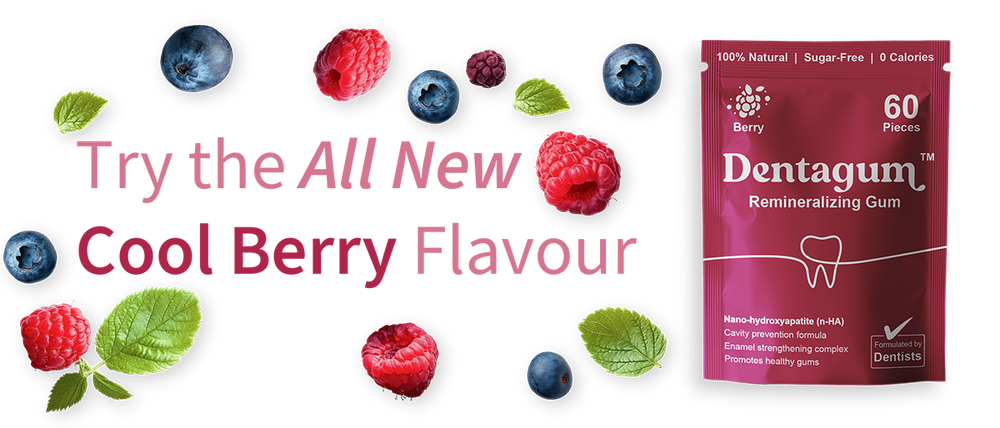
Dentagum Remineralizing Chewing Gum delivers nano-hydroxyapatite at 5% concentration, about 90mg per piece, alongside organic xylitol as the primary sweetener, in a natural chicle and mastic gum base. It was formulated specifically for the post-meal window: chewed for 20 minutes after eating, it stimulates saliva, delivers xylitol to suppress S. mutans, and deposits nano-HAp mineral directly to enamel at the moment it is most receptive. Erythritol, propolis, coconut oil, and mastic gum in the formula add supporting antibacterial and anti-inflammatory effects. There is no aspartame, no synthetic polymer gum base, and no artificial sweeteners.
For a fluoride-free routine, Dentagum closes Gaps 2 and 3 simultaneously after every meal: the two gaps most likely to be missed by anyone simply swapping their toothpaste and assuming the job is done. For someone using fluoride toothpaste, Dentagum adds a between-brushing layer of protection that fluoride toothpaste itself does not provide, addressing the post-meal window regardless of which approach you take to brushing.
The full ingredient rationale is covered in our article on Dentagum ingredients, every one explained with the science. For the broader evidence on why the post-meal habit matters, see our piece on why chewing gum after meals is one of the best habits you can build.
A passive fluoride-free switch, swapping toothpaste and keeping everything else the same, leaves three protection gaps unaddressed. A deliberate fluoride-free routine, nano-HAp toothpaste at the brush, xylitol and nano-HAp remineralizing gum after each meal, tighter snacking discipline, and regular dental monitoring, closes all three. The evidence supports the deliberate version for healthy adults with low to moderate cavity risk. The passive version is where cavity rates rise.
10. Frequently Asked Questions
Is it safe to go fluoride-free?
For healthy adults with low to moderate cavity risk and a deliberate replacement protocol, the evidence now supports this. Three randomized controlled trials have found nano-hydroxyapatite non-inferior to fluoride for cavity prevention in this population. The risks are highest for people with a history of frequent cavities, dry mouth, radiation-induced salivary damage, or high sugar intake. Those groups should consult their dentist before switching. The single biggest risk in going fluoride-free is not the absence of fluoride itself: it is removing fluoride without deliberately replacing its functions, particularly the post-meal acid window protection.
What is the best fluoride-free toothpaste?
Look for nano-hydroxyapatite listed explicitly as an active ingredient. Not just "hydroxyapatite" or "calcium," and not simply as an item in a long ingredient list: nano-HAp specifically, at a meaningful concentration. This is the fluoride-free ingredient with the strongest clinical evidence base, including three independent RCTs showing non-inferiority to standard fluoride toothpaste for cavity prevention. Avoid choosing a toothpaste based purely on what it excludes rather than what it actively delivers: an "all-natural" label without a proven active ingredient is not a functional fluoride replacement.
Does fluoride-free toothpaste work as well as fluoride toothpaste?
For nano-hydroxyapatite specifically, the clinical evidence in adults with low to moderate cavity risk says yes, based on three randomized controlled trials including an 18-month double-blind RCT published in Frontiers in Public Health in 2023. For other fluoride-free toothpastes without an evidence-backed remineralizing active, no: brushing removes plaque mechanically, but without an active ingredient that deposits mineral, the product is cleaning without remineralizing. The answer depends entirely on which fluoride-free toothpaste you are comparing to which fluoride toothpaste, for which patient population.
What happens to my teeth if I stop using fluoride?
If you stop using fluoride and replace it with nothing deliberate, you remove three protections from your routine: active remineralization at brushing, residual fluoride enhancement in saliva between brushing sessions, and modest bacterial suppression. Over time, without replacing these functions, the risk of early demineralization and eventual cavities increases, particularly at the post-meal acid windows that are unaddressed by twice-daily brushing regardless of toothpaste type. The risk is not immediate and not universal: it accumulates gradually and depends on your diet, saliva quality, and brushing thoroughness. But it is real, measurable, and shows up on dental X-rays months later.
How does xylitol gum help in a fluoride-free routine?
Xylitol gum addresses two of the three gaps that removing fluoride creates. First, chewing stimulates saliva to 10 to 12 times the resting rate, accelerating post-meal acid buffering and delivering calcium and phosphate to enamel for remineralization, which partially replaces the residual fluoride effect in saliva. Second, xylitol kills S. mutans through a specific metabolic mechanism (PTS futile cycling) that is more targeted than fluoride's broad antibacterial effect. Optimal dose is 5 to 10 grams per day across three or more exposures, with after-meal timing producing the greatest effect. Remineralizing gum that combines nano-HAp with xylitol covers both functions simultaneously.
Should I tell my dentist I am going fluoride-free?
Yes, always. Your dentist calibrates your cavity risk assessment and preventive recommendations in part based on your fluoride exposure. Switching without telling them means your risk profile changes without their knowledge. A dentist who knows you are going fluoride-free can monitor for early demineralization at the stage where it is still reversible, adjust your recall frequency if needed, and offer professional topical fluoride varnish as a safety net if early signs of vulnerability appear, even if you prefer fluoride-free daily products. Transparency with your dentist is the single most important safeguard in a fluoride-free routine.
The Bottom Line
Going fluoride-free is not reckless if you do it deliberately. Fluoride does three things in your oral care routine: it remineralizes enamel at the brush, creates residual protection in saliva between brushing sessions, and modestly suppresses cariogenic bacteria. Remove it and replace nothing, and all three gaps remain open. Replace all three deliberately, with nano-HAp toothpaste at the brush, xylitol and nano-HAp gum after every meal, tighter snacking discipline, and regular dental monitoring, and the current evidence supports the approach for healthy adults with low to moderate cavity risk.
The critical insight is that the most important gap in any oral care routine, fluoride or fluoride-free, is the post-meal acid window. Addressing it is where a deliberate fluoride-free routine separates itself from a passive one. For more on the fluoride-free evidence landscape, see our comparison of nano-hydroxyapatite vs fluoride and our piece on what the 2026 fluoride changes actually mean for your teeth.
Shop Dentagum: the post-meal step your fluoride-free routine needsResearch Summary
- Paszynska E et al. Frontiers in Public Health (2023). 18-month double-blind RCT: fluoride-free nano-HAp toothpaste non-inferior to 1,450 ppm fluoride for DMFS in adults (89.3% vs 87.4% no increase). Third RCT to demonstrate non-inferiority. doi:10.3389/fpubh.2023.1199728. Figures from ingredient research.
- In vitro remineralization study: nano-HAp produced highest surface microhardness improvement of all tested agents including sodium fluoride. Figures from ingredient research.
- Stephan R. (1943). Intra-oral hydrogen-ion concentrations associated with dental caries activity. Original Stephan Curve: post-meal pH drops below 5.5 within minutes; takes 20-40 min to recover. Figures from clinical dentistry literature.
- Dimensions of Dental Hygiene. Role of Nutrition in Dental Caries: oral pH at rest approximately 7.0; drops to 5.5 critical threshold within minutes of carbohydrate intake; each eating event is a new acid attack. Frequency of consumption identified as highest-risk dietary variable.
- PMC Xylitol Review (PMC4232036). Xylitol delivery via chewing gum: recommended 20 minutes chewing after eating. Three or more weeks of xylitol consumption produces short-term and long-term reduction in salivary and plaque S. mutans. Figures from ingredient research.
- Today's RDH. Tooth Remineralization Agents evidence-based review: optimal xylitol dose for S. mutans suppression: 5-8g/day across 3 or more exposures. Xylitol synergistic with fluoride; PTS futile-cycling mechanism against S. mutans confirmed. Figures from ingredient research.
- PMC review (PMC7076334). Role of salivary contents in enamel remineralization: saliva as mineral transport system; calcium, phosphate, bicarbonate, antimicrobial enzymes. At pH 5.5, saliva no longer supersaturated with calcium/phosphate; demineralization initiates. Fluoride in saliva replaces hydroxyl ions to form fluorapatite; speeds remineralization rate.
- Role of Dietary Habits in Dental Caries Prevention (review). Dairy products especially cheese stimulate saliva and deliver calcium/phosphate; xylitol reduces bacterial adhesion and boosts saliva. Fibrous foods stimulate mechanical saliva flow.
- EU Scientific Committee on Consumer Safety. Nano-hydroxyapatite confirmed safe up to 29.5% in oral care products.
References
- Paszynska E, Enax J, Meyer F, Amaechi BT, Limeback H, et al. Caries-preventing effect of a hydroxyapatite-toothpaste in adults: an 18-month double-blinded randomized clinical trial. Front Public Health. 2023;11:1199728. doi:10.3389/fpubh.2023.1199728
- Limeback H, Enax J, Meyer F. Biomimetic hydroxyapatite and caries prevention: a systematic review and meta-analysis. Can J Dent Hyg. 2021;55:148-159.
- Stephan RM. Intra-oral hydrogen-ion concentrations associated with dental caries activity. J Dent Res. 1944;23(4):257-266. (Original Stephan Curve description.)
- Mobley C et al. The Role of Nutrition in Dental Caries. Dimensions of Dental Hygiene. 2024. dimensionsofdentalhygiene.com
- Nayak PA, Nayak UA, Khandelwal V. The effect of xylitol on dental caries and oral flora. Clin Cosmetic Investig Dent. 2014;6:89-94. PMC4232036.
- Toors FA. Chewing gum and dental health. Review of the literature. Rev Belge Med Dent. 1992;47(3):67-92. (ADA endorsement of 20-min post-meal chewing; saliva stimulation rate.)
- American Dental Association. Chewing Gum. ADA position: chewing sugarless gum for 20 minutes after meals endorsed for cavity prevention. ada.org
- Nasir EF, Astrøm AN, David J, Ali RW. Chewing sticks, tooth brushing and socio-behavioural factors among Sudanese adolescents. In: Remineralization review. PMC7076334.
- EU Scientific Committee on Consumer Safety. Opinion on Hydroxyapatite (nano) in cosmetic products. European Commission.
- VitaDentLabs. Fluoride Free Toothpaste Guide 2026: Best Options and Insights. Updated 2026. vitadentlabs.com
