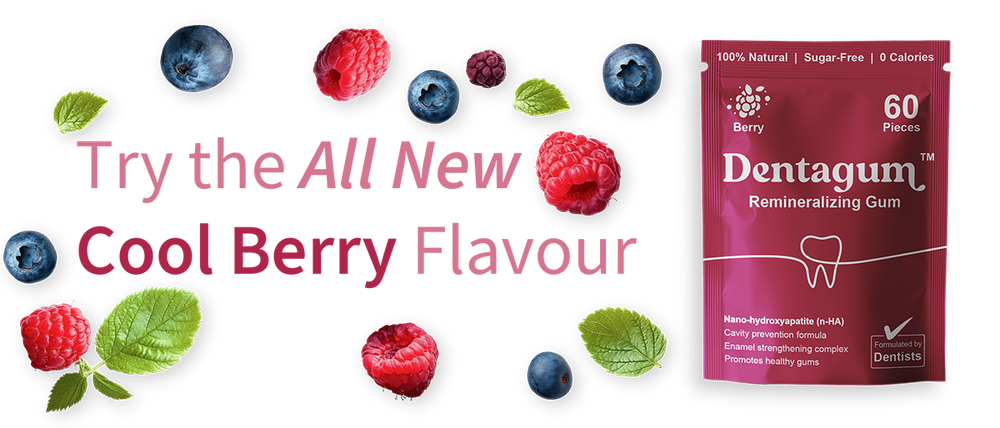

Dentagum Ingredients: Every One Explained With the Science
Dentagum received a 2 out of 8 score on ingredient transparency from one independent reviewer. This article is the direct response. Every ingredient in Dentagum's formula is explained below with its mechanism, the specific peer-reviewed evidence behind it, and an honest statement of where that evidence is strong and where it is still developing. Nothing is overclaimed. Nothing relevant is omitted. This is what ingredient transparency looks like when a brand takes it seriously.

Dentagum's formula contains: Organic Xylitol, Organic Erythritol, Organic Mastic Gum Base, Organic Chicle Gum Base, Nano-Hydroxyapatite, Organic Eggshell Calcium, Organic Propolis Extract, Calcium Bentonite Clay, Organic Coconut Oil, Organic Spearmint Essential Oil, Organic Peppermint Essential Oil. No aspartame. No acesulfame K. No BHT or BHA. No titanium dioxide. No polyvinyl acetate or synthetic polymer gum base. No artificial flavors. Every ingredient in this article is explained with its mechanism, the specific clinical evidence behind it, and an honest statement about what the evidence does and doesn't show. This article exists because ingredient transparency is something Dentagum believes every consumer is entitled to.
Ingredient transparency in the chewing gum category is poor. "Gum base" legally conceals up to 46 undisclosed ingredients. "Natural and artificial flavors" reveals nothing about what's actually providing the flavor. Clinical claims about cavity prevention appear without citations to the research they're based on.
Dentagum received a 2 out of 8 score on ingredient transparency from one independent reviewer. This article is the direct response to that assessment. Every ingredient in Dentagum's formula is listed below with its full name, its mechanism of action, the specific peer-reviewed evidence behind its oral health function, and an honest statement of where the evidence is strong and where it is still developing. Nothing is overclaimed. Nothing relevant is omitted.
This is what ingredient transparency looks like when a brand takes it seriously.
The Complete Ingredient List

Organic Xylitol, Organic Erythritol, Organic Mastic Gum (Pistacia lentiscus resin) and Chicle Gum Base, Nano-Hydroxyapatite, Organic Eggshell Calcium (Calcium Carbonate), Organic Propolis Extract, Calcium Bentonite Clay, Organic Coconut Oil, Organic Spearmint Essential Oil (Mentha spicata), Organic Peppermint Essential Oil (Mentha piperita)
Organic Xylitol
What it is: A five-carbon sugar alcohol (C5H10O5) found naturally in birch trees, many fruits, and some vegetables. Dentagum uses organic xylitol from certified organic sources, meaning non-GMO feedstock and production without synthetic processing aids. Organic certification is meaningful here: most commercial xylitol is derived from GMO corn cobs, and organic certification ensures the feedstock meets different standards.
What it does: Xylitol is the formula's primary antibacterial sweetener. S. mutans (the primary cavity-causing bacterium) transports xylitol into its cells using the same phosphoenolpyruvate phosphotransferase system it uses for sucrose, expecting to metabolize it for energy. It cannot. The bacterium expends energy in a futile cycle attempting to phosphorylate xylitol and is killed in the process. This mechanism is highly specific to S. mutans and doesn't create the selection pressure for resistance that conventional antibiotics do.
The clinical evidence: The evidence base for xylitol gum is among the strongest of any ingredient in this formula. A 2025 systematic review (Söderling et al., BMC Oral Health) found xylitol gum significantly reduced S. mutans in 12 of 14 clinical studies versus sorbitol gum controls. A 2024 European Archives of Paediatric Dentistry systematic review of 10 xylitol chewing gum RCTs found all 10 showed statistically significant preventive effects against cavities compared to control, with 9 of 10 showing clinically significant preventive fractions. Decades of clinical research across multiple continents support xylitol as the most evidence-backed natural antibacterial in oral care.
Honest evidence level: Established. Highest evidence tier of any ingredient in this formula. The clinical evidence for xylitol's antibacterial and cavity-preventive effects is consistent, large, and multi-centre across more than 40 years of research.
One note: Xylitol is highly toxic to dogs and potentially other pets. Any xylitol-containing product must be kept completely away from animals.
Organic Erythritol
What it is: A four-carbon sugar alcohol produced by fermentation of glucose using the yeast Moniliella pollinis or similar organisms. Organic erythritol requires certified organic glucose substrate and fermentation without synthetic processing aids. Unlike sorbitol and xylitol, erythritol is largely absorbed in the small intestine before reaching the large intestine, giving it a significantly better digestive tolerability profile.
What it does: Functions as a secondary sweetener that reduces total xylitol load (improving digestive comfort) while contributing its own mild antibacterial and antifungal properties. Has documented activity against S. mutans and Candida species in in vitro studies. Erythritol may also inhibit biofilm formation independently of its antibacterial activity by reducing bacterial adherence to surfaces.
The clinical evidence: Erythritol has a growing clinical evidence base. A clinical trial found erythritol-sweetened gum produced lower plaque acid production than xylitol or sorbitol gum in one comparative study. An NHMRC-funded systematic review found erythritol reduced S. mutans levels and plaque accumulation. The evidence base is smaller than xylitol's but consistent in direction.
Honest evidence level: Good and growing. Smaller evidence base than xylitol, consistent positive direction. Erythritol's digestive tolerability advantage over sorbitol is well-established.
Organic Mastic Gum (Pistacia lentiscus) and Chicle Gum Base
What it is: The gum base in Dentagum is composed of two natural plant resins: mastic (the dried resinous sap of Pistacia lentiscus trees grown on Chios, Greece, holding EU Protected Designation of Origin status) and chicle (the latex of Manilkara zapota trees, the original natural chewing gum material). Both are certified organic. Neither contains polyvinyl acetate, polyisobutylene, polyethylene, or any other synthetic petroleum-derived polymer.
What it does: Unlike conventional synthetic gum bases, this base is biologically active. Mastic gum contains masticadienonic acid, isomasticadienonic acid (triterpenoids), oleanolic acid, alpha-pinene, linalool, verbenone, terpineol, and myrtenol. These terpenoid and monoterpene compounds have documented antibacterial activity against cariogenic and periodontal pathogens. Chicle provides the chewable texture and serves as the foundation for the formula's physical properties.
The clinical evidence: The 2023 state-of-the-art review in the Journal of Natural Medicines (Alwadi, Sidhu, Khaled, Aboul-Enein; with LSHTM affiliation) searched 13 databases, identified 14 qualifying studies from 246, and confirmed mastic gum displays antibacterial and antimicrobial properties, inhibits plaque accumulation, provides effective antibacterial activity against periodontal bacteria (P. gingivalis, S. oralis, A. actinomycetemcomitans, F. nucleatum, P. intermedia), and shows anti-inflammatory properties. No notable toxic or side effects were reported across all 14 included studies. A periodontal pathogen study (Koychev et al., Journal of Periodontology) found mastic extract showed significantly higher inhibition of all five major periodontal pathogens compared with 3% hydrogen peroxide (p ≤ 0.016), with beneficial effects on epithelial cell viability that chlorhexidine did not provide.
Honest evidence level: Well-supported. 14-study state-of-the-art review, multiple direct clinical comparisons. Evidence is strongest for periodontal pathogen inhibition and weakest for direct cavity prevention (the cavity mechanism is primarily indirect through plaque and bacterial reduction).
Why natural gum base matters: A 2025 ACS pilot study found 100 to 637 microplastic particles per gram of chewed gum, with 94% released in the first 8 minutes of chewing. These originate from synthetic polymer gum bases. Natural resin bases do not generate microplastics during chewing.
Nano-Hydroxyapatite

What it is: Hydroxyapatite (Ca10(PO4)6(OH)2) is the mineral that constitutes approximately 96% of tooth enamel by dry weight. Nano-hydroxyapatite is the same mineral produced at 20 to 100 nanometre particle sizes, matching the scale of enamel crystal structures and the dimensions of dentinal tubule openings. Nano-HAp is classified as biomimetic: it uses the same material the body uses to build enamel, rather than introducing exogenous chemistry.
What it does: Nano-HAp has two primary mechanisms. First, it deposits directly into enamel microporosities during contact, replacing the same mineral in the same crystalline form that acid demineralization removed. Second, it deposits into exposed dentinal tubule openings, progressively occluding them and reducing the fluid movement inside that triggers sensitivity pain. Both mechanisms operate during the chewing session: contact time is the key delivery variable.
The clinical evidence: The strongest evidence base of any active ingredient in this formula. A 2023 systematic review and meta-analysis in Biomimetics (Limeback, Enax, Meyer) covering 44 clinical trials confirmed nano-HAp's effectiveness for enamel mineral delivery and sensitivity reduction. The 2024 systematic review and meta-analysis in the Journal of Dentistry (Pawinska et al.) confirmed caries prevention. An 18-month randomized clinical trial (cited in January 2026 dental professional reviews) found 10% nano-HAp toothpaste protected adult teeth from new cavities as well as standard 1,450 ppm fluoride toothpaste. A clinical review published in Registered Dental Hygienists magazine stated: "Nano-HA is a great alternative to fluoride because of its biomimetic and nontoxic properties. According to various studies, nano-HA is comparable to fluoride and/or CHX in terms of its effectiveness in remineralizing tooth structure, hypersensitivity, and biofilm control."
Honest evidence level: Established. 44 clinical trials. Fluoride-equivalence data in 18-month RCT. Strongest clinical evidence tier alongside xylitol. Does not have 70 years of evidence behind it the way fluoride does, but the evidence for the biomimetic mechanism is mature and growing rapidly.
Organic Eggshell Calcium (Calcium Carbonate)
What it is: Calcium carbonate (CaCO3) derived from certified organic chicken eggshell. Eggshell is 94 to 97% calcium carbonate by dry weight, with the remainder being an organic matrix of proteins including type X collagen and osteopontin. It is not vegan: eggshell is an animal-derived ingredient. Dentagum is clear about this in its product description.
What it does: In the acidic post-meal oral environment (pH below 5.5), CaCO3 from eggshell partially dissolves, releasing calcium ions (Ca2+) into the oral fluid. These ions are available for uptake by enamel surfaces being simultaneously demineralized by the same acid conditions. This creates a pH-responsive calcium delivery mechanism that is most active precisely when enamel needs it most: during the post-meal demineralization window. The biogenic context of eggshell calcium (calcium within and around an organic protein matrix) may contribute to bioavailability advantages over purely synthetic CaCO3, though this is better supported in supplementation research than in topical dental application specifically.
The clinical evidence: A 2026 PROSPERO-registered systematic review and meta-analysis published in Odontology (Springer Nature Singapore; Naveenraj et al.; PROSPERO CRD420251015581) analyzed 17 in vitro studies from 2005 to 2024. The meta-analysis found eggshell extract significantly improved enamel microhardness (Cohen's d = 0.45, 95% CI 0.30-0.60, p less than 0.05) and reduced surface roughness (Cohen's d = -0.50, 95% CI -0.70 to -0.30, p less than 0.01), with moderate heterogeneity (I2 = 45%) and minimal publication bias. Performance was comparable to fluoride varnish and nano-hydroxyapatite across the studies that included direct comparisons.
Honest evidence level: Promising, in vitro only. The 2026 meta-analysis is the most comprehensive evidence synthesis available, confirming consistent positive effects across 17 studies. All evidence is in vitro (extracted teeth in laboratory conditions). The review authors explicitly call for in vivo human studies to confirm clinical applicability. In Dentagum's formula, eggshell calcium is positioned as a supporting calcium source alongside nano-HAp's primary mineral delivery, consistent with this evidence level.
Organic Propolis Extract
What it is: Propolis is a resinous mixture collected by honeybees from plant exudates, combined with beeswax and bee enzymes. It is used by bees to seal and sterilize the hive. Its primary bioactive compounds for oral health are flavonoids (galangin, pinocembrin, chrysin, quercetin) and caffeic acid phenethyl ester (CAPE). Dentagum uses certified organic propolis, meaning from hives operating under certified organic standards.
What it does: Propolis has broad-spectrum antibacterial activity through flavonoid-mediated disruption of bacterial cell membranes and inhibition of bacterial enzyme systems. Its anti-inflammatory mechanism operates through inhibition of prostaglandin synthesis and COX pathway activity. The combination of antibacterial and anti-inflammatory activity targets both the bacterial cause and the tissue response of gum inflammation simultaneously.
The clinical evidence: A 2025 PROSPERO-registered systematic review published in the Journal of Functional Biomaterials (Sycinska-Dziarnowska et al.; PROSPERO CRD42023467573) reviewed the evidence for propolis in managing gingivitis. The review confirmed propolis extracts show broad-spectrum antibacterial activity and anti-inflammatory properties, with significant improvements in plaque index, gingival index, and bleeding on probing. A 21-day RCT (Gunjal and Pateel, BMC Complementary Medicine) found propolis mouthwash produced gingival index improvements comparable to 0.2% chlorhexidine digluconate, the pharmaceutical gold standard for gingivitis treatment, without chlorhexidine's side effects (tooth staining, altered taste perception, mucosal irritation). A 2025 meta-analysis confirmed propolis mouthwash significantly reduced plaque index compared to placebo (SMD -1.09, p less than 0.001) and gingival index (SMD -2.29, p less than 0.001).
Honest evidence level: Well-supported. PROSPERO-registered systematic review, multiple RCTs including head-to-head with chlorhexidine. Evidence strongest for gingivitis and plaque outcomes. Evidence for anti-caries effects is less robust than for periodontal outcomes.
Calcium Bentonite Clay
What it is: A volcanic ash-derived clay mineral composed primarily of montmorillonite (a phyllosilicate), with calcium as the dominant interlayer cation. The calcium form is preferred over sodium bentonite for oral care due to its lower swelling in hydration and higher bioavailable calcium content. Contains naturally occurring calcium, magnesium, silica, and trace minerals. Heavy metals occur naturally in geological clay deposits at variable concentrations: Dentagum's calcium bentonite clay is Prop 65 tested through Lightlabs, with publicly verifiable results at lightlabs.com.
What it does: Three documented mechanisms. (1) Adsorption: in aqueous environments, calcium bentonite carries a net negative electrical charge at its particle surfaces. Many bacteria, food debris particles, and bacterial metabolites carry positive surface charges. The clay electrostatically attracts and binds these positively charged particles during chewing contact. (2) Alkaline pH contribution: calcium bentonite has a pH of approximately 8.7 to 9.8 in aqueous solution, contributing to acid buffering during the post-meal chewing session. (3) Mineral contribution: calcium ions in the interlayer space may be released in the acidic post-meal oral environment, adding to the dissolved calcium pool. A 2020 study in ScienceDirect confirmed calcium montmorillonite releases calcium ions in conditions simulating the natural oral environment.
The clinical evidence: The adsorption mechanism and alkaline pH properties are well-established in materials science. The contribution to oral health specifically (as distinct from other topical applications) has a more limited and mechanistic-rather-than-clinical evidence base compared to the formula's other antibacterial ingredients. The 2020 study provides mechanistic support for calcium release. There are no large-scale human clinical trials specifically on calcium bentonite clay in chewing gum for oral health outcomes.
Honest evidence level: Mechanistically supported, limited oral-care-specific clinical trials. Calcium bentonite contributes a physical adsorption and pH buffering dimension that no other ingredient in the formula provides. Its inclusion is justified by a well-understood mechanism and safety profile rather than a clinical trial evidence base at the scale of xylitol or nano-HAp.
Organic Coconut Oil
What it is: Cold-pressed oil from the dried meat of Cocos nucifera coconuts. Approximately 50% of its fatty acid content is lauric acid (C12:0), a medium-chain saturated fatty acid with documented antimicrobial properties. Organic certification means production without synthetic pesticide application on the coconut crop.
What it does: Lauric acid's amphipathic structure (both hydrophilic and lipophilic regions) allows it to insert into bacterial cell membranes and disrupt their integrity. It has particularly strong activity against gram-positive bacteria including S. mutans. In vivo, lauric acid is partially converted to monolaurin, a monoglyceride with broader antimicrobial spectrum. In the gum format, lauric acid provides sustained contact with oral tissue surfaces during chewing, delivering its antimicrobial activity throughout each session.
The clinical evidence: Multiple meta-analyses of coconut oil pulling (a different delivery format but the same active compound) show positive effects on plaque index and gingival inflammation. The 2024 Peng et al. meta-analysis of RCTs found significant effects. A 2025 triple-blind RCT (Clinical Oral Investigations) found coconut oil treatment significantly modulated the oral microbiome toward a healthier profile and reduced IL-6 and TNF-alpha in periodontitis patients. The oil pulling evidence has consistent methodological limitations (blinding difficulty, small samples, heterogeneity) that are honestly acknowledged. Lauric acid's direct antibacterial mechanism against oral bacteria is well-established in in vitro studies. The specific contribution of coconut oil as a gum ingredient (versus the more extensively studied oil pulling format) hasn't been separately quantified.
Honest evidence level: Real mechanism, moderate evidence. Lauric acid's antimicrobial mechanism is pharmacologically real. The oil pulling clinical evidence is positive but methodologically limited. In Dentagum's formula, coconut oil is a supporting antimicrobial ingredient rather than a primary one, contributing additional antibacterial coverage through a fatty acid membrane disruption mechanism that is different from xylitol's metabolic disruption and mastic/propolis's terpenoid and flavonoid mechanisms.
Organic Spearmint Essential Oil (Mentha spicata)
What it is: Steam-distilled essential oil from certified organic Mentha spicata (spearmint) plants. The full-spectrum oil, not isolated flavor compounds. Primary composition: carvone (approximately 57.93%), limonene (12.91%), dihydrocarvone, and other monoterpenes.
What it does: Provides the full antimicrobial terpene complex of spearmint, not just the flavor. Carvone (the dominant terpene) has documented antimicrobial activity against S. mutans biofilms. Limonene has antifungal and antibacterial properties. The full terpene complex works through overlapping membrane-disruption mechanisms that are harder for bacteria to adapt to than single-compound exposures. Natural mint terpenes also address bad breath at the bacterial source: the VSC-producing bacteria (P. gingivalis, F. nucleatum) are among those inhibited by carvone, menthone, 1,8-cineole, and the other monoterpenes present in the oil.
The clinical evidence: The 2025 comprehensive review (Arzani et al., PMC 12032991) confirmed the role of mint terpenes and terpenoids in oral health, with documented activity against the bacteria linked to dental caries, gingivitis, and periodontitis. An in vitro study confirmed Mentha spicata essential oil (with carvone as the primary compound at 57.93%) showed antimicrobial activity against S. mutans biofilms. The scoping review of thymol, menthol, and eucalyptol found these monoterpene compounds are "broad-spectrum antimicrobial substances" against S. mutans, S. sanguinis, A. actinomycetemcomitans, E. faecalis, and C. albicans.
Honest evidence level: Well-supported mechanistically and in vitro; less so in large-scale clinical trials specifically for the gum format. The terpene antimicrobial mechanism is pharmacologically real and clinically used (Listerine's four-terpene formula has been in continuous use since 1914). The natural essential oil provides the full terpene complex; synthetic mint flavor provides only the sensory experience.
Organic Peppermint Essential Oil (Mentha piperita)
What it is: Steam-distilled essential oil from certified organic Mentha piperita (peppermint) plants. Full-spectrum oil containing: menthol (dominant), menthone, 1,8-cineole (eucalyptol), linalool, piperitone, pulegone, and isomenthone.
What it does: Contributes complementary terpene coverage to the spearmint oil, with a different dominant compound profile. 1,8-cineole (eucalyptol) is present in peppermint essential oil and is one of the four active antibacterial compounds in Listerine (alongside menthol, thymol, and methyl salicylate) that have been used continuously in oral care since 1914. Menthone has documented antibacterial and anti-inflammatory properties. The peppermint oil provides the cooling sensation of menthol while adding antimicrobial terpene coverage complementary to the spearmint oil's carvone-dominant profile. A 2023 study found eucalyptus oil (65.83% 1,8-cineole, the same compound present in peppermint EO) killed planktonic S. mutans in 15 minutes and inhibited biofilm formation "with more successful results than 0.1% commercial NaF (sodium fluoride)" in one direct comparison.
The clinical evidence: The same 2025 PMC review, the scoping review on thymol/menthol/eucalyptol as oral microbiological control agents, and the Listerine clinical literature (over 110 years of use with its four-terpene formula including eucalyptol and menthol) all provide clinical foundation for peppermint essential oil's antimicrobial terpenes in oral care. The specific contribution of peppermint essential oil as a gum ingredient rather than a mouthwash or toothpaste component hasn't been isolated in a dedicated clinical trial.
Honest evidence level: Well-supported via terpene mechanism research and Listerine's longstanding clinical use of the same compounds. The gap is a dedicated clinical trial specifically on peppermint EO in a chewing gum format, which doesn't exist for any gum manufacturer.
What Dentagum Doesn't Contain: The Absence List
No aspartame (IARC Group 2B possibly carcinogenic, 2023). No acesulfame K (animal studies raising gut microbiome concerns). No sucralose. Dentagum is sweetened with organic xylitol (primary) and organic erythritol (secondary), both with evidence of oral health benefit beyond being non-cariogenic.
No polyvinyl acetate (petroleum-derived plastic polymer). No polyisobutylene. No polyethylene. No styrene-butadiene rubber. The gum base is entirely organic mastic and chicle: natural plant resins used by humans for thousands of years. A 2025 ACS pilot study found 100 to 637 microplastic particles per gram of conventional chewed gum, originating from synthetic polymer gum bases. Natural resin bases do not generate microplastics.
No BHT (under FDA safety review 2026, restricted in EU food categories). No BHA (listed carcinogen in California and Japan, on SIN List for hormonal effects). The natural formulation achieves shelf stability without petroleum-derived synthetic antioxidants.
No titanium dioxide (E171, banned in EU food 2022 over genotoxicity concerns). No artificial mint flavor (isolated menthol or synthetic flavor compounds). No artificial colorants. Flavor comes entirely from organic spearmint and peppermint essential oils: the full terpene complex, not isolated sensory compounds.
Independent Third-Party Safety Verification

Ingredient transparency includes safety verification, not just mechanism explanations. Dentagum's complete formula is Prop 65 tested through Lightlabs, an independent third-party laboratory. Results are publicly verifiable at lightlabs.com. Prop 65 sets heavy metal thresholds up to 20 times more stringent than standard FDA limits.
This testing is particularly relevant for calcium bentonite clay (geological clay can contain naturally occurring heavy metals at varying concentrations by deposit; testing confirms the specific batch is within safe limits) and for the overall formula as consumed in the oral environment.
Honest Summary: Evidence Levels Across the Formula
Product Suitability Notes
Dentagum contains organic eggshell calcium (chicken eggshell, an animal-derived ingredient) and organic propolis (a bee-produced resin). Both are animal-derived ingredients. Dentagum is not suitable for people following a vegan diet or lifestyle.
Xylitol is highly toxic to dogs. Even small amounts cause rapid insulin release in dogs that can be life-threatening. Dentagum, like all xylitol-containing products, must be kept completely out of reach of dogs and other pets. This is a serious safety concern that Dentagum states clearly because most xylitol products don't prominently enough.
New users of xylitol occasionally experience digestive discomfort (gas, bloating, loose stools) when starting at multiple pieces per day. This is not harmful and resolves with adjustment. Starting with one piece per day for the first week and building up to 2 to 3 pieces after meals is recommended for people sensitive to sugar alcohols.
Clinical References by Ingredient
Xylitol
- Söderling E et al. "Specific Effects of Xylitol Chewing Gum on Mutans Streptococci Levels." BMC Oral Health, 2025. doi:10.1186/s12903-025-06602-1
- Pienihäkkinen K et al. "The Effect of Xylitol Chewing Gums and Candies on Caries Occurrence in Children: A Systematic Review." European Archives of Paediatric Dentistry, 2024. doi:10.1007/s40368-024-00891-6
Nano-Hydroxyapatite
- Limeback H, Enax J, Meyer F. "Clinical Evidence of Biomimetic Hydroxyapatite in Oral Care Products for Reducing Dentin Hypersensitivity." Biomimetics, 2023. doi:10.3390/biomimetics8010010
- Pawinska M et al. "Clinical evidence of caries prevention by hydroxyapatite: an updated systematic review and meta-analysis." J Dent, 2024. doi:10.1016/j.jdent.2024.105429
Mastic Gum
- Alwadi MAM et al. "Mastic (Pistacia lentiscus) Gum and Oral Health: A State-of-the-Art Review." J Nat Med, 2023. doi:10.1007/s11418-023-01701-3
- Koychev S et al. "Antimicrobial Effects of Mastic Extract Against Oral and Periodontal Pathogens." J Periodontol, 2017. doi:10.1902/jop.2017.160442
Propolis
- Sycinska-Dziarnowska M et al. "Propolis as an Effective Component of Natural Mouthwashes in the Treatment of Gingivitis." J Funct Biomater, 2025. PROSPERO CRD42023467573. doi:10.3390/jfb16040120
- Gunjal S, Pateel DGS. "Efficacy of Propolis-containing Mouthwash on Oral Health." BMC Complement Med Ther, 2024.
Eggshell Calcium
- Naveenraj NS et al. "In vitro remineralization effectiveness of eggshell extract on human teeth: a systematic review and meta-analysis." Odontology, 2026. PROSPERO CRD420251015581. doi:10.1007/s10266-025-01265-4
Terpenes (Spearmint and Peppermint Essential Oils)
- Arzani V et al. "Plant polyphenols, terpenes, and terpenoids in oral health." PMC 12032991, 2025. doi:10.1515/med-2025-1183
- "Inhibitory Activity of Essential Oils of Mentha spicata and Eucalyptus globulus on Biofilms of Streptococcus mutans." PMC. PMC9952483
Coconut Oil
- Peng TR et al. "Effect of Oil Pulling with Coconut Oil on Dental Plaque and Gingival Inflammation." J Clin Med, 2024. doi:10.3390/jcm13237381
- "Anti-inflammatory and Antimicrobial Efficacy of Coconut Oil for Periodontal Pathogens: A Triple-Blind RCT." Clin Oral Invest, 2025. doi:10.1007/s00784-025-06267-8
