
Is Fluoride Being Banned in the US? What 2026 Means for Your Teeth
Headlines say fluoride is being "banned," but the reality is narrower and more specific than it sounds. Two states have ended water fluoridation, the FDA has restricted some children's supplements, yet fluoride toothpaste remains legal and recommended. Here's a calm, non-political breakdown of exactly what changed, what didn't, what the major health bodies say, and how to protect your teeth whichever side of the fluoride debate you land on.

Fluoride is not banned nationwide in the US, and fluoride toothpaste remains legal, available, and recommended by the American Dental Association and CDC. What has actually changed is narrower: as of mid-2026, two states (Utah, effective May 2025, and Florida, effective shortly after) have banned the addition of fluoride to public drinking water, dozens of local communities have voted to stop water fluoridation, and the FDA has moved to restrict prescription ingestible fluoride supplements for young children. These changes affect water fluoridation and swallowed supplements, not the topical fluoride in toothpaste. The shift has driven many Americans to look for fluoride-free options, and nano-hydroxyapatite has emerged as the most evidence-backed fluoride-free ingredient: an 18-month randomized controlled trial found it non-inferior to standard fluoride toothpaste for cavity prevention in adults. If you are going fluoride-free, the key is replacing the protection deliberately rather than simply removing it.
If you have seen headlines about fluoride being "banned" and felt unsure what that means for your family's teeth, you are not alone. The fluoride story has been one of the most searched oral health topics in the US through 2025 and 2026, and the coverage has been confusing because several different things are happening at once, each affecting a different kind of fluoride.
This article lays out exactly what has changed, what has not, what the major health bodies actually say, and what your practical options are. It is written to inform, not to take a political side. Fluoride is a genuinely contested public health topic right now, and reasonable people land in different places. Our goal is to give you the facts clearly so you can make your own decision.
1. First, There Are Three Different Kinds of Fluoride

Almost all of the confusion in the fluoride debate comes from treating "fluoride" as one single thing. It is not. There are three distinct ways fluoride reaches your teeth, and the 2025 to 2026 changes affect them very differently. Keeping them separate is the key to understanding what is actually going on.
Water fluoridation (systemic, ingested). This is fluoride added to public drinking water supplies at low levels. You swallow it. It has been standard US public health practice since Grand Rapids, Michigan became the first city to fluoridate in 1945. This is the category facing the most legislative action right now.
Ingestible fluoride supplements (systemic, ingested). These are prescription tablets, drops, or lozenges, usually given to children in areas without fluoridated water. You swallow these too. This is the category the FDA has moved to restrict for young children.
Topical fluoride (applied to the tooth surface, not meant to be swallowed). This is the fluoride in toothpaste, mouth rinses, and the gels and varnishes a dentist applies. It works on the surface of teeth already in your mouth. This category is largely untouched by the recent changes, and the major dental bodies continue to recommend it.
As the FDA itself stated in its 2025 scientific evaluation, topical and ingestible fluoride are considered complementary but not duplicative: topical fluoride delivers high concentrations directly to the tooth surface, while ingested fluoride is incorporated at lower levels into developing teeth. When you read that "fluoride is being banned," it almost always refers to the first category, water fluoridation, and sometimes the second, supplements. It rarely if ever refers to your toothpaste.
Swallowed fluoride (water, supplements) is what the current debate is mostly about. Topical fluoride (toothpaste, rinses, professional varnish) is a separate thing that remains legal, available, and recommended by the ADA and CDC. If a headline does not specify which kind it means, it is almost certainly talking about water fluoridation, not the tube in your bathroom.
2. What Has Actually Changed in 2025 and 2026
Here is the concrete, factual timeline of what has happened, drawn from state legislation and federal announcements.
A 2024 federal court ruling. In September 2024, a federal court ruled that the EPA's existing fluoride levels presented an unreasonable risk and directed the agency to respond. This ruling is frequently cited as the catalyst that accelerated state and local action.
Utah became the first state to ban water fluoridation. Governor Spencer Cox signed HB 81 in March 2025, and the ban took effect on May 7, 2025. It prohibits cities and communities from adding fluoride to public water systems. Before the ban, only about 40% of Utah residents had fluoridated water, so the state already ranked near the bottom nationally. The law also allows pharmacists to prescribe fluoride supplements as an alternative.
Florida became the second state. Governor Ron DeSantis signed SB 700 in May 2025, prohibiting local governments from adding fluoride to public drinking water across the state.
Dozens of local communities acted independently. Separately from the state bans, the Fluoride Action Network reported that between the September 2024 court ruling and April 2025, 62 communities serving over 9 million people ended, suspended, or prevented water fluoridation. The largest was Miami-Dade County, whose commission voted to end the practice.
Many more states introduced bills. Bills to ban or make fluoridation optional were introduced in at least 18 to 19 additional states during 2025, with measures considered in Nebraska, Louisiana, Kentucky, Massachusetts, New Hampshire, Tennessee, Arkansas, and others. Some passed, many failed or stalled, and the momentum has carried into the 2026 legislative sessions. The picture changes month to month, so the count of states with active or proposed legislation is a moving target.
The FDA moved on children's supplements. On October 31, 2025, the FDA announced efforts to restrict the sale of unapproved ingestible fluoride prescription drug products for children, sending notices to four companies and issuing guidance to health professionals. Importantly, the FDA stopped short of a full ban: its action targets ingestible supplements for children under 3 and older children at low to moderate cavity risk, not toothpaste or topical fluoride.
3. What Has Not Changed
Given the headlines, it is worth being equally clear about what is still exactly as it was.
Fluoride toothpaste is still legal and sold everywhere. There is no national ban on fluoride, and there is no proposal to remove fluoride from toothpaste. The ADA, the CDC, and the World Health Organization continue to recommend fluoride toothpaste as a primary cavity prevention tool. Professional topical fluoride treatments at the dentist's office are still offered and still recommended, particularly for people at higher cavity risk. Most US public water systems outside the two banned states are still fluoridated.
In other words, if you want to keep using fluoride exactly as you always have, in most of the country you still can. The changes have expanded choice in some states and restricted some swallowed products, but they have not taken fluoride toothpaste off the shelf.
4. Why This Is Happening
The push to reduce water fluoridation rests on a few arguments that supporters of the change make. We are presenting these as the case the proponents make, not as settled conclusions.
The central scientific argument points to a 2024 National Toxicology Program report that found an association between higher fluoride exposure and lower IQ in children. Supporters of fluoridation bans cite this as evidence of neurological risk. It is important to understand the report's own stated limits: it analyzed studies conducted largely outside the US, at fluoride levels more than twice the US drinking water standard, and the report itself stated in bold type that it did not address whether fluoride at the level added to US drinking water is associated with a measurable effect on IQ. Critics of the bans argue this makes the report a weak basis for changing US policy. Supporters argue it is reason enough for caution. Both readings exist in the public debate.
The second argument is about consent and choice. Officials who have supported the bans, including the governors of Utah and Florida, have framed water fluoridation as a form of "mass medication" without individual consent, arguing that people who want fluoride can get it through toothpaste, rinses, or supplements, while those who do not want it should not have it added to their water. This is a values argument about personal choice rather than a strictly scientific one.
The third factor is broader federal momentum. The changes have unfolded alongside a national wellness and "medical freedom" movement, and federal health leadership under HHS Secretary Robert F. Kennedy Jr. has been openly skeptical of ingested fluoride, which has amplified state and local action.
5. What the Major Health Bodies Say

To make an informed decision, it helps to know where the established dental and public health organizations stand, because they have not changed their position.
The American Dental Association and the CDC continue to support community water fluoridation as safe and effective for preventing tooth decay, citing roughly 80 years of evidence. The CDC has noted that water fluoridation reduces tooth decay by about 25% across children and adults. The World Health Organization promotes fluoride toothpaste as a key caries prevention strategy.
These bodies also raise a practical concern about the bans: cost and equity. A 2025 analysis published in JAMA Health Forum modeled what would happen if all US states ended water fluoridation. It estimated 25.4 million additional cavities within five years, roughly one additional decayed tooth for every three children, and projected treatment costs of $9.8 billion within five years. The researchers noted the people most affected would likely be those with the least access to dental care, because for many low-income and rural families, fluoridated water is one of the few cavity-prevention measures they receive automatically.
Supporters of the bans counter that individual choice and the precautionary principle outweigh these population-level projections, and that alternatives exist for those who want them. This is the heart of the disagreement: it is partly about reading the same science differently, and partly about a genuine values difference over public health versus individual choice. We are not going to resolve that here. What we can do is help you protect your teeth whichever side you land on.
6. What It Means for Your Teeth
Strip away the politics and here is the practical reality. Fluoride, however it reaches your teeth, does two main things: it helps remineralize early enamel damage, and it makes enamel more resistant to acid. If your exposure to fluoride goes down, whether because your city stopped fluoridating the water or because you chose to stop using fluoride products, you lose some of that protection, and you need to replace it deliberately to keep your cavity risk from rising.
This matters most for a few groups: children whose developing teeth benefit significantly from cavity prevention, people in the two states (and many communities) that have ended water fluoridation, and anyone choosing fluoride-free products for personal reasons. For all of these groups, the question is not really "fluoride or nothing." It is "if I am getting less fluoride, what am I doing instead to protect my enamel?"
That is where the rest of this article focuses, because it is the part you actually control. You can read more about how enamel loses and regains minerals in our explainer on what happens during enamel demineralization.
7. The Evidence-Backed Fluoride-Free Option: Nano-Hydroxyapatite

The surge of interest in fluoride-free oral care has put a spotlight on alternative ingredients. Most of them have thin evidence. One stands out for having a genuine clinical research base: nano-hydroxyapatite.
Nano-hydroxyapatite (often written nano-HAp or n-HA) is the nanoscale form of hydroxyapatite, the mineral that tooth enamel is primarily made from. Enamel is roughly 97% hydroxyapatite by composition. Engineered at particle sizes of 20 to 100 nanometres, nano-HAp can deposit into the microscopic pores and early lesions in enamel, delivering the exact mineral that enamel is built from rather than fighting decay with a foreign chemical. This "biomimetic" approach is the basis for our article on what biomimetic oral care is and why it matters.
The evidence is what sets it apart from other fluoride alternatives. An 18-month randomized controlled trial published in Frontiers in Public Health (2023) found fluoride-free nano-hydroxyapatite non-inferior to standard 1,450 ppm fluoride toothpaste for cavity prevention in adults. A systematic review and meta-analysis by Limeback, Enax, and Meyer published in Biomimetics (2023), covering 44 clinical trials, found nano-HAp significantly reduced tooth sensitivity. The EU Scientific Committee on Consumer Safety has confirmed nano-HAp safe at concentrations up to 29.5%. Figures from ingredient research.
Nano-HAp also has a safety advantage that is especially relevant in the fluoride debate: because it is the same mineral already in teeth and bones, it carries no fluorosis risk and is non-toxic if swallowed. That makes it particularly suitable for young children who have not yet learned to spit reliably, which is one of the concerns driving parents toward fluoride-free choices in the first place. Hydroxyapatite has been used in oral care in Japan for over 40 years.
To be clear and fair: fluoride has the longer and deeper evidence base, and nano-HAp is not "proven better" than fluoride. The honest summary is that nano-HAp is the fluoride-free ingredient with the strongest evidence behind it, performing comparably to fluoride for cavity prevention in the adult trial data while offering a safety profile that appeals to people specifically worried about swallowing fluoride. For a deeper dive, see our complete guide to everything you need to know about nano-hydroxyapatite.
Evidence ratings reflect the current published research base for each ingredient as a fluoride alternative. Figures from ingredient research, not product trials.
8. If You Decide to Go Fluoride-Free, Do It Deliberately
This is the single most important practical point in this article. The biggest risk in the current moment is not fluoride and it is not fluoride-free products. It is people removing fluoride from their routine and replacing it with nothing, then assuming they are covered. That is how cavity rates rise.
If you choose to reduce or remove fluoride, build a deliberate replacement routine:
Use a nano-hydroxyapatite toothpaste as your fluoride-free brushing product, so you still get a remineralizing active twice a day.
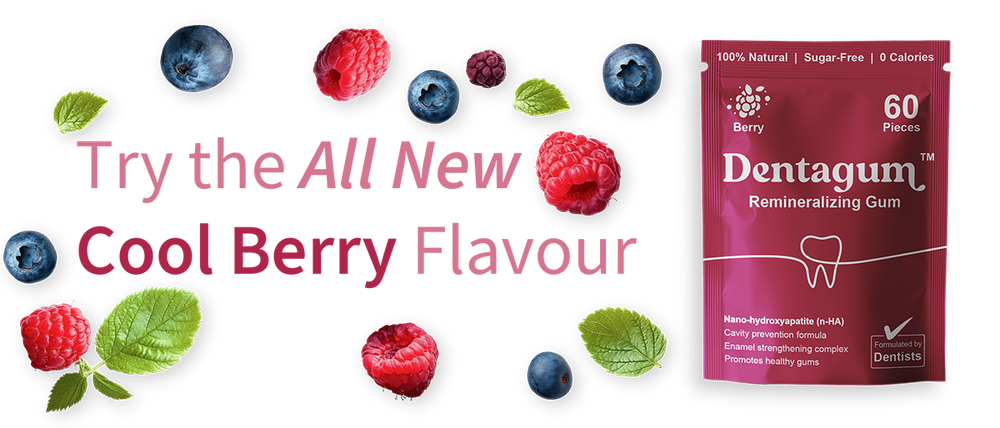
Add protection in the windows brushing does not cover. Most enamel damage happens in the 20 to 40 minutes after eating, when you are usually nowhere near a toothbrush. A remineralizing gum chewed after meals stimulates saliva (your body's natural remineralizing fluid), delivers xylitol to suppress cavity-causing bacteria, and delivers nano-hydroxyapatite directly to enamel at the moment it is most vulnerable. This is the gap Dentagum was designed to fill.
Tighten up the basics. Without fluoride's backstop, diet and frequency matter more. Reducing how often you snack and drink acidic or sugary beverages has an outsized effect. Our guide on whether you can reverse cavities naturally covers what is and is not possible here.
Keep seeing your dentist. Going fluoride-free is a reasonable personal choice, but it is not a reason to skip professional care. If anything, regular checkups matter more, because early problems get caught before they become cavities. Tell your dentist you are going fluoride-free so they can adjust your risk plan, and discuss whether professional topical treatments still make sense for you.
And if you decide to keep using fluoride, that is an equally reasonable choice backed by decades of evidence. A remineralizing gum still adds value alongside fluoride, because it covers the post-meal window that toothpaste timing misses. The two approaches are not mutually exclusive.

Dentagum Remineralizing Chewing Gum is fluoride-free and built around nano-hydroxyapatite (5%, about 90mg per piece) plus organic xylitol, in a natural chicle and mastic gum base. If you are going fluoride-free, it gives you an evidence-backed remineralizing active for the between-meal windows. If you are staying with fluoride, it complements your toothpaste by protecting your enamel after meals, when you cannot brush. Either way, it addresses the post-meal acid attack that brushing twice a day simply does not reach. $32.97 for 60 pieces at dentagum.co and on Amazon.
9. Frequently Asked Questions
Is fluoride banned in the United States?
No, not nationally. As of mid-2026, two states (Utah and Florida) have banned the addition of fluoride to public drinking water, and many local communities have voted to stop water fluoridation. The FDA has also moved to restrict prescription ingestible fluoride supplements for young children. But there is no national fluoride ban, fluoride toothpaste remains legal and widely available, and the ADA and CDC continue to recommend it. The changes affect swallowed fluoride (water and supplements), not the topical fluoride in toothpaste.
Is fluoride toothpaste still allowed?
Yes. Fluoride toothpaste is not affected by any of the current bans or restrictions. It is legal, sold everywhere, and still recommended by the American Dental Association, the CDC, and the World Health Organization as a primary cavity-prevention tool. The fluoride in toothpaste is topical, meaning it works on the surface of your teeth and is spit out rather than swallowed, which is a different category from the water fluoridation and ingestible supplements that the recent changes target.
Which states have banned fluoride in water?
As of mid-2026, Utah (effective May 7, 2025) and Florida (effective shortly after) are the two states with statewide bans on adding fluoride to public drinking water. Hawaii has historically never fluoridated most of its public water. Beyond these states, dozens of individual cities and counties have voted to end fluoridation, and bills to ban or make fluoridation optional have been introduced in roughly 18 to 19 other states. Because legislation is actively moving, the exact list changes over time, so check current sources for the latest status in your state.
What is the best fluoride-free alternative for cavity prevention?
Nano-hydroxyapatite has the strongest evidence base of any fluoride-free ingredient. It is the mineral enamel is made from, and an 18-month randomized controlled trial found it non-inferior to standard fluoride toothpaste for cavity prevention in adults. It also carries no fluorosis risk and is safe if swallowed, which makes it appealing for young children. Xylitol is another well-researched fluoride-free ingredient that reduces cavity-causing bacteria. The most effective fluoride-free approach combines a nano-hydroxyapatite product with xylitol and good dietary habits.
If my city stopped fluoridating the water, what should I do?
Do not simply do nothing, because losing fluoridated water does remove a layer of cavity protection. Replace it deliberately: use a remineralizing toothpaste (fluoride or nano-hydroxyapatite, your choice), protect the post-meal windows with a remineralizing gum that stimulates saliva and delivers nano-hydroxyapatite and xylitol, reduce snacking frequency and acidic drinks, and keep up regular dental checkups. If you have children, talk to your dentist about whether professional topical fluoride treatments or other measures make sense for your family's specific cavity risk.
Is nano-hydroxyapatite as good as fluoride?
The honest answer is that fluoride has the longer and deeper evidence base, but nano-hydroxyapatite performs comparably for cavity prevention in the available adult trial data. The key 18-month randomized controlled trial found fluoride-free nano-hydroxyapatite non-inferior to standard 1,450 ppm fluoride toothpaste. Nano-hydroxyapatite also has a safety advantage in being non-toxic if swallowed and carrying no fluorosis risk. It is best described as the most evidence-backed fluoride-free option rather than as a proven replacement that beats fluoride. Your choice between them can reasonably come down to personal preference and your dentist's advice for your situation.
The Bottom Line
Fluoride is not banned nationwide, and your fluoride toothpaste is not going anywhere. What has changed is narrower and specific: two states and many communities have ended water fluoridation, and the FDA has moved to restrict swallowed fluoride supplements for young children. These changes affect ingested fluoride, not the topical fluoride you brush with. The major dental bodies still recommend fluoride, while a growing number of Americans are choosing fluoride-free options for personal reasons.
Whichever path you choose, the principle is the same: do not remove protection without replacing it. Nano-hydroxyapatite is the fluoride-free ingredient with the strongest evidence behind it, and a remineralizing gum that delivers it after meals covers the window your toothbrush cannot reach. Make a deliberate choice, keep seeing your dentist, and your teeth will be fine on either side of the fluoride debate. To go deeper on the fluoride-free shift, see our article on why more people are choosing fluoride-free gum.
Shop Dentagum Remineralizing Gum — 30-Day GuaranteeResearch Summary
- Utah HB 81 (signed March 2025, effective May 7, 2025): first state ban on adding fluoride to public drinking water. Florida SB 700 (signed May 2025): second state ban. Source: state legislation, MultiState and Fluoride Action Network tracking.
- Local action: Fluoride Action Network reported 62 communities serving 9M+ people ended, suspended, or prevented fluoridation between the September 2024 federal court ruling and April 2025, including Miami-Dade County.
- Legislative momentum: bills to ban or make fluoridation optional introduced in roughly 18-19 additional states in 2025, carrying into 2026 sessions. Exact status changes over time.
- FDA action (October 31, 2025): moved to restrict unapproved ingestible fluoride prescription supplements for children under 3 and older children at low-to-moderate caries risk. Notices sent to four companies. Not a full ban; does not affect topical fluoride.
- 2024 National Toxicology Program report: found association between higher fluoride exposure and lower child IQ, but at levels above the US drinking water standard and largely from non-US studies; the report explicitly did not address US-level water fluoridation effects on IQ.
- ADA, CDC, and WHO: continue to support water fluoridation and fluoride toothpaste as safe and effective. CDC: fluoridation reduces tooth decay by about 25%.
- JAMA Health Forum (2025) modeling: a hypothetical national end to water fluoridation projected 25.4 million additional cavities within 5 years and $9.8 billion in treatment costs, with greatest impact on low-access populations.
- FDA 2025 scientific evaluation: topical and ingestible fluoride are complementary but not duplicative; topical delivers high surface concentration, ingested incorporates lower levels into developing teeth.
- Meyer F, Enax J. Frontiers in Public Health (2023): 18-month RCT, fluoride-free nano-hydroxyapatite non-inferior to 1,450 ppm fluoride toothpaste for adult cavity prevention. Figures from ingredient research.
- Limeback H, Enax J, Meyer F. Biomimetics (2023): systematic review and meta-analysis of 44 clinical trials; nano-HAp significantly reduces dentin hypersensitivity. Figures from ingredient research.
- EU Scientific Committee on Consumer Safety: nano-hydroxyapatite confirmed safe up to 29.5%.
References
- MultiState. States Move to Ban Water Fluoridation: Utah and Florida Enacted Laws in 2025. 2025. multistate.us
- Fluoride Action Network. Two States Ban Fluoridation While More Prepare To Follow. 2025. fluoridealert.org
- Salt Lake Tribune. After Utah Bans It in Water, Fluoride Treatments Targeted by FDA, Other States. February 2026. sltrib.com
- US Food and Drug Administration. FDA Begins Action to Remove Ingestible Fluoride Prescription Drug Products for Children from the Market. October 31, 2025. fda.gov
- US Food and Drug Administration. Fluoride Ingestible Drug Products: Scientific Evaluation. 2025. fda.gov/media/189421
- National Toxicology Program. State of the Science: Fluoride Exposure and Neurodevelopment. 2024. ntp.niehs.nih.gov
- American Dental Association. Fluoride: Topical and Systemic Supplements. ada.org
- Centers for Disease Control and Prevention. Community Water Fluoridation. cdc.gov
- Simon L et al. Projected Effects of Ending Community Water Fluoridation on Pediatric Dental Caries. JAMA Health Forum. 2025.
- Meyer F, Enax J. Hydroxyapatite in oral care: comparative 18-month randomized controlled trial with fluoride toothpaste. Frontiers in Public Health. 2023.
- Limeback H, Enax J, Meyer F. Biomimetic hydroxyapatite and caries prevention: a systematic review and meta-analysis. Biomimetics. 2023. doi:10.3390/biomimetics8010059
- Scientific Committee on Consumer Safety (EU). Opinion on Hydroxyapatite (nano). European Commission.
