
Are Fluoride-Free Kids Safe from Cavities? What Parents Need to Know in 2026
The FDA restricted ingestible fluoride supplements for young children in October 2025, and two states banned water fluoridation. Parents are asking whether fluoride-free kids can be protected from cavities. The honest answer: yes, but it requires deliberate effort rather than simply switching to a natural toothpaste. Here is what the evidence says about nano-hydroxyapatite, xylitol, and what the AAPD actually endorses for children.

Fluoride-free kids can be protected from cavities, but it requires more deliberate effort than simply choosing a natural toothpaste. Fluoride toothpaste remains the pediatric gold standard, and the ADA, AAPD, CDC, and AAP have not changed that position. What did change in October 2025 is that the FDA restricted ingestible fluoride supplements for children under 3 and children at low to moderate cavity risk, creating parental anxiety about what comes next. The answer starts with a clear-eyed look at what fluoride actually does for children, and what replaces each function when parents choose to go without it. Nano-hydroxyapatite is the best-evidenced fluoride-free remineralizing option for children: it is non-toxic if swallowed, carries no fluorosis risk, and a 2024 systematic review published in the Journal of Clinical Periodontology called it an ideal substitute for fluoride in toothpaste for young children who are still learning to spit. Xylitol is endorsed by the AAPD for cavity prevention in children, with a 30 to 80 percent reduction in caries incidence at 5 to 10 grams per day across three or more exposures. Together with tight snacking discipline and regular dental monitoring, fluoride-free protection for children is achievable for families committed to it.
The question is reasonable and the anxiety behind it is real. In October 2025, the FDA announced it would restrict ingestible fluoride supplements for young children. Utah and Florida banned water fluoridation. Parents watching these headlines want to know: if my child is not getting the fluoride in the water, and maybe not taking the supplement, are their teeth safe? What do I actually need to do?
This article answers that question directly, without political framing, and without talking parents into or out of any particular philosophy. It lays out what the evidence says, what the pediatric dental organizations say, and what a family choosing fluoride-free for their child's teeth needs to do deliberately to protect them.
1. What Actually Changed in 2025 and Why Parents Are Asking
Two distinct things happened in 2025 that together have made this question urgent for millions of American parents.
First, two states took action on water fluoridation. Utah became the first state to ban the addition of fluoride to public drinking water in March 2025, effective May 7. Florida followed shortly after. Dozens of local communities across other states voted independently to end fluoridation. Children who previously received some systemic fluoride passively through drinking water are no longer getting it in those communities.
Second, on October 31, 2025, the FDA announced restrictions on ingestible prescription fluoride supplements for children. The FDA recommended these products not be given to children under age 3 or to any child at low or moderate risk for tooth decay. The agency stopped short of a full ban: fluoride supplements remain available for children over age 3 who are at high risk of cavities and live in areas with low fluoride in their water. But the recommendation created genuine parental confusion about what is now appropriate.
The ADA, AAPD, AAP, and CDC responded swiftly and clearly. The ADA's statement: "The research shows that daily use of fluoride tablets or drops at home are a safe and effective way to strengthen teeth and prevent cavities in children who are at high risk for tooth decay and whose water is deficient in fluoride. A doctor's clinical judgment, not a new warning label, should remain the guiding factor in determining appropriate fluoride use for children." The CDA, alongside AAPD, ADA, and AAP, continued to affirm the use of fluoride as a safe and effective prevention practice.
This is the context parents are navigating: federal action on one form of fluoride, institutional affirmation of another, and a genuine gap in guidance for families who prefer to go fluoride-free entirely. This article addresses that gap directly.
2. The Critical Distinction: Toothpaste Was Not Affected
Before discussing fluoride-free alternatives, one point must be established unambiguously, because it is the most common source of confusion following the 2025 headlines.
The FDA's October 2025 action affected only ingestible fluoride supplements: the prescription tablets, drops, and lozenges that children take orally and swallow. The FDA's announcement was explicit: the agency's actions do not affect toothpastes, mouthwash, or fluoride treatments used in dentists' offices.
Fluoride toothpaste remains legal, available, and still the recommended first-line tool for cavity prevention in children by every major US pediatric dental organization. The ADA's current guidance recommends a rice-grain smear of fluoride toothpaste as soon as the first tooth appears, increasing to a pea-sized amount at age 3. These recommendations have not changed.
If a family is using fluoride toothpaste and their child is brushing twice daily with appropriate amounts and supervision, the water fluoridation changes and the supplement restrictions have not changed that child's fluoride exposure in any meaningful way. Topical fluoride from toothpaste is the primary mechanism of fluoride's dental protection. The current evidence shows it accounts for the majority of fluoride's cavity-prevention effect regardless of whether fluoride is also in the water.
This article is for families who have additionally chosen to go fluoride-free at the toothpaste level, or who are in a situation where their child is not receiving adequate fluoride from any source, and who want to know what evidence-backed alternatives exist.
Changed: Prescription ingestible fluoride supplements are no longer recommended for children under 3 or children at low to moderate cavity risk. Changed: Utah and Florida no longer add fluoride to public drinking water. Not changed: Fluoride toothpaste, mouthwash, and professional fluoride varnish are unaffected. Not changed: ADA, AAPD, AAP, CDC recommendations for fluoride toothpaste use in children starting at the first tooth. Not changed: Fluoride supplements remain available for children over 3 at high caries risk in low-fluoride water areas, as determined by their dentist.
3. Why Cavity Risk in Children Is High Without Active Protection
Before evaluating alternatives, it is worth understanding why active protection matters so much for children specifically, and what the baseline risk looks like without it.
Dental caries is the most common chronic childhood disease in the United States, roughly five times more common than asthma and seven times more common than hay fever, according to the CDC and National Institutes of Health. By age 8, over 52 percent of American children have had at least one cavity in their primary teeth. NHANES data shows caries prevalence of 21 percent in children aged 2 to 5, rising to over 50 percent in ages 6 to 11.
Children face specific risk factors that adults do not. Primary tooth enamel is thinner and less minerally mature than adult enamel, making it demineralize faster and more deeply under acid attack. S. mutans, the primary cavity-causing bacterium, is transmitted from caregiver to child in early infancy and can establish high-load colonization quickly. Children eat more frequently, snack more, consume more sugary and acidic beverages, and have less brushing compliance and technique than adults. All of these factors mean that active cavity protection is more consequential for children than for adults, not less.
Fluoride's value in this context has been substantial: water fluoridation has been estimated to reduce tooth decay by about 25 percent at the population level. Removing it without replacing it deliberately is where cavity rates rise, as dentists in states with existing low fluoridation have observed.
4. Nano-Hydroxyapatite for Kids: The Safety and Evidence Case

Nano-hydroxyapatite is the ingredient with the strongest evidence base among fluoride-free alternatives for children, and its specific advantages in the pediatric context go beyond efficacy to include a safety profile that addresses the core concern about giving young children oral care products they might swallow.
Why swallowing safety matters most for children
The reason fluoride toothpaste requires careful dosing for young children is swallowing risk. Young children, particularly those under 6, have not reliably learned to spit and may swallow significant amounts of toothpaste during brushing. The ADA's rice-grain and pea-sized recommendations exist precisely to limit fluoride ingestion in young children because too much swallowed fluoride during tooth development causes dental fluorosis, the white spots or streaking on permanent teeth that appear years later. In severe cases fluorosis causes pitting. Keeping fluoride toothpaste to the right amount and supervising brushing is essential and demanding.
Nano-hydroxyapatite eliminates this concern entirely. It is the same mineral that teeth and bones are made from, calcium hydroxyapatite. If a child swallows nano-HAp toothpaste, they are ingesting small amounts of the same calcium phosphate their own body uses to build their skeleton and enamel. The EU Scientific Committee on Consumer Safety confirmed nano-HAp safe for use in oral care products. The March 2025 SCCS opinion confirmed safety when particles meet specific shape criteria, noting that nano-HAp particles are rapidly broken down by stomach acid into calcium and phosphate minerals rather than being absorbed intact. There is no fluorosis equivalent. There is no poison-control warning on nano-HAp toothpaste. Parents of young children who use nano-HAp still encourage spitting, but the consequences of not doing so are qualitatively different.
The 2024 systematic review finding
The most important recent citation for the pediatric context is a 2024 systematic review and meta-analysis on clinical evidence of caries prevention by hydroxyapatite, published in the Journal of Clinical Periodontology (ScienceDirect, 2024). Its conclusion about children: "As a sole active ingredient, considered safe if swallowed, hydroxyapatite is an ideal substitute for fluoride in toothpaste and mouthwash tailored for young children, and new data as presented in this review, demonstrated that hydroxyapatite-based oral care products can be used by people of all ages." The language is direct: ideal substitute, specifically for young children, specifically because of swallowing safety. Figures from ingredient research.
This is distinct from a general non-inferiority finding in adults. The pediatric recommendation is grounded in the combination of comparable caries-prevention evidence and a safety profile that is specifically superior to fluoride in the swallowing-risk scenario that defines young children's oral care. The Frontiers in Public Health 2023 RCT demonstrated non-inferiority in adults; the 2024 meta-analysis extended and confirmed the case for children specifically.
Forty-plus years of use in Japan
Nano-hydroxyapatite has been used in Japan in both adult and pediatric oral care since the 1980s, giving it a real-world safety track record that spans decades in a population accustomed to high standards of product safety scrutiny. Japanese pediatric dental practice has incorporated nano-HAp into children's oral care without fluorosis-equivalent complications because the swallowing-safety profile does not carry the same accumulating risk that fluoride does during tooth development.
Figures from ingredient research. For personalized recommendations, consult your child's pediatric dentist.
5. Xylitol for Children: What the AAPD Actually Endorses
Xylitol is the second pillar of evidence-backed fluoride-free pediatric oral care, and its institutional backing is explicit. The American Academy of Pediatric Dentistry includes a formal Policy on Use of Xylitol in Pediatric Dentistry, most recently updated in its 2024 Reference Manual (pp. 114-6). The AAPD supports the use of xylitol and other sugar alcohols as non-cariogenic sugar substitutes and cites considerable research on its potential oral health benefits for infants, children, adolescents, and persons with special health care needs.
The AAPD's quantitative reference is important: studies have shown a 30 to 80 percent decrease in caries incidence with consumption of xylitol at 5 to 10 grams three times per day. The AAPD notes, consistent with the broader evidence review, that frequencies less than three times per day appear less effective, and the delivery vehicle matters. Chewing gum is appropriate for children old enough to chew gum safely, typically from around age 5, and has been the most widely studied delivery mechanism in the clinical literature on xylitol and children.
The AAPD's policy is appropriately cautious about the overall evidence base for xylitol as a standalone cavity-prevention tool, noting that design flaws in some studies limit the conclusions, and the evidence should be interpreted as supporting xylitol as an adjunct rather than a sole primary intervention. This is a consistent position across the pediatric dental evidence: xylitol reduces S. mutans and supports oral health in children, but it does not replace brushing, diet management, or professional dental care.
For the fluoride-free family, xylitol's role is filling the bacterial-suppression gap that removing fluoride creates, through a mechanism that is more targeted than fluoride's broad antibacterial activity: xylitol kills S. mutans selectively without disrupting beneficial oral bacteria. A detailed look at the maternal-transmission benefit is in our broader kids' oral health article at what parents should know about kids' oral health between brushing.
6. Age-by-Age Guide to Fluoride-Free Pediatric Oral Care

The practical implications differ significantly across developmental stages. Here is a specific framework for each.
Birth to first tooth: Clean gums with a soft damp cloth after feedings. Avoid putting infants to bed with a bottle of milk or juice; prolonged sugar contact with erupting teeth is a primary driver of early childhood caries. No toothpaste needed yet. If the mother uses xylitol gum, this is the window where it matters most: maternal xylitol use reduces S. mutans transmission to infants during the colonization window of early infancy.
First tooth to age 2: Brush twice daily as soon as any tooth appears. For families committed to fluoride-free, use a nano-HAp toothpaste: the swallowing-safety advantage is most meaningful at this age, when children invariably swallow toothpaste. Begin the first dental visit by age 1. Talk to your pediatric dentist at this visit about your fluoride-free approach and get their assessment of your child's individual cavity risk.
Ages 2 to 5: Nano-HAp toothpaste twice daily. Floss when any two teeth touch. Xylitol can be introduced in syrup or lozenge form rather than gum, appropriate for children who are not yet safely chewing gum. The California Dental Association recommends 5 grams of xylitol daily in 3 to 5 doses for effective S. mutans reduction. Tight dietary discipline matters more here than at any other age: frequent snacking and sugary drinks are the primary driver of caries in this age group. Every additional eating event is a new acid attack on thin, vulnerable primary enamel.
Ages 5 to 12 (school age): The highest-return window for establishing between-brushing habits. Nano-HAp toothpaste twice daily. Children old enough to chew gum safely (typically from around age 5, with parent supervision) can begin a post-meal xylitol and nano-HAp remineralizing gum habit. The school lunch window is the most reliably unaddressed oral care gap in the school week: children eat lunch and return to class for hours with no oral care intervention. A piece of remineralizing gum for 20 minutes after lunch addresses this gap directly.
Ages 12 and older: Adult-equivalent approach applies. The between-brushing habits established in childhood tend to carry into adolescence and adulthood naturally, making this the investment age.
Consult your child's pediatric dentist about their individual cavity risk and the right approach for your family.
7. The School Lunch Problem: Why the Post-Meal Window Matters Most

The highest-return intervention for school-age children in a fluoride-free routine is addressing the post-meal window, and the school lunch is the most predictable and consistently unaddressed opportunity.
Every meal triggers an acid cycle. Bacteria in the mouth metabolize the sugars in food and produce acid. Within minutes, oral pH drops below 5.5, the threshold at which primary tooth enamel begins to lose mineral. This acid window persists for 20 to 40 minutes. School lunch happens five days a week, roughly 180 days per year, and virtually no child brushes their teeth afterward. That is 180 predictable, unprotected acid attacks on developing enamel per school year.
A piece of xylitol remineralizing gum chewed for 20 minutes after lunch addresses this gap through three simultaneous mechanisms: stimulating saliva (which buffers acid and delivers calcium and phosphate for remineralization), killing S. mutans via xylitol's PTS metabolic mechanism, and depositing nano-HAp mineral directly to enamel at the moment it is most softened. It requires no bathroom, no sink, no toothbrush. It fits in a lunch bag.
For children aged 5 and older who can chew gum safely without swallowing it, this is one of the most practical and evidence-backed habits a fluoride-free family can build. Pack one piece in the lunch bag. Chew for 20 minutes. Discard before afternoon classes. That single habit, applied consistently across a school year, directly addresses the most predictable unprotected acid window in a child's week.
For a fluoride-free child, the school lunch acid window is where most cumulative enamel risk accumulates. 180 school days per year, each with an unprotected 20 to 40 minute acid attack on thin primary or early permanent enamel, with no active remineralization support. A single piece of remineralizing gum after lunch stimulates saliva for acid buffering, delivers xylitol for S. mutans suppression, and deposits nano-HAp mineral during peak enamel receptivity. Total time: 20 minutes of passive chewing. Total intervention required from child: remembering to take the gum out of their lunch bag.
8. Signs to Watch For and When to Call the Dentist
Going fluoride-free with children requires closer dental monitoring than the standard twice-yearly schedule in the first year of transition, because early demineralization in children can progress faster than in adults and is easier to reverse at an early stage than after it becomes a cavity.
White spot lesions. These chalky, opaque white patches on tooth surfaces, particularly on smooth surfaces between teeth or near the gumline, are the earliest visible sign of demineralization. They are not cavities yet: at this stage, the enamel is weakened but structurally intact and can remineralize with more aggressive intervention. They are the clinical warning to increase nano-HAp and xylitol use and consult the dentist immediately. Do not wait for the next scheduled appointment.
Sensitivity in the back teeth. Increased sensitivity to sweet, cold, or hot foods in primary molars can indicate progressing demineralization. This is harder for young children to articulate, so watch for flinching, refusing cold drinks, or complaints about sweet foods hurting.
Brown or dark spots on tooth surfaces. Distinct from normal tooth variation, brown spots progressing in size or darkening indicate active decay beyond the white spot stage. This warrants an immediate dental appointment.
The general recommendation: schedule a dental check at the 3-month mark after any significant fluoride reduction in your child's routine, not just the standard 6-month interval. Tell the dentist you have reduced or eliminated fluoride and let them assess your child's specific risk. If they see white spot lesions forming, they can apply professional fluoride varnish as a safety net even if your daily routine is fluoride-free, and you can intensify the nano-HAp and xylitol protocol. You can read more about the reversal window for early enamel damage in our article on whether you can reverse cavities naturally.
9. How Dentagum Fits a Family Fluoride-Free Routine
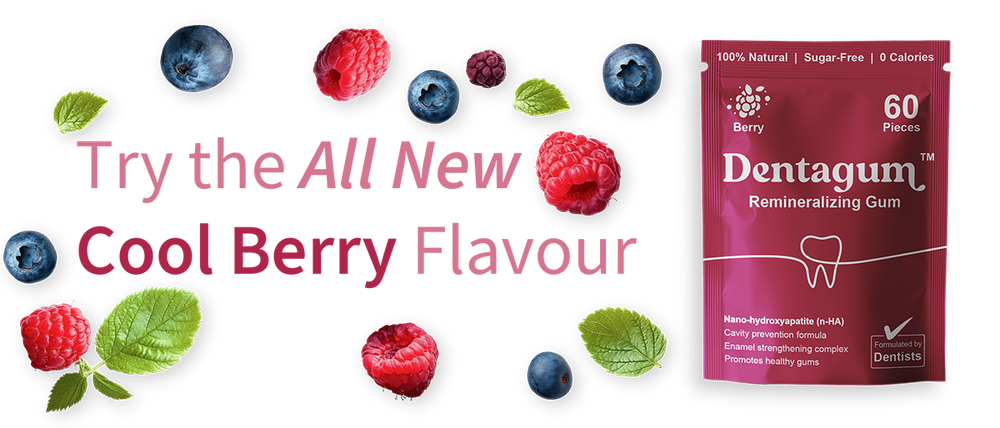
Dentagum Remineralizing Chewing Gum is appropriate for children aged 5 and older who can chew gum safely without swallowing it, with parent supervision for the first weeks to confirm the habit. It delivers nano-hydroxyapatite at 5 percent concentration, about 90mg per piece, alongside organic xylitol as the primary sweetener, in a natural chicle and mastic gum base with no aspartame, no saccharin, and no petroleum-derived synthetic polymers.
In a fluoride-free family routine, Dentagum covers the two gaps that a nano-HAp toothpaste alone does not address: the post-meal acid windows throughout the day (where no toothpaste, fluoride or otherwise, provides active protection) and the ongoing S. mutans suppression that xylitol provides across three or more daily exposures. For the school lunch window specifically, Dentagum is a practical and direct solution: one piece, 20 minutes, covers the most consequential unprotected oral health moment in a school-age child's day.
Note: Dentagum contains organic eggshell powder and is not suitable for children with egg allergies. Parents should review the complete ingredient list before introducing to children with known food allergies. For children with any specific health conditions or very high caries risk, discuss with the pediatric dentist before introducing any new oral care product.
For the full evidence behind our ingredients, see Dentagum ingredients: every one explained with the science. To understand why the post-meal window is where the dental action actually is, see our article on what happens during enamel demineralization.
Nano-HAp toothpaste twice daily (swallowing-safe, 2024 systematic review: ideal substitute for children). Xylitol and nano-HAp remineralizing gum after each meal for children aged 5 and up (AAPD-endorsed xylitol at correct dose and frequency; addresses school lunch gap). Regular dental monitoring every 3 to 6 months with transparent communication to the dentist about your fluoride-free approach. Everything else follows from these three.
10. Frequently Asked Questions
Is it safe for kids to use fluoride-free toothpaste?
For families committed to fluoride-free, nano-hydroxyapatite toothpaste is the safest and best-evidenced option. A 2024 systematic review published in the Journal of Clinical Periodontology specifically called nano-HAp an ideal substitute for fluoride in toothpaste tailored for young children, citing its swallowing safety as the key pediatric advantage. That said, the ADA, AAPD, and AAP have not changed their recommendation that fluoride toothpaste remains the first-line cavity-prevention tool for children. If you are going fluoride-free, talk to your child's pediatric dentist before making the switch and schedule more frequent monitoring in the first year.
What did the FDA actually do to children's fluoride in 2025?
On October 31, 2025, the FDA restricted ingestible prescription fluoride supplements, recommending they no longer be used for children under age 3 or children at low to moderate cavity risk. This action did not affect fluoride toothpaste, fluoride mouthwash, or professional fluoride varnish applied at the dentist. Fluoride supplements remain available for children over age 3 who are at high caries risk and live in areas with low fluoride in drinking water, under dentist guidance. The ADA, AAPD, AAP, and CDC all maintained their support of fluoride toothpaste as the primary cavity-prevention tool for children.
What age can kids start using nano-hydroxyapatite toothpaste?
Nano-HAp toothpaste can be introduced at the same time as any toothpaste, when the first tooth appears. Its primary advantage over fluoride toothpaste in very young children is that swallowing is not a concern: nano-HAp is the same mineral as teeth and bone, non-toxic if ingested. Some brands are formulated specifically for children with milder flavors. Seek out products where nano-hydroxyapatite is explicitly listed as an active ingredient at a meaningful concentration, not just in a general ingredient list.
What age can kids start chewing remineralizing gum?
Most pediatric dentists suggest gum is appropriate around age 5, when children have sufficient jaw coordination and understanding to chew without swallowing. Parent supervision for the first several weeks helps confirm the child is chewing and discarding rather than swallowing. The AAPD cites xylitol chewing gum as one of the delivery vehicles in its pediatric xylitol policy, alongside syrups and lozenges. For children under 5, xylitol syrup, tablets, or lozenges are appropriate delivery forms. Consult your child's dentist if you are uncertain about gum readiness.
My state banned fluoride in the water. What should I change for my kids?
If your child is already brushing twice daily with fluoride toothpaste, the water fluoridation change has minimal direct effect on their oral health, because topical fluoride from toothpaste is the primary mechanism of fluoride's dental protection. If you are also choosing fluoride-free toothpaste, the loss of water fluoride makes deliberate replacement more important: use nano-HAp toothpaste twice daily, add remineralizing gum after meals from age 5 up, keep snacking frequency low, stay current on dental checkups, and tell your dentist you are fluoride-free so they can monitor more closely and apply professional topical fluoride varnish if early signs of vulnerability appear.
Is xylitol safe for children?
Yes, in age-appropriate forms and amounts. Xylitol is FDA-approved and endorsed by the AAPD as an adjunct for cavity prevention in children. The AAPD's 2024 Reference Manual cites 30 to 80 percent reductions in caries incidence at 5 to 10 grams per day across three or more exposures. Xylitol in lozenges, syrups, or tablets is appropriate from toddler age; xylitol gum from approximately age 5 with supervision. Critical safety note: xylitol is highly toxic to dogs and must be kept completely out of reach of pets.
The Bottom Line
Fluoride-free children can be protected from cavities, but it requires a deliberate, layered approach rather than simply swapping toothpaste. Fluoride toothpaste remains the pediatric gold standard endorsed by every major US dental organization, and that position has not changed. For families committed to going without it, the best-evidenced path is nano-hydroxyapatite toothpaste (confirmed safe if swallowed, called an ideal pediatric substitute in a 2024 systematic review) combined with xylitol in age-appropriate forms across three or more daily exposures (AAPD-endorsed), tight snacking discipline, and transparent communication with the pediatric dentist with closer monitoring than the standard schedule. The post-meal window, particularly school lunch for school-age children, is where cumulative enamel risk is highest and where a remineralizing gum makes its most practical difference.
For the full fluoride-free routine for adults, see our article on what your fluoride-free routine is missing. For the broader context on current fluoride changes in the US, see what the 2026 changes actually mean for your teeth.
Shop Dentagum Remineralizing Gum for FamiliesResearch Summary
- FDA announcement (October 31, 2025): Restricted ingestible prescription fluoride supplements for children under age 3 and children at low to moderate caries risk. Not a full ban; did not affect toothpaste, mouthwash, or professional fluoride varnish. Source: FDA press release and ADA/CDA responses.
- ADA statement (October 31, 2025): Affirmed fluoride supplements as safe and effective for high-risk children in low-fluoride-water areas. Called for doctor clinical judgment over warning labels. Source: ADA press release.
- CDC / NIDCR. Dental caries: most common chronic childhood disease in the US; 5x more common than asthma, 7x hay fever. Over 52% of children aged 8 have had a primary-tooth cavity. NHANES 2015-16: 21.4% caries ages 2-5; 50.5% ages 6-11.
- Systematic review and meta-analysis on clinical evidence of caries prevention by hydroxyapatite. Journal of Clinical Periodontology (ScienceDirect, 2024). Key finding: "As a sole active ingredient, considered safe if swallowed, hydroxyapatite is an ideal substitute for fluoride in toothpaste and mouthwash tailored for young children." Figures from ingredient research.
- EU Scientific Committee on Consumer Safety (SCCS). Nano-hydroxyapatite confirmed safe in oral care products. March 2025 SCCS opinion: nano-HAp particles with rod-shaped or spherical geometry at concentrations up to 10% in toothpaste and 0.465% in mouthwash. Nano-HAp particles break down rapidly in stomach acid into calcium and phosphate.
- Nano-HAp: 40+ years of use in Japan in adult and pediatric oral care. No fluorosis equivalent documented. Non-toxic if swallowed at toothpaste concentrations.
- American Academy of Pediatric Dentistry. Policy on Use of Xylitol in Pediatric Dentistry. Reference Manual 2024, pp. 114-6. Supports xylitol as non-cariogenic sugar substitute; cites 30 to 80 percent decrease in caries incidence at 5 to 10 grams per day across 3+ exposures. Notes evidence is strongest as adjunct rather than sole primary intervention.
- Paszynska E et al. Frontiers in Public Health (2023). 18-month RCT: nano-HAp non-inferior to 1,450 ppm fluoride toothpaste for DMFS in adults. Third such RCT to demonstrate non-inferiority. Figures from ingredient research.
- ADA recommendation: rice-grain smear of fluoride toothpaste from first tooth through age 3; pea-sized amount ages 3 to 6. Amounts calibrated to minimize fluorosis risk from swallowing. Source: ADA Mouth Healthy guidance, current.
References
- US Food and Drug Administration. FDA Acts to Protect Children from Unapproved Fluoride Drug Products. October 31, 2025. fda.gov
- American Dental Association. Statement from the ADA on FDA Action to Limit Fluoride Supplements for Children. October 31, 2025. ada.org
- California Dental Association. FDA Acts to Limit Fluoride Supplements for Children. February 2026. cda.org
- Centers for Disease Control and Prevention. Oral Health: Children's Oral Health. cdc.gov
- National Institute of Dental and Craniofacial Research. Big Hopes for Little Teeth. 2024. nidcr.nih.gov
- Clinical evidence of caries prevention by hydroxyapatite: An updated systematic review and meta-analysis. Journal of Clinical Periodontology. ScienceDirect. 2024. doi:10.1016/S0300-5712(24)005992
- EU Scientific Committee on Consumer Safety. Opinion on Hydroxyapatite (nano) in cosmetic products. European Commission. March 2025 update.
- American Academy of Pediatric Dentistry. Policy on Use of Xylitol in Pediatric Dentistry. Reference Manual of Pediatric Dentistry. 2024:114-6. aapd.org
- Paszynska E, Enax J, Meyer F, Amaechi BT, Limeback H, et al. Caries-preventing effect of a hydroxyapatite-toothpaste in adults: an 18-month double-blinded randomized clinical trial. Front Public Health. 2023;11:1199728. doi:10.3389/fpubh.2023.1199728
- American Dental Association. Fluoride: Topical and Systemic Supplements. Including dosing guidance for children. ada.org
