
Kids' Oral Health Between Brushing: What Parents Should Know
Tooth decay is the most common chronic childhood disease in the United States — five times more common than asthma. Most of the damage happens not during the two minutes your child brushes, but in the long unprotected windows between brushing sessions: after breakfast, after lunch, after snacks. Here's what actually protects children's teeth between brushing, which ingredients are safe and effective for kids, and why the fluoride-ingestion risk that makes parents anxious about conventional toothpaste is completely absent with nano-hydroxyapatite.

Tooth decay is the most common chronic disease in US children, more common than asthma and hay fever combined,, affecting nearly 46% of American children. Most of the damage happens not during brushing, but in the long unprotected windows between brushing sessions: the post-breakfast window, the post-lunch window at school, the post-snack window in the afternoon. Three things protect children's teeth between brushing: saliva stimulation (which buffers post-meal acid), xylitol (which kills the bacteria that cause cavities through a targeted metabolic mechanism that's safe for children), and nano-hydroxyapatite (which remineralizes enamel and is non-toxic even if swallowed, unlike fluoride, which which requires careful dosing in young children). Remineralizing xylitol gum, suitable for children old enough to chew gum safely (typically age 5 and up), is one of the most practical ways to address all three simultaneously in the post-meal windows that conventional brushing doesn't reach.
Most parents have the brushing conversation with their kids every day. Brush twice, use fluoride toothpaste, see the dentist every six months. That advice is correct and non-negotiable. What it doesn't address is the other 23 hours and 58 minutes of your child's day.
Tooth decay doesn't happen during brushing. It happens in the windows between brushing: in the 30 to 40 minutes after every meal when bacterial acid production peaks and enamel mineral loss exceeds mineral gain. For most children, these windows are completely unprotected. After breakfast, they get on the bus. After lunch at school, there's no brushing opportunity. After the afternoon snack, they do homework. Three to five acid attacks per day, every day, with nothing interrupting them except whatever saliva naturally produces.
This guide covers what the research actually says about protecting children's teeth between brushing sessions, which ingredients are safe and evidence-backed for kids, and why some of the most effective tools (xylitol, nano-hydroxyapatite) have safety profiles that make them particularly appropriate for children who can't always spit reliably.
1. The Scale of the Problem: Why Cavities Are a Childhood Crisis
Tooth decay is the most common chronic childhood disease in the United States. That's not a relative claim or a dental industry talking point: it's the position of the CDC, the National Institutes of Health, and the American Academy of Pediatric Dentistry, supported by decades of epidemiological data. Cavities are approximately five times more common than asthma and seven times more common than hay fever in children.
By age 8, over half of US children (52%) have had a cavity in their primary (baby) teeth. Tooth decay affects nearly 46% of American children. Prevalence of total dental caries increases significantly with age: 21.4% among children aged 2 to 5, 50.5% among ages 6 to 11, and 53.8% among ages 12 to 19.
The consequences reach well beyond the dental chair. Children with oral health problems miss more school: American children miss more than 51 million school hours per year due to illnesses related to dental problems. Tooth pain interferes with concentration, eating, and sleep. Primary teeth that are lost early due to large cavities can disrupt the eruption path of permanent teeth, creating crowding that requires orthodontic treatment. The dental anxiety built up through painful childhood dental experiences tends to persist into adulthood, perpetuating the cycle.
The frustrating part: cavities are preventable. It is about five times more common than asthma and seven times more common than hay fever, yet preventable. The gap between "preventable" and "prevented" is primarily a gap in what happens between brushing sessions.
The "they're just baby teeth" logic is one of the most damaging misconceptions in children's oral health. Primary teeth hold space for permanent teeth. When a baby tooth is lost early due to decay, neighboring teeth drift into the gap, blocking the eruption path of the permanent tooth that was supposed to occupy that space. This results in impacted, crowded, or misaligned permanent teeth that often require orthodontic correction. Beyond space-holding, untreated primary tooth decay is associated with higher risk of decay in permanent teeth, chronic pain that affects nutrition and development, and elevated dental anxiety that persists into adulthood. Primary teeth deserve protection with the same seriousness as permanent teeth.
2. What Happens to Kids' Teeth Between Brushing

Understanding what actually damages children's teeth between brushing sessions requires understanding the post-meal acid cycle, which operates the same way in children as in adults but with a few amplifying factors unique to childhood eating patterns.
Every time a child eats, the bacteria in their mouth metabolize the sugars and fermentable carbohydrates in the meal, producing lactic acid as a byproduct. Within minutes of eating, oral pH drops below 5.5, the threshold at which enamel begins to demineralize: calcium and phosphate ions leave the enamel surface and dissolve into the saliva. This acid attack lasts 20 to 40 minutes, during which enamel is in a net mineral-loss state. Only after pH recovers above 5.5 does remineralization resume.
Children typically eat three to five times per day, sometimes more. Each eating occasion triggers this acid cycle. With meals, snacks, and sugary drinks, some children spend a substantial portion of their waking day in the demineralization phase, with only brief remineralization windows between events. Frequent snacking is particularly problematic because it chains acid attacks together, preventing pH from recovering between events.
Three factors amplify this problem in children specifically:
Thinner, newer enamel. Primary teeth have enamel that is thinner and less minerally mature than adult enamel. They demineralize more quickly and more deeply under acid attack. This is why primary teeth can develop cavities significantly faster than adult teeth in the same acidic conditions.
Higher bacterial loads in many children's mouths. S. mutans, the primary cavity-causing bacterium, is transmitted from caregiver to child, typically in early infancy through shared utensils, tasted food, or kisses. Children who receive this colonization early often have higher S. mutans populations than adults with established, more balanced oral microbiomes. More S. mutans means more acid production per meal.
Unpredictable eating patterns. Children snack frequently, drink juice and milk between meals, and eat at irregular times that don't correspond to structured tooth-care moments. The post-lunch acid window at school is typically entirely unaddressed: children eat, then return to class with no oral care intervention for hours.
3. Xylitol for Children: The Evidence and the Dose
Xylitol is the oral care ingredient with the strongest and most specific evidence base for children's cavity prevention, and it's endorsed by pediatric dental organizations for this use. Understanding why requires understanding what it does, and importantly, why it does it specifically and selectively without disrupting the rest of the oral environment.
S. mutans, the primary cavity-causing bacterium, uses a specific transport system (phosphoenolpyruvate-dependent phosphotransferase system, or PTS) to pull sugars into its cells for metabolic energy. Xylitol enters this system but cannot be metabolized. The bacterium spends energy importing and then expelling xylitol in a futile cycle, depletes its ATP reserves, and eventually dies. Beneficial oral bacteria don't have the same vulnerability. Xylitol is therefore not a broad-spectrum antimicrobial (which would disrupt the oral microbiome) but a targeted, selective weapon against the specific bacterium most responsible for childhood cavities.
The pediatric dental evidence is substantial. A 2021 review in the Journal of the American Dental Association confirmed that xylitol is effective at reducing the levels of cavity-causing bacteria in children. Evidence strongly suggests xylitol prevents cavities in kids by reducing the amount of harmful oral bacteria, making it harder for plaque to stick to teeth and reducing plaque acid attacks on enamel.
The American Academy of Pediatric Dentistry has a formal policy on xylitol use in pediatric dentistry, endorsing xylitol-containing products as adjunctive cavity prevention tools in children. The California Dental Association recommends 5 grams per day in three to five doses as effective. Xylitol is considered safe for children in the amounts found in food and oral care products, approved as a sugar substitute by the FDA and the World Health Organization's Joint Expert Committee on Food Additives.
One additional benefit that is particularly relevant to parents: maternal xylitol use reduces the transmission of S. mutans from mother to child. Research published in the Journal of Dental Research (Nakai et al., 2010) found that mothers who used xylitol gum regularly had significantly lower rates of S. mutans colonization in their infants. Since S. mutans is primarily transmitted from caregiver to child in early infancy, reducing the maternal bacterial load directly reduces the child's caries risk from the earliest window of colonization. This is a preventive benefit that operates before the child even has teeth.
One important caveat: xylitol is toxic to dogs. If you have pets, xylitol-containing products need to be kept well out of reach.
4. Nano-Hydroxyapatite for Children: The Safety Advantage
Nano-hydroxyapatite (nano-HAp) is the mineral enamel is primarily made from: calcium hydroxyapatite (Ca10(PO4)6(OH)2), engineered at nanoparticle sizes (20 to 100 nanometres) that allow it to enter enamel microporosities and deposit mineral directly into the enamel microstructure. Its oral health mechanism is direct: it delivers to enamel the exact mineral enamel is made from, at sizes that reach where the mineral is needed.
For children specifically, nano-HAp has a safety profile that gives it a meaningful advantage over fluoride in the under-7 age group where swallowing risk is highest.
The EU Scientific Committee on Consumer Safety confirmed nano-HAp is safe at levels up to 29.5%. A 2024 systematic review called nano-HAp "an ideal substitute for fluoride in toothpaste for young children." Nano-hydroxyapatite poses no risk of fluorosis and is safe if swallowed in small amounts.
This matters because young children often swallow rather than spit toothpaste. The ADA recommends a rice-grain sized amount of fluoride toothpaste for children under 3 and a pea-sized amount for ages 3 to 6, precisely because fluoride must be dosed carefully: too much ingested fluoride causes dental fluorosis (white spots or streaking on developing enamel) and, at high enough levels, can cause more serious systemic effects. Parents of young children often feel anxious about this: they know fluoride works but also worry about how much their child is swallowing.
Nano-hydroxyapatite eliminates this anxiety entirely. Nano-HAp is the same mineral already present in teeth and bones. Swallowing it doesn't add a foreign substance: it adds a small amount of the same calcium phosphate mineral the body already produces and manages. Hydroxyapatite has been used in Japan for over 40 years in both adult and pediatric toothpaste formulations, with extensive study for safety and efficacy.
The efficacy evidence is also strong. A systematic review and meta-analysis by Limeback, Enax, and Meyer published in Biomimetics (2023) analyzed 44 clinical trials and found nano-HAp significantly reduced dentin hypersensitivity by 39.5% compared to placebo. An 18-month randomized controlled trial published in Frontiers in Public Health (2023) found fluoride-free nano-HAp non-inferior to standard 1,450 ppm fluoride toothpaste for cavity prevention in adults. Figures from ingredient research.
5. Fluoride vs Nano-HAp for Kids: What to Know
This is one of the most common questions parents ask when they discover nano-hydroxyapatite, and the honest answer requires nuance rather than a winner declaration.
Fluoride has the longer, deeper clinical evidence base and remains the gold standard recommendation from pediatric dental organizations. Its mechanism is different from nano-HAp: fluoride incorporates into remineralizing enamel to form fluorapatite (Ca10(PO4)6F2), a more acid-resistant mineral form. It also has antibacterial properties at higher concentrations. The ADA, AAP, and AAPD all recommend fluoride toothpaste as the primary cavity prevention tool for children, with dosing adjusted for age to manage swallowing risk.
Nano-hydroxyapatite addresses a different point in the same process: it delivers the calcium and phosphate substrate that enamel remineralization requires, at a form and size that integrates directly into the enamel microstructure. It doesn't produce a more acid-resistant mineral form, but it directly rebuilds the mineral that acid attack removed.
The practical summary for parents: fluoride toothpaste with age-appropriate dosing is the established first-line recommendation that your pediatric dentist will endorse. Nano-HAp is a well-evidenced alternative or complement, with particular advantages for parents who are anxious about fluoride swallowing in young children or who prefer a fluoride-free approach. Some families use fluoride toothpaste for brushing and nano-HAp containing products (like remineralizing gum) for the between-brushing windows, getting the well-established protection from fluoride at the brushing moments and the direct mineral delivery from nano-HAp in the post-meal windows. Consult your pediatric dentist about the approach that best fits your child's specific caries risk and age.
6. The Post-Meal Habit That Makes a Difference

The ADA endorses chewing sugar-free gum for 20 minutes after meals for cavity prevention via saliva stimulation. This recommendation is based on the mechanism: chewing mechanically stimulates saliva production, and elevated saliva flow buffers the post-meal acid environment while delivering calcium and phosphate ions to the enamel surface. The 20-minute post-meal window is when acid production peaks and enamel is most vulnerable: saliva stimulation during this window is the body's most powerful natural protective response.
For children old enough to chew gum safely (typically age 5 and up, with parent supervision, and not for children with jaw pain or TMJ issues), a remineralizing xylitol gum after meals addresses the post-meal window with three simultaneous mechanisms:
Saliva stimulation buffers the acid environment and delivers minerals to enamel (the mechanism the ADA specifically endorses).
Xylitol kills S. mutans through the targeted metabolic mechanism, reducing the bacterial population most responsible for converting the meal's sugars into the acids that caused the enamel attack.
Nano-hydroxyapatite delivers enamel mineral directly to the enamel surface at the moment of highest enamel receptivity: when enamel has been softened by acid and is most open to mineral deposition. Research found nano-HAp recovered approximately 40% of enamel surface microhardness in approximately 30 minutes in vitro (PMC8659594). Figures from ingredient research.
The practical reality: a child who chews a piece of remineralizing xylitol gum for 20 minutes after their school lunch has interrupted the acid attack, killed a portion of the S. mutans responsible for that attack, and actively remineralized the enamel that was softened. A child who does nothing after school lunch has given that acid attack an uninterrupted 30 to 40 minutes on softened enamel, every school day. Over weeks and months, that difference accumulates in enamel mineral density.
7. By Age: What to Use and When
Children's oral care needs and appropriate interventions change significantly across developmental stages. Here's a practical framework.
0 to 12 months (before first tooth): Clean gums with a soft damp cloth after feedings. Avoid putting baby to bed with a bottle of milk or juice. Prolonged contact of sugary liquids with erupting tooth surfaces is one of the primary drivers of early childhood caries. No gum products appropriate at this stage.
12 months to 2 years (first teeth erupting): Brush twice daily with a rice-grain amount of fluoride toothpaste (ADA/AAPD recommendation) as soon as teeth appear. Begin first dental visit by age 1. This is the stage where maternal xylitol use matters most: if the mother has been using xylitol gum regularly, the S. mutans transmission that commonly occurs in infancy is significantly reduced.
2 to 5 years: Pea-sized fluoride toothpaste twice daily. Begin flossing when any two teeth touch. This age group can use xylitol in syrup, lozenge, or tablet forms (with parent supervision) to begin establishing xylitol's S. mutans-reducing effect between brushing. Xylitol gum is generally not appropriate below age 4 to 5 due to swallowing risk.
5 to 12 years (mixed dentition, school age): The highest-impact age for establishing between-brushing habits. Fluoride toothpaste twice daily remains the foundation. Children old enough to chew gum safely (typically 5+, with supervision) can use a remineralizing xylitol gum after meals, particularly the school lunch where brushing is not practical. The school lunch window is the most consistently unprotected acid attack of the school week.
12 years and older: Adult oral care approach applies. The post-meal gum habit established in childhood typically carries into adolescence and adulthood as one of the most durable oral health habits because it requires no additional time in the bathroom and can be done anywhere.
Most children eat school lunch five days per week, 180 days per year, and have no practical brushing opportunity afterward. That's 180 uninterrupted acid attacks on enamel per year, each lasting 20 to 40 minutes, with no saliva buffering boost, no xylitol antibacterial coverage, and no remineralizing mineral delivery. A single piece of remineralizing xylitol gum chewed for 20 minutes after lunch addresses all three gaps simultaneously. For parents thinking about where to target their children's oral health improvement, the school lunch window is the highest-return intervention point.
8. The School Problem: Oral Health at Lunch
The school environment creates a specific, recurring, predictable oral health gap that most families don't actively address. Children eat lunch at school five days per week. Almost none of them brush their teeth afterward. Most don't rinse. Most go from lunch directly to afternoon classes with no oral care intervention until they brush at home that evening, sometimes five or six hours later.
This is not a minor gap. Lunch is often one of the most carbohydrate-rich meals of the day, containing breads, processed starches, sugars, and acidic drinks (juice, lemonade, sports drinks). The post-lunch acid attack can be particularly aggressive. And it is entirely unaddressed in the daily routine for most school-age children.
The practical solution has to work within the school environment: it needs to be something a child can do at a cafeteria table without access to a sink, toothbrush, or mirror. A piece of gum is the only oral care intervention that fully meets this constraint. The ADA's endorsement of sugar-free gum after meals was specifically designed around windows exactly like this.
For parents who want to address the school lunch gap: pack a piece of xylitol remineralizing gum in your child's lunch bag. Instruct them to chew it for 20 minutes after eating and discard before going to class. This single habit, applied consistently across the school year, directly addresses the most reliably unprotected oral care window in most children's week. Read more about how to use remineralizing gum in the post-meal window in our guide to why chewing gum after meals is one of the best habits you can build.
9. How Dentagum Fits Into a Family Oral Care Routine

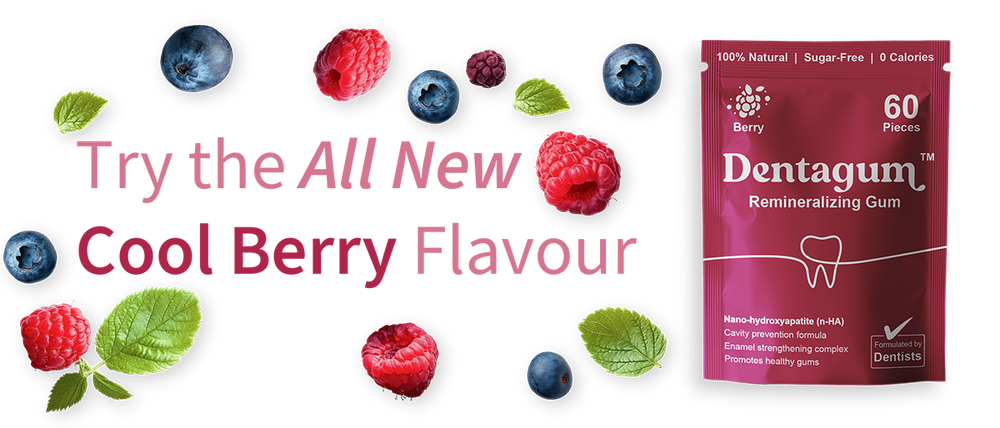
Dentagum Remineralizing Chewing Gum is appropriate for children aged 5 and older who can chew gum safely without swallowing it. It contains organic xylitol as the primary sweetener, nano-hydroxyapatite at 5% concentration (~90mg per piece), organic erythritol, organic mastic gum, natural propolis, and a natural chicle-based gum base, with no synthetic petroleum-derived polymers, no aspartame, no saccharin, no artificial colors.
The xylitol and nano-HAp combination makes it particularly suited to the between-brushing use case for children. Xylitol addresses S. mutans directly. Nano-HAp delivers enamel mineral without any swallowing concern even if a child chews and accidentally ingests some of the gum base (though as with all gum, the goal is chewing and discarding). The natural gum base from organic chicle is biodegradable and plastic-free, which some parents appreciate as a cleaner-ingredient choice compared to synthetic polymer gum bases.
Dentagum is available in Mint, Cool Berry, Watermelon, and Cool Mango flavors. For school-age children, Cool Berry and Cool Mango tend to be particularly popular. It's priced at $32.97 for 60 pieces ($0.55 per piece), with the recommended use of one piece after each meal meaning a typical school child using it three times per day would go through a pouch in approximately three weeks.
Important context for parents: Dentagum is a supplement to, not a replacement for, brushing with fluoride toothpaste, flossing, and regular professional dental care. Xylitol and nano-HAp between brushing do not replace the mechanical plaque removal and fluoride protection of brushing. The between-brushing use case is additive: it addresses the post-meal acid windows that brushing doesn't reach. Also note that Dentagum contains organic eggshell powder and is not suitable for children with egg allergies. For children with nut or other specific allergies, check the full ingredient list before introducing.
Consult your child's pediatric dentist before introducing any new oral care product, particularly if your child has a high caries risk, existing dental work, or specific medical conditions. You can find the complete guide to what our ingredients do in our article Dentagum ingredients: every one explained with the science, and read about the evidence for reversing early enamel damage in our piece on whether you can reverse cavities naturally.
Shop Dentagum Remineralizing Gum — 30-Day Guarantee10. Frequently Asked Questions
Is xylitol gum safe for kids?
Yes, for children old enough to chew gum safely without swallowing it, typically age 5 and older with parent supervision. Xylitol is FDA-approved and endorsed by the American Academy of Pediatric Dentistry as an adjunctive tool for cavity prevention in children. The California Dental Association recommends 5 grams per day in three to five doses for effective S. mutans reduction. Important exception: xylitol is highly toxic to dogs and must be kept away from pets. For children under age 5, xylitol in syrup, lozenge, or tablet form may be more appropriate than gum.
Is nano-hydroxyapatite safe for children to swallow?
Yes. Nano-hydroxyapatite is the same mineral teeth and bones are made from: calcium hydroxyapatite. It is non-toxic, biocompatible, and considered safe if swallowed in small amounts. The EU Scientific Committee on Consumer Safety confirmed nano-HAp safety up to 29.5%. A 2024 systematic review described it as an ideal substitute for fluoride in toothpaste for young children precisely because of its swallowing safety profile. It does not carry the fluorosis risk associated with excess fluoride ingestion. This makes nano-HAp products particularly suitable for young children who haven't yet reliably learned to spit.
What should kids do for their teeth after school lunch?
Chew a piece of xylitol remineralizing gum for 20 minutes. This is the ADA-endorsed approach for post-meal oral care when brushing isn't possible. The chewing stimulates saliva that buffers the post-meal acid, xylitol kills S. mutans to reduce acid production, and nano-hydroxyapatite in remineralizing gum delivers enamel mineral at the window of highest enamel receptivity. Pack one piece in your child's lunch bag and instruct them to chew it after eating and discard before afternoon classes. This single habit consistently applied across a school year directly addresses the most reliably unprotected oral care window of most children's week.
What age can kids start chewing remineralizing gum?
Most pediatric dentists suggest children are ready to chew gum safely around age 5, when they have sufficient jaw coordination and understanding to chew without swallowing. Parent supervision is appropriate for the first few months of gum use to confirm the child is chewing and discarding rather than swallowing. For children under 5, xylitol-containing lozenges, tablets, or syrups provide the xylitol benefit without the gum format. Consult your child's pediatric dentist for age-specific guidance based on your child's development and caries risk.
Do baby teeth really matter if they're going to fall out anyway?
Yes, significantly. Primary teeth hold space for permanent teeth: when a baby tooth is lost early due to decay, neighboring teeth drift into the gap and block the eruption path of the permanent tooth. This results in crowding and misalignment that often requires orthodontic correction. Primary tooth decay is also associated with higher risk of decay in permanent teeth, chronic pain that affects nutrition and development, and dental anxiety that persists into adulthood. Treating cavities in baby teeth is more expensive and more difficult than preventing them. The "just baby teeth" framing understates the real long-term consequences of untreated primary tooth decay.
Can remineralizing gum replace brushing for kids?
No. Remineralizing gum is an adjunct to brushing, not a replacement. Brushing removes the plaque biofilm that is the physical substrate where S. mutans and other cariogenic bacteria live and reproduce. No gum, regardless of its active ingredients, performs this mechanical plaque removal. Fluoride toothpaste used during brushing provides cavity protection that is not replicated by post-meal gum alone. The between-brushing role of remineralizing gum is additive: it addresses the post-meal acid windows and unprotected school lunch gap that twice-daily brushing doesn't reach. Brushing twice daily, flossing regularly, using fluoride toothpaste with age-appropriate amounts, and attending regular dental checkups remain the foundation of children's oral health.
The Bottom Line
Tooth decay is the most common chronic childhood disease in the US, affecting nearly half of American children. Most of the damage happens not during brushing but in the unprotected 20 to 40 minute acid attack windows that follow every meal. The school lunch window alone represents 180 unprotected acid attacks per school year for most children. Three things address these windows: saliva stimulation (chewing), xylitol (S. mutans reduction with strong pediatric evidence and AAPD endorsement), and nano-hydroxyapatite (direct enamel mineral delivery that's safe even if swallowed, unlike fluoride which requires careful dosing in young children).
For children aged 5 and older who can chew gum safely, a piece of remineralizing xylitol gum for 20 minutes after meals, particularly after school lunch, is one of the most practical and evidence-supported additions to a childhood oral care routine. It doesn't replace brushing with fluoride toothpaste, flossing, or professional dental care. It fills the gap those interventions were never designed to reach. Learn more about the full post-meal gum habit in our guide to why chewing gum after meals is one of the best habits you can build.
Shop Dentagum Remineralizing Gum — 30-Day GuaranteeResearch Summary
- CDC Oral Health Data. By age 8, 52% of US children have had a cavity in primary teeth. Cavities are the most common chronic childhood disease, 5x more common than asthma, 7x more common than hay fever. Children miss 51+ million school hours per year due to dental problems.
- NHANES 2015-2016 data. Total dental caries prevalence: 21.4% ages 2-5; 50.5% ages 6-11; 53.8% ages 12-19. Overall approximately 45.8% of children 2-19 affected.
- Journal of the American Dental Association review (2021). Xylitol significantly reduces cavity-causing bacteria in children across multiple studies.
- Pienihäkkinen et al. European Archives of Paediatric Dentistry (2024). Systematic review: xylitol chewing gum and candies reduce caries occurrence in children, particularly at higher caries risk levels.
- American Academy of Pediatric Dentistry. Formal policy on xylitol use in pediatric dentistry: endorsed as adjunctive cavity prevention tool in children. Available at aapd.org.
- California Dental Association. Effective xylitol dose for children: 5 grams per day in 3-5 exposures.
- EU Scientific Committee on Consumer Safety. Nano-hydroxyapatite confirmed safe at concentrations up to 29.5%. 2024 systematic review: "ideal substitute for fluoride in toothpaste for young children."
- Limeback H, Enax J, Meyer F. Biomimetics (2023). Systematic review and meta-analysis of 44 clinical trials: nano-HAp significantly reduces dentin hypersensitivity by 39.5% vs placebo. Figures from ingredient research.
- Meyer F, Enax J. Frontiers in Public Health (2023). 18-month RCT: fluoride-free nano-HAp non-inferior to 1,450 ppm fluoride toothpaste for cavity prevention in adults. Figures from ingredient research.
- PMC8659594. In vitro: nano-HAp recovered approximately 40% of enamel surface microhardness in approximately 30 minutes. Figures from ingredient research.
- Nakai Y et al. Journal of Dental Research (2010). Maternal xylitol gum use significantly reduces S. mutans colonization in infants compared to control groups.
- ADA position. 20 minutes of sugar-free gum chewing after meals endorsed for cavity prevention via saliva stimulation. Foundation for post-meal gum intervention.
References
- Centers for Disease Control and Prevention. Oral Health: Managing Health Conditions in Schools. 2026. cdc.gov/school-health-conditions/chronic/oral-health.html
- National Institute of Dental and Craniofacial Research. Big Hopes for Little Teeth. 2024. nidcr.nih.gov
- Indiana University School of Medicine. Dental Decay: The Most Common Chronic Disease of Childhood in the US. 2025. medicine.iu.edu
- Fleming E, Afful J. Prevalence of Total and Untreated Dental Caries Among Youth: United States 2015-2016. NCHS Data Brief. 2018;(307):1-8.
- Journal of the American Dental Association. Review confirming xylitol effectiveness at reducing cavity-causing bacteria in children. 2021.
- Pienihäkkinen K, Hietala-Lenkkeri A, Arpalahti I, Söderling E. The effect of xylitol chewing gums and candies on caries occurrence in children: a systematic review. Eur Arch Paediatr Dent. 2024;25:145-160. doi:10.1007/s40368-024-00875-w
- American Academy of Pediatric Dentistry. Policy on Use of Xylitol in Pediatric Dentistry. 2022. aapd.org
- Nakai Y, Shinga-Ishihara C, Kaji M, et al. Xylitol gum and maternal transmission of mutans streptococci. J Dent Res. 2010;89(1):56-60.
- EU Scientific Committee on Consumer Safety. Safety assessment of nano-hydroxyapatite in cosmetic products. Confirmed safe up to 29.5%.
- Limeback H, Enax J, Meyer F. Biomimetic hydroxyapatite and caries prevention: a systematic review and meta-analysis. Biomimetics. 2023. doi:10.3390/biomimetics8010059
- Meyer F, Enax J. Hydroxyapatite in oral care: comparative 18-month RCT with fluoride toothpaste. Frontiers in Public Health. 2023.
- PMC8659594. Nano-hydroxyapatite enamel microhardness recovery in vitro. Approximately 40% recovery in approximately 30 minutes. Figures from ingredient research.
- American Dental Association. Position on chewing gum. 20 minutes of sugar-free gum after meals endorsed for cavity prevention.
