
What Is Biomimetic Oral Care and Why Does It Matter?
Biomimetic oral care is the approach that asks: instead of introducing synthetic chemistry to fight oral disease, what if we used the materials the body already uses? Nano-hydroxyapatite, the mineral enamel is made from, is the paradigm case. Here's what biomimetic means, why it's a genuinely different philosophy from conventional oral care, and where the clinical evidence currently stands.

Biomimetic oral care (from Greek: bio = life, mimetic = imitation) is an approach that uses materials and compounds that mimic or amplify the body's own biological processes for maintaining oral health, rather than introducing synthetic chemistry designed to fight oral disease. The clearest example is nano-hydroxyapatite, the mineral enamel is made from, used to repair enamel by depositing the exact same mineral that was lost. A 2023 clinical trial found 10% nano-HAp toothpaste protected adult teeth from new cavities as well as standard fluoride toothpaste. The Academy of Biomimetic Dentistry defines the approach as restoring and protecting teeth "using materials mimicking natural teeth in function, strength and appearance." The shift toward biomimetic oral care reflects both growing clinical evidence for natural mineral approaches and consumer demand for fluoride-free, clean-label alternatives.
Oral care has been built around synthetic chemistry for most of its modern history. Fluoride (introduced in municipal water supplies in the 1940s and toothpaste in the 1950s) became the gold standard for cavity prevention. Chlorhexidine became the pharmaceutical standard for antiseptic mouthwash. Sodium lauryl sulfate became the standard foaming agent in toothpaste. Triclosan was added to many products as an antibacterial. Synthetic sweeteners replaced sugar in gum.
Each of these ingredients works. Most have solid clinical evidence behind them. But they all share a common paradigm: introducing exogenous (externally derived) chemistry to compensate for biological processes that have gone wrong, or to kill microorganisms that threaten oral health. This is the conventional approach.
Biomimetic oral care asks a different question: what if, instead of synthetic chemistry to fight oral disease, we used the same materials the body already uses to maintain oral health? What if we repaired enamel with the mineral enamel is made from? What if we reduced harmful bacteria with compounds from the same plants and organisms that evolved antimicrobial chemistry over millions of years? What if the oral care product worked with the body's biology rather than replacing it?
What Biomimetic Means: The Science of Mimicking Biology

The term biomimetic derives from the Greek bios (life) and mimetos (imitation). In materials science and medicine, it refers to materials, products, and approaches that are designed to replicate the structure and function of biological systems. The field spans engineering (structures modeled on natural architectures like bone or shell), medicine (scaffolds for tissue engineering), and increasingly, consumer health products.
In oral care, biomimetic has a specific meaning grounded in what the Academy of Biomimetic Dentistry defines as its core principle: "damaged teeth are restored using materials mimicking natural teeth in function, strength and appearance." The key word is mimicking. Not substituting, not compensating, not chemically overriding: mimicking. Using materials that behave the way natural tooth structure behaves because they're made of the same stuff.
Nano-hydroxyapatite is the paradigm case. Enamel is hydroxyapatite. Nano-HAp is hydroxyapatite. When nano-HAp deposits into demineralized enamel, it's not introducing a foreign material: it's replacing what was lost with the same mineral, in the same crystalline form, from the same class of calcium phosphate ceramics. The body doesn't need to adapt to it because it's what the body already uses.
Biomimetic specifically means materials that replicate the structure and function of biological tissues. Bioactive means materials that elicit a biological response. Natural means derived from natural sources rather than synthesized. These terms overlap but are not equivalent. A synthetic nano-hydroxyapatite produced in a laboratory is biomimetic (same mineral as enamel) but not natural (it's manufactured). A plant-derived compound may be natural and bioactive without being biomimetic in the strict mineral-mimicry sense. Understanding the distinction matters for evaluating product claims: "natural" doesn't mean biomimetic, and biomimetic doesn't require natural sourcing.
The Conventional Paradigm: What It Does Well and What It Doesn't
Understanding the biomimetic approach requires understanding what it's distinguishing itself from. The conventional oral care paradigm is built around fluoride and synthetic antibacterials, and it deserves credit for what it has achieved.
Water fluoridation, introduced in the United States in 1945, is credited with dramatic reductions in dental caries across the 20th century. The CDC listed community water fluoridation as one of the ten great public health achievements of the 20th century. Fluoride toothpaste has remained the ADA-endorsed gold standard for individual cavity prevention for decades with a strong evidence base.
The conventional paradigm's limitations are specific, not fundamental. Fluoride works not by replacing lost enamel mineral with the same material but by incorporating the exogenous ion (fluoride) into the enamel crystal structure, forming fluorapatite, which has a lower critical dissolution pH (approximately 4.5 vs 5.5 for hydroxyapatite). Fluorapatite is more acid-resistant, but it's a different material from the natural hydroxyapatite it's converting. The treatment changes the tooth's chemistry rather than restoring it.
The concern about fluorosis (white or brown spots on developing teeth from excess fluoride during the critical developmental period) is documented but contextually modest: the CDC reports that fluorosis typically doesn't affect tooth function and isn't painful. But for many parents and individuals, the concern drives preference for alternatives. And for populations without access to carefully controlled fluoride concentrations, excess exposure is a genuine issue in some parts of the world.
The Clinical Evidence: How Biomimetic Approaches Are Performing

The shift toward biomimetic oral care is not purely philosophical. A growing clinical evidence base supports the efficacy of biomimetic approaches, particularly for nano-hydroxyapatite.
The most consequential recent data point is an 18-month randomized clinical trial (cited by dental professionals in January 2026 clinical reviews) finding that 10% nano-HAp toothpaste protected adult teeth from new cavities as well as standard 1,450 ppm fluoride toothpaste. This is the type of equivalence data that shifts professional opinion: not just that nano-HAp works, but that it works comparably to the gold standard in a clinical trial setting.
The 2023 Biomimetics systematic review and meta-analysis by Limeback, Enax, and Meyer, covering 44 clinical trials, confirmed nano-HAp's clinical effectiveness across sensitivity reduction and enamel mineral delivery. Registered Dental Hygienists' clinical review stated explicitly: "Nano-HA is a great alternative to fluoride because of its biomimetic and nontoxic properties. According to various studies, nano-HA is comparable to fluoride and/or CHX in terms of its effectiveness in remineralizing tooth structure, hypersensitivity, and biofilm control."
Dr. Pia Lieb, cosmetic dentist and clinical assistant professor emerita at NYU College of Dentistry: "As ingredient labels shift toward cleaner, fluoride-free formulas, one compound is taking center stage in modern oral care: nano-hydroxyapatite."
The broader biomimetic approach, encompassing the plant-derived antimicrobials (xylitol, mastic, propolis), the biogenic calcium sources (eggshell), and the naturally amplified salivary mechanism (chewing gum), has a more heterogeneous evidence base. The individual ingredients have their own clinical evidence reviewed in detail in this blog's ingredient deep-dive cluster. The philosophy that unifies them (working with biological processes rather than replacing them) is the emergent category that biomimetic oral care describes.
A randomized clinical trial, referenced across dental professional literature in 2025-2026, found that 10% nano-hydroxyapatite toothpaste protected adult teeth from new cavities as well as 1,450 ppm fluoride paste over an 18-month study period. This result places nano-HAp at clinical equivalence with fluoride for caries prevention in the studied population, a significant milestone for the biomimetic approach. Fluoride's 70-year head start in clinical trial data means the overall evidence base still favors fluoride for high-caries-risk populations, but the equivalence data changes the conversation for lower-risk individuals and those who prefer fluoride-free products.
Why Biomimetic Is a Different Philosophy, Not Just Different Ingredients

The distinction between conventional and biomimetic oral care runs deeper than the specific ingredients used. It represents a different philosophy about what oral care should do.
The conventional philosophy is interventional: oral disease is a chemical and biological threat that synthetic chemistry can fight. The goal is to create conditions that bacteria can't thrive in (by introducing fluoride to make enamel more resistant, chlorhexidine to kill bacteria, SLS to foam away plaque) and to compensate for lost mineral through fluoride's crystal modification mechanism.
The biomimetic philosophy is restorative: oral health is a natural biological state that the body maintains through saliva, the oral microbiome, and mineral equilibrium. When that state is disrupted, the goal is to restore the biological conditions for the body's own maintenance systems to function optimally, by providing the same materials the body uses (hydroxyapatite mineral for enamel) and by working with the biology rather than overriding it (amplifying saliva's natural remineralization through chewing rather than bypassing saliva with synthetic mineral delivery).
This is not a claim that the biomimetic approach is always superior. Fluoride is effective and its evidence base is deeper. Chlorhexidine handles acute bacterial infections more aggressively than any natural antimicrobial at short-term clinical doses. The biomimetic approach is not appropriate for all clinical situations, and the most clinically informed perspective treats the two paradigms as complementary tools rather than competing absolutes.
What the biomimetic philosophy offers that the conventional approach doesn't is a long-term daily use profile that aligns with how the body naturally works. Chlorhexidine can't be used daily for extended periods without side effects. Fluoride at high doses creates fluorosis risk in children's developing teeth. Synthetic gum bases are petroleum-derived polymers you chew for 20 minutes. None of these concerns apply to biomimetic alternatives: hydroxyapatite is what enamel is made from, xylitol is found naturally in many fruits and vegetables, and mastic has been chewed for 2,500 years without identified adverse effects.
The Drivers of the Biomimetic Shift
The movement toward biomimetic oral care is being driven by forces from multiple directions simultaneously.
Clinical evidence accumulation. The evidence base for nano-HAp has grown substantially over the past decade. The 18-month fluoride equivalence trial, the 44-trial meta-analysis in Biomimetics, and the growing number of individual clinical studies comparing nano-HAp to conventional agents have provided the scientific community with enough data to have a credible professional conversation about biomimetic alternatives rather than dismissing them as wellness trends.
Consumer demand for clean-label formulations. The broader consumer trend toward transparency in personal care products has reached oral care. Consumers reading ingredient lists are questioning synthetic gum bases, artificial sweeteners, and SLS. The same forces that drove the clean beauty movement in skincare are shaping oral care product preferences.
Fluoride-free segment growth. Whether or not the clinical case for fluoride avoidance is as strong as some advocates suggest, the consumer segment that prefers fluoride-free products is growing and willing to pay premium prices for credible alternatives. Nano-HAp is that credible alternative: clinically validated, mechanistically sound, and philosophically aligned with what this segment wants.
Professional opinion shift. Dentists and dental hygienists are increasingly familiar with and willing to discuss nano-HAp as an alternative. Dr. Yenile Pinto, DDS, described as a "functional and biomimetic dentist," represents an emerging professional category that explicitly embraces the biomimetic paradigm as a practice philosophy.
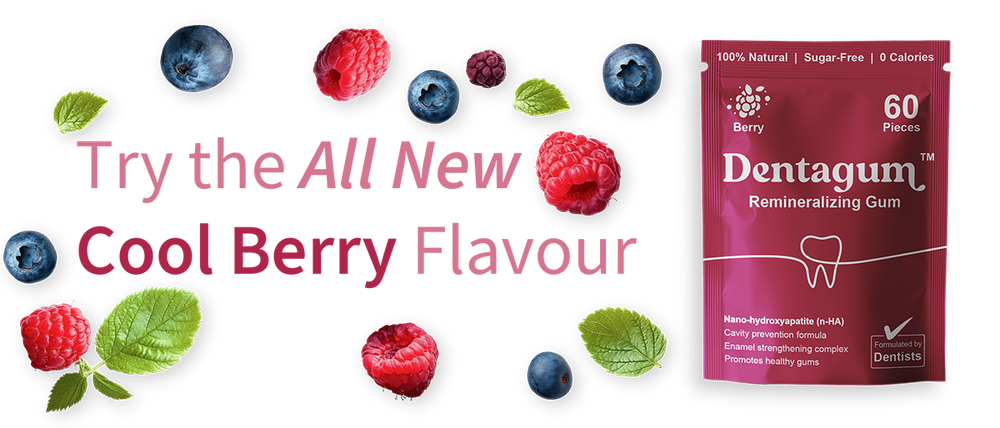
Dentagum as Biomimetic Oral Care in Practice

Dentagum's formula is built around the biomimetic philosophy, applied across every ingredient choice. The pattern is consistent: where conventional oral care uses synthetic chemistry, Dentagum uses materials that work with the body's own biology.
Nano-hydroxyapatite replaces the mineral that acid attacks remove, using the exact same mineral enamel is made from. Eggshell calcium releases Ca2+ in the acidic post-meal environment, mirroring the pH-responsive mineral release that the body's own saliva chemistry provides. Organic xylitol disrupts S. mutans through a metabolic mechanism that the bacteria cannot develop resistance to the way they can to synthetic antibacterials. Mastic gum provides broad-spectrum antimicrobial coverage through a terpenoid compound complex that has been tested against oral pathogens across over 2,500 years of human use. Propolis adds antibacterial and anti-inflammatory coverage comparable to chlorhexidine without chlorhexidine's tissue cytotoxicity and daily-use side effects. Organic mint essential oils provide the full terpene complex, including the same four active compounds that Listerine has used since 1914, in their natural whole-plant form rather than isolated or synthetic equivalents.
The chewing gum format itself is biomimetic: chewing stimulates the salivary mechanism that the body evolved for oral health maintenance, amplifying it 10 to 12 times rather than replacing it with a synthetic delivery vehicle.
The result is a formula where every ingredient decision reflects the biomimetic question: does this work with how the body naturally maintains oral health, or does it substitute synthetic chemistry for biological processes? Every answer in Dentagum's formula is the former.
Try Dentagum risk-free — 30-day guaranteeFrequently Asked Questions
What is biomimetic oral care?
Biomimetic oral care uses materials and approaches that mimic or amplify the body's own biological processes for maintaining oral health, rather than using synthetic chemistry designed to fight oral disease. The term comes from the Greek bios (life) and mimetos (imitation). In practice, the clearest example is nano-hydroxyapatite, the mineral enamel is made from, used in toothpaste and chewing gum to repair enamel by depositing the same mineral that was lost. The Academy of Biomimetic Dentistry defines the approach as restoring teeth using materials that mimic natural teeth "in function, strength and appearance."
Is nano-hydroxyapatite as effective as fluoride?
Clinical evidence is converging on equivalence for many outcomes. A 2023 18-month randomized clinical trial found 10% nano-HAp toothpaste protected adult teeth from new cavities as well as standard 1,450 ppm fluoride toothpaste. The 2023 Biomimetics meta-analysis of 44 clinical trials confirmed nano-HAp's clinical effectiveness for sensitivity reduction and enamel mineral delivery. Registered Dental Hygienists' clinical review stated that nano-HAp "is comparable to fluoride and/or CHX in terms of its effectiveness in remineralizing tooth structure, hypersensitivity, and biofilm control." Fluoride's overall evidence base (70+ years of clinical data) is deeper, and fluoride remains the recommendation for high-caries-risk patients from most dental authorities. For low-risk individuals or those who prefer fluoride-free products, nano-HAp represents a clinically validated alternative.
What is the difference between biomimetic and natural oral care?
Natural oral care means using ingredients derived from natural sources rather than synthesized. Biomimetic oral care means using materials that replicate the structure and function of biological tissues, specifically tooth mineral. These overlap but are not identical. Nano-hydroxyapatite is biomimetic because it's the same mineral as enamel. It may be synthesized rather than extracted from natural sources, making it technically manufactured rather than "natural." Natural plant-derived ingredients like mastic and propolis are natural and bioactive but not biomimetic in the strict mineral-mimicry sense. The best biomimetic oral care combines both: biomimetic mineral delivery (nano-HAp) and natural plant-derived antibacterials.
Is the biomimetic approach safe for children?
Nano-hydroxyapatite has a strong safety profile for children specifically because it doesn't carry fluorosis risk. Fluorosis occurs when children consume excess fluoride during the critical developmental period of tooth formation, causing white or brown spots on permanent teeth. Nano-HAp is the same mineral enamel is made from and doesn't produce this effect. Multiple studies have tested nano-HAp in pediatric populations. Xylitol gum is appropriate for children from approximately age 5 to 6 and older (when they can reliably not swallow gum). The biomimetic approach is generally considered safer for children's daily use than high-fluoride products, though moderate-fluoride toothpaste remains appropriate and recommended for many children by dental authorities.
Why is the biomimetic approach considered the future of oral care?
Several converging trends support the biomimetic paradigm's growth. Clinical evidence for nano-HAp has reached the point of fluoride equivalence in clinical trials, making the professional conversation viable. Consumer demand for clean-label, fluoride-free formulations is growing. The understanding of the oral microbiome has shifted thinking from "kill all bacteria" toward "support a healthy microbial balance," which aligns more naturally with the biomimetic philosophy of working with biological systems. And the growing evidence that oral health connects to systemic health outcomes (cardiovascular disease, diabetes, pregnancy complications) creates demand for daily-use products that are safe for extended long-term use, which favors materials that the body already uses over synthetic interventions.
Does the ADA endorse biomimetic oral care?
The ADA has not formally endorsed nano-hydroxyapatite or explicitly adopted the biomimetic framework. The ADA's Seal of Acceptance for toothpaste still primarily recognizes fluoride-containing products. The ADA does endorse sugar-free gum chewing after meals, which is the delivery mechanism that biomimetic gum products like Dentagum use. The professional conversation about nano-HAp is evolving: many dental professionals are recommending it as an alternative for patients who prefer fluoride-free products, and the clinical evidence for equivalence is accumulating. Formal organizational endorsement typically lags clinical practice by several years, particularly for approaches that challenge the existing gold standard.
The Bottom Line
Biomimetic oral care is not a wellness trend. It's a coherent scientific philosophy with a growing evidence base: use the same materials the body uses to maintain oral health, work with the body's biological processes rather than replacing them, and avoid synthetic interventions where natural alternatives with equivalent evidence exist.
Nano-hydroxyapatite is the paradigm case, now supported by clinical equivalence data against the fluoride standard. Xylitol has four decades of clinical evidence. Mastic, propolis, and plant-derived terpenes have documented antibacterial mechanisms. Eggshell calcium has a promising in vitro evidence base. The chewing mechanism itself is ADA-endorsed as the post-meal oral care delivery vehicle.
The conventional paradigm did extraordinary things for oral health in the 20th century. The biomimetic paradigm is the question the 21st century is asking: can we achieve the same outcomes by working with biology rather than overriding it? The answer emerging from the clinical literature is increasingly yes, for most people, most of the time, and for daily-use products specifically, the biomimetic approach's long-term safety profile has distinct advantages over synthetic interventions not designed for lifelong daily exposure.
Try Dentagum risk-free — 30-day guarantee at dentagum.coResearch Summary
- Academy of Biomimetic Dentistry. Biomimetic approach defined as: "damaged teeth are restored using materials mimicking natural teeth in function, strength and appearance." Core philosophy: mimic natural tooth biology rather than substitute synthetic materials.
- 18-month RCT (referenced in dental professional reviews, January 2026). 10% nano-HAp toothpaste protected adult teeth from new cavities as well as standard 1,450 ppm fluoride toothpaste. Clinical equivalence milestone for the biomimetic approach.
- Limeback H, Enax J, Meyer F. "Clinical Evidence of Biomimetic Hydroxyapatite in Oral Care Products." Biomimetics, 2023. 44 clinical trials. Explicitly frames nano-HAp as biomimetic. Clinical effectiveness confirmed for sensitivity, enamel mineral delivery. "Improving oral health with fluoride-free calcium-phosphate-based biomimetic toothpastes: an update of the clinical evidence."
- RDH Magazine. "Nano-HA is a great alternative to fluoride because of its biomimetic and nontoxic properties. According to various studies, nano-HA is comparable to fluoride and/or CHX in terms of its effectiveness in remineralizing tooth structure, hypersensitivity, and biofilm control."
- Dr. Pia Lieb, NYU College of Dentistry: "As ingredient labels shift toward cleaner, fluoride-free formulas, one compound is taking center stage in modern oral care: nano-hydroxyapatite." Dr. Christopher Tolmie: nano-HAp may "cut off a hidden spark of chronic inflammation linked to heart disease and diabetes."
- Fluoride context: CDC credits community water fluoridation as one of ten great 20th century public health achievements. Fluorosis (typically non-painful, cosmetic) occurs from excess fluoride during tooth development. Critical pH for fluorapatite: ~4.5 vs ~5.5 for hydroxyapatite.
References
- Academy of Biomimetic Dentistry. Definition and principles of biomimetic dentistry. https://www.academyofbiomimeticdentistry.com/
- Limeback H, Enax J, Meyer F. "Clinical Evidence of Biomimetic Hydroxyapatite in Oral Care Products for Reducing Dentin Hypersensitivity." Biomimetics, 2023. https://pmc.ncbi.nlm.nih.gov/articles/PMC9844412/
- "Nano-hydroxyapatite in dental products: Better than fluoride?" Registered Dental Hygienists. https://www.rdhmag.com/patient-care/article/14276225/
- "Dentists Weigh In: Is Nano-Hydroxyapatite Toothpaste Better Than Fluoride?" Fluoride Action Network, January 2026. https://fluoridealert.org/news/dentists-weigh-in-is-nano-hydroxyapatite-toothpaste-better-than-fluoride/
- American Dental Association. "Chewing Gum." Oral Health Topics. https://www.ada.org/resources/ada-library/oral-health-topics/chewing-gum
- Söderling E et al. "Specific Effects of Xylitol Chewing Gum on Mutans Streptococci Levels." BMC Oral Health, 2025. https://link.springer.com/article/10.1186/s12903-025-06602-1
