
How Often You Eat Matters More Than What You Eat (for Your Teeth)
Most oral health messaging focuses on what you eat. The research consistently points elsewhere: how often you eat matters more. Every eating occasion creates a fresh 20 to 40 minute acid attack on enamel, regardless of how much sugar is involved. The Vipeholm study (Gustafsson et al., 1954) proved this in 436 people over five years: 300g of additional sugar at meals didn't increase cavities; between-meal snacks did. With 78% of US adults now eating two or more snacks per day and 56% replacing meals with snacking, most Americans' teeth are never in recovery.

Quick Answer
For your teeth, how often you eat matters more than how much sugar you consume. Every eating occasion, regardless of the amount of food involved, creates a fresh acid attack on enamel that lasts 20 to 40 minutes. If you eat three meals with defined endpoints, your teeth experience three acid attacks per day with full recovery periods between them. If you graze continuously, the acid attacks overlap and merge into hours of sustained demineralization with no recovery window. The Vipeholm study (Gustafsson et al., Acta Odontol Scand, 1954), one of the largest controlled dietary studies in dental history, confirmed this directly: adding 300g of additional sugar to meals had little effect on cavity rates, while sugary snacks between meals significantly increased them. Currently, 78% of US adults eat two or more snacks on any given day, and 56% replace traditional meals with snacking. The teeth are never in recovery.
Last updated: June 2026 | Reviewed against Vipeholm study research, modern caries epidemiology, ADA nutrition and oral health guidance, and USDA snacking pattern data
Most oral health messaging focuses on what to eat and what not to eat. Cut back on sugar. Avoid sticky candy. Limit soda. These are not bad recommendations, but they address the wrong variable. The research on diet and cavity formation consistently points to the same conclusion: the number of times your teeth are exposed to acid per day matters more than the total amount of acid-producing food or sugar you consume. Understanding why this is true changes how you think about what you do between meals.
The Mechanism: Why Each Eating Occasion Is Its Own Acid Attack

Every time food or drink enters your mouth, oral bacteria begin fermenting the available carbohydrates and producing lactic acid. Within two to three minutes, this acid accumulates in dental plaque to the point where the pH at the enamel surface drops below 5.5, the critical threshold at which enamel begins to demineralize. This acid attack period lasts 20 to 40 minutes before saliva buffers the acid back toward neutral. During that entire window, your enamel is losing mineral.
This is the Stephan curve, first described by Robert Stephan in 1943 and explained in detail in our dedicated article on the Stephan curve. The key point for this article is the consequence of the curve's structure for eating frequency.
Each eating occasion creates one independent acid attack window. The size of the food portion affects how much acid is produced and how deep the pH drops, but it does not change the fundamental structure of the event: one occasion equals one 20 to 40 minute acid attack, followed by one recovery period. Three meals a day equals three attacks and three recovery windows. The math is straightforward.
When the next eating occasion begins before the pH has fully recovered from the previous one, the curves overlap. The acid from attack number 2 adds to the residual acid from attack number 1 before it has fully cleared. pH stays below 5.5 for the combined duration of both attacks, with no recovery window between them. If eating is continuous throughout the day, five to eight hours of near-continuous below-5.5 pH is possible. Remineralization cannot occur during this extended window: the conditions for mineral redeposition only exist above pH 5.5 with adequate calcium and phosphate in the saliva.
This is the biological reason why frequency beats amount. A single large amount of sugar consumed in one sitting creates one attack. The same amount consumed in 10 small occasions across the day creates 10 attacks, potentially overlapping, with far more total time below pH 5.5 and far less time available for recovery and repair.
The Frequency Principle: How Acid Attacks Stack
- One eating occasion: One pH drop below 5.5, lasting 20-40 minutes. Full recovery before the next challenge.
- Three meals, no snacking: Three distinct acid attack windows with full pH recovery between each. Remineralization occurs during recovery periods.
- Three meals plus continuous snacking: Overlapping acid attacks. The recovery window from each meal is interrupted by the next snack before pH can return to safe levels. Total time below 5.5 may be 4-6 hours.
- Continuous grazing (eating every hour): Virtually no recovery window exists. Teeth spend most of the waking day below pH 5.5. Cumulative demineralization outpaces remineralization.
- The key variable: Total time below pH 5.5 per day, not total sugar consumed.
The Vipeholm Study: The Evidence That Changed Dentistry
The most powerful controlled evidence for the frequency principle comes from one of the most significant, and ethically controversial, studies in the history of dental research.
The Vipeholm experiments were conducted between 1945 and 1954 at Vipeholm Hospital in Lund, Sweden (Gustafsson BE, Quensel C-E, Lanke LS, Lundqvist C, Grahnen H, Bonow BE, Krasse B. "The Vipeholm dental caries study: the effect of different levels of carbohydrate intake on caries activity in 436 individuals observed for five years." Acta Odontol Scand. 1954;11:232-364). The study involved 436 institutionalized adults whose diets were systematically controlled and varied, with dental caries monitored through annual examinations over five years. Some groups received additional sugar in their meals; others received sugary snacks and sticky confections between meals.
The findings were categorical. As Karger's Caries Research journal summarized (van Loveren, Caries Research, 2019, reviewing the Vipeholm data): as much as 300g of additional sugar during main meals did not increase caries risk, while the addition of sugary snacks between meals increased it significantly. Three hundred grams of additional sugar at meals produced no meaningful cavity increase. Snacks between meals, delivering far less sugar, produced significant increases. The form and timing mattered more than the quantity.
The Vipeholm study also confirmed the importance of food texture: sticky forms of sugar that adhered to tooth surfaces for longer produced more cavities than non-sticky forms, because they extended the acid exposure time at the enamel surface. But the between-meal frequency finding stood independently of the stickiness effect.
The study's ethical problems, which involved institutionalized participants with intellectual disabilities who could not meaningfully consent to a research protocol that intentionally promoted tooth decay, are now universally recognized. The study could never be conducted today under modern research ethics standards. The scientific findings, however, have been replicated in epidemiological data across decades and populations, and remain the foundational evidence for the frequency principle in dental nutrition guidance.
The Vipeholm Finding (1954): Still the Most Powerful Evidence
- 300g additional sugar at meals: Did not significantly increase caries rate in 436 participants over 5 years (Gustafsson et al., Acta Odont Scand, 1954)
- Sugary snacks between meals: Significantly increased caries rate in the same population
- Sticky confections between meals: Highest caries rate of all groups (longer enamel contact time)
- The Oxford Reference summary: "The risk of sugar increasing caries activity is greatest if the sugar is consumed between meals and in the form in which the tendency to be retained on the surfaces of the teeth is pronounced"
- Modern confirmation (PubMed 2704974): "Sugary foods consumed in a sticky form at high frequency between meals are highly cariogenic" (this finding "is generally accepted" in modern dental literature)
Modern Evidence on Frequency vs. Amount
The Vipeholm findings have been supported and refined by subsequent research, including large-scale NHANES data analyses and systematic reviews conducted over the past decade.
The ADA's Nutrition and Oral Health guidance states directly: "Increased frequency of sugar consumption and additional snacking between meals have been hypothesized to be more important in predicting caries risk than total sugar consumption. A possible rationale for this concept is that it takes approximately 30 minutes for the pH to drop after an intake of sugar, so additional sugar intake within that 30-minute period is less harmful than additional intake after 30 minutes."
The Karger Caries Research review (van Loveren, 2019, "Sugar Restriction for Caries Prevention: Amount and Frequency. Which Is More Important?") further explained the nuance: the correlation between frequency of eating occasions and DMFT (decayed, missing, or filled teeth) scores was confirmed across multiple studies, with correlation coefficients suggesting that eating occasions separated by less than 45 minutes do not independently increase caries risk, while those separated by more than 45 minutes each count as independent acid challenges. This is the biological reason the ADA recommends that between-meal food and drink be limited: each separated occasion after a sufficient recovery period creates a new acid attack rather than extending the prior one.
A cross-sectional analysis of 10,514 US adults from NHANES 2011-2016 (Alosaimi and Bernabe, IJERPH, 2022) found that the amount of added sugars intake was positively associated with caries scores, but that the relationship varied significantly depending on how frequency was measured. When measured as episodes per day (distinct eating occasions with adequate time between them), the frequency association with caries was meaningful. The overall picture from the modern literature is that both frequency and amount contribute, but for people who already consume some sugar, reducing the frequency of eating occasions is the more accessible and often more impactful intervention.
A PMC systematic review on dietary habits and oral health (2024) confirmed: avoiding frequent snacking between meals was consistently recommended across studies as a key strategy for caries prevention, with the time between meals needing to be 3 to 4 hours to allow full salivary recovery.
The US Snacking Reality
Understanding how far current American eating patterns diverge from what the research recommends requires looking at the actual data on US snacking behavior.
According to the USDA NHANES 2017-March 2020 data (published April 2024), 78% of US adults eat two or more snacks on any given day, with multiple snacks now the norm rather than the exception. The mean frequency of snacking increased from 1.0 snacks per day in 1977 to 2.2 snacks per day by 2007-2008 (USDA FSRG Dietary Data Brief). The percentage of adults who snack on any given day rose from 59% in 1977-1978 to 90% by 2007-2008. In 1977-1978, most adults (73%) snacked only once or not at all; by 2007-2008, about two-thirds (65%) snacked two or more times.
The 2024 IFIC Food and Health Survey found that 74% of Americans snack at least once daily, with 40% snacking multiple times per day. More striking: 56% of Americans replace traditional meals with snacking or by eating smaller meals throughout the day. The IFIC 2025 survey confirmed these trends have been stable since 2022.
The PMC narrative review on US eating frequency (2022, citing NHANES 2013-2016) found that more than 90% of Americans consume 2 to 3 snacks on any given day, in addition to their meals. Combined with the meals themselves, the typical American adult has 5 to 7 or more eating occasions per day.
Against the backdrop of what the Vipeholm study found and what the Stephan curve predicts, these numbers mean the average American's teeth are experiencing 5 to 7 or more distinct acid attacks per day, with inadequate recovery time between many of them. The cavity statistics for adults in the US (91% of adults have had cavities in permanent teeth, according to NHANES data) are not surprising given this eating pattern. The typical diet has not become dramatically higher in sugar per eating occasion. It has become dramatically higher in the number of eating occasions.
What Continuous Grazing Does to Your Teeth Across a Day
A visualized day of continuous grazing shows the cumulative effect clearly. Consider a typical high-snacking day: breakfast at 7am, mid-morning coffee with biscuit at 9:30am, a snack at 11am, lunch at 12:30pm, another coffee at 2:30pm, afternoon snack at 4pm, dinner at 7pm, and an evening snack at 9pm. That is eight distinct eating occasions.
The Stephan curve for each occasion lasts 20 to 40 minutes below pH 5.5. With 8 eating occasions spread 1.5 to 2.5 hours apart, many of the recovery windows between occasions are insufficient for complete pH recovery. The total time below pH 5.5 across the day could easily be 3 to 5 hours. The total time above pH 5.5 where remineralization is possible may be only 5 to 8 hours, compressed into the night when resting saliva flow is also at its lowest.
In contrast, a three-meal day with no snacking (eating at 7am, 1pm, and 7pm) produces three acid attacks with 5 to 6 hour recovery windows between each. The total time below pH 5.5 might be 60 to 90 minutes. The total time above pH 5.5 would be 15 to 18 hours, with saliva continuously available for remineralization. The same total food intake, consumed in a different pattern, produces a dramatically different enamel outcome over months and years.
This is not theoretical. The Vipeholm study demonstrated it in 436 people over five years. The modern cavity statistics confirm the population-level effect. And the Stephan curve explains the mechanism precisely.
The Sipping Problem: Drinks Make It Worse
The same frequency principle that applies to food applies with equal or greater force to drinks. Every sip of a sugary or acidic beverage is a micro-acid-attack. Sipping a sweetened coffee over two hours does not create one large acid attack. It creates dozens of small ones that never allow pH to recover.
Acidic drinks (sports drinks at pH 3.1 to 3.5, energy drinks at pH 2.5 to 3.3, coffee at pH 4.5 to 5.5, wine at pH 3.3 to 3.5) deliver extrinsic acid directly to the enamel surface without requiring bacterial fermentation. Each sip resets the Stephan curve clock. Coffee sipped over a 90-minute morning meeting keeps enamel in a sustained demineralizing environment for the entire session plus 30 minutes of recovery time afterward.
The practical fix mirrors the food frequency principle: drink beverages quickly rather than slowly. One cup of coffee consumed in ten minutes creates one 40-minute acid attack with full recovery. The same cup sipped over 90 minutes creates a 120-minute acid attack. The volume consumed is the same; the enamel exposure is dramatically different.
For the full breakdown on how coffee, tea, wine, and sports drinks create combined acid and staining damage and what to do about it, see our articles on coffee, wine, and tea stains and oral health for athletes.
Not All Between-Meal Eating Is Equal

The frequency principle has nuance that is worth acknowledging. Not everything you eat or drink between meals creates an equivalent acid attack.
Foods that do not ferment in the oral environment do not create a Stephan curve event. Xylitol is the most important example: oral bacteria cannot ferment it, so chewing xylitol gum produces no pH drop. This is why sugar-free gum is the one between-meal oral habit that is explicitly endorsed by the ADA: it stimulates saliva that accelerates recovery without creating a new acid challenge.
Plain water also creates no acid challenge and actively dilutes and clears residual acids. This is why "drink water between meals" is one of the most consistently useful pieces of dental advice despite its simplicity.
Cheese, vegetables, nuts, and other low-carbohydrate foods create minimal acid challenges because there is little fermentable substrate for bacteria. The Vipeholm study specifically found that foods consumed with meals, even in large quantities, had far less impact than between-meal snacks, partly because the meal context itself involves higher salivary flow, buffering, and clearance than isolated snacking.
The dental nutrition guidance, as summarized by the PMC dietary habits review, is not "never eat between meals." It is: avoid fermentable carbohydrates and acidic drinks between meals; maintain at least 3 to 4 hours between eating occasions to allow full pH recovery; and if you do eat between meals, choose foods with minimal fermentable carbohydrate content.
Between-Meal Eating: What Creates an Acid Attack and What Doesn't
- Creates significant acid attack: Anything sweet or starchy: candy, crackers, chips, dried fruit, sugary beverages, fruit juice, sports drinks, sweetened yogurt. Acidic drinks: coffee, tea, wine, soda, sports drinks.
- Creates minimal acid attack: Plain water (no fermentable substrate), cheese (neutralizes acid, provides calcium), raw vegetables, nuts and seeds, unsweetened plain dairy.
- Creates no acid attack: Xylitol-containing sugar-free gum (not fermentable, stimulates recovery saliva), plain water, xylitol mints or lozenges.
- Drinking pattern matters: One drink consumed quickly creates one acid event. The same drink sipped continuously creates an extended event for the duration of sipping plus recovery time.
- Guideline: 3-4 hours between fermentable eating occasions to allow full pH recovery (PMC dietary habits review; ADA Nutrition and Oral Health guidance)
How Remineralizing Gum Resets the Curve
For the reality of daily life in the US, where 78% of adults eat two or more snacks per day and 56% replace meals with snacking, avoiding all between-meal acid exposure is not achievable. The practical question is what can interrupt the damage in the gap between the last bite and the next opportunity to brush.

Chewing sugar-free gum immediately after an eating occasion does something mechanically meaningful: it stimulates salivary flow through the masticatory reflex, producing alkaline, high-bicarbonate saliva that accelerates the Phase 3 recovery of the Stephan curve. Research by Manning and Edgar (Br Dent J, 1993) confirmed that chewing sugar-free gum after eating significantly shortened the time spent below pH 5.5 versus not chewing. The ADA endorses chewing sugar-free gum for 20 minutes after meals specifically for this acid-neutralization function.
For frequent snackers, this intervention is most useful not at the end of every day, but at the end of every eating occasion. Each time you eat, the clock starts on a 20 to 40 minute acid attack. Chewing remineralizing gum immediately afterward compresses that window by stimulating the saliva that would otherwise take 30 to 40 minutes to buffer the acid on its own.
Xylitol in the gum adds an independent benefit beyond pH recovery: it is not fermented by Streptococcus mutans, so it creates no new acid attack while delivering antibacterial activity that reduces the bacteria responsible for the next acid attack. The 2025 BMC Oral Health systematic review confirmed xylitol gum reduced S. mutans counts in 12 of 14 clinical studies. Over time, consistent xylitol use reduces the acid-producing capacity of the oral biofilm, meaning future Stephan curve events are shallower and shorter.
Nano-hydroxyapatite in functional gum takes the role one step further: it delivers mineral directly to enamel surfaces during the chewing session, providing remineralization support at precisely the moment when the Stephan curve is in Phase 3 and enamel is most receptive to mineral deposition. For the full mechanism of how nano-HAp works, see our article on what nano-hydroxyapatite is and why it's in oral care.
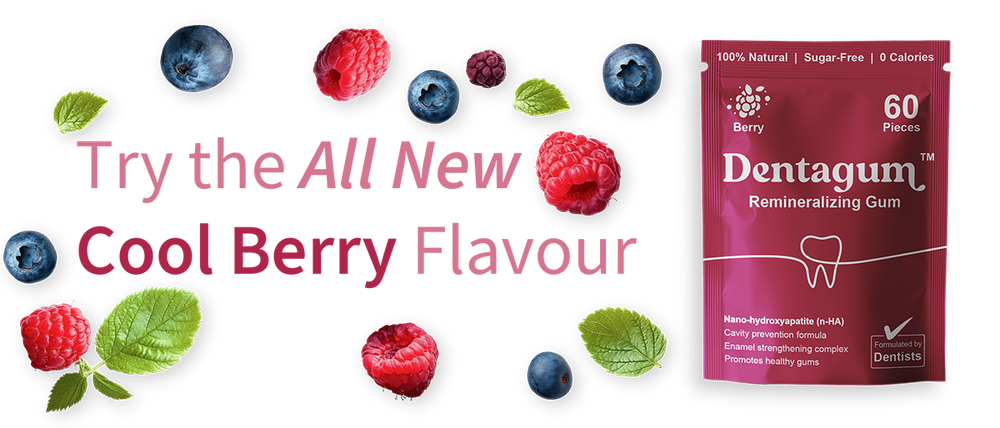
The habit framework: after every eating occasion, chew two pieces of Dentagum for 10 to 20 minutes. This does not eliminate the acid attack. Nothing does that except not eating. What it does is compress the recovery timeline, add active antibacterial action during the recovery window, and deliver remineralization mineral during the period when enamel is most ready to accept it. For people who graze frequently and cannot reorganize their eating patterns around defined mealtimes, this is the single most impactful inter-meal oral health habit available.
The Practical Framework
The research produces a clear, actionable hierarchy. In order of impact:
First, reduce the number of eating occasions where possible. The most impactful change for your teeth is also one of the most studied from a metabolic standpoint: eating at defined mealtimes with no fermentable carbohydrates between them. Three to four eating occasions per day with 3 to 4 hour gaps between them allows full pH recovery and meaningful remineralization between each acid challenge. This is not about reducing the total amount you eat. It is about consolidating it into fewer occasions.
Second, when between-meal eating does happen, choose strategically. Plain water, cheese, raw vegetables, or nuts create far less acid challenge than crackers, fruit, or anything sweetened. If you need to snack, choose foods with minimal fermentable carbohydrates.

Third, drink quickly rather than sipping continuously. For coffee, tea, sports drinks, and anything acidic or sweetened, finishing the drink in a single sitting creates one acid event with one recovery window. Sipping over an hour creates a sustained acid exposure that prevents any recovery.
Fourth, follow every eating occasion with 10 to 20 minutes of remineralizing gum. This is the intervention that fits into any lifestyle regardless of how many eating occasions occur, because it doesn't require changing what or when you eat. It adds a recovery-accelerating, bacteria-suppressing, enamel-mineralizing habit to whatever pattern you already have.
Frequently Asked Questions
Why does eating frequency matter more than sugar amount for cavities?
Each eating occasion creates one Stephan curve acid attack: a 20 to 40 minute window where plaque pH drops below 5.5 and enamel demineralizes. The frequency of these attacks determines the total time teeth spend below pH 5.5 per day, which is the primary driver of cavity formation. The Vipeholm study (Gustafsson et al., 1954) confirmed this directly: adding 300g of sugar to meals didn't significantly increase cavities, while sugary snacks between meals did. The ADA also states that increased frequency of sugar consumption may be more important in predicting caries risk than total sugar consumption.
What is the Vipeholm study and why does it matter?
The Vipeholm study (Gustafsson et al., Acta Odont Scand, 1954) was a five-year controlled dietary study of 436 participants in Sweden that systematically varied the amount, frequency, and form of sugar in their diets while monitoring dental caries. Its key finding: 300g of additional sugar consumed at mealtimes had little effect on cavity rates, while sugary snacks consumed between meals significantly increased them. It remains one of the most cited studies in dental nutrition and is the foundational evidence for the frequency principle. It was ethically controversial due to the use of institutionalized participants with intellectual disabilities, but its scientific findings have been widely replicated and are broadly accepted.
How many eating occasions are Americans having per day?
According to USDA NHANES 2017-March 2020 data (published April 2024), 78% of US adults eat two or more snacks on any given day, with the mean snacking frequency rising from 1.0 to 2.2 snacks per day since 1977. The 2024 IFIC Food and Health Survey found 74% of Americans snack at least once daily, with 56% replacing traditional meals with snacking or smaller meals. When meals and snacks are combined, most US adults have 5 to 7 or more eating occasions per day, creating 5 to 7 or more acid attacks on enamel per day.
If I'm going to snack, what should I eat to minimize dental damage?
Choose foods with minimal fermentable carbohydrates. Cheese (neutralizes acid and provides calcium), raw vegetables, nuts, and plain water create little to no acid challenge. Avoid sweet, starchy, or acidic options between meals. If you do consume something fermentable, compress the exposure by eating it quickly rather than grazing, and follow with remineralizing gum to stimulate saliva and accelerate pH recovery. The 3 to 4 hours between eating occasions recommended by dental nutrition guidelines allows full pH recovery; anything consumed within that window extends the current acid challenge rather than creating a separate one.
Does chewing gum after every snack actually help?
Yes, with direct clinical evidence. Manning and Edgar (Br Dent J, 1993) confirmed that chewing sugar-free gum after eating significantly shortened the time spent below pH 5.5 versus not chewing. Beiswanger et al. (JADA, 1998) found measurable reduction in clinical caries incidence in patients who chewed sugar-free gum after meals. The ADA endorses chewing sugar-free gum for 20 minutes after eating specifically for this acid-neutralization function. Xylitol in the gum adds antibacterial activity against S. mutans that works independently of pH, and nano-HAp delivers remineralization mineral during the recovery window. The habit fits any snacking pattern because it follows each occasion without requiring you to change what you eat.
How long should I wait between eating occasions to protect my teeth?
The PMC dietary habits review and ADA guidance both suggest a minimum of 3 to 4 hours between eating occasions for full pH recovery and meaningful remineralization between acid challenges. The Stephan curve recovery to baseline takes 30 to 40 minutes from the last acid exposure under normal salivary conditions, but 3 to 4 hours between full meals allows genuine remineralization to occur. If snacking must happen at shorter intervals, using remineralizing gum immediately after each occasion compresses the acid attack window and provides some mineral support during recovery, partially compensating for the shorter gap.
Bottom Line
The most counterintuitive finding in dental research is also the most consistent: how often you eat matters more than how much sugar you consume. The Vipeholm study proved it in 1954. The Stephan curve explains the mechanism. The modern epidemiology confirms it at population scale. Every eating occasion creates a fresh acid attack on enamel that lasts 20 to 40 minutes. Grazing continuously creates near-constant demineralization with no recovery window. Three defined meals per day create three acid attacks with long recovery periods between them.
The US eating pattern has evolved dramatically toward more frequent eating occasions, from an average of one snack per day in 1977 to more than two today, with 56% of Americans now replacing some meals with snacking entirely. The cavity statistics reflect this. The intervention with the most leverage is also the one dental professionals have consistently recommended for decades: consolidate eating occasions where possible, choose water or low-fermentable options between meals, and follow every eating occasion with remineralizing gum that stimulates saliva, suppresses bacteria, and delivers mineral while the recovery window is open.
Try Dentagum: Chew After Every Eating OccasionResearch Summary
This article draws on landmark dental nutrition research and modern epidemiological data. Key sources include: Gustafsson BE et al. The Vipeholm dental caries study: the effect of different levels of carbohydrate intake on caries activity in 436 individuals observed for five years. Acta Odont Scand. 1954;11:232-364 (foundational frequency evidence: 300g sugar at meals no caries increase; between-meal snacks significant increase); Oxford Reference, Vipeholm study entry; PubMed 2704974 (Rugg-Gunn, "Frequent sugar intake: then and now": confirms between-meal frequency finding "is generally accepted"); van Loveren C. Sugar Restriction for Caries Prevention: Amount and Frequency. Caries Research. 2019;53:168-182 (45-minute interval threshold; correlation coefficients for eating frequency vs DMFT); ADA Nutrition and Oral Health (frequency more important than amount in predicting caries risk; 30-minute pH drop timeline); PMC dietary habits and oral health review, PMC10674309, 2024 (3-4 hours between meals recommendation; high-sugar snacks between meals greatest threat); Alosaimi N, Bernabe E. Amount and Frequency of Added Sugars Intake and Their Associations with Dental Caries in US Adults. IJERPH. 2022;19:4511. NHANES 2011-2016, 10,514 adults; USDA FSRG Dietary Data Brief (snacking increased from 1.0 to 2.2/day 1977-2007; 78% of US adults eat 2+ snacks/day, NHANES 2017-March 2020, published April 2024); IFIC 2024 Food and Health Survey (74% Americans snack daily; 56% replace meals with snacking); IFIC 2025 Survey (40% snack multiple times daily; 70%+ since 2022); PMC narrative review on US eating frequency, PMC9469881 (90%+ consume 2-3 snacks on any given day, NHANES 2013-2016); Manning and Edgar Br Dent J 1993 (sugar-free gum after meals accelerates pH recovery); Beiswanger et al. JADA 1998 (sugar-free gum after meals reduces clinical caries incidence); Söderling et al. BMC Oral Health 2025 (xylitol gum vs S. mutans). All Dentagum ingredient statistics from ingredient-level published research; not Dentagum product trial claims.
References
- Gustafsson BE, Quensel C-E, Lanke LS, Lundqvist C, Grahnen H, Bonow BE, Krasse B. The Vipeholm dental caries study: the effect of different levels of carbohydrate intake on caries activity in 436 individuals observed for five years. Acta Odontol Scand. 1954;11(3-4):232-364. PMID: 13196991. [Foundational frequency evidence: 300g additional sugar at meals did not increase caries; between-meal snacks significantly increased caries; sticky form between meals produced highest caries rates]
- Rugg-Gunn AJ. Frequent sugar intake: then and now: interpretation of the main results of the Vipeholm Study. Scand J Dent Res. 1989;97:103-109. PubMed 2704974. [Modern confirmation that between-meal frequency finding "is generally accepted"]
- Oxford Reference. "Vipeholm study." A Dictionary of Dentistry. ["Risk of sugar increasing caries is greatest if consumed between meals and in form with tendency to be retained on tooth surfaces"]
- van Loveren C. Sugar Restriction for Caries Prevention: Amount and Frequency. Which Is More Important? Caries Research. 2019;53(2):168-182. DOI: 10.1159/000495665. [300g sugar at meals: no caries increase; between-meal frequency: significant increase; 45-minute interval threshold; DMFT correlation coefficients for eating frequency]
- ADA. Nutrition and Oral Health. ada.org. [Frequency of sugar consumption may be more important than amount in predicting caries risk; 30-minute pH drop rationale; additional snacking between meals associated with caries development]
- Dietary Habits and Oral Hygiene as Determinants of the Incidence and Intensity of Dental Caries. PMC. PMC10674309. 2024. [3-4 hour interval recommended between meals; high-sugar snacks between meals: greatest oral health threat; short intervals interfere with salivary anti-cariogenic action]
- Alosaimi N, Bernabe E. Amount and Frequency of Added Sugars Intake and Their Associations with Dental Caries in United States Adults. IJERPH. 2022;19(8):4511. PMC9026961. [10,514 US adults, NHANES 2011-2016; amount positively associated with DMFS; frequency episodes/day also associated with caries]
- Sebastian RS, Hoy MK, Murayi T, Goldman JD, Moshfegh AJ. Snack Consumption by U.S. Adults: What We Eat in America, NHANES 2017-March 2020. FSRG Dietary Data Brief No. 53. April 2024. [78% of US adults eat 2+ snacks on any given day; snacking the norm across all age, race, income groups]
- USDA Food Surveys Research Group. Snacking Patterns of U.S. Adults. FSRG Dietary Data Brief No. 4. [Mean snacking frequency increased from 1.0 to 2.2/day; percentage snacking on any day rose from 59% to 90%; 73% snacked once or not at all in 1977]
- International Food Information Council (IFIC). 2024 IFIC Spotlight Survey: American Consumer Perceptions of Snacking. August 2024. [74% of Americans snack at least daily; 56% replace traditional meals with snacking or smaller meals]
- International Food Information Council (IFIC). 2025 IFIC Food and Health Survey. [70%+ of Americans snack at least once daily since 2022; 40% snack multiple times per day; 30% snack once daily]
- Hess JM, Slavin JL, Steele EM et al. Frequency of Eating in the US Population: A Narrative Review of the 2020 Dietary Guidelines Advisory Committee Report. PMC. PMC9469881. 2022. [NHANES 2013-2016: >90% of Americans consume 2-3 snacks on a given day; 28% consume 2 meals, 64% consume 3 meals]
- Manning RH, Edgar WM. pH changes in plaque after eating snacks and meals, and their modification by chewing sugared- or sugar-free gum. Br Dent J. 1993;174:241-244. [Sugar-free gum after eating significantly accelerated pH recovery vs. no gum]
- Beiswanger BB, Boneta AE, Mau MS et al. The effect of chewing sugar-free gum after meals on clinical caries incidence. J Am Dent Assoc. 1998;129:1623-6. [Clinical trial: measurable reduction in caries incidence; sugar-free gum after meals]
- Söderling E, Pienihäkkinen K. Specific effects of xylitol chewing gum on mutans streptococci levels, plaque accumulation and caries occurrence: a systematic review. BMC Oral Health. 2025. [Xylitol reduced S. mutans in 12 of 14 studies vs. sorbitol gum]
