
Why Holistic and Biological Dentists Recommend Hydroxyapatite
Biological and holistic dentists are one of the fastest-growing segments of US dental practice, and they almost universally recommend hydroxyapatite over fluoride. This article explains why: what the biological dentistry philosophy actually is, the four core principles driving their product choices, what the IABDM explicitly published about hydroxyapatite in 2025, the published PMC evidence on nano-HAp and the oral microbiome, and the important caveat that the ADA does not recognize it as a specialty.

Biological and holistic dentists recommend hydroxyapatite because it aligns with every core principle of their philosophy: it is the mineral teeth are made from (biomimetic), it does not disrupt the oral microbiome the way broad-spectrum antimicrobials do (microbiome-preserving), it supports the body's own remineralization process rather than imposing a synthetic chemical (biocompatible), and it carries no fluorosis risk or swallowing concern (non-toxic). The International Academy of Biological Dentistry and Medicine explicitly named hydroxyapatite toothpaste as the preferred solution in biological dentistry for enamel protection. The science supports this: three independent randomized controlled trials show nano-HAp non-inferior to fluoride for cavity prevention, and published PMC evidence confirms nano-HAp reduces S. mutans adhesion without the oral microbiome disruption seen with chlorhexidine and other broad-spectrum antimicrobials. The biological dentistry movement is large and growing fast, and hydroxyapatite has become one of its defining product recommendations.
You may have heard of holistic or biological dentists from a friend, seen them mentioned in wellness content, or searched for one after a conventional dental experience that felt too focused on drilling and filling rather than preventing damage in the first place. Or you may have noticed that many dentists recommending hydroxyapatite describe themselves with one of these terms, and wondered what the connection is.
This article explains what biological and holistic dentistry actually means, the principles that drive its product recommendations, why hydroxyapatite specifically fits those principles, what the underlying science says, and where a remineralizing gum fits into the picture. The goal is a clear, evidence-grounded explanation, not advocacy for the movement and not dismissal of it.
1. What Biological and Holistic Dentistry Actually Is
Biological dentistry, holistic dentistry, and integrative dentistry are terms used more or less interchangeably to describe a philosophy of dental practice that treats the mouth as part of the whole body rather than as an isolated set of structures to be repaired. The underlying premise is that materials and procedures used in the mouth have systemic implications that conventional dentistry has not always adequately considered, and that dental care should be guided by biocompatibility, minimal invasion, and prevention rather than symptom management and restoration.
In practical terms, a biological dentist is likely to: avoid or remove mercury amalgam fillings using strict safety protocols; choose ceramic, composite, or zirconia materials over metal for restorations; use ozone therapy for disinfection rather than stronger chemical antimicrobials; recommend hydroxyapatite over fluoride for remineralization; give significant weight to nutrition, lifestyle, and the oral microbiome in their treatment planning; and approach cavities with a remineralize-first mindset before recommending drilling.
What it is not: it is not a single coherent system with standardized training and credentialing like an ADA-recognized specialty. It is, as the IAOMT itself puts it, "a thought process and an attitude that can apply to all facets of dental practice." Individual practitioners vary substantially in how they implement these principles, and the label is used by dentists with very different levels of commitment to the underlying philosophy.
The movement has grown substantially in the US over the past decade. Over 60 million Americans now spend money on complementary healthcare, and that shift in consumer demand has fed demand for dentists who reflect the same integrated, ingredient-conscious philosophy in oral care that many of these consumers already bring to their skincare, nutrition, and general healthcare choices. Searching for a biological or holistic dentist in most major US cities now returns dozens of results.
2. The Four Core Principles That Drive Product Choices

Understanding why biological dentists recommend specific products requires understanding the principles that guide their recommendations. There are four that matter most for how they evaluate oral care ingredients.
Biocompatibility
Materials and ingredients should work with the body's biology rather than impose foreign chemistry on it. This is the principle that drives the move away from mercury amalgam: mercury is a neurotoxin regardless of whether its vapor release from fillings causes measurable harm at the levels involved, and a biocompatible alternative (ceramic, composite) exists. Applied to daily oral care, the biocompatibility principle asks: is this ingredient biologically alien to the oral environment, or is it something the body recognizes and works with? Nano-hydroxyapatite passes this test more cleanly than fluoride because hydroxyapatite is the mineral teeth are made from. Fluoride is not naturally present in enamel in significant quantities: it is introduced externally to modify the mineral structure of enamel into something more acid-resistant. Both achieve cavity prevention, but one does so by delivering what enamel is made from, the other by chemically converting the surface.
Minimally invasive, prevention-first approach
Biological dentistry heavily emphasizes arresting and reversing early enamel damage before it requires drilling. This is sometimes called a "remineralize-first" approach to early caries. Rather than monitoring a small white spot lesion and waiting until it progresses to a cavity requiring a filling, the biological dentist looks for active remineralization strategies: dietary changes, salivary analysis, hydroxyapatite-based products, and sometimes ozone therapy. The Emerald Publishing international hydroxyapatite symposium report explicitly links hydroxyapatite to minimally invasive dentistry, noting that the clinical goal is to preserve as much tooth tissue as possible, including tissue altered by initial caries that still shows the ability to remineralize. Hydroxyapatite supports this remineralize-first philosophy directly.
Non-toxicity and systemic safety
Materials should not introduce substances with known or plausible systemic toxicity. This is the primary driver of the fluoride skepticism among biological dentists: not the topical fluoride in toothpaste, which stays on the tooth surface, but the systemic fluoride ingested through water and supplements, which has faced increasing scrutiny through the 2025 FDA actions and the 2024 National Toxicology Program report. Hydroxyapatite carries no systemic toxicity concern: if swallowed, the nanoparticles rapidly dissolve into calcium and phosphate in stomach acid. There is no fluorosis risk. There is no poison-control warning. For biological dentists advising patients who are anxious about systemic chemical exposure, hydroxyapatite removes the concern entirely.
Oral microbiome preservation
This is the principle that has gained the most scientific momentum in recent years and that most clearly distinguishes the biological approach from conventional antimicrobial dentistry. The conventional approach to oral bacterial management uses broad-spectrum antimicrobials: chlorhexidine, stannous fluoride, sodium lauryl sulfate, and similar agents that kill bacteria across the board. Biological dentistry argues, and the published science increasingly supports, that this disrupts the oral microbiome in ways that can be counterproductive: eliminating beneficial bacterial species alongside harmful ones, creating the conditions for dysbiosis, and potentially worsening the long-term oral health environment.
3. Organizations and Certifications: How to Navigate Them
Two organizations primarily define the biological dentistry space in the US, and understanding what they are and are not matters for evaluating practitioners.
The International Academy of Oral Medicine and Toxicology (IAOMT) focuses on evidence review and advocacy around oral medicine toxicology, with a primary emphasis on mercury amalgam and fluoride. It offers the SMART certification (Safe Mercury Amalgam Removal Technique), which is a specific procedural certification for safe mercury filling removal. IAOMT base-level membership is open to all dentists and does not in itself indicate training or depth of commitment to biological dentistry principles. IAOMT is a global organization with chapters in many countries.
The International Academy of Biological Dentistry and Medicine (IABDM), established in 1985 as the American Academy of Biological Dentistry, is a network of dentists and allied health professionals committed to integrating whole-body health and mouth care. It offers certification programs that indicate greater commitment to the field's core principles. The IABDM has explicitly published guidance recommending hydroxyapatite toothpaste as the preferred solution in biological dentistry for enamel protection, naming it as the option that provides protection without fluoride's systemic concerns.
Neither IAOMT nor IABDM membership alone guarantees any specific standard of care. As one holistic dentistry resource notes, any dentist can say they practice biological or holistic dentistry, whether they actually do or not. When evaluating a specific practitioner, the specific certifications and the content of their clinical philosophy matter more than the label.
4. The Important Caveat: ADA Does Not Recognize It as a Specialty
The article's brief requires stating this clearly, and it is worth stating clearly regardless: the ADA does not recognize biological or holistic dentistry as a dental specialty. The ADA currently recognizes twelve dental specialties, including pediatric dentistry, orthodontics, oral surgery, periodontics, and endodontics, among others. Biological/holistic dentistry is not among them and has not gone through the recognition process for a new dental specialty.
The IAOMT itself acknowledges this directly: "Biological Dentistry is not a separate, recognized specialty of dentistry, but it is a thought process and an attitude that can apply to all facets of dental practice."
What this means in practice: there is no standardized curriculum for training biological dentists, no ADA-accredited residency program, and no uniform standard for what constitutes competency in the field. A dentist who has completed IABDM certification has demonstrated commitment to specific principles and completed specific training within that organization's framework, but that framework is not subject to the same ADA oversight as recognized specialty training.
This is not a dismissal. Many conventional dental specialties were once unrecognized before building the evidence base and organizational infrastructure for formal recognition. And many principles of biological dentistry, particularly the oral-systemic health connection and the push toward minimally invasive care, are now supported by mainstream dental research in ways they were not twenty years ago. It is simply an important piece of context for evaluating the field and its practitioners.
Because the term is unregulated, any dentist can describe themselves as holistic or biological without specific training. When evaluating a practitioner, ask specifically about their certifications (IABDM, IAOMT SMART), their specific protocols for mercury removal, their approach to fluoride and alternative remineralization, and their evidence base for those positions. A practitioner with genuine training in the field will be able to answer these questions specifically. The label alone is not sufficient due diligence.
5. Why Biological Dentists Specifically Recommend Hydroxyapatite
Against this philosophical backdrop, hydroxyapatite's appeal to biological dentists becomes straightforward to understand. It satisfies all four of the core principles simultaneously, which is unusual for any single oral care ingredient.
It is biocompatible in the most literal sense: it is the same mineral enamel is primarily composed of. Using hydroxyapatite in oral care is not introducing a foreign chemical to a biological surface; it is returning the surface's own material to it. This is why the term "biomimetic" appears repeatedly in the hydroxyapatite literature: it mimics the biological process of enamel remineralization using the biological material that enamel is made from.
It supports minimally invasive practice directly. Biological dentists who want to arrest early white spot lesions before they become cavities needing fillings need an active remineralizing agent that can reach early subsurface lesions. Nano-HAp's particle size, 20 to 100 nanometres, allows it to penetrate enamel microporosities and deposit mineral in early subsurface damage. Fluoride's chemistry is limited to the enamel surface. For the remineralize-first approach to early caries that biological dentists favor, nano-HAp's subsurface mineral deposition is a genuine mechanistic advantage. The Emerald Publishing symposium explicitly linked nano-HAp and ozone therapy as the combination producing the best remineralization effect in early approximal caries lesions in a cited trial.
It is non-toxic systemically. Swallowed nano-HAp is calcium and phosphate, the same ions in bone and enamel. There is no fluorosis risk, no neurological concern, no endocrine disruption debate. For practitioners who have built their philosophy around minimizing systemic chemical exposure, recommending an ingredient with zero toxicological concern is straightforwardly consistent.
And it preserves the oral microbiome, which is the principle where the most recent science has been most compelling. This is covered in the next section.
6. The Oral Microbiome Argument: Why It Matters for Product Choice

The oral microbiome is one of the most scientifically active areas in dentistry right now, and it is where the biological dentistry argument for hydroxyapatite over conventional antimicrobials has the most recent research support.
The conventional approach to oral bacterial management uses agents that kill bacteria broadly. Chlorhexidine is the gold standard antimicrobial in dentistry: it is highly effective at reducing plaque bacteria, but it does so without discrimination between harmful and beneficial species, and its extended use is associated with oral dysbiosis, tooth staining, and altered taste. Stannous fluoride has similar antimicrobial action but similarly broad bacterial effects. Sodium lauryl sulfate, the detergent foaming agent in many toothpastes, strips mucosal protection and disturbs oral bacterial populations.
The argument from biological dentistry is that this broad-spectrum approach treats the symptom (bacterial plaque) without considering the systemic effect (disruption of the oral microbiome). A healthy oral microbiome has beneficial species that compete with cariogenic bacteria, maintain mucosal health, and contribute to systemic nitric oxide production and cardiovascular health. Wiping out this ecosystem repeatedly with broad-spectrum antimicrobials may produce short-term plaque reduction while undermining the longer-term microbial ecology of the mouth.
Hydroxyapatite's bacterial mechanism is qualitatively different. Published PMC research (PMC6777166) specifically comparing nano-HAp to conventional antimicrobials for oral biofilm management found that "HAp particles in oral care products lead to a reduction in bacterial attachment to enamel surfaces in situ without having pronounced antibacterial effects or showing unwanted side effects such as tooth discoloration. Furthermore, antibacterial agents might lead to dysbiosis of the oral ecology, which was recently discussed regarding pros and cons." A 2025 PMC paper (PMC12156372) on biomimetic hydroxyapatite and dental stain management further confirmed that, in contrast to frequently used antibacterial agents, "HAP particles in oral care products lead to a reduction in bacterial attachment to enamel surfaces without unwanted side effects... antibacterial agents could lead to dysbiosis of oral ecology, which, in contrast, is not observed in the case of biomimetics."
The mechanism is physical rather than chemical. Nano-HAp particles adsorb onto the pellicle layer on enamel and reduce the surface available for bacterial adhesion. S. mutans and other cariogenic bacteria find it harder to attach. But this is a physical, selective effect, not a chemical kill that affects all bacterial species equally. Beneficial bacteria that do not rely on the same adhesion mechanisms are unaffected. Figures from ingredient research.
This is a meaningful distinction, and it is increasingly recognized in the mainstream dental literature as well as in biological dentistry circles. It is one of the reasons why hydroxyapatite is now recommended not just by biological dentists but by an expanding number of conventional dental hygienists and preventive dentistry practitioners who are attentive to the oral microbiome literature.
Sources: PMC6777166 and PMC12156372. Figures from ingredient research.
7. What the Published Science Actually Shows
Presenting the biological dentistry case for hydroxyapatite requires being honest about where the evidence is strong and where it is weaker, to respect the intelligence of an audience who is specifically interested in evidence-based choices.
Where the evidence is strong: Nano-HAp's cavity-prevention efficacy in adults with low to moderate risk has been shown in three independent randomized controlled trials, including the 18-month double-blind multicenter RCT published in Frontiers in Public Health (2023), which found fluoride-free nano-HAp non-inferior to standard 1,450 ppm fluoride toothpaste. A systematic review and meta-analysis across 44 clinical trials (Limeback, Enax, and Meyer, Biomimetics 2023) confirmed significant sensitivity reduction. The oral microbiome selectivity finding from PMC research is peer-reviewed, not anecdotal. The swallowing safety from the EU SCCS is formal regulatory confirmation. Figures from ingredient research.
Where the evidence is still developing: Long-term population-level data for nano-HAp comparable to the 75-plus years of fluoride epidemiology does not yet exist. Most RCTs are 18-month trials in selected adult populations: they do not yet tell us what happens over decades or in the diversity of populations that fluoride research covers. The biological dentistry community sometimes presents hydroxyapatite as definitively better than fluoride across all dimensions; the honest version is that it is comparable for cavity prevention in low-to-moderate risk adults, superior for sensitivity (via tubule occlusion), superior for swallowing safety, and different on microbiome impact, but the long-term population evidence that would allow definitive comparative claims is not yet complete.
What the biological dentistry community's own organization states: The IABDM published in September 2025 that "hydroxyapatite toothpaste works just as effectively [as fluoride] by restoring enamel and blocking bacteria naturally. Unlike fluoride, hydroxyapatite is non-toxic, safe for all ages, and beneficial for sensitive teeth." The framing reflects genuine evidence for the cavity-prevention comparison while emphasizing the non-toxicity and sensitivity advantages where nano-HAp has clear differentiation.
8. Beyond Toothpaste: The Between-Brushing Gap Biological Dentists Often Address

Biological dentists who emphasize prevention and remineralization typically go beyond toothpaste recommendations. The reason: toothpaste covers two brief brushing sessions per day. Most enamel damage happens between those sessions, in the 20 to 40 minutes after each meal when bacterial acid production peaks and oral pH drops below the 5.5 threshold for enamel demineralization. This is the post-meal acid window, and it is unaddressed by toothpaste timing regardless of what active ingredient the toothpaste contains.
Biological dentists who address this typically recommend one or more of the following for the between-brushing window: xylitol gum or lozenges to suppress S. mutans and stimulate saliva, ozone-based oral rinses to reduce bacterial load without broad-spectrum antimicrobial effects, alkalizing protocols to restore pH faster after acid events, and sometimes specific dietary recommendations such as cheese after meals (which stimulates alkaline saliva and delivers calcium and phosphate). The ADA itself endorses chewing sugar-free gum for 20 minutes after meals for saliva stimulation and cavity prevention, which is consistent with the biological dentistry framework.
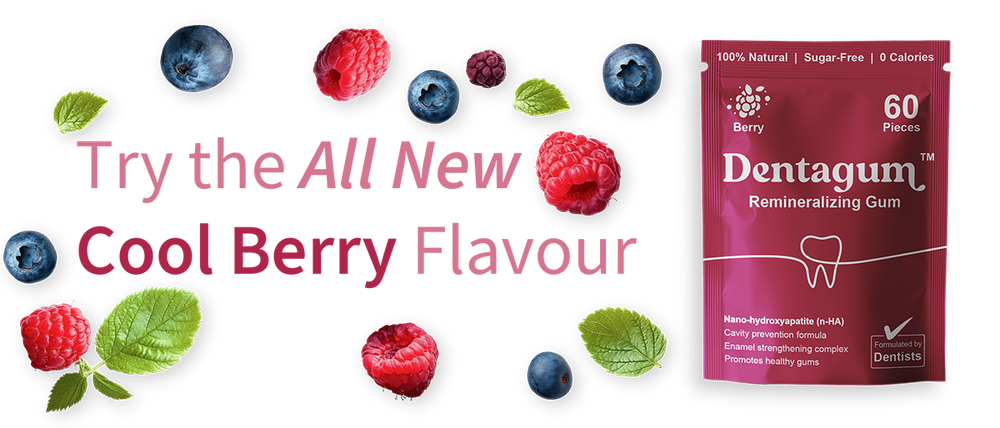
A remineralizing gum that combines nano-HAp with xylitol specifically aligns with this philosophy: it addresses the post-meal window using two ingredients that biological dentists already recommend (nano-HAp for enamel mineral delivery, xylitol for targeted S. mutans suppression without microbiome disruption), in a format that requires no additional time in a bathroom. The natural chicle and mastic gum base, free from petroleum-derived synthetic polymers, further aligns with the biocompatible-materials principle. Read more about why the gum base matters in our article on why Dentagum uses a natural gum base.
Mastic resin from the Greek island of Chios is one of the oldest documented oral health ingredients, with 14 clinical studies of its own showing antibacterial, anti-inflammatory, and anti-plaque properties. Its documented antimicrobial action is selective and plant-derived rather than synthetic. It is exactly the kind of ingredient that aligns with the biological dentistry philosophy: natural origin, oral health benefit, and no systemic toxicity concern. As a gum base component, it adds active oral health benefit without any of the concerns associated with petroleum-derived synthetic polymer bases found in commercial gum. See our full article on what biomimetic oral care means and why it matters.
9. How Dentagum Aligns with Biological Dentistry Principles
Dentagum Remineralizing Chewing Gum was not formulated with a biological dentistry label in mind, but its formulation reflects the same principles that drive biological dentistry's product recommendations, because those principles track closely with the evidence on what oral care ingredients are safest, most evidence-backed, and most consistent with how the oral environment actually works.
The active remineralizing ingredient is nano-hydroxyapatite at 5 percent concentration (about 90mg per piece), the same mineral enamel is made from, at the particle size that allows subsurface mineral deposition. No fluoride. The primary sweetener is organic xylitol, which suppresses S. mutans through a targeted PTS mechanism rather than broad-spectrum antimicrobial action, and organic erythritol, which further inhibits S. mutans adhesion to tooth surfaces. The gum base is organic chicle from the sapodilla tree and mastic resin: both plant-derived, both biodegradable, and mastic carrying 14 clinical studies of its own. No petroleum-derived synthetic polymers. No aspartame or saccharin. No artificial colors. Propolis provides additional antimicrobial coverage from a natural source. Third-party heavy metals testing from an ISO 17025-accredited laboratory (Light Labs) is published.
This is not the formulation of a product designed to appeal to a label. It is a formulation built around what the ingredient evidence says works, and it happens to align closely with what biological and holistic dentists recommend because both are following the same underlying evidence. For the between-brushing window that no toothpaste addresses, Dentagum gives the biological-dentistry-aligned patient a practical, evidence-backed daily habit. You can see the full evidence behind every ingredient in our article on Dentagum ingredients: every one explained with the science.
Shop Dentagum Remineralizing Gum10. Frequently Asked Questions
What is a biological dentist?
A biological dentist (also called a holistic or integrative dentist) practices under a philosophy that treats the mouth as part of the whole body, emphasizing biocompatible materials, minimally invasive procedures, prevention over restoration, and the oral-systemic health connection. In practice, this typically means mercury-free amalgam removal protocols, ceramic restorations, fluoride-free remineralization strategies (usually hydroxyapatite-based), ozone therapy, nutritional counseling, and attention to the oral microbiome. The term is not regulated by the ADA, which does not recognize biological dentistry as a formal specialty, so practitioners vary significantly in their training and approach. Certification from IABDM or IAOMT SMART provides some indication of commitment to the field's core principles.
Why do holistic dentists recommend hydroxyapatite instead of fluoride?
For four reasons that align with their core philosophy. First, hydroxyapatite is the mineral enamel is made from, making it biomimetic rather than chemically foreign. Second, it carries no systemic toxicity concern: swallowed nano-HAp dissolves into calcium and phosphate with no fluorosis risk. Third, it supports the remineralize-first approach to early caries by depositing mineral directly into subsurface lesions, not just surface-converting them as fluoride does. Fourth, it reduces bacterial adhesion without disrupting the oral microbiome the way broad-spectrum antimicrobials do. The IABDM published in 2025 that hydroxyapatite is their preferred solution for enamel protection in biological dentistry.
Is biological dentistry recognized by the ADA?
No. The ADA does not recognize biological or holistic dentistry as a dental specialty. There are twelve ADA-recognized specialties; biological dentistry is not among them. The IAOMT itself acknowledges this on its own website. This means there is no standardized training path, no ADA-accredited residency, and no uniform standard for the label. When evaluating a biological dentist, look for specific certifications (IABDM, IAOMT SMART), ask about their specific clinical protocols, and evaluate the evidence basis for their recommendations rather than relying on the label alone.
What does "biomimetic" mean in oral care?
Biomimetic means designed to mimic the body's own biological structures and processes. In oral care, it refers to products that replicate the mineral composition and remineralization mechanisms of natural tooth enamel rather than introducing synthetic chemicals. Nano-hydroxyapatite is the defining biomimetic oral care ingredient: it is synthesized to replicate hydroxyapatite, the mineral that enamel is naturally made from, at particle sizes that integrate with the enamel crystal structure the same way the body's natural remineralization process does. The contrast is with fluoride, which converts enamel's surface mineral into a different (fluorapatite) and more acid-resistant form rather than rebuilding what was there.
Does nano-hydroxyapatite disrupt the oral microbiome?
Published PMC research specifically addressing this question found that nano-HAp reduces bacterial attachment to enamel surfaces without killing bacteria broadly and without the dysbiosis effect observed with conventional antimicrobials like chlorhexidine. The mechanism is physical: nano-HAp particles adsorb onto the enamel pellicle and reduce the surface available for bacterial adhesion. Cariogenic bacteria find it harder to attach, but this is a selective, physical effect rather than a chemical kill that eliminates beneficial bacterial species. Two PMC papers (PMC6777166 and PMC12156372) specifically note the contrast with conventional antimicrobials on this point. Figures from ingredient research.
What is the difference between holistic dentistry and biological dentistry?
The terms are used more or less interchangeably. Both refer to the same underlying philosophy: mouth-body connection, biocompatible materials, minimally invasive procedures, microbiome preservation, and prevention-first care. Some practitioners prefer "biological" to emphasize the science-based nature of the approach; others prefer "holistic" to emphasize its whole-body context. "Integrative dentistry" is a third term sometimes used. There is no formal distinction between them in terms of training, certification, or scope of practice. When evaluating any practitioner using any of these labels, the specific clinical protocols and evidence basis matter more than which term they choose.

The Bottom Line
Biological and holistic dentists recommend hydroxyapatite because it satisfies all four principles their philosophy requires: biocompatible (it is the mineral enamel is made from), minimally invasive (it supports subsurface remineralization of early lesions), non-toxic (non-fluorosis-risk, safe if swallowed), and microbiome-preserving (reduces S. mutans adhesion without the dysbiosis seen with broad-spectrum antimicrobials). The science behind these claims is published, peer-reviewed, and increasingly cited in mainstream preventive dentistry as well as in the biological dentistry community. The IABDM formally named hydroxyapatite its preferred solution for enamel protection in biological dentistry in 2025.
The caveat worth holding: biological dentistry is not an ADA-recognized specialty, the label is unregulated, and individual practitioners vary substantially. Hydroxyapatite's evidence base for cavity prevention is strong for low-to-moderate risk adults but does not yet have the multi-generational population data that fluoride's 75-plus year track record provides. The honest position is that nano-HAp is the best-evidenced fluoride-free choice, not a proven improvement across every population or risk level. For the deeper evidence review, see our article on nano-hydroxyapatite vs fluoride.
Shop Dentagum Remineralizing GumResearch Summary
- IAOMT (iaomt.org). Official position: "Biological Dentistry is not a separate, recognized specialty of dentistry, but it is a thought process and an attitude that can apply to all facets of dental practice." Confirms ADA non-recognition. Focuses on mercury-free and mercury-safe dentistry, fluoride concerns.
- IABDM (iabdm.org, September 2025). Article: "Why Biological Dentistry Recommends Hydroxyapatite Toothpaste for Safer Oral Care." Explicitly named hydroxyapatite as the preferred solution in biological dentistry for enamel protection. Claims non-toxicity and biocompatibility as primary advantages over fluoride.
- Holistic Dental Center NJ (2024). Analysis: "any dentist can say they do holistic or biological dentistry, whether they actually do or not." IABDM founded 1985 as American Academy of Biological Dentistry. SMART certification from IAOMT as the primary procedural certification in the field.
- PMC6777166. Hydroxyapatite in Oral Biofilm Management: HAp particles reduce bacterial attachment in situ without pronounced antibacterial effects and without tooth discoloration. Conventional antimicrobials might lead to dysbiosis; this is not observed with biomimetics. Anti-adherent properties comparable to chlorhexidine gold standard. Figures from ingredient research.
- PMC12156372 (June 2025). Biomimetic hydroxyapatite and dental stains in smokers: HAP particles reduce bacterial attachment without unwanted side effects; antibacterial agents could lead to dysbiosis of oral ecology, which "in contrast, is not observed in the case of biomimetics." Figures from ingredient research.
- Emerald Publishing / Bioinspired Biomimetic and Nanobiomaterials (2024). International hydroxyapatite symposium report: linked nano-HAp to minimally invasive dentistry; goal is to preserve tooth tissue altered by initial caries that still shows ability to remineralize. Nano-HAp + ozone therapy combination produced best remineralization effect in approximal caries lesions.
- Paszynska E et al. Frontiers in Public Health (2023). 18-month double-blind RCT: fluoride-free nano-HAp non-inferior to 1,450 ppm fluoride toothpaste for DMFS in adults. Third such non-inferiority RCT. Figures from ingredient research.
- Limeback H, Enax J, Meyer F. Biomimetics (2023). Systematic review and meta-analysis: 44 clinical trials; nano-HAp significantly reduces dentin hypersensitivity by 39.5% vs placebo; nano particle size central to clinical effect. Figures from ingredient research.
- EU Scientific Committee on Consumer Safety. Nano-HAp confirmed safe in oral care up to 10% in toothpaste and 0.465% in mouthwash. March 2025 opinion.
- Whole Health Dentistry AZ (2025): 60+ million Americans now spend money on complementary healthcare; biological dentistry growth tracking with this consumer shift. Whole Foods, IAOMT, and wellness publications documenting growth of the movement.
References
- International Academy of Oral Medicine and Toxicology (IAOMT). About the IAOMT: A Scientific, Biological Dental Organization. iaomt.org/about-iaomt
- International Academy of Biological Dentistry and Medicine (IABDM). Why Biological Dentistry Recommends Hydroxyapatite Toothpaste for Safer Oral Care. September 1, 2025. iabdm.org
- Holistic Dental Center NJ. Only Some Dentists Can Say They're a Certified Biological Dentist. 2024. holisticdentalcenternj.com
- Rejuvenation Dentistry. What is biological dentistry? March 30, 2026. rejuv-health.com
- Enax J, Epple M. Hydroxyapatite in Oral Biofilm Management. PMC. PMC6777166. doi:10.3390/dj7030076
- Efficacy of Biomimetic Hydroxyapatite in dental stain management, smokers and non-smokers. PMC12156372. 2025. doi:10.3390/jfb16060195
- Enax J, Meyer F, Fabritius H-O, Amaechi BT. Hydroxyapatite as an active ingredient in oral care: an international symposium report. Bioinspired Biomimetic Nanobiomaterials. Emerald Publishing. 2024. doi:10.1680/jbibn.23.00063
- Paszynska E et al. Caries-preventing effect of a hydroxyapatite-toothpaste in adults: an 18-month double-blinded randomized clinical trial. Front Public Health. 2023;11:1199728.
- Limeback H, Enax J, Meyer F. Clinical Evidence of Biomimetic Hydroxyapatite in Oral Care Products for Reducing Dentin Hypersensitivity: An Updated Systematic Review and Meta-Analysis. Biomimetics. 2023;8(1):23.
- EU Scientific Committee on Consumer Safety. Opinion on Hydroxyapatite (nano) in cosmetic products. European Commission. March 2025 update.
