
Prevent Tooth Demineralization: 9 Daily Habits
Preventing demineralization isn't complicated, it's consistent. Here are nine small, evidence-backed habits that tip the balance toward stronger enamel.

Preventing enamel demineralization comes down to limiting how often and how long your mouth's pH drops below 5.5, the point where enamel starts losing mineral, while giving saliva the resources and opportunity to do its job. The nine habits with real evidence behind them: limit snacking frequency, use a straw with acidic drinks, wait 30 minutes before brushing after acid exposure, rinse with water or milk after acidic food, chew sugar-free gum after meals, prioritize calcium and vitamin D, stay hydrated, address mouth breathing, and use a fluoride or nano-hydroxyapatite toothpaste twice daily. None of these require dramatic lifestyle change. Most are small adjustments to things you already do every day.
Demineralization prevention is not complicated science, it is consistent behavior. The chemistry is well understood: acid pulls mineral out of enamel, saliva puts it back, and whichever process gets more net time each day determines whether your teeth are gaining or losing ground. These nine habits are the specific, actionable ways to tip that balance toward recovery, each one grounded in actual research rather than general wellness advice.
- 1. Limit how often you snack, not just what you eat
- 2. Use a straw with acidic drinks
- 3. Wait 30 minutes before brushing after acid exposure
- 4. Rinse with water or milk after acidic food or drinks
- 5. Chew sugar-free gum after meals
- 6. Prioritize calcium, phosphate, and vitamin D
- 7. Stay hydrated throughout the day
- 8. Address mouth breathing
- 9. Use a fluoride or nano-hydroxyapatite toothpaste, twice daily
- Frequently asked questions
1. Limit how often you snack, not just what you eat
Every time you eat or drink something with fermentable carbohydrates, oral bacteria produce acid and your mouth's pH drops, often reaching its lowest point within 5 to 20 minutes and staying below the 5.5 demineralization threshold for roughly 20 to 40 minutes before recovering. Each snack resets that clock, regardless of how small it was. Three meals plus two planned snacks gives your enamel five recovery windows a day. Continuous grazing, a handful of crackers here, a few sips of a sweetened drink there, spread across twelve hours, can keep your mouth in a near-constant low-pH state, regardless of how "healthy" the individual snacks themselves are.
This is genuinely counterintuitive for anyone following typical diet advice, which often encourages smaller, more frequent meals for metabolic reasons. From a dental perspective, frequency is closer to the opposite of a virtue. A large meal eaten once triggers one acid attack and one recovery window. The same total food intake spread across six small snacking sessions triggers six separate attacks, several of which will overlap before the previous one has fully resolved.
You do not need to eliminate snacking. Consolidating it into fewer, planned windows rather than spreading it across the whole day gives saliva more uninterrupted recovery time between each acid exposure.
2. Use a straw with acidic drinks

This is an official ADA recommendation, not a minor tip. The ADA's guidance on dental erosion specifically advises drinking with a straw positioned behind the front teeth to minimize how much the liquid actually bathes the tooth surface. It works because it changes where the liquid contacts your mouth, reducing direct exposure on the front teeth where erosion is often most visible.
This applies to soda, juice, sports drinks, and iced coffee, essentially anything acidic you would otherwise sip directly. It costs nothing and requires no change to what you are actually drinking.
3. Wait 30 minutes before brushing after acid exposure
This one runs against instinct. After something acidic, enamel is temporarily softened, and brushing immediately can physically abrade that softened surface before saliva has had the chance to buffer the acid and begin remineralizing it. Dental guidance consistently recommends waiting at least 30 minutes after acidic food or drinks before brushing, giving the enamel time to reharden first.
This applies most directly to citrus fruit, soda, wine, sports drinks, and anything else with a pH well below 5.5. It does not mean skipping brushing altogether after these foods, only shifting the timing. If the meal itself was not particularly acidic, this consideration does not really apply, and normal timing is fine.
Brushing sooner feels more thorough, but it can do more harm than good in this specific window. If you want to clean your mouth immediately after something acidic, rinse with water instead and save the brushing for later.
4. Rinse with water or milk after acidic food or drinks
The ADA also recommends drinking water while eating, or rinsing with water after acidic foods, drinks, or candies. Milk works even better in this role, since it is not just neutral but mildly buffering and calcium-rich, giving saliva a head start on the mineral redeposition it is already trying to do. After vomiting specifically, the ADA recommends rinsing with water, a sodium bicarbonate rinse, or milk, since stomach acid is considerably more erosive than most foods or drinks and this specific scenario, whether from illness, morning sickness, or reflux, is a commonly overlooked source of enamel damage.
The mechanism here is simple dilution and buffering rather than anything more complex: rinsing does not remove all the acid, but it reduces its concentration and helps move it off the tooth surface faster than saliva alone would manage in the same timeframe.
5. Chew sugar-free gum after meals
Chewing mechanically stimulates saliva flow, pushing it from a resting rate of roughly 0.3 to 0.4 mL per minute up toward 3 to 4 mL per minute or more. Since saliva is the vehicle that buffers acid and carries calcium and phosphate back to enamel, this is one of the most direct, low-effort ways to speed up recovery specifically during the post-meal window when you often cannot brush. The ADA's own guidance notes that saliva helps buffer and remove acids, and that chewing gum may help protect teeth from erosion by promoting salivary flow.
6. Prioritize calcium, phosphate, and vitamin D

Diet supports remineralization indirectly, by determining what your saliva has available to redeposit, not by delivering minerals from your bloodstream straight into your enamel. Calcium and phosphate are the direct building blocks of enamel mineral, found in dairy, leafy greens, almonds, and canned fish with bones. Phosphate specifically is also abundant in meat, poultry, eggs, and nuts, so most diets with adequate protein intake are not typically deficient in it on its own.
Vitamin D matters because it governs how well your body absorbs that calcium in the first place, regardless of how much calcium-rich food you eat. A 2023 systematic review covering seven studies and 6,978 participants found low vitamin D associated with enamel defects in 21.1% to 64% of the children studied, depending on the population. Vitamin K2, found in foods like natto, aged cheese, and grass-fed butter, plays a supporting role by helping direct calcium toward bone and teeth rather than soft tissue. A gap in any one of these nutrients weakens the whole system, regardless of how good your other habits are.
7. Stay hydrated throughout the day
Plain water dilutes oral acids and directly supports the saliva flow every other habit on this list depends on. It is easy to treat hydration as generic health advice rather than a dental one, but a dry mouth has less capacity to buffer acid or carry minerals, regardless of what toothpaste or gum you use. This becomes especially relevant during exercise, air travel, or any period of increased fluid loss, all of which reduce saliva production at exactly the times your mouth may also be exposed to sports drinks, cabin dehydration, or other risk factors. A simple habit of sipping water between meals, rather than only when thirsty, keeps this baseline steady.
8. Address mouth breathing

This is the habit most people never connect to their teeth at all. Breathing through your mouth, especially during sleep, dries out oral tissue and reduces the saliva available to protect your enamel overnight, precisely when your natural defenses are already at their lowest. Research on mouth-breathing patients has found it a genuine risk factor for both caries and periodontal disease, largely because of that reduced salivary flow and the loss of saliva's natural cleaning action.
Practical steps include addressing nasal congestion or allergies that force mouth breathing in the first place, using a humidifier in the bedroom, and, for chronic cases, discussing breathing patterns with a dentist or physician rather than assuming it is a harmless habit.
9. Use a fluoride or nano-hydroxyapatite toothpaste, twice daily
This is the foundation the other eight habits build around, not a replacement for them. Fluoride converts redeposited mineral into more acid-resistant fluorapatite; nano-hydroxyapatite supplies the same mineral your enamel is made of, at a particle size small enough to enter early lesions directly. Both have real clinical trial evidence behind their remineralizing effect, and the choice between them generally comes down to personal preference and regulatory status rather than one being definitively superior for this purpose.
Twice-daily use, morning and night, is the baseline every other habit on this list is designed to extend into the hours brushing cannot reach. The "spit, don't rinse" habit after brushing at night also matters here, since it leaves a thin protective layer of active ingredient on your teeth through the hours of lowest saliva flow, overnight.
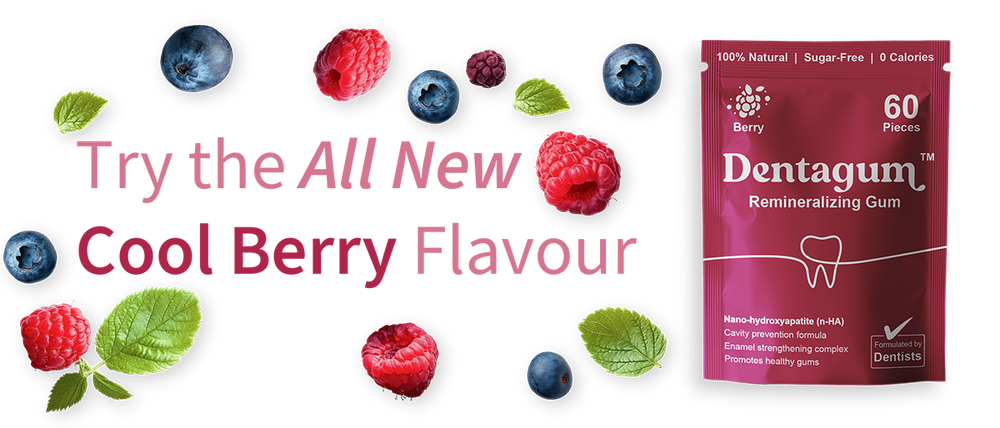
Dentagum's Remineralizing Chewing Gum is built around habit 5 specifically, delivering nano-hydroxyapatite and organic xylitol into the saliva surge chewing creates, right after meals when the acid window is most active. It complements the toothpaste habit rather than replacing it. For the deeper mechanics behind this timing, see our guide on how gum helps neutralize acids after eating and our breakdown of what the ADA actually recommends on chewing gum.
Frequently asked questions
None of them work in isolation as well as they work together, but limiting snacking frequency and brushing consistently with fluoride or nano-hydroxyapatite toothpaste are the foundational two. The other habits are what extend and reinforce that foundation during the hours brushing cannot cover.
It is an official ADA recommendation specifically because positioning a straw behind the front teeth reduces how much acidic liquid contacts the enamel surface directly, particularly on the front teeth where erosion is often most visible.
Acid temporarily softens the outer layer of enamel. Brushing during that softened window can physically wear away enamel that would otherwise reharden on its own within about 30 minutes as saliva buffers the acid.
Mouth breathing dries out oral tissue and reduces saliva flow, and saliva is what buffers acid and carries minerals back to enamel. Chronic mouth breathing, especially during sleep, has been linked to increased caries and periodontal disease risk as a result.

The Bottom Line
Preventing demineralization is not about a single powerful habit, it is about consistently tipping the balance between acid exposure and saliva-driven recovery in your favor. Limiting snack frequency, using a straw, timing your brushing correctly, rinsing after acidic exposure, chewing sugar-free gum, eating enough calcium and vitamin D, staying hydrated, addressing mouth breathing, and brushing twice daily with the right toothpaste together cover nearly every hour of a normal day.
Nine small habits, working on the same simple chemistry.
See how Dentagum supports habit 5 at dentagum.coResearch Summary
- ADA Oral Health Topics, Dental Erosion: straw positioning, water rinsing, and post-vomiting rinse guidance; chewing gum promotes salivary flow to help protect against erosion.
- Stephan Curve research: oral pH drops within 5-20 minutes of eating and remains below 5.5 for approximately 20-40 minutes before recovering.
- Nutrients (2023) systematic review, 7 studies, n=6,978: low vitamin D associated with enamel defects in 21.1% to 64% of children studied.
- Mouth-breathing research (maxillary expansion study, PMC): mouth breathing identified as a risk factor for caries and periodontal disease via reduced salivary flow and cleaning action.
- ADA guidance on post-acid brushing timing: waiting recommended to avoid abrading temporarily softened enamel.
References
- American Dental Association. "Dental Erosion." ADA Oral Health Topics. https://www.ada.org/resources/ada-library/oral-health-topics/dental-erosion
- American Dental Association / MouthHealthy. "Dietary Acids and Your Teeth." https://www.mouthhealthy.org/all-topics-a-z/dietary-acids-and-your-teeth
- "Demineralization of teeth in mouth-breathing patients undergoing maxillary expansion." PMC. https://www.ncbi.nlm.nih.gov/pmc/articles/PMC9444539/
- Vitamin D deficiency and enamel defects systematic review. Nutrients, 2023.
- "Erosive Impact of Acidic 'Healthy' Beverages on Dental Enamel: A Systematic Review (2013-2025)." Preprints.org. https://www.preprints.org/manuscript/202505.1016
