
Can Gum Help Neutralize Acids After Eating?
Every time you eat, your oral pH drops below the level at which enamel starts to dissolve, and it stays there for up to 40 minutes. Chewing the right gum after meals is one of the most clinically well-supported habits you can build. Here's the full science behind why.

Yes, chewing sugar-free gum after meals genuinely helps neutralize oral acid. It does this through a specific, well-documented biological mechanism involving saliva, bicarbonate, and the physical act of chewing. This isn't a marketing claim. It's backed by 18 independent clinical studies on plaque pH, endorsed by the American Dental Association, the FDI World Dental Federation, and the European Food Safety Authority, and supported by one of the oldest and most consistently replicated concepts in dental science: the Stephan Curve.
This article explains exactly what happens to your mouth pH after every meal, why that matters for your enamel, how chewing gum accelerates recovery, and what ingredients in a well-formulated gum go further than saliva stimulation alone.
The Acid Attack You Don't Feel

Your teeth are under acid attack right now if you've eaten anything in the last 40 minutes. The attack is invisible, painless, and happening whether your diet is excellent or poor. Understanding it is the starting point for understanding why post-meal gum use is a clinically meaningful habit rather than a marketing talking point.
When you eat or drink, two things happen simultaneously. Bacteria in your dental plaque, particularly Streptococcus mutans and other acidogenic species, metabolize the fermentable carbohydrates and sugars in your food. As a byproduct, they produce lactic acid, butyric acid, and acetic acid. These acids accumulate in the plaque biofilm that sits against your tooth surfaces. At the same time, directly acidic foods and drinks, things like coffee, orange juice, wine, soft drinks, and even fruit, introduce their own extrinsic acids directly to the enamel surface.
Both pathways drive your oral pH downward. And when pH drops below 5.5, enamel begins to dissolve.
The critical pH of 5.5 is one of the most important numbers in dentistry. Above it, the environment in your mouth is saturated with calcium and phosphate, and enamel is stable or actively remineralizing. Below it, the fluid bathing your teeth becomes undersaturated with respect to tooth mineral, and enamel crystals begin to lose calcium and phosphate into the surrounding fluid. This is demineralization. It happens silently, incrementally, and it accumulates over years into the enamel thinning, sensitivity, and cavities that eventually become visible problems.
The Stephan Curve: 80 Years of Evidence for Why Timing Matters

In 1943, a researcher named Robert Stephan published one of the most consequential charts in the history of dentistry. He measured how plaque pH changed over time after sugar exposure, producing what is now called the Stephan Curve.
The curve has two phases. The first is a rapid, steep drop in plaque pH immediately after eating or drinking. Within 2 to 5 minutes of sugar or carbohydrate exposure, depending on individual factors including saliva flow, plaque composition, and food type, pH can crash to 4.0 or lower. Well below the critical threshold of 5.5. Enamel is actively dissolving.
The second phase is a gradual, slower recovery back toward baseline as saliva buffers the acid and pH climbs back through the 5.5 threshold into the safe zone. This recovery takes 20 to 40 minutes under normal conditions.
That recovery window is where the problem lives for most people. Thirty to forty minutes after every meal, your enamel is losing mineral. And if you eat, drink coffee, or snack again before the recovery is complete, the curve resets. Your pH drops again. Another acid attack begins before the previous one has finished. The cumulative time your enamel spends below pH 5.5 determines how much mineral loss accumulates over years.
The Stephan Curve isn't just a dental school concept. Oxford Reference defines it as showing "the fall in pH below the critical level of pH 5.5, at which demineralization of enamel occurs following the intake of fermentable carbohydrates, acidic liquids, or sugar in the presence of acidogenic bacteria." It has been replicated, validated, and built upon in thousands of studies over eight decades. It's the reason dental professionals tell you that how often you eat matters more than how much.
What Happens to Oral pH After Common Foods and Drinks

Not all foods are equally damaging to oral pH, but the range of everyday items that drop pH below the critical threshold is broader than most people expect.
The ADA's research into commercially available beverages found that 93% of 379 products tested had a pH below 4.0. That's not 93% of sodas. That's 93% of beverages overall. Soft drinks typically sit between pH 2.5 and 3.5. Citrus juice ranges from 2.5 to 3.5. Coffee sits around pH 4.5 to 5.0, closer to the critical threshold but still acidic enough to contribute to demineralization with frequent exposure. Wine runs between 3.0 and 3.5. Even sparkling water, which many people consider benign, tends toward pH 4.0 to 5.0 due to dissolved carbon dioxide forming carbonic acid.
A 2022 study from Newcastle University published in Frontiers in Dental Medicine confirmed that dietary acid pH and concentration interact dynamically to drive early-stage enamel erosion, and that dental erosion affects nearly 30% of adults worldwide. The ADA notes that frequent soft drink consumption is a primary predisposing factor for extrinsic dental erosion, with sports drinks, fruit juices, and acidic snacks also contributing significantly.
This matters because modern eating patterns look nothing like what our enamel was designed to handle. Multiple coffees throughout the morning, a piece of fruit as a snack, a sandwich with a soft drink at lunch, an afternoon energy drink, wine with dinner. Each exposure generates a Stephan Curve. Each Stephan Curve puts enamel below the critical pH. The recovery windows between them are often shorter than 40 minutes, which means many people spend most of their day with pH hovering near or below the level at which enamel dissolves.
How Saliva Neutralizes Acid: The Three Buffering Systems

Before looking at what gum does, it's important to understand what your saliva is already doing, because gum works by amplifying these natural mechanisms rather than replacing them.
Saliva neutralizes oral acid through three overlapping buffering systems. The primary one, and by far the most powerful, is the bicarbonate system. Bicarbonate ions (HCO3-) react with hydrogen ions (H+) from acid to form carbonic acid, which then breaks down into water and carbon dioxide. In simple terms: bicarbonate meets acid, and the acid is neutralized. The phosphate buffering system provides a secondary layer of protection, particularly at slightly lower pH ranges. Salivary proteins form a third buffer that acts directly within the plaque biofilm itself.
The critical detail is what happens to these systems when saliva flow is stimulated. Under resting conditions, unstimulated saliva has a bicarbonate concentration of approximately 3 to 4 mmol/l. When salivary flow is stimulated, whether by chewing, taste, or other mechanical and chemical signals, bicarbonate concentration rises dramatically, reaching 15 mmol/l or higher. That's a fourfold to fivefold increase in buffering power, delivered precisely when it's most needed.
Research published in PMC confirms that "bicarbonate increases dramatically in stimulated saliva, acting as an effective buffer system," and that "pH and buffering capacity are the most relevant factors associated with caries experience in young adults." The connection between saliva flow rate, bicarbonate delivery, and enamel protection is one of the most consistently supported relationships in dental science.
A review published in the BDJ Team described the mechanism precisely: "The effect of stimulation is to increase the concentration of bicarbonate in the saliva entering the mouth. This bicarbonate raises the pH of the saliva and greatly increases its buffering power: the saliva is, therefore, much more effective in neutralising and buffering food acids and acids arising in plaque from the fermentation of carbohydrate."
More saliva means more bicarbonate. More bicarbonate means faster acid neutralization. And faster acid neutralization means less time below the critical pH of 5.5.
What Chewing Gum Does to Saliva Flow

Here's where gum becomes a practical tool rather than just a pleasant habit.
The act of chewing mechanically stimulates the salivary glands. According to the ADA, the average unstimulated salivary flow rate for healthy adults is 0.3 to 0.4 mL per minute. Simply chewing unsweetened, unflavored gum base stimulates salivary flow to 10 to 12 times that resting rate. Flavored and sweetened gums stimulate even more flow, because taste receptors in the mouth add a chemical stimulus on top of the mechanical one.
That 10-12x increase in flow rate has direct consequences for acid neutralization. More volume of saliva entering the oral cavity per minute means more bicarbonate delivered per minute. More physical movement of saliva across tooth surfaces means faster clearance of acid from the plaque environment. Research confirms that the rapid rise from minimum plaque pH values after sugar ingestion occurs due to the combined effects of increased salivary film velocity and greater bicarbonate availability, both of which chewing gum produces simultaneously.
Evidence presented to the UK Parliament summarized 18 clinical studies on the effect of sugar-free gum chewing on plaque pH. Their collective finding: "The results of these 18 studies demonstrate the rapid and sustained plaque acid neutralisation which occurs when sugarfree gum is chewed after an acid response to carbohydrate exposure. The consistency of these findings has been reflected in a statement on noncariogenic sweeteners" from the FDA and three expert reviews.
The key word is consistent. This isn't a finding from one or two studies that hasn't been replicated. It's the same result across 18 independent clinical investigations conducted over decades. Chewing sugar-free gum after meals reliably and measurably neutralizes plaque acid faster than allowing saliva to work unaided.
Why 20 Minutes Is the Recommended Duration
The ADA's recommendation to chew sugar-free gum for 20 minutes after meals isn't arbitrary. It reflects the biology of the Stephan Curve and the duration needed to maximize the buffering effect.
In the first few minutes of chewing, salivary flow ramps up rapidly. Bicarbonate concentration in the stimulated saliva rises to its elevated level quickly. Plaque pH, which may have dropped to 4.0 or lower, begins climbing back toward the critical threshold of 5.5 as the buffering saliva contacts the acid in plaque.
The 20-minute window covers two things: the time needed to push pH reliably back above 5.5 and into the remineralizing zone, and the sustained elevated salivary flow that keeps it there as the plaque continues to metabolize residual food substrates. Research from Mars Wrigley Oral Care notes that saliva stimulation from chewing can last up to two hours after the gum is removed, meaning the benefit extends well beyond the chewing period itself.
Stopping at five minutes delivers a fraction of the benefit. The saliva is stimulated briefly, pH begins to recover, but the sustained buffering that pushes pH fully back above the critical threshold and keeps it there through the recovery phase requires the full recommended duration. This is one of the most straightforward and underutilized pieces of dental advice available: a 20-minute habit after every meal that costs essentially nothing and has 80 years of scientific support behind it.
Where Xylitol Takes This Further
Standard sugar-free gum does the job of stimulating saliva and delivering bicarbonate. Xylitol-sweetened gum adds a second, distinct mechanism that standard gum entirely lacks.
Xylitol reduces the population of Streptococcus mutans, the primary acid-producing bacterium in dental plaque. It does this through a specific metabolic disruption: S. mutans transports xylitol into its cells expecting to metabolize it like sugar, can't complete the process, gets trapped in a futile energy cycle that exhausts the cell, and dies. Bacteria that survive repeated xylitol exposure progressively lose their ability to adhere to tooth surfaces, reducing plaque mass and therefore the total acid-producing capacity of the biofilm.
This is critically relevant to pH neutralization because it addresses the source of the acid rather than just the acid itself. Standard sugar-free gum works on the downstream effect: stimulating saliva to neutralize acid that's already been produced. Xylitol works upstream: reducing the bacterial population that produces the acid in the first place.
A 2022 microbiome investigation from Taipei Medical University, published in Frontiers in Nutrition, used 16S rDNA full-length sequencing to analyze plaque microbiome composition in 24 adults before and after two weeks of xylitol gum use. Participants chewing xylitol gum showed measurable reductions in both cariogenic bacteria, including S. mutans, and periodontopathic bacteria compared to the control group. The plaque was producing less acid not just in the moment, but structurally, as a result of a changed microbial community.
This is why xylitol gum consistently outperforms sorbitol gum in clinical trials measuring plaque and caries outcomes. Sorbitol stimulates the same saliva response. But it does nothing to the bacterial population. Xylitol does both, which is why a 2022 systematic review published in Clinical Oral Investigations found that xylitol gum decreased plaque accumulation in 13 of 14 clinical trials reviewed, often significantly outperforming sorbitol comparators.
Over time, consistent daily use of xylitol gum after meals shifts the oral microbiome toward a less acidogenic state, reducing the depth of each Stephan Curve and compressing the time spent below the critical pH threshold, even before saliva's buffering work begins.
The Remineralization Window: Where Nano-Hydroxyapatite Fits In
Neutralizing acid is the first job. But once pH is restored above 5.5, something important becomes possible: remineralization.
When plaque and salivary pH rise back into the safe zone, the fluid environment around your teeth becomes supersaturated with calcium and phosphate. These ions begin reintegrating into the enamel crystal structure, repairing the mineral loss from the acid attack. This is the remineralization phase of the Stephan Curve, and it only happens when pH is above the critical threshold.
Chewing gum accelerates the arrival of that remineralization window by neutralizing acid faster. But a well-formulated gum goes further: it actively delivers remineralizing minerals during the same chewing window, compounding saliva's natural repair effort.
Nano-hydroxyapatite (nano-HAp or nHA) is the ingredient that delivers this. It's a synthetic form of the mineral that makes up around 97% of your tooth enamel, produced in nanoparticle sizes small enough to penetrate the microporosities in enamel and deposit directly into early lesions. Where saliva delivers calcium and phosphate ions in solution, nano-HAp delivers those same minerals in a concentrated, particulate form that can physically integrate into the enamel structure rather than just bathing the surface.
A 2023 systematic review and meta-analysis by Limeback, Enax, and Meyer published in Biomimetics found that hydroxyapatite in oral care products, including gum format, reduced dentin hypersensitivity by 6% to 80% compared to placebo, and performed comparably to fluoride for caries prevention over an 18-month randomized controlled trial. A 2022 review in Biomimetics from a team at the University of Texas Health San Antonio and the University of Bielefeld confirmed that hydroxyapatite and xylitol are effective combination ingredients, with hydroxyapatite providing the remineralizing mechanism and xylitol the antibacterial action.
Chewing a gum that contains nano-HAp after meals does something that no other single habit achieves: it simultaneously speeds acid neutralization through saliva stimulation, reduces acid production by targeting the bacteria responsible, and delivers remineralizing minerals to enamel surfaces during the same 10-20 minute window when pH is recovering and remineralization conditions are improving. The three mechanisms are additive and timed perfectly to the post-meal acid cycle.
The Common Habits That Extend the Acid Attack
Understanding why gum helps requires understanding what most people are actually doing that keeps oral pH suppressed.
Continuous sipping. A single cup of coffee consumed over three hours generates a near-continuous acid challenge rather than a single Stephan Curve with a recovery period. The same applies to sipping soft drinks, juice, or energy drinks throughout the day. Each sip resets the pH drop, preventing recovery.
Frequent snacking. Every snack, even a piece of fruit or a handful of crackers, generates its own Stephan Curve. Multiple snacks within 40 minutes of each other mean the recovery from the first attack is still incomplete when the second begins. The cumulative time below pH 5.5 compounds.
Mouthwash immediately after eating. Many commercial mouthwashes contain alcohol or acidic compounds that can extend the low-pH period after meals rather than shortening it.
Brushing immediately after acidic meals. Enamel is temporarily softened during the demineralization phase. Brushing during this window causes mechanical abrasion of softened enamel. Waiting 30 minutes is the standard recommendation, but that creates a gap when nothing is supporting recovery.
Habitual coffee at the desk. A coffee consumed in 10 minutes creates one Stephan Curve. The same coffee sipped over 90 minutes creates a nearly continuous one. The volume consumed is identical. The enamel exposure is completely different.
Chewing sugar-free gum with xylitol immediately after eating or drinking addresses each of these situations practically. It speeds recovery from the acid challenge, reduces the bacterial load contributing to ongoing acid production, and delivers remineralizing support during the recovery window. It's compatible with work, travel, and any situation where brushing isn't practical.
What to Look for in an Acid-Neutralizing Gum
Not all sugar-free gum performs equally for pH neutralization, and the ingredient list determines the difference.
Sugar-free: The absolute baseline. Sugar feeds the acid-producing bacteria you're trying to suppress. Any sugar in the formula directly counteracts the saliva stimulation benefit by providing substrate for continued bacterial acid production.
Xylitol as the primary sweetener: Not sorbitol, not aspartame, not a blend where xylitol is listed third behind sorbitol. Xylitol's antibacterial mechanism is specific to xylitol and isn't meaningfully replicated by other polyols. A gum that leads with xylitol does the downstream buffering work through saliva and the upstream work by reducing acid-producing bacteria.
Nano-hydroxyapatite: Converts the post-meal chewing window from pure acid neutralization into active enamel remineralization. It doesn't replace saliva's role. It amplifies it by delivering the mineral directly during the same period.
A natural gum base: You're chewing this for 20 minutes multiple times a day. What the base is made of matters for what's in sustained contact with your oral tissues. Chicle (from the sapodilla tree) or mastic gum (from Pistacia lentiscus) are natural alternatives to petroleum-derived synthetic polymer bases. Mastic gum additionally brings its own documented antibacterial and anti-inflammatory properties to the formula.
Supporting antibacterial ingredients: Propolis and mastic gum both have clinical evidence for antimicrobial activity against oral bacteria. In a gum designed to reduce acid production as well as neutralize it, these ingredients contribute meaningfully.
Third-party testing: In a growing category with many new entrants making strong claims, independent verification of formulation accuracy is a meaningful trust signal.
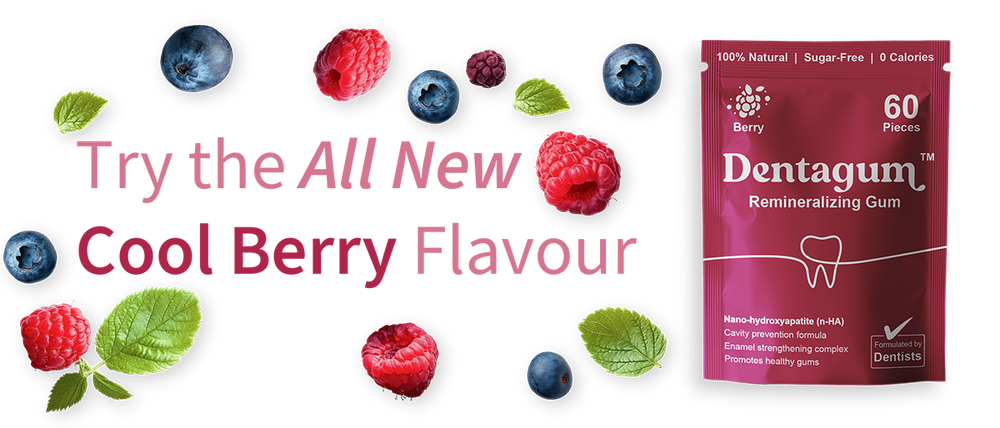
Dentagum's Remineralizing Chewing Gum combines organic xylitol and organic erythritol as the primary sweeteners, nano-hydroxyapatite for remineralization, an organic chicle and mastic gum base, and natural propolis and organic eggshell powder as supporting ingredients. It's dentist-formulated, 3rd-party tested, and designed to be chewed for 10-20 minutes after meals, the window the Stephan Curve tells us matters most. In Dentagum's own clinical data, 87% of participants were less susceptible to cavities compared to non-users with consistent daily use, and 83% showed notable gains in enamel quality and mineral quantity.
Try it risk-free with a 30-day guarantee at dentagum.co.
How to Build the Post-Meal Gum Habit

The science is only useful if it translates into something you actually do. A few practical notes on making this habit stick.
Immediately after eating, not 20 minutes later. The goal is to intercept the Stephan Curve while pH is still dropping or at its lowest point, not after the natural recovery has already happened. Keep gum at your desk, in your bag, in the car. The habit works when it's automatic, not deliberate.
After coffee and other acidic drinks too. A meal isn't the only acid challenge. Your morning coffee drops pH just as surely as breakfast does. Keeping a piece of xylitol gum for after your first and second coffee is a genuinely useful habit for anyone who drinks it habitually.
Chew for the full 20 minutes. This is where most people shortchange themselves. Three minutes of chewing delivers some benefit. Twenty delivers the full clinical effect that the research is based on. If you're chewing while you work, driving, or doing anything routine, the 20 minutes passes without effort.
Don't follow with food or drink immediately. Give the post-meal recovery window the time it needs. Chewing gum and then drinking another coffee five minutes later partially negates the buffering work done.
Frequently Asked Questions
Does chewing gum actually neutralize acids in your mouth?
Yes. Chewing sugar-free gum stimulates salivary flow to 10-12 times the resting rate, dramatically increasing the bicarbonate concentration in saliva. Bicarbonate is the primary buffer that neutralizes plaque acid. A body of 18 independent clinical studies found consistent, rapid, and sustained plaque acid neutralization when sugar-free gum was chewed after carbohydrate exposure. The ADA, FDI World Dental Federation, and European Food Safety Authority have all endorsed this mechanism.
What is the Stephan Curve and why does it matter?
First described by Robert Stephan in 1943, the Stephan Curve charts how plaque pH drops rapidly after eating or drinking, falls below the critical threshold of 5.5 at which enamel begins to dissolve, and then recovers gradually over 20-40 minutes as saliva buffers the acid. It's the foundational concept for understanding why meal timing and post-meal habits matter so much for enamel health. Chewing sugar-free gum after meals accelerates the recovery phase of the curve.
How long does it take for oral pH to recover after eating?
Without intervention, the recovery from a Stephan Curve typically takes 20-40 minutes depending on individual salivary flow, buffering capacity, the type and quantity of food consumed, and residual food in the mouth. Chewing sugar-free gum accelerates that recovery by stimulating high-bicarbonate saliva at 10-12 times the resting flow rate. Xylitol-containing gum adds the benefit of reducing the acid-producing bacteria responsible for ongoing pH suppression.
Is xylitol gum better than regular sugar-free gum for neutralizing acids?
For acid neutralization through saliva stimulation, they're comparable. Both stimulate saliva flow and bicarbonate delivery equally well. The difference is what xylitol does beyond that. Xylitol specifically reduces Streptococcus mutans, the primary acid-producing bacterium, through a metabolic disruption that starves and kills the bacterium. Regular sorbitol gum doesn't produce this effect. Over time, consistent xylitol use reduces the bacterial acid load in plaque, meaning the Stephan Curve dips less deeply and recovers more quickly.
When is the best time to chew gum for acid neutralization?
Immediately after eating or drinking, before pH has had time to drop further. The goal is to intercept the post-meal acid window early, stimulate saliva flow while pH is at or near its minimum, and sustain that flow for the full 20 minutes recommended by the ADA. Waiting 20 minutes to start chewing largely misses the window. The habit works best when gum is accessible and automatic, not something you have to remember deliberately.
Can gum with nano-hydroxyapatite do more than just neutralize acid?
Yes, meaningfully. Standard sugar-free gum accelerates acid neutralization and opens the remineralization window faster. A gum containing nano-hydroxyapatite also delivers the mineral enamel is made of directly to tooth surfaces during the same chewing period, actively contributing to enamel repair rather than just reducing the forces attacking it. A 2023 systematic review found hydroxyapatite in gum format reduced dentin hypersensitivity by 6-80% compared to placebo and performed comparably to fluoride for cavity prevention over 18 months.
Does gum replace the need to brush and floss?
No. The ADA is explicit that gum is a complement to, not a replacement for, twice-daily brushing with fluoride toothpaste and daily flossing. Established plaque and debris between teeth require mechanical removal. What gum does is address the post-meal windows between brushing sessions, precisely the times when enamel is most under acid attack and when brushing isn't practical or advisable.
In Conclusion
The question of whether gum can neutralize acids after eating has a clear, evidence-based answer: yes, with the right formula, chewed at the right time for the right duration. The mechanism isn't complicated. Chewing stimulates saliva. Stimulated saliva delivers dramatically more bicarbonate. Bicarbonate neutralizes plaque acid. The Stephan Curve's recovery phase, which normally takes 20-40 minutes unaided, is accelerated. Less time below pH 5.5 means less enamel demineralization with every meal.
Xylitol adds a second mechanism that addresses the problem at its source: reducing the bacteria responsible for producing the acid in the first place. Nano-hydroxyapatite converts the post-meal window from defensive work into active enamel repair. Together, they turn a 20-minute habit into the most productive 20 minutes your teeth experience between brushing sessions.
The research behind this is not new, not limited, and not contested. 18 clinical studies. 80 years of Stephan Curve research. Endorsements from every major dental authority globally. The habit is simple. The evidence is solid. The window is after every meal.
Dentagum's Remineralizing Chewing Gum is dentist-formulated with organic xylitol, nano-hydroxyapatite, organic mastic gum, and natural propolis, designed to be chewed for 10-20 minutes after meals. Try it risk-free with a 30-day guarantee at dentagum.co.
RESEARCH SUMMARY
- UK Parliament Written Evidence / 18-study clinical body. Sugar-free gum chewing after meals rapidly neutralizes plaque acid. Stimulated saliva bicarbonate concentration rises from 3-4 mmol/l to 15 mmol/l or higher. 18 clinical studies consistently demonstrated rapid and sustained plaque acid neutralization when sugar-free gum was chewed after carbohydrate exposure.
- American Dental Association. "Chewing Gum." Oral Health Topics. The physical act of chewing stimulates salivary flow to 10-12 times the unstimulated resting rate of 0.3-0.4 mL/min. Increased saliva dilutes and neutralizes acids produced by plaque bacteria.
- BDJ Team / Nature. "Saliva: A Review of Its Role in Maintaining Oral Health." Stimulated saliva dramatically increases bicarbonate concentration, raising salivary pH and greatly increasing its buffering power. Critical pH for enamel demineralization confirmed at 5.5.
- Oxford Reference / Robert Stephan, 1943. The Stephan Curve: original documentation of plaque pH drop below 5.5 following fermentable carbohydrate intake, followed by gradual recovery to neutral through saliva buffering. Repeated acid exposures prevent recovery, maintaining cumulative enamel demineralization.
- ADA. "Dental Erosion." Oral Health Topics. 93% of 379 commercially available beverages in the US have a pH below 4.0. Frequent soft drink consumption primary risk factor for erosive tooth wear. Citric and phosphoric acid are the primary dietary acid agents.
- Pattem J et al. "The Dynamic Interplay of Dietary Acid pH and Concentration During Early-Stage Human Enamel and Dentine Erosion." Frontiers in Dental Medicine, 2022. Newcastle University. Dental erosion affects nearly 30% of adults worldwide. Dynamic interaction between dietary acid pH and concentration determines erosion severity.
- PubMed / Assessment of Salivary Parameters. Bicarbonate increases dramatically in stimulated saliva, acting as an effective buffer. pH and buffering capacity are the most relevant salivary factors associated with caries experience in young adults.
- Wu Y-F et al. Frontiers in Nutrition, 2022. Xylitol gum reduced cariogenic and periodontopathic bacteria in plaque microbiome over two weeks. Plaque pH and weight measurements tracked before and after intervention.
- Systematic review on chewing gum dental hygiene effectiveness, 2024 (PRISMA). Evaluated RCTs and CCTs published between 2000 and 2024. Confirmed chewing gum improves oral pH buffering, reduces plaque, and modulates oral microbiota.
- Farooq I et al. F1000Research, 2021. Saliva acts as a buffering agent and carrier of essential ions for enamel remineralization. Three buffering systems: bicarbonate (primary), phosphate, and protein.
- Limeback H, Enax J, Meyer F. Biomimetics, 2023. Hydroxyapatite in gum format reduced dentin hypersensitivity by 6-80% compared to placebo. Nano-HAp comparable to fluoride for caries prevention over 18 months.
References
- UK Parliament Written Evidence. "Evidence on Children's Oral Health." Summary of 18 clinical studies on sugar-free gum and plaque pH neutralization. https://committees.parliament.uk/writtenevidence/56608/html/
- American Dental Association. "Chewing Gum." Oral Health Topics. https://www.ada.org/resources/ada-library/oral-health-topics/chewing-gum
- American Dental Association. "Dental Erosion." Oral Health Topics. https://www.ada.org/resources/ada-library/oral-health-topics/dental-erosion
- BDJ Team / Nature. "Saliva: A Review of Its Role in Maintaining Oral Health and Preventing Dental Disease." https://www.nature.com/articles/bdjteam2015123
- Pattem J et al. "The Dynamic Interplay of Dietary Acid pH and Concentration During Early-Stage Human Enamel and Dentine Erosion." Frontiers in Dental Medicine, 2022. https://www.frontiersin.org/journals/dental-medicine/articles/10.3389/fdmed.2022.1040565/full
- Wu Y-F et al. "Xylitol-Containing Chewing Gum Reduces Cariogenic and Periodontopathic Bacteria in Dental Plaque: Microbiome Investigation." Frontiers in Nutrition, 2022. https://www.ncbi.nlm.nih.gov/pmc/articles/PMC9131035/
- Farooq I et al. "The Role of Salivary Contents and Modern Technologies in the Remineralization of Dental Enamel: A Narrative Review." F1000Research, 2021. https://www.ncbi.nlm.nih.gov/pmc/articles/PMC7076334/
- Limeback H, Enax J, Meyer F. "Clinical Evidence of Biomimetic Hydroxyapatite in Oral Care Products for Reducing Dentin Hypersensitivity: An Updated Systematic Review and Meta-Analysis." Biomimetics, 2023. https://pmc.ncbi.nlm.nih.gov/articles/PMC9844412/
- "Assessment of Salivary Parameters: pH, Buffering Capacity and Flow Associated with Caries Susceptibility." PMC. https://pmc.ncbi.nlm.nih.gov/articles/PMC12939177/
- Oxford Reference. "Stephan Curve." https://www.oxfordreference.com/display/10.1093/oi/authority.20110803100531178
