
Mouth Breathing and Teeth: Why It Causes Damage and How to Counter It
Mouth breathing is one of the most underrecognized causes of adult dental problems. It removes saliva during the overnight window when enamel needs remineralization most, drops intraoral pH to 6.6 versus 7.0 in nasal breathers, and makes mouth breathers four times more likely to carry high S. mutans loads. This guide covers the mechanism, the pH data, the exercise angle, why mouth taping is not the answer, and the daytime counter-strategy built around xylitol and nano-HAp.

Quick Answer
Mouth breathing removes saliva from the oral environment continuously, through two distinct mechanisms: the airflow accelerates evaporation of the thin fluid layer coating your teeth and gums, and the reduced parasympathetic signaling during breathing effort suppresses salivary gland output. During sleep, this effect is most severe. A University of Otago study published in the Journal of Oral Rehabilitation found that simulated mouth breathing during sleep dropped intraoral pH from 7.0 to 6.6 (p<0.01), well below the 5.5 threshold at which enamel begins to demineralize. Mouth breathers are four times more likely to develop high-level Streptococcus mutans colonies than nasal breathers. The counter-strategy has two parts: addressing the root cause of nasal obstruction to reduce mouth breathing, and actively replacing saliva's protective functions during the daytime hours when something can be done about it.
Last updated: June 2026 | Reviewed against current oral physiology, airway dysfunction, and clinical dry mouth research
You wake up with a dry, sticky mouth and a throat that feels like sandpaper. Your breath in the morning is worse than it should be given you brushed the night before. You have been getting more cavities than usual, despite not changing your diet or hygiene routine. These are the recognizable signs of chronic mouth breathing, and if you recognize them, they are worth taking seriously.
Mouth breathing is not a niche concern. Pediatric mouth breathing is reported in 10 to 15% of children. In adults the prevalence ranges widely in different studies, with estimates of habitual or occasional mouth breathing in anywhere from 30 to 50% of the adult population. For many people it happens primarily during sleep, when they have no awareness of it. For athletes and active adults, it happens during exercise as an unavoidable physiological response to increased oxygen demand.
This article covers what mouth breathing actually does to your teeth, why it happens, what the mouth taping debate gets wrong, and what actually works as a counter-measure at every stage of the problem.
How Mouth Breathing Damages Teeth
The damage from mouth breathing is not direct: air does not erode enamel. The mechanism runs through saliva. Saliva is the critical intermediary between a healthy oral environment and a disease-prone one, and mouth breathing systematically depletes it.
When air flows over oral tissues during mouth breathing, it accelerates evaporation of the thin fluid layer that coats tooth surfaces and gum tissue. Salivary flow cannot keep pace with this evaporation rate, particularly during sleep when the salivary glands are naturally in their lowest-output state. The result is a progressive drying of oral surfaces throughout the night or during prolonged mouth-breathing periods during the day.
Saliva provides four core protective functions that are all lost simultaneously when this drying occurs:
First, acid buffering. Saliva contains bicarbonate ions that neutralize the acids produced by oral bacteria and by acidic foods. Without adequate saliva, these acids sit on enamel surfaces for extended periods. Enamel begins to lose mineral content at pH below 5.5. Stimulated saliva has a pH of approximately 7.8, ideal for remineralization. The mouth breathing environment, with its reduced fluid and accumulating bacterial acid, tips this balance toward sustained demineralization.
Second, remineralization support. Saliva delivers calcium and phosphate ions to tooth surfaces, enabling the natural repair of early mineral loss. Without adequate flow, this delivery mechanism fails. Early lesions that would normally remineralize overnight do not, and progress instead toward visible decay.
Third, antimicrobial defense. Saliva contains lysozyme, lactoferrin, secretory IgA, and other antimicrobial proteins that suppress pathogenic bacterial growth. When salivary flow drops, cariogenic bacteria including Streptococcus mutans thrive in the drier, less-defended environment.
Fourth, mechanical clearance. Saliva constantly washes food debris and bacteria from tooth surfaces. In a dry oral environment, plaque accumulates faster and bacterial populations increase unchecked.
The combined effect of these four failures is a significantly elevated risk of cavities, gum inflammation, enamel erosion, and sensitivity, even in patients who brush and floss regularly and eat well. The mouth breathing explains the dental problems that good hygiene habits alone cannot prevent.
What Mouth Breathing Does to Your Oral Environment
- Depletes acid buffering: Saliva's bicarbonate system fails; oral pH stays low for longer after meals and throughout the night
- Stops remineralization: Calcium and phosphate delivery to enamel is interrupted during the overnight repair window
- Weakens antimicrobial defense: Lysozyme, lactoferrin, and secretory IgA concentrations drop; S. mutans and periodontal pathogens thrive
- Increases plaque accumulation: Mechanical self-cleansing stops; biofilm builds up faster on drier surfaces
- Mouth breathers are 4x more likely to develop high S. mutans colonies compared to nasal breathers (clinical study data)
The Overnight Problem: pH Drop During Sleep

The most consequential mouth breathing for dental health happens at night, and the pH data makes the reason clear. A controlled study by Choi et al. from the Sir John Walsh Research Institute at the University of Otago, published in the Journal of Oral Rehabilitation, measured continuous intraoral pH during sleep with and without simulated mouth breathing in ten healthy participants using custom-fitted pH probes.
The findings were precise and clinically meaningful. Normal daytime intraoral pH averaged 7.3. Normal sleep pH averaged 7.0. Simulated mouth-breathing sleep pH dropped to 6.6, a statistically significant decrease (p<0.01). Importantly, the pH during mouth-breathing sleep showed a greater fall over a longer period, rather than brief dips: the environment remained acidic for extended stretches of the night.
The clinical significance of these numbers is direct. Enamel demineralization begins below pH 5.5. The mouth-breathing sleep environment at pH 6.6 is not in the danger zone for active demineralization, but it is substantially further from the remineralization range than normal sleep. Normal sleep at pH 7.0 is a mild net-remineralizing environment for enamel. Mouth-breathing sleep at pH 6.6 is not. This means the overnight window, when saliva would normally deliver the minerals and pH conditions needed to repair the day's acid exposure, is compromised precisely when it matters most.
The Brazilian Oral Research study (2024) confirmed the downstream consequence: mouth-breathing children showed a significantly higher prevalence of anterior dental caries compared to nasal breathers, directly citing the Choi et al. pH data as the proposed mechanism. The same pattern is observed across multiple studies in adults: chronic mouth breathers consistently show higher rates of cavities, more plaque, and more gingival inflammation than nasal breathers matched for diet and hygiene habits.
The Exercise Problem: Athletes and Active Adults

Nighttime mouth breathing is the most consequential for cumulative dental damage, but exercise-related mouth breathing creates its own acute oral health risks that are particularly relevant for active adults.
During intense exercise, the body's oxygen demand increases substantially and nasal breathing simply cannot deliver air fast enough at high intensities. Mouth breathing becomes physiologically necessary. The Dimensions of Dental Hygiene clinical review, citing Ljungberg et al.'s marathon runner study, found that salivary flow rates were significantly lower after the race than before, with flow rates dropping from approximately 1.0 mL/min to 0.7 mL/min over the course of prolonged exercise. More than half of participants in a study by Mulic et al. showed decreased salivary flow during exercise.
The compounding factors during exercise make the oral health impact worse than salivary volume reduction alone. Mouth breathing during exercise increases net water loss by 42% compared to nasal breathing, creating systemic dehydration that further reduces salivary output. The composition of saliva changes under exercise stress: proteins and mucins concentrate as fluid volume drops, producing the thick, sticky saliva sensation that athletes report. Sports drinks consumed during exercise, which are typically acidic (pH 3 to 4), arrive in a mouth that is already dry and poorly buffered, extending acid exposure on enamel surfaces with minimal salivary protection available to counteract it.
The American Association of Orthodontists' 2025 athletic oral health guidance noted this directly: when athletes "sip and graze" during practices and games, oral pH stays low for extended periods. Add mouth breathing and dehydration, and the chemistry tilts against teeth significantly. For anyone training regularly, the post-workout period, when saliva is depleted and the oral environment is most acidic, is the highest-risk window of the day for enamel.
Mouth Breathing and Exercise: The Numbers
- 42% increase in net water loss when breathing mode switches from nasal to oral breathing
- 1.0 mL/min to 0.7 mL/min: Salivary flow rate drop measured in marathon runners before vs. after race (Ljungberg et al.)
- 50%+ of exercise study participants showed reduced salivary flow during intense physical activity (Mulic et al.)
- pH 3 to 4: Typical sports drink acidity arriving on a mouth that is already dry and under-buffered during exercise
- Exercise-induced dry mouth increases susceptibility to plaque accumulation, gingivitis, and caries (Dimensions of Dental Hygiene clinical review)
Signs You May Be a Chronic Mouth Breather
Many chronic mouth breathers do not know they are mouth breathing, particularly those who breathe through their nose during the day and switch to mouth breathing during sleep. The signs tend to be oral and systemic rather than a felt sensation of breathing differently.
Common indicators include waking up with a dry, sticky, or sore mouth; persistent bad breath in the morning that brushing does not fully resolve; cracked or dry lips on waking; frequent new cavities despite good hygiene habits; inflamed or bleeding gums without obvious dietary cause; increased tooth sensitivity particularly in the morning; chronic sore throat on waking; snoring or reported apneas; and feeling tired or unrefreshed despite adequate sleep duration.
If you recognize several of these signs and your dentist has found multiple new cavities in teeth that were previously healthy, raising the possibility of mouth breathing with your dentist or a physician is a reasonable next step. A dentist experienced in airway dentistry can assess the oral signs of chronic mouth breathing, and an ENT or sleep specialist can evaluate the structural causes.
What Causes Mouth Breathing
Mouth breathing is almost always a symptom of something else rather than a standalone habit. The most common causes in adults include nasal obstruction from allergies (seasonal or perennial), nasal polyps, a deviated septum, enlarged inferior turbinates, or chronic sinusitis. These structural and inflammatory conditions block the nasal airway and force the body to use the mouth as an alternative route.
Sleep-related mouth breathing is often associated with obstructive sleep apnea (OSA) or upper airway resistance syndrome: the relaxation of the jaw and tongue during sleep reduces the pharyngeal airway diameter, and mouth breathing partially compensates for the reduced nasal inflow. Chronic nasal congestion from untreated allergies is among the most common and most correctable causes in adults. Stress and anxiety can also contribute through increased sympathetic nervous system activity that promotes nasal vasoconstriction and reduces nasal airway patency.
In some adults, mouth breathing is a habit acquired during childhood, when structural problems or persistent illness created a learned pattern that persisted after the original cause resolved. This pattern is the province of myofunctional therapy, which retrains the muscles of the face, tongue, and throat to support nasal breathing at rest.
Mouth Taping: Why It's Not the Answer
Mouth taping has become the wellness-circle response to nighttime mouth breathing: place a strip of adhesive over the lips at bedtime and force nasal breathing during sleep. The logic is superficially appealing, but as covered in detail in our article on oral biohacking trends, the clinical evidence does not support it as a safe general recommendation.
A 2025 PLOS One systematic review (Rotenberg et al., Western University) analyzed 10 studies and 213 patients and found minimal benefit and documented asphyxiation risk for people with nasal obstruction. All 10 studies were rated low quality. The Cleveland Clinic stated directly that forcing the mouth closed forces the person to rely only on the nose for air, which can lead to severe respiratory distress in those who cannot breathe adequately through their nose.
The critical problem is that the people most likely to mouth-breathe at night are precisely those with nasal obstruction: the population for whom mouth taping is most dangerous. Taping your mouth shut does not resolve the nasal obstruction; it simply removes the airway backup route. For anyone who snores, has diagnosed sleep apnea, has allergies, a deviated septum, or any nasal breathing difficulty, this is not a safe experiment to conduct at home without medical clearance.
Mouth taping may be appropriate for a very narrow population: healthy adults with confirmed patent nasal airways and confirmed mouth breathing as a habit rather than a structural necessity. For everyone else, the root cause is the right target, not the symptom.
Addressing the Root Cause
The most effective strategy for nighttime mouth breathing is addressing whatever is causing the nasal obstruction or mouth-opening habit.
For allergy-driven obstruction, evidence-based options include intranasal corticosteroid sprays (the most effective first-line treatment for allergic rhinitis), antihistamines, saline nasal rinses, and allergen avoidance. Many adults who have accepted chronic nasal congestion as normal find that treating the underlying allergy dramatically improves their nasal airway and reduces or eliminates nighttime mouth breathing without taping.
For structural causes such as a deviated septum or significantly enlarged inferior turbinates, ENT evaluation is the appropriate pathway. Septoplasty, turbinate reduction, or nasal valve repair can meaningfully improve nasal airflow and reduce habitual mouth breathing.
Myofunctional therapy, a specialized form of orofacial muscle rehabilitation, has growing evidence for retraining tongue posture, swallowing patterns, and resting breathing mode in adults who have developed habitual mouth breathing. A myofunctional therapist can assess whether muscle or habit patterns are contributing to the breathing mode and provide a structured exercise program to correct them.
For sleep apnea-related mouth breathing, a CPAP device with a full-face mask, mandibular advancement devices fitted by a dental sleep medicine specialist, or positional therapy are medically supervised options that address both the breathing disorder and the mouth breathing simultaneously.
The Daytime Counter-Strategy
Addressing the root cause resolves the long-term problem. But even for people in the process of treating nasal obstruction or myofunctional therapy, the mouth breathing is still happening today, and the saliva depletion and pH consequences are accumulating every night and during every workout.
The daytime counter-strategy is about actively replacing what mouth breathing takes away: saliva's acid buffering, remineralization support, and antimicrobial function, at the times during the day when intervention is possible.
Hydration Throughout the Day
Consistent water intake partially offsets the fluid depletion from mouth breathing evaporation. This does not restore saliva's biochemical functions (water is not a substitute for the proteins, calcium, phosphate, and antimicrobial compounds in saliva), but it maintains a baseline of oral moisture that reduces the most severe drying effects. Sipping water regularly is more effective than infrequent large amounts.
Stimulating Saliva After Meals and After Exercise
Chewing stimulates salivary flow through the chewing reflex, producing both the mechanical stimulation of mastication and the cephalic-phase salivary response to the sensory experience of chewing. For mouth breathers, the post-meal and post-exercise windows are the most critical times to stimulate saliva: these are the periods when the acidic oral environment is most in need of buffering and when the remineralization window is open.
The ADA endorses sugar-free gum after meals specifically for its saliva-stimulating effects. Chewing gum after exercise, when mouth-breathing-induced xerostomia is at its acute peak, applies the same mechanism at a moment of maximal need.
Xylitol and Nano-HAp: Filling the Gaps Mouth Breathing Creates
For mouth breathers specifically, a functional gum formulated with the right ingredients does more than just stimulate saliva. It actively addresses the dental vulnerabilities that mouth breathing creates.
Xylitol suppresses S. mutans directly through its phosphotransferase system mechanism. For a mouth breather whose reduced saliva is already providing less natural antimicrobial defense, an ingredient that specifically targets the primary cavity pathogen is directly compensating for a specific loss. Mouth breathers are four times more likely to have high S. mutans counts: xylitol addresses that elevated bacterial load head-on.

Nano-hydroxyapatite addresses the remineralization gap created by overnight mouth breathing. When the pH drops to 6.6 during mouth-breathing sleep and the natural remineralization window is compromised, the enamel enters the next morning with more mineral debt than a nasal breather's enamel carries. Chewing nano-HAp gum after breakfast delivers enamel-building mineral to the tooth surface at the start of the day, partially compensating for the overnight repair that did not happen. A 2023 randomized controlled trial by Paszynska et al. found nano-HAp non-inferior to 1,450 ppm fluoride for cavity prevention at 18 months. For mouth breathers managing elevated enamel vulnerability, this between-meal remineralization support is directly targeted at the deficit the overnight pH drop creates.
For a deeper look at how saliva's protective functions work and what specifically fails when flow drops, see our article on how saliva protects your teeth naturally. For the overlap between mouth breathing, dry mouth from medications, and how they compound, see our guide on medications that cause dry mouth.
Morning Sensitivity and What It Means

Waking up with teeth that are tender to cold water, to biting, or to the first sip of morning coffee is a recognizable complaint among chronic mouth breathers, and the overnight pH data explains it mechanically.
Enamel that has spent hours at pH 6.6 rather than 7.0 enters the morning in a mildly mineral-depleted state. The dentin tubules, microscopic channels running through the layer beneath enamel, are slightly more exposed when the superficial enamel is softened. This hypersensitivity typically resolves as saliva builds up during the morning and eating and drinking stimulate salivary flow. But it is a signal that the overnight remineralization window was compromised.
Nano-hydroxyapatite's mechanism is directly relevant here. The nano-sized particles (20 to 100 nanometres) can enter open dentin tubules and deposit hydroxyapatite mineral, physically occluding the channels that transmit sensitivity stimuli to the nerve. The Biomimetics 2023 meta-analysis covering 44 clinical trials found nano-HAp reduced dentin hypersensitivity by 39.5% versus placebo. For mouth breathers experiencing morning sensitivity specifically, applying nano-HAp gum in the morning is timed to address both the sensitivity and the enamel mineral deficit that the overnight pH drop created.
Why Nano-HAp Gum Is Particularly Relevant for Mouth Breathers
- Overnight pH drop creates mineral debt: Mouth-breathing sleep at pH 6.6 compromises the overnight remineralization window that normal nasal-breathing sleep (pH 7.0) supports
- Morning sensitivity explained: Mildly depleted enamel and slightly open dentin tubules from overnight acid exposure create the "zingy" morning sensitivity that many mouth breathers recognize
- Nano-HAp counter-mechanism: 20-100 nm particles penetrate early demineralized zones and deposit enamel mineral; also physically occludes dentin tubules, reducing sensitivity at source
- Evidence: 39.5% sensitivity reduction vs. placebo across 44 trials (Limeback, Enax, Meyer, Biomimetics, 2023); non-inferior to 1,450 ppm fluoride for cavity prevention at 18 months (Paszynska et al., Front Public Health, 2023)
- Xylitol adds: Selective S. mutans suppression in a reduced-saliva oral environment where cariogenic bacteria have less natural competition
Figures from ingredient-level research. Not Dentagum product trials.
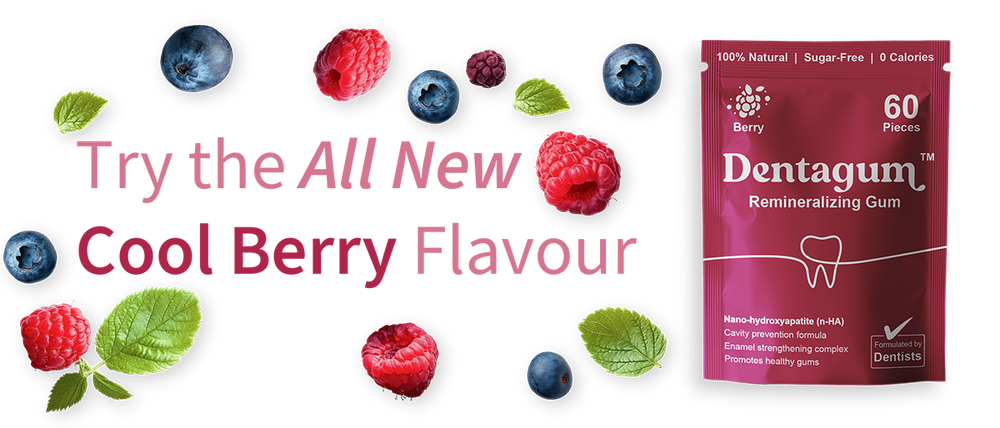
Dentagum combines organic xylitol (primary sweetener, selective S. mutans suppression), nano-hydroxyapatite 5% at approximately 90mg per piece (remineralization and sensitivity support), organic mastic gum (antibacterial and anti-inflammatory for the elevated periodontal pathogen risk in a dry oral environment), and natural propolis (broad-spectrum antimicrobial). Chewed after breakfast and after exercise, it addresses the specific oral vulnerabilities that mouth breathing creates at the two moments when those vulnerabilities are at their acute peak. See the full formula and flavors here.
Frequently Asked Questions
Can mouth breathing really cause cavities?
Yes. Mouth breathing reduces saliva, which removes the acid-buffering, remineralization, and antimicrobial protection that saliva normally provides. A controlled University of Otago study found that simulated nighttime mouth breathing dropped intraoral pH from 7.0 to 6.6, significantly compromising the overnight remineralization window. Studies show mouth breathers are four times more likely to develop high-level Streptococcus mutans colonies compared to nasal breathers. Clinical studies consistently show mouth breathers have higher cavity rates, higher plaque scores, and more gingival inflammation than nasal breathers matched for hygiene and diet.
How do I know if I'm a mouth breather?
Common signs include waking up with a dry, sticky, or sore mouth; persistent morning bad breath despite brushing the night before; cracked lips on waking; frequent new cavities despite good hygiene; inflamed or bleeding gums; and morning tooth sensitivity. Many chronic mouth breathers breathe nasally when awake and switch to mouth breathing during sleep without awareness. If you recognize several of these signs, raising it with your dentist is a reasonable next step, as they can identify oral patterns consistent with chronic mouth breathing.
Is mouth taping safe for mouth breathers?
Not reliably. A 2025 PLOS One systematic review of 10 studies and 213 patients found minimal benefit and documented asphyxiation risk in people with nasal obstruction. All studies were rated low quality. The problem is that the people most likely to mouth-breathe during sleep are those with nasal obstruction, precisely the group for whom removing the mouth as an airway backup is most dangerous. Mouth taping should not be used without medical clearance, particularly for anyone who snores, has sleep apnea, has allergies, or has any nasal breathing difficulty. See our full analysis in the article on oral biohacking trends.
What can I do about mouth breathing during exercise?
Mouth breathing during high-intensity exercise is a physiological necessity at certain intensities and not something to fight. The focus should be on managing the oral consequences: hydrate before, during, and after exercise; rinse with water after exercise rather than immediately consuming acidic sports drinks; avoid sports drinks altogether where performance does not require them; and chew xylitol gum with nano-HAp after exercise when saliva is most depleted and the post-exercise remineralization window is open. Some research and coaching communities advocate training nasal breathing at lower intensities as a way to build nasal airway capacity, though the evidence on this for oral health specifically is still developing.
Why do I have tooth sensitivity in the morning?
Morning tooth sensitivity in a chronic mouth breather typically results from overnight pH drop compromising the enamel mineral surface. Mouth-breathing sleep at pH 6.6 keeps enamel in a mildly demineralizing environment rather than the remineralizing one that nasal-breathing sleep at pH 7.0 creates. The mildly depleted enamel surface and slightly open dentin tubules create hypersensitivity that resolves as morning saliva flow recovers. Nano-hydroxyapatite gum chewed after breakfast directly addresses this: the 20 to 100 nm particles deposit enamel mineral on the morning surface and can occlude dentin tubules, reducing the sensitivity at its source. The Biomimetics 2023 meta-analysis found nano-HAp reduced dentin hypersensitivity by 39.5% versus placebo across 44 trials.
What should I tell my dentist about mouth breathing?
Tell your dentist if you recognize any signs of mouth breathing: dry mouth on waking, morning bad breath, morning sensitivity, frequent new cavities. Ask whether your cavity pattern or oral tissue condition is consistent with dry-mouth effects. Dentists experienced in airway-conscious care can identify the oral signs of chronic mouth breathing and guide you toward appropriate referrals, whether to an ENT for nasal obstruction evaluation, a myofunctional therapist for habit retraining, or a sleep specialist for sleep-disordered breathing assessment.
Bottom Line
Mouth breathing is one of the most underrecognized drivers of dental problems in adults. It removes saliva's protective functions at the most consequential times, drops intraoral pH during sleep to levels that compromise overnight enamel repair, makes mouth breathers four times more likely to carry high S. mutans loads, and compounds every morning with sensitivity that tells you the overnight window did not go well. The solution is two-part: address whatever is causing the nasal obstruction (allergies, structural issues, habit) through appropriate professional pathways, and actively replace what mouth breathing takes away during the day through hydration, saliva stimulation, and ingredients that specifically address the elevated bacterial load and enamel mineral deficit it creates.
Mouth taping is not the answer. Treating the cause, stimulating saliva after meals and after exercise with xylitol gum, and supporting enamel with nano-HAp at the moments of greatest vulnerability: that is the counter-strategy with the evidence behind it.
Try Dentagum: Xylitol and Nano-HAp for Dry Mouth ProtectionResearch Summary
This article draws on peer-reviewed oral physiology and clinical dentistry literature from 2016 to 2026. Primary sources include: Choi JE et al., "Intraoral pH and temperature during sleep with and without mouth breathing," Journal of Oral Rehabilitation, 2016 (University of Otago, n=10, pH 6.6 vs. 7.0 finding); Tamkin J., "Impact of airway dysfunction on dental health," Bioinformation, 2020 (PMC6986941); Ljungberg et al. marathon salivary flow study and Mulic et al. exercise salivary flow study, both cited in Dimensions of Dental Hygiene clinical review; Brazilian Oral Research (2024) mouth breathing and anterior caries study; American Association of Orthodontists athletic oral health guidance (2025); Rhee et al. mouth taping PLOS One systematic review (2025); Limeback, Enax, Meyer, Biomimetics, 2023 (nano-HAp meta-analysis, 44 trials); Paszynska et al., Frontiers in Public Health, 2023 (nano-HAp RCT). All Dentagum ingredient statistics are from ingredient-level published research and are not claims about the Dentagum product formula.
References
- Choi JE, Waddell JN, Lyons KM, Kieser JA. Intraoral pH and temperature during sleep with and without mouth breathing. J Oral Rehabil. 2016;43(5):356-363. DOI: 10.1111/joor.12372 [Mean pH during mouth-breathing sleep: 6.6 vs. 7.0 normal sleep; p<0.01]
- Tamkin J. Impact of airway dysfunction on dental health. Bioinformation. 2020;16(1):26-29. DOI: 10.6026/97320630016026. PMC6986941 [Mouth breathing reduces saliva; increases caries, periodontal disease, erosion risk; pediatric prevalence 10-15%]
- Lin L, Zhao T, Qin D, Hua F, He H. The impact of mouth breathing on dentofacial development: A concise review. Front Public Health. 2022;10:929165. DOI: 10.3389/fpubh.2022.929165
- Brazilian Oral Research. Mouth breathing is associated with a higher prevalence of anterior dental caries in preschool children. Braz Oral Res. 2024;38:e0057. DOI: 10.1590/1807-3107bor-2024.vol38.0057 [Mouth-breathing children: higher caries prevalence; cites Choi et al. as mechanism]
- Oral health risks in athletes. Dimensions of Dental Hygiene. [Salivary flow decrease during exercise: 1.0 mL/min to 0.7 mL/min; 50%+ of participants showed flow reduction; mouth breathing primary cause of exercise-induced xerostomia]
- American Association of Orthodontists. Oral Health Tips for Athletes. aaoinfo.org. December 2025. [Low pH sports drinks + mouth breathing + dehydration = compounded enamel risk]
- sleepQ+. The Detrimental Impact of Mouth Breathing on Athletic Performance. [42% increase in water loss: oral vs. nasal breathing]
- Mouth breathing increases risk of developing periodontal disease. MyoTape clinical review. 2024. [Mouth breathers 4x more likely to develop high S. mutans colonies]
- Rhee B, Rotenberg BW et al. Breaking social media fads and uncovering the safety and efficacy of mouth taping. PLOS One. 2025. DOI: 10.1371/journal.pone.0323643 [10 studies, 213 patients; minimal benefit; asphyxiation risk]
- Cleveland Clinic. Mouth Taping: Is It Safe To Use? July 2025. ["Potentially leading to severe respiratory distress" in cases of nasal obstruction]
- Limeback H, Enax J, Meyer F. Hydroxyapatite in oral care products: Biomimetics systematic review and meta-analysis. Biomimetics. 2023. [44 clinical trials; 39.5% dentin hypersensitivity reduction vs. placebo]
- Paszynska E, Pawinska M, Gawriolek M et al. Efficacy of nano-hydroxyapatite toothpaste for caries prevention: 18-month RCT. Front Public Health. 2023. DOI: 10.3389/fpubh.2023.1199728
- Wu Y-F, Salamanca E, Chen I-W et al. Xylitol-Containing Chewing Gum Reduces Cariogenic and Periodontopathic Bacteria in Dental Plaque. Front Nutr. 2022;9:882636. DOI: 10.3389/fnut.2022.882636
- BDJ Open. Interarch comparison of intraoral pH and temperature: a pilot study. 2016. [Mouth breathing confirmed to cause greater pH and temperature fluctuation than nasal breathing]
