
Oral Biohacking: Which Trends Are Legit vs. Hype
The oral biohacking space is a mix of genuinely useful habits, modest benefits, and social media trends that range from low-evidence to outright risky. This guide rates tongue scraping, oil pulling, mouth taping, nasal breathing, and oral probiotic lozenges against the published research, with an honest verdict on each, and positions remineralizing gum as the highest evidence-to-effort ratio oral care habit in the category.

Quick Answer
The oral biohacking space is a mix of genuinely useful habits, modest-but-real benefits, and social media trends that range from low-evidence to outright risky. Tongue scraping has solid Cochrane-backed evidence for short-term bad breath reduction and is worth doing. Oil pulling has modest, preliminary evidence for plaque and bacterial reduction but falls well short of the claims made for it. Mouth taping has limited clinical evidence and carries a documented asphyxiation risk in people with nasal obstruction: a 2025 PLOS One systematic review of 10 studies found minimal benefit and flagged real safety concerns. Nasal breathing is genuinely beneficial for oral health and worth prioritizing during the day. Oral probiotics are an emerging category with promising early data on specific strains, particularly Streptococcus salivarius K12 and M18, but the evidence base is still developing. The most evidence-backed, low-effort daily oral health habit remains xylitol-containing remineralizing gum chewed after meals.
Last updated: June 2026 | Reviewed against current systematic reviews, clinical trials, and dental research literature
Wellness culture has discovered the mouth. TikTok has millions of views on tongue scraping, mouth taping, oil pulling, and "oral microbiome hacking." Some of this is good: people are paying attention to oral health in ways they were not five years ago. Some of it is not good: the most viral trends are not always the most evidence-backed ones, and at least one carries a safety risk that its enthusiasts rarely mention.
This guide rates the major oral biohacking trends honestly, using the published research rather than the testimonials. No brand agenda: we apply the same standard to all of them, including the remineralizing gum we make at the end.
How We Scored Each Trend
Each trend is rated on three criteria: quality of evidence (what kind of studies exist and how rigorous they are), size of benefit (how meaningful the effect is when it does appear), and safety (whether there are documented risks). The final verdict is one of four labels: Worth Doing, Modest Benefit, Emerging Evidence, or Proceed With Caution.
We use the published research, including systematic reviews and meta-analyses where they exist. Where the evidence is thin, we say so rather than filling the gap with plausibility. Some of these trends are genuinely good habits with decent evidence. Some are harmless rituals with marginal benefit. One is potentially dangerous for a meaningful subset of people.
Scoring Framework
- Worth Doing: Solid evidence, meaningful benefit, safe, low effort
- Modest Benefit: Real but limited evidence, small-to-moderate benefit, safe
- Emerging Evidence: Promising early data, not yet sufficient for strong recommendations, safe
- Proceed With Caution: Weak evidence, limited benefit, documented risks for some users
Tongue Scraping
Tongue scraping involves using a curved metal or plastic tool to mechanically remove the coating from the dorsal (top) surface of the tongue. The tongue coating is the primary reservoir for the volatile sulfur compounds (VSCs) responsible for most cases of bad breath: anaerobic bacteria in the tongue biofilm break down sulfur-containing amino acids and produce hydrogen sulfide and methyl mercaptan, the compounds that create the characteristic malodor of halitosis.

What the Evidence Shows
A Cochrane systematic review (Outhouse et al., later incorporated into a broader Cochrane Review on halitosis interventions) evaluated tongue scraping for bad breath and found that mechanical tongue cleaning with tongue scrapers had short-term efficacy in controlling halitosis. A 2019 Cochrane Review on managing halitosis confirmed this: tongue scrapers and tongue brushes reduce bad breath more effectively than tongue brushing alone, and mechanical tongue cleaning is a useful adjunct to standard oral hygiene.
The limitation acknowledged in the evidence is that the benefit is short-acting. Tongue scraping removes the current bacterial load and coating but does not eliminate the bacteria permanently: the tongue biofilm recolonizes within hours. As a daily morning hygiene practice, however, the effect is real and practically meaningful. For people who suffer from chronic bad breath despite regular brushing, tongue scraping is frequently the missing step.
How to Do It
Place the scraper at the back of the tongue and draw it forward with gentle pressure, rinsing the tool after each pass. Repeat two to three times. A metal (stainless steel or copper) scraper is generally recommended over plastic for durability and cleaning effectiveness. Do it in the morning before eating or drinking. Adding it after meals is optional and has additional benefit for bad breath management throughout the day.
Verdict: Worth Doing. Low cost, low effort, short-term evidence confirmed by Cochrane review, no meaningful safety concerns for healthy adults. Best combined with brushing and cleaning between teeth as the foundation of oral hygiene.
Oil Pulling
Oil pulling is an ancient Ayurvedic practice involving swishing a tablespoon of oil (most commonly coconut oil) in the mouth for 15 to 20 minutes, then spitting it out. The claimed mechanism is that the oil "pulls" bacteria and toxins from the oral environment. The actual mechanism, to the extent it exists, is more mechanical: swishing any liquid for an extended period disrupts the oral biofilm, and coconut oil contains lauric acid which has some documented antibacterial and anti-inflammatory activity.

What the Evidence Shows
A systematic review and meta-analysis published in the International Journal of Dental Hygiene (Jong et al., 2024) critically synthesized the evidence on oil pulling compared with chlorhexidine and other mouthwash interventions. The findings were measured: some studies showed positive effects on plaque control, gingival health, and bacterial reduction, but the evidence was not robust enough to recommend oil pulling as a replacement for standard oral hygiene practices.
A separate systematic review published in PMC examining coconut oil pulling specifically found significant differences in salivary bacterial colony count (p=0.03) and plaque index score (p<0.001) in some studies, but noted that data was insufficient for conclusive findings, study quality was mixed, and risk of bias was high. Studies typically lasted only 7 to 14 days, which limits what can be concluded about long-term effects.
Some studies suggest oil pulling may be comparable to chlorhexidine for reducing halitosis without the staining side effects of chlorhexidine, which is a legitimate point in its favor given the microbiome concerns around chlorhexidine covered in our oral microbiome article. But "possibly comparable to chlorhexidine for halitosis in short studies" is a much more modest claim than the sweeping wellness claims circulating online.
The Honest Assessment
Oil pulling is safe and may have modest benefits for plaque and bad breath when done consistently. The 15-to-20-minute commitment per session is the primary practical obstacle: that is a long time to spend swishing oil before breakfast. For people who enjoy it as a ritual and find it manageable, it is a harmless and possibly helpful addition. For people looking for high return on time invested, there are better-evidenced habits worth prioritizing first. The claims of systemic detoxification and curing of 30+ diseases that circulate in Ayurvedic health communities have no credible scientific basis.
Verdict: Modest Benefit. Real but limited evidence for plaque and bad breath reduction. Safe. No evidence for the broader health claims made for it. Requires a significant time commitment relative to its demonstrated benefit.
Mouth Taping
Mouth taping involves placing an adhesive strip over the lips at bedtime to encourage nasal breathing during sleep. The stated goals include reducing snoring, improving sleep quality, and preventing the dry mouth and oral health consequences of nighttime mouth breathing. The trend exploded on social media after appearing in popular wellness books about breathing.
What the Evidence Shows
A 2025 PLOS One systematic review by Rotenberg et al. (Western University, Canada) is the most rigorous evaluation of mouth taping to date. Following PRISMA guidelines and searching MEDLINE, Embase, and Google Scholar for studies from 1999 to 2024, the researchers identified 120 articles, removed 34 duplicates, screened 86, and included 10 studies with a total of 213 patients. All 10 studies were rated low quality on the Newcastle-Ottawa Scale due to small sample sizes and risk of bias. The findings:
Two studies showed statistically significant improvement in markers of sleep apnea such as apnea-hypopnea index (AHI) or oxygen desaturations. The remaining studies showed that mouth taping offered no differences in outcomes. Critically, the review identified a documented risk of asphyxiation in patients with nasal obstruction, the very population most likely to be mouth breathing to begin with.
The Cleveland Clinic described the risk plainly: forcing the mouth closed forces the person to rely only on their nose for air, which can lead to severe respiratory distress, significant drops in oxygen levels, and exacerbation of underlying health issues during sleep.
A separate scoping review published in ScienceDirect (2024) covering nocturnal mouth taping reached similar conclusions: inconsistent outcomes, limited evidence, and specific risks for people with certain airway anatomy where forced mouth closure can actually decrease airflow and worsen their condition.
The Honest Assessment
The premise of mouth taping is sound: nasal breathing is better than mouth breathing, and nighttime mouth breathing does cause dry mouth, increased bacterial growth, and elevated cavity risk. The intervention to achieve it, however, is problematic. The people most likely to mouth-breathe at night, those with nasal obstruction, allergies, a deviated septum, or sleep-disordered breathing, are precisely the people for whom taping the mouth shut carries the highest risk. Evidence of benefit is thin across all 10 identified studies, none of which were rated high quality. The Cleveland Clinic, PLOS One, and multiple ENT specialists reviewing the literature have all concluded that the data does not support mouth taping as a safe or effective general recommendation.
The underlying goal, nasal breathing during sleep, is worth pursuing through safer routes: treating nasal obstruction with a physician, using nasal strips, managing allergies, or addressing structural issues if present.
Verdict: Proceed With Caution. Minimal benefit shown in low-quality studies. Documented asphyxiation risk in those with nasal obstruction. Not recommended without medical clearance, particularly for people who snore, have sleep apnea, or have any nasal breathing difficulty.
Nasal Breathing
This one is not a trend so much as a rediscovery of a physiological fact. Nasal breathing, the natural resting state for healthy humans, differs from mouth breathing in ways that are directly relevant to oral health.
What the Evidence Shows
Chronic mouth breathing has well-documented effects on the oral environment. The airflow over oral tissues during mouth breathing accelerates evaporation of the oral fluid layer, reducing saliva availability throughout the day and especially at night. Reduced saliva means less acid buffering, less remineralization support, and less antimicrobial defense: the same cascade of oral health degradation described in the context of medication-induced dry mouth, covered in our article on medications that cause dry mouth.
Chronic mouth breathers consistently show higher plaque scores, higher cariogenic bacterial counts, and more gingival inflammation compared to habitual nasal breathers. The altered oral environment created by reduced saliva directly favors the ecological dominance of acid-producing pathogens as covered in our article on the oral microbiome.
Beyond the oral environment, nasal breathing filters particulates and pathogens through the nasal mucosa before air reaches the lungs, humidifies and warms incoming air reducing respiratory tract irritation, and stimulates nitric oxide production in the nasal sinuses, contributing to the cardiovascular benefits of the nitrate-nitric oxide pathway. The physiology here is well-established, not speculative.
The Practical Angle
Prioritizing nasal breathing during waking hours is straightforward and free. For habitual mouth breathers who want to correct the pattern, working with a myofunctional therapist (a specialist in oral and facial muscle function) is more evidence-backed and safer than mouth taping during sleep. Addressing the root cause of nasal obstruction through allergy management, nasal sprays, or structural evaluation by an ENT achieves the goal of nasal breathing without the risks associated with taping.
Verdict: Worth Doing. Well-established physiology, meaningful oral and systemic benefits, free. The goal is correct; mouth taping is not the right tool to achieve it.
Oral Probiotic Lozenges
Oral probiotics are a rapidly growing category: products, typically lozenges or dissolvable tablets, containing live beneficial bacterial strains designed to colonize the oral cavity and shift the microbiome toward a healthier balance. This is conceptually well-grounded given everything the research shows about the oral microbiome, and the early clinical data on specific strains is genuinely interesting.
What the Evidence Shows
The most studied strain is Streptococcus salivarius K12, a commensal organism with documented bacteriocin production against oral pathogens. A study cited in a 2024 Frontiers in Microbiology review found that K12 probiotic lozenges produced a significant reduction in volatile sulfur compounds (VSCs) in 85% of participants after one week, alongside reductions in gingivitis, pharyngitis, oral candidiasis, and dental decay markers. S. salivarius M18 has been studied for periodontal applications: clinical trials by Babina and colleagues (2022 and 2023) found that M18 and K12 strains in young adults with gingivitis aided in diminishing gingival and plaque indices and reducing plaque accumulation.
A 2025 systematic review published in PMC on oral probiotics for halitosis confirmed that emerging clinical evidence highlights the effectiveness of specific probiotic strains, including S. salivarius K12 and Weissella cibaria, in lowering VSC concentrations. However, the review also noted that many studies suffer from methodological limitations including small sample sizes, and that the evidence base, while promising, is still developing.
A 2025 narrative review in the Sage Journal of Oral Diseases on probiotics for caries prevention found that specific strains including Lactobacillus reuteri, Lactobacillus rhamnosus, and S. salivarius inhibit cariogenic bacteria through competitive exclusion, acidity modulation via arginine metabolism, and production of antimicrobial compounds. Clinical trials across multiple delivery formats (lozenges, gums, and dairy products) showed reductions in S. mutans counts and caries incidence in both children and adults.
The Honest Assessment
Oral probiotics occupy a genuinely interesting niche in the oral microbiome care landscape: rather than eliminating bacteria (like antiseptics) or simply cleaning mechanically (like brushing), they attempt to actively introduce beneficial competitors that shift the ecological balance. The mechanism is sound. The evidence, while promising, is not yet at the level of strength that would support strong clinical recommendations. The strains matter enormously: gut probiotic products are not the same as oral probiotics, and the delivery format matters for colonization.
Worth watching. Possibly worth trying if the product clearly specifies S. salivarius K12 or M18 and uses a lozenge or dissolvable tablet format that allows adequate oral contact time.
Verdict: Emerging Evidence. Scientifically grounded concept. Specific strains showing promising early results for bad breath and gingivitis. Evidence base still developing. Not a replacement for mechanical hygiene. Worth monitoring as this category matures.
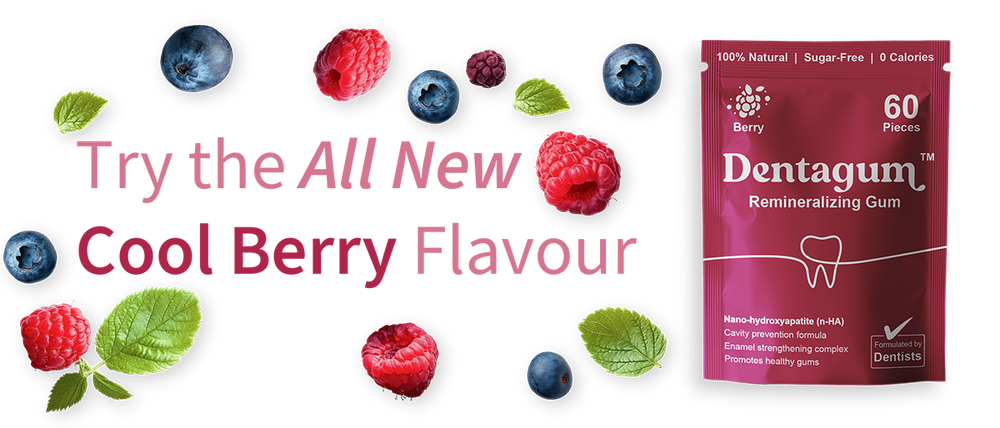
Remineralizing Gum with Xylitol and Nano-HAp
Remineralizing gum sits in the biohacking conversation because it is a deliberate, functional addition to a daily routine aimed at optimizing oral health beyond brushing. But unlike most of the trends on this list, it is backed by a substantial evidence base that extends across multiple independent research groups and decades of clinical investigation.
What the Evidence Shows
Xylitol's mechanism against S. mutans through the PTS metabolic disruption pathway is one of the best-characterized targeted antimicrobial mechanisms in all of dental research. Its selectivity for the primary caries pathogen while sparing commensal organisms, as detailed in a 2026 Frontiers in Cellular and Infection Microbiology review, makes it a genuine microbiome-smart intervention. A 2025 systematic review in BMC Oral Health found xylitol gum significantly reduced S. mutans counts compared to sorbitol gum in 12 of 14 clinical studies reviewed. A clinical microbiome study (Wu et al., Frontiers in Nutrition, 2022) found a 20% reduction in dental plaque accumulation and decreased periodontopathic bacteria after two weeks of xylitol gum chewing at 6.2g per day.
Nano-hydroxyapatite adds a remineralization dimension that addresses enamel vulnerability directly. A 2023 randomized controlled trial (Paszynska et al., Frontiers in Public Health) found nano-HAp non-inferior to standard 1,450 ppm fluoride toothpaste for cavity prevention at 18 months. The Biomimetics 2023 systematic review and meta-analysis by Limeback, Enax, and Meyer covering 44 clinical trials found that hydroxyapatite in oral care products significantly reduced dentin hypersensitivity by 39.5% versus placebo.
The ADA endorses sugar-free gum chewed after meals for its saliva-stimulating and acid-neutralizing effects. The xylitol and nano-HAp evidence extends this basic endorsement into active caries prevention and enamel support territory.

Why It Fits the Biohacking Framework
The biohacking appeal of functional gum is that it turns a passive moment (finishing a meal when you cannot brush) into an active oral health intervention. It stimulates saliva, selectively reduces the primary caries pathogen, delivers remineralization support, and can be done anywhere without any preparation or cleanup. The commitment required is minimal: two to four pieces after meals, chewed for 10 to 20 minutes. The evidence base is among the strongest of any oral care habit in this guide outside of brushing and flossing themselves.
Verdict: Worth Doing. Multiple RCTs and meta-analyses. Selective mechanism that improves the oral microbiome rather than disrupting it. ADA-endorsed category. Low effort, zero risk, maximal return on time invested in a biohacking routine.
Evidence Summary: Xylitol Gum and Nano-HAp
- Xylitol vs. S. mutans: Significant reduction in 12 of 14 studies (BMC Oral Health, 2025 systematic review)
- Xylitol selectivity: Confirmed to spare commensal streptococci while targeting S. mutans across multiple independent studies (Frontiers in Cellular and Infection Microbiology, 2026)
- Plaque reduction: 20% reduction in 2 weeks at 6.2g/day (Wu et al., Frontiers in Nutrition, 2022)
- Nano-HAp RCT: Non-inferior to 1,450 ppm fluoride for cavity prevention at 18 months (Paszynska et al., Frontiers in Public Health, 2023)
- Sensitivity reduction: 39.5% vs. placebo across 44 clinical trials (Limeback, Enax, Meyer, Biomimetics, 2023)
- ADA endorsement: Sugar-free gum after meals explicitly endorsed for saliva stimulation and acid buffering
Figures from ingredient-level and clinical research. Not Dentagum product trials.
Ranked: Best to Skip
Here is the honest ranking from most to least worth incorporating into a daily routine, based on evidence quality, benefit size, safety, and practical effort:
1. Nasal Breathing: Free, well-evidenced physiology, real oral and systemic benefits. The most important foundational habit in this list.
2. Xylitol and Nano-HAp Gum (after meals): Multiple RCTs, selective microbiome-smart mechanism, ADA-endorsed category. Highest evidence-to-effort ratio of any targeted oral biohack.
3. Tongue Scraping: Cochrane-backed evidence for short-term bad breath reduction. Cheap, fast, no risk. Add to morning routine before brushing.
4. Oral Probiotics (K12/M18 specific strains): Promising early data, especially for bad breath and gum health. Evidence still developing but mechanism is sound. Worth considering if breath or gum health is a specific concern.
5. Oil Pulling: Modest, preliminary evidence for plaque and bad breath. Safe and possibly useful as a complementary habit. Does not justify the broad claims made for it or the time investment relative to higher-evidence alternatives.
6. Mouth Taping: Weak evidence, documented asphyxiation risk in people with nasal obstruction. The goal (nasal breathing) is right. This is the wrong tool to achieve it. Not recommended without medical clearance.
Frequently Asked Questions
Is tongue scraping actually effective?
Yes, for short-term bad breath reduction. A Cochrane systematic review confirmed that mechanical tongue cleaning with tongue scrapers has short-term efficacy in controlling halitosis, and that tongue scrapers reduce oral malodor more effectively than tongue brushing alone. The benefit is not permanent: the tongue biofilm recolonizes within hours, so daily use is needed for ongoing effect. For anyone with persistent bad breath despite brushing, tongue scraping is often the missing step.
Is oil pulling worth doing?
Possibly, as a low-risk complement to brushing and flossing, but the evidence is limited. A 2024 systematic review and meta-analysis in the International Journal of Dental Hygiene found some positive effects on plaque and gingival health but rated the evidence as insufficient to recommend oil pulling as a replacement for standard oral hygiene. The systemic health and detoxification claims circulating online have no credible scientific support. The 15-to-20 minute daily time commitment is the primary practical concern given the modest evidence base.
Is mouth taping safe?
Not reliably. A 2025 PLOS One systematic review by Rotenberg et al. (Western University) of 10 studies and 213 patients found minimal benefit and flagged a documented risk of asphyxiation in patients with nasal obstruction. All 10 studies were rated low quality. The Cleveland Clinic and multiple ENT specialists have concluded that the data does not support mouth taping as a safe or effective general intervention. People who snore, have sleep apnea, allergies, or any nasal breathing difficulty should not use mouth taping without medical clearance.
What are oral probiotics and do they work?
Oral probiotics are products containing live beneficial bacterial strains designed to colonize the mouth and shift the microbiome balance. The most studied strains are Streptococcus salivarius K12 (best evidence for bad breath) and M18 (studied for gingivitis and plaque). A study showed K12 lozenges produced significant VSC reduction in 85% of participants after one week. A 2025 systematic review in PMC confirmed promising results but noted methodological limitations across the evidence base. This is a genuinely emerging category worth watching, but the evidence is not yet strong enough for broad recommendations. Gut probiotic capsules are not the same as oral probiotics and will not have the same effect.
Why is nasal breathing important for oral health?
Mouth breathing reduces saliva availability by accelerating evaporation of the oral fluid layer. Reduced saliva means less acid buffering, less remineralization support, and less antimicrobial defense, all of which increase cavity risk and gum disease risk. Chronic mouth breathers consistently show higher plaque scores, more cariogenic bacteria, and more gingival inflammation than habitual nasal breathers. Nasal breathing also filters, humidifies, and warms incoming air, and stimulates nasal nitric oxide production with cardiovascular benefits.
What is the highest evidence-to-effort ratio oral biohack?
Chewing xylitol-containing remineralizing gum after meals. The ADA explicitly endorses sugar-free gum after meals for saliva stimulation and acid buffering. Xylitol adds selective S. mutans suppression, confirmed to spare commensal bacteria across multiple independent clinical studies. Nano-hydroxyapatite provides remineralization support between meals. The commitment is two to four pieces after meals for 10 to 20 minutes. The evidence base across multiple systematic reviews and RCTs is the strongest of any targeted oral care habit in this guide outside of brushing and flossing.

Bottom Line
Oral biohacking is genuinely worth paying attention to: the habits you build around your oral microbiome have real consequences for teeth, gums, and based on the systemic research, for your cardiovascular and metabolic health too. But not all trends are equal. Tongue scraping and nasal breathing are worth doing. Oil pulling has modest evidence and is safe but time-consuming. Oral probiotics are promising and worth watching. Mouth taping is the one to approach with real caution: the evidence is thin, the potential risk is serious, and the goal of nasal breathing is better achieved through safer routes.
The oral biohack with the best evidence-to-effort ratio remains the simplest: chewing xylitol gum with nano-HAp after meals. It selectively suppresses the primary cavity pathogen, supports remineralization, and stimulates saliva. You can do it anywhere, with no preparation, in the time it takes to drive to your next errand.
Try Dentagum: Evidence-Backed Daily Oral CareResearch Summary
This article draws on peer-reviewed systematic reviews, meta-analyses, and clinical trials. Key sources include: Rhee et al., PLOS One, 2025 (mouth taping systematic review, 10 studies, 213 patients); Jong et al., Int J Dental Hygiene, 2024 (oil pulling meta-analysis); Cochrane halitosis review and Outhouse et al. Cochrane tongue scraping review (tongue scraping evidence); Beattie, Frontiers in Microbiology, 2024 (oral probiotics for oral health); PMC systematic review on oral probiotics for halitosis, 2025; Nizami et al., Sage J Oral Diseases, 2025 (probiotics for caries prevention); Wu et al., Frontiers in Nutrition, 2022 (xylitol microbiome study); BMC Oral Health 2025 (xylitol systematic review); Paszynska et al., Frontiers in Public Health, 2023 (nano-HAp RCT); Limeback, Enax, Meyer, Biomimetics, 2023 (nano-HAp meta-analysis). Cleveland Clinic guidance on mouth taping. All Dentagum ingredient statistics are from ingredient-level published research and are not claims about the Dentagum product formula.
References
- Rhee B, Rotenberg BW et al. Breaking social media fads and uncovering the safety and efficacy of mouth taping in patients with mouth breathing, sleep disordered breathing, or obstructive sleep apnea: A systematic review. PLOS One. 2025. DOI: 10.1371/journal.pone.0323643 [10 studies, 213 patients; minimal benefit; asphyxiation risk in nasal obstruction; all studies low quality]
- Jong DJO, Timmerman MF et al. The effect of oil pulling in comparison with chlorhexidine and other mouthwash interventions in promoting oral health: A systematic review and meta-analysis. Int J Dental Hygiene. 2024. DOI: 10.1111/idh.12725
- Cochrane Oral Health. Interventions for managing halitosis (incorporating tongue scraping review). PMC6905014. [Tongue scrapers reduce oral malodor more effectively than tongue brushing; short-term benefit confirmed]
- Outhouse TL et al. Tongue scraping for treating halitosis. Cochrane Database of Systematic Reviews. 2006. [Short-term efficacy of tongue scraping confirmed]
- Coconut oil pulling systematic review. PMC7475120. [4 RCTs, 182 participants; significant bacterial reduction p=0.03; insufficient for conclusive findings]
- Beattie S. Probiotics for oral health: a critical evaluation of bacterial strains. Front Microbiol. 2024;15:1430810. DOI: 10.3389/fmicb.2024.1430810 [S. salivarius K12 and M18 evidence review]
- Effectiveness of Probiotics in Managing Oral Halitosis: A Systematic Review of Randomized Controlled Trials. PMC12425399. 2025. [K12 and Weissella cibaria: promising but methodologically limited]
- Nizami MZI, Chu S et al. Probiotics for caries prevention: A narrative review. J Int Soc Prev Community Dent. 2025. DOI: 10.1177/22808000251376427
- Cleveland Clinic. Mouth Taping: Is It Safe To Use? health.clevelandclinic.org. July 2025. ["Potentially leading to severe respiratory distress" in nasal obstruction cases]
- Wu Y-F, Salamanca E, Chen I-W et al. Xylitol-Containing Chewing Gum Reduces Cariogenic and Periodontopathic Bacteria in Dental Plaque: Microbiome Investigation. Front Nutr. 2022;9:882636. DOI: 10.3389/fnut.2022.882636
- BMC Oral Health. Specific effects of xylitol chewing gum on mutans streptococci levels, plaque accumulation and caries: a systematic review. 2025. [Xylitol reduced S. mutans in 12 of 14 studies vs. sorbitol]
- Frontiers in Cellular and Infection Microbiology. Oral hygiene agents at work: effects on Streptococcus mutans and caries risk. 2026. DOI: 10.3389/fcimb.2026.1768512 [Xylitol spares commensal streptococci; multiple independent clinical study citations]
- Paszynska E, Pawinska M, Gawriolek M et al. Nano-HAp RCT: 18-month fluoride non-inferiority. Front Public Health. 2023. DOI: 10.3389/fpubh.2023.1199728
- Limeback H, Enax J, Meyer F. Hydroxyapatite in oral care products: Biomimetics systematic review and meta-analysis. Biomimetics. 2023. [44 clinical trials; 39.5% sensitivity reduction]
