
How Saliva Helps Protect Your Teeth Naturally
Your mouth has a built-in protection system working around the clock, and most people take it completely for granted. Here's what saliva actually does for your teeth, and why supporting it matters more than most people realize.

Saliva does far more than keep your mouth comfortable. It neutralizes acid after every meal, delivers the minerals your enamel needs to repair itself, forms a protective coating on your teeth, and produces proteins that fight bacteria around the clock. It's one of the most sophisticated biological defense systems in the human body, and most people never think about it until something goes wrong.
Understanding what saliva actually does, and what happens when it's compromised, changes how you think about oral health entirely.
What Saliva Is Made Of
Saliva is roughly 99% water, but that remaining 1% is doing an enormous amount of work.
The key components relevant to oral health are calcium and phosphate ions, bicarbonate, antimicrobial proteins including lysozyme, lactoferrin, and lactoperoxidase, immunoglobulins, mucins, and enzymes like amylase. Each plays a distinct role in keeping your teeth and oral tissues healthy.
Your salivary glands produce between 0.5 and 1.5 litres of saliva per day under normal conditions, though flow rate varies considerably depending on hydration, medications, stress, and age. That flow rate turns out to matter a great deal for how well the protective mechanisms work.
Role 1: Neutralizing Acid Before It Damages Enamel
Every time you eat or drink something, oral bacteria get to work. They metabolize sugars and fermentable carbohydrates, producing lactic acid as a byproduct. That acid lowers the pH in your mouth, and when it falls below 5.5, enamel starts to dissolve. This is demineralization, and it's happening to some degree after almost every meal.
Saliva's first and most urgent job is to neutralize that acid and restore pH to a safe range.
It does this through three overlapping buffering systems. The primary one is the carbonic acid/bicarbonate system, driven largely by saliva from the parotid gland. The second is a phosphate buffering system. The third involves salivary proteins. Together, they work to push oral pH back toward saliva's natural range of 6.7 to 7.4 as quickly as possible.
The faster your pH recovers, the shorter the window during which enamel is under attack. This is why salivary flow rate is directly linked to cavity risk. People who produce less saliva, whether from medication side effects, systemic conditions, or chronic dehydration, stay in that danger zone for longer after every meal, which significantly accelerates enamel erosion and caries development over time.
Role 2: Rebuilding Enamel Through Remineralization
Enamel can't regenerate the way skin or bone can. Once it's gone, it's gone permanently. But early-stage mineral loss, the kind that happens every day from acid exposure, is reversible. Saliva is what reverses it.
A 2021 narrative review published in F1000Research confirmed that saliva acts as "a carrier of essential ions, such as fluoride, calcium and phosphate, which have a positive role in enamel's remineralization," and that salivary proteins and enzymes play a natural role in the mineralization process itself.
The mechanism works like this. After the acid challenge of a meal, saliva delivers a supersaturated solution of calcium and phosphate ions to the enamel surface. These ions reintegrate into the hydroxyapatite crystals that make up enamel, filling in the microscopic gaps left by demineralization. A 2024 paper from the University of Duisburg-Essen published in Dentistry Journal described this as saliva playing a dual role: direct delivery of calcium and phosphate ions to the enamel surface, and gradual sustained ion release that maintains a supersaturated environment to support ongoing remineralization.
The key word is ongoing. Remineralization from saliva is a continuous process, not a one-time event. Teeth cycle through demineralization and remineralization dozens of times a day. Whether that cycle favors health or decay depends heavily on how well your saliva is functioning.
Role 3: Forming a Protective Coating on Tooth Surfaces
Saliva doesn't just deliver ions. It also physically coats your teeth with a thin layer called the acquired pellicle, a film of salivary proteins that forms on enamel within minutes of cleaning. This pellicle serves as a selective barrier between your teeth and the oral environment.
It's not perfect protection. Acidic foods and drinks can still penetrate it and begin demineralization. But it slows the process considerably and reduces the direct contact between acid and enamel. It also provides an attachment surface for remineralizing ions, concentrating calcium and phosphate where the enamel needs it most.
The pellicle reforms constantly. Brushing removes it, but saliva rebuilds it within a few minutes. It's a dynamic, self-renewing layer that your mouth generates automatically every hour of every day.
Role 4: Fighting Bacteria With Antimicrobial Proteins
Beyond its chemical roles, saliva functions as an active immune defense system for the oral cavity. It contains a suite of antimicrobial proteins that work continuously to control bacterial populations.
Lysozyme targets and breaks down bacterial cell walls. Lactoferrin binds iron and starves bacteria of a nutrient they need to grow, while also directly inhibiting the adhesion of Streptococcus mutans to tooth surfaces. Lactoperoxidase generates antimicrobial compounds that disrupt bacterial metabolism. Immunoglobulin A (IgA) antibodies neutralize specific pathogens and prevent them from attaching to oral tissues.
Research published in Oral Diseases confirmed that these innate salivary defense proteins exert broad antimicrobial activity against bacterial, viral, and fungal pathogens. They're not a complete barrier against infection on their own, but they substantially reduce the bacterial load in your mouth between brushing and form a meaningful part of your overall immune defense.
When saliva production is reduced, all of these mechanisms are compromised simultaneously. That's why xerostomia (chronic dry mouth) is one of the strongest predictors of rapid dental deterioration. It's not just discomfort. It's the loss of a whole-body defense system operating in your mouth.
What Reduces Saliva Production

Knowing what compromises saliva helps you protect it.
Medications are the most common culprit. More than 400 commonly prescribed drugs list dry mouth as a side effect, including antihistamines, antidepressants, blood pressure medications, and diuretics. If you're taking any of these regularly and noticing increased thirst or changes in your oral health, it's worth mentioning to your dentist.
Dehydration reduces saliva volume meaningfully. Your salivary glands need adequate hydration to maintain healthy flow rates. Caffeine and alcohol both have mild diuretic effects that compound this.
Mouth breathing, particularly during sleep, dramatically reduces saliva's effectiveness by exposing oral tissues to air and accelerating evaporation. People who breathe through their mouths at night often wake up with a dry, sticky feeling that reflects genuine overnight saliva deprivation.
Aging naturally reduces salivary gland function over time. Stress and anxiety trigger physiological responses that temporarily reduce saliva flow, which is why your mouth feels dry before a stressful event. Autoimmune conditions like Sjögren's syndrome can severely impair the salivary glands, creating a significant and chronic dental risk.
How Chewing Gum Supports Your Saliva's Natural Work
One of the most practical and well-researched ways to support saliva between meals is chewing sugar-free gum. The chewing action stimulates saliva production mechanically, increasing flow rate and delivering more of saliva's protective components to the oral environment precisely when they're most needed: the post-meal period when acid exposure is at its peak.
The American Dental Association recommends chewing sugar-free gum for 20 minutes after meals to increase salivary flow, reduce plaque acid, and strengthen teeth. It's one of the few non-brushing oral health behaviors the ADA explicitly endorses.
Chewing gum with xylitol takes that benefit further. Xylitol is a sugar alcohol that oral bacteria, specifically Streptococcus mutans, attempt to metabolize but can't. The bacteria burn energy on a futile process, become exhausted, and die off. A 2022 systematic review published in Clinical Oral Investigations found that xylitol gum decreased plaque accumulation in 13 of 14 randomized controlled clinical trials reviewed. That reduction in bacterial load directly reduces the acid these bacteria would otherwise be producing, which means saliva has less to neutralize and more capacity to focus on remineralization.
In simple terms: chewing xylitol gum after meals reduces the acid load your saliva has to deal with, while simultaneously stimulating more saliva to do the work.
Ingredients like nano-hydroxyapatite in functional gums can extend this further. Where saliva delivers calcium and phosphate ions for natural remineralization, nano-HAp delivers those same minerals in nanoparticle form, directly and in sustained contact with enamel during the chewing window. It amplifies what saliva is already trying to do.
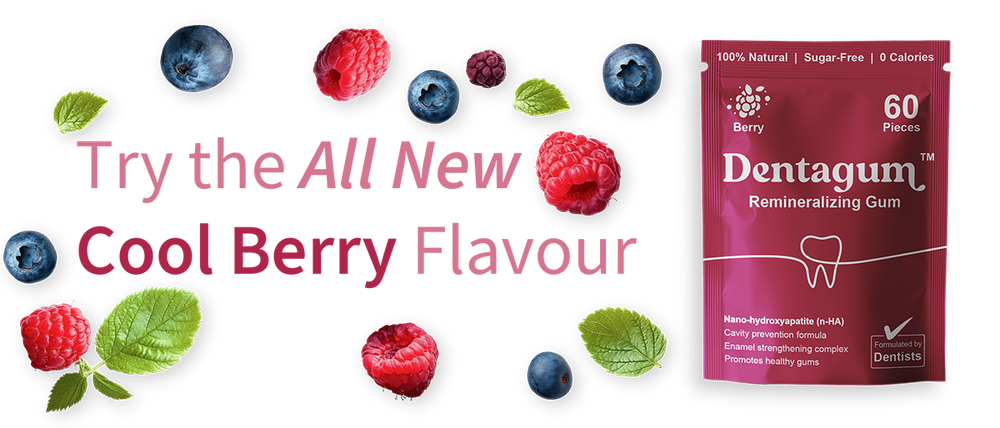
Dentagum's Remineralizing Chewing Gum combines organic xylitol and nano-hydroxyapatite in a chicle-based formula designed to be chewed for 10-20 minutes after meals. It works with your saliva's natural defense system rather than replacing it: reducing the bacterial load saliva has to manage, while delivering remineralizing minerals during the same window. In Dentagum's own clinical data, 87% of participants were less susceptible to cavities compared to non-users with consistent daily use.
Simple Habits That Help Your Saliva Do Its Job
Supporting your saliva doesn't require dramatic changes. A few consistent habits make a meaningful difference.
Stay hydrated. Adequate water intake throughout the day keeps your salivary glands functioning at healthy levels. Sipping water between meals also physically rinses food debris and dilutes acid.
Chew sugar-free gum after meals. Particularly xylitol-based gum, and particularly in the 20-30 minutes after eating when oral pH is at its lowest and your enamel is most vulnerable.
Limit acid and sugar exposure. The frequency matters more than the quantity. Constant snacking keeps oral pH suppressed and gives saliva no recovery window. Eating at defined meal times allows your buffering systems to fully restore pH between exposures.
Breathe through your nose. Mouth breathing dries out the oral environment and reduces the effectiveness of every protective mechanism saliva provides.
Talk to your dentist about dry mouth. If you're on multiple medications or notice persistent dryness, your dentist can assess your salivary function and recommend specific interventions before it becomes a dental problem.
Frequently Asked Questions
What does saliva actually do for your teeth?
Saliva neutralizes the acid that bacteria produce after meals, delivers calcium and phosphate ions that rebuild enamel through remineralization, forms a protective coating on tooth surfaces called the acquired pellicle, and produces antimicrobial proteins including lysozyme and lactoferrin that fight cavity-causing bacteria. It's a continuous, multi-layered defense system working around the clock.
What pH does saliva need to be to protect enamel?
Saliva's healthy pH range sits between 6.7 and 7.4. Enamel begins to demineralize when oral pH falls below 5.5. Saliva's buffering systems work to restore pH to the safe range after every acid exposure. The faster that recovery happens, the less damage accumulates over time.
Does chewing gum increase saliva production?
Yes. The mechanical action of chewing is one of the most effective ways to stimulate saliva flow. The American Dental Association recommends chewing sugar-free gum for 20 minutes after meals specifically because it increases salivary flow, neutralizes plaque acid, and strengthens teeth. Chewing gum with xylitol also reduces the bacteria that produce the acid saliva has to neutralize.
What happens when you don't produce enough saliva?
Reduced saliva production (xerostomia or dry mouth) significantly increases the risk of tooth decay, enamel erosion, gum disease, and oral infections. Without adequate saliva, acid from bacteria goes unneutralized for longer, remineralization is impaired, the antimicrobial protein system is weakened, and the protective pellicle on tooth surfaces is less robust. Dry mouth is one of the strongest predictors of rapid dental deterioration.
What causes dry mouth?
The most common cause is medication. More than 400 commonly prescribed drugs list dry mouth as a side effect, including antihistamines, antidepressants, and blood pressure medications. Dehydration, mouth breathing during sleep, aging, stress, and autoimmune conditions like Sjögren's syndrome can all also reduce salivary flow significantly.
How does xylitol gum support saliva's protective role?
Xylitol reduces the population of Streptococcus mutans, the primary acid-producing bacterium in the mouth. Less bacteria means less acid, which means saliva's buffering systems have a smaller acid load to manage after meals. Chewing the gum also stimulates saliva production mechanically, creating a double benefit: more saliva produced, and less acid for it to neutralize.
The Bottom Line
Saliva is one of the most underappreciated systems in human biology. It neutralizes acid, rebuilds enamel, coats your teeth with a protective film, and fights bacteria, all continuously, all automatically. When it's working well, it quietly prevents enormous amounts of dental damage. When it's compromised, the consequences show up in the dental chair.
Supporting your saliva is simpler than it sounds. Stay hydrated, reduce the frequency of sugar and acid exposure, and give your mouth recovery windows between meals. Chewing xylitol gum for 20 minutes after eating is one of the most practical habits you can build, reducing the bacterial load your saliva has to manage while stimulating more saliva at exactly the right time.
Dentagum's Remineralizing Chewing Gum is dentist-formulated with organic xylitol and nano-hydroxyapatite, designed to complement your saliva's natural defenses after every meal. Try it risk-free with a 30-day guarantee at dentagum.co.
References
- Farooq I et al. "The Role of Salivary Contents and Modern Technologies in the Remineralization of Dental Enamel: A Narrative Review." F1000Research, 2021. https://www.ncbi.nlm.nih.gov/pmc/articles/PMC7076334/
- Enax J et al. "The Remineralization of Enamel from Saliva: A Chemical Perspective." Dentistry Journal, 2024. https://www.ncbi.nlm.nih.gov/pmc/articles/PMC11592461/
- "Biomimetic Effect of Saliva on Human Tooth Enamel: A Scanning Electron Microscopic Study." PMC, 2025. https://www.ncbi.nlm.nih.gov/pmc/articles/PMC11724731/
- Tenovuo J. "Clinical Applications of Antimicrobial Host Proteins Lactoperoxidase, Lysozyme and Lactoferrin in Xerostomia: Efficacy and Safety." Oral Diseases, 2002. https://pubmed.ncbi.nlm.nih.gov/11936452/
- "Evidence-Based Remineralization Therapies." Decisions in Dentistry, April 2023. https://decisionsindentistry.com/article/evidence-based-remineralization-therapies/
- Nasseripour M et al. "A Systematic Review and Meta-Analysis of the Role of Sugar-Free Chewing Gum on Plaque Quantity in the Oral Cavity." Frontiers in Oral Health, 2022. https://www.ncbi.nlm.nih.gov/pmc/articles/PMC9006880/
- American Dental Association. "Chewing Gum." Oral Health Topics. https://www.ada.org/resources/ada-library/oral-health-topics/chewing-gum
RESEARCH SUMMARY
- Farooq I et al. "The Role of Salivary Contents and Modern Technologies in the Remineralization of Dental Enamel: A Narrative Review." F1000Research, 2021. Saliva acts as a buffering agent and carrier of calcium, phosphate, and fluoride ions essential for enamel remineralization. Salivary proteins and enzymes play a natural role in enamel mineralization.
- Enax J et al. "The Remineralization of Enamel from Saliva: A Chemical Perspective." Dentistry Journal, 2024. University of Duisburg-Essen. Natural remineralization of enamel from saliva is of major importance for oral health. Detailed the calcium phosphate ion delivery mechanism from saliva to enamel.
- PMC / Scanning Electron Microscopy Study. "Biomimetic Effect of Saliva on Human Tooth Enamel." 2025. Confirmed saliva plays a dual role: direct delivery of Ca2+ and PO43- ions to enamel surface, and gradual ion release causing supersaturation that drives remineralization. Critical pH threshold for enamel demineralization confirmed at 5.5.
- Dimensions of Dental Hygiene / Decisions in Dentistry. "Saliva, Remineralization and Dental Caries." Saliva's buffering capacity operates through three systems: carbonic/bicarbonate (primary), phosphate, and protein buffers. Saliva neutralizes acids, forms a protective pellicle on tooth surfaces, and enhances remineralization.
- Tenovuo J. "Clinical Applications of Antimicrobial Host Proteins Lactoperoxidase, Lysozyme and Lactoferrin in Xerostomia." Oral Diseases, 2002. Established that innate salivary defense proteins (lysozyme, lactoferrin, peroxidase) exert wide antimicrobial activity against bacterial, viral, and fungal pathogens in vitro.
- University of Duisburg-Essen / Materials journal, 2022. When salivary pH falls below the critical value of 5.5, acids begin decomposing enamel. Saliva's optimal pH sits between 6.7 and 7.4.
- Nasseripour M et al. Frontiers in Oral Health, 2022. Sugar-free gum including xylitol significantly reduces plaque and supports saliva stimulation.
