
How to Remineralize Teeth: The Complete Guide
Confident advice on remineralizing teeth is everywhere, most of it contradictory. Here's the sourced version: the real mechanism, the diet that fuels it, and the myths that don't hold up.

Teeth remineralize through a natural, ongoing process in which saliva, supersaturated with calcium and phosphate ions, redeposits mineral into enamel that has been softened by acid. You support this process in four practical ways: keeping your mouth's pH above the 5.5 threshold where demineralization starts, eating enough calcium, phosphate, vitamin D, and vitamin K2 to keep saliva mineral-rich, maximizing saliva flow around meals, and being consistent, since your enamel cycles through demineralization and remineralization dozens of times a day. This works specifically on early-stage enamel softening, not on a cavity that has already formed a hole. Popular home remedies like oil pulling and apple cider vinegar have no evidence behind them for remineralization, and the vinegar can actively erode enamel further.
"How to remineralize teeth" turns up a lot of confident, contradictory advice, from serious dental science to home remedies with no evidence behind them at all. This guide is built to be the version you can actually trust: what remineralization really is, the chemistry behind it, the diet and habits with real research support, the common myths that do not hold up, and a practical daily framework that ties it together. Nothing here promises to regrow a tooth. What it does show is exactly what the evidence supports, and where a remineralizing gum realistically fits as one useful tool among several, not a stand-alone fix. For a breakdown of what to actually look for in a remineralizing gum specifically, see our guide comparing remineralizing gum brands.
- What remineralization actually is, and isn't
- The mechanism: how saliva rebuilds enamel
- The pH threshold that determines everything
- Diet: the nutrients that fuel remineralization
- The post-meal window: your daily opportunity
- What doesn't work: common myths
- A practical daily framework
- Where a remineralizing gum fits
- Frequently asked questions
What remineralization actually is, and isn't
Once your enamel finishes forming, it cannot be biologically repaired or replaced the way skin or bone can, since it has no living cells or blood supply. What it can do is remineralize, meaning minerals lost from the surface during an acid attack get redeposited from saliva, filling in the microscopic gaps left behind. This is a genuinely different process than growing new tissue, and it is worth being precise about the distinction, because it defines what remineralization can and cannot fix.
Your enamel is in a constant back-and-forth between demineralization, mineral loss triggered by acid, and remineralization, mineral gain from saliva, dozens of times a day. When the scale tips toward loss for too long, without enough recovery time, the earliest visible sign is often a chalky white spot, a lesion that has not yet cavitated. This is the stage where remineralization genuinely works, restoring mineral density and, in many cases, reversing the visible defect. Once decay progresses into an actual cavity, a physical hole in the tooth, remineralization cannot fix it, and a dentist is needed.
Remineralization repairs early, pre-cavity mineral loss. It does not regrow enamel structure that has already broken down into a cavity. Everything in this guide operates within that first category.
The mechanism: how saliva rebuilds enamel
Saliva is doing more work here than most people realize. It is not just moisture, it is a solution supersaturated with calcium and phosphate ions relative to your enamel's mineral content, meaning it is chemically primed to deposit mineral back onto the tooth surface whenever conditions allow. Saliva also carries proteins and enzymes that actively support this deposition process, alongside its more familiar role of buffering acid and neutralizing the mouth's pH after eating.
The chemistry is more layered than a simple crystallization. Calcium phosphate does not deposit directly as finished hydroxyapatite; it typically passes through intermediate, less stable phases, including amorphous calcium phosphate, before converting into the same crystalline apatite structure your enamel is made of. Saliva also carries nanoscopic calcium phosphate clusters that can attach directly to the enamel surface, giving the mineral more than one route back into the tooth. Fluoride, when present, accelerates this whole process by increasing local supersaturation and forming a more acid-resistant fluorapatite structure as it integrates.
Unstimulated saliva flows at roughly 0.3 mL per minute. Chewing or other stimulation can push that up toward 7 mL per minute. Since saliva is the delivery vehicle for calcium and phosphate, anything that meaningfully increases flow rate increases how much mineral reaches your enamel during the recovery window after eating.
The pH threshold that determines everything
Every strategy in this guide ultimately comes back to one number: pH 5.5. Below that point, your enamel's mineral starts dissolving faster than saliva can redeposit it. Above it, the balance tips back toward repair. This relationship was first mapped in the 1940s by researcher R.M. Stephan, and the resulting pH curve, now called the Stephan Curve, remains the foundational model for understanding when your teeth are vulnerable and when they are recovering.
Here is what actually happens after you eat something with fermentable carbohydrates. Oral bacteria metabolize the sugars almost immediately, and plaque pH drops sharply, often reaching its lowest point within 5 to 20 minutes. From there, saliva's buffering capacity gradually pulls the pH back up, but recovery is not instant: research consistently places the mouth in the sub-5.5 "danger zone" for roughly 20 to 40 minutes, with full return to resting pH sometimes taking 45 to 60 minutes depending on saliva flow, buffering capacity, and what else you consume during that window.
The practical implication is straightforward: anything that shortens time spent below 5.5, or that keeps you from repeatedly resetting the clock through frequent snacking, gives remineralization more net time to work each day.
Diet: the nutrients that fuel remineralization

Diet supports remineralization indirectly, by determining what your saliva has available to deposit, not by delivering minerals from your bloodstream straight into your enamel. Several nutrients work together in this system, and a gap in any one of them weakens the whole chain.
| Nutrient | Role | Food sources |
|---|---|---|
| Calcium | The primary structural mineral in enamel | Dairy, leafy greens, almonds, canned fish with bones |
| Phosphate | Pairs with calcium to form hydroxyapatite | Meat, poultry, fish, eggs, nuts, seeds |
| Vitamin D | Increases intestinal calcium absorption | Fatty fish, egg yolks, fortified foods, sunlight |
| Vitamin K2 | Directs calcium toward teeth and bone, away from soft tissue | Natto, grass-fed butter, aged cheese, egg yolks |
| Magnesium | Supports calcium and phosphate metabolism | Leafy greens, nuts, whole grains |
Vitamin D's role deserves particular attention, since deficiency is common and the dental consequences are measurable. A 2023 systematic review in Nutrients, covering seven studies and 6,978 participants, found that low vitamin D levels were associated with enamel defects in 21.1% to 64% of the children studied, depending on the population.
Hydration matters here too, since water dilutes oral acids and supports the saliva flow the whole system depends on. It is a simple lever, easy to overlook, and genuinely useful alongside the nutrient-focused advice above.
The post-meal window: your daily opportunity

Given the Stephan Curve mechanics above, the 20 to 40 minutes right after eating is where you have the most influence over your daily remineralization balance. A few specific, research-backed moves make a real difference during that window.
Research comparing post-meal beverages found pH returning to normal fastest after milk, then water, and slowest after fruit juice. Aged hard cheese has also been shown to help neutralize acid relatively quickly, likely due to casein phosphopeptides that buffer pH directly in the mouth.
Chewing itself is one of the more direct levers, since it mechanically stimulates the saliva flow this entire process depends on. This is also why dental guidance consistently recommends waiting at least 30 minutes before brushing after eating something acidic: acid temporarily softens the outer enamel layer, and brushing immediately can physically abrade that softened surface before it has had the chance to reharden.
What doesn't work: common myths

Because this topic attracts so much wellness-adjacent advice, it is worth being direct about what the evidence does not support, since some popular practices actively work against the goal.
There is no evidence that oil pulling remineralizes enamel or reverses tooth decay. As one dental school department chair put it plainly, there is no known biologic or mechanical reason it would help enamel specifically; some studies suggest modest plaque or gingival benefits from the mechanical swishing action, but that is a separate claim from remineralization. Apple cider vinegar is worse than merely ineffective: its acidity can actively degrade enamel with regular use, and the ADA has specifically warned that regular consumption increases the risk of tooth decay and enamel erosion. Whatever surface-staining benefit people report has nothing to do with remineralization, and the acid exposure works directly against it.
Neither of these practices is harmless-but-useless across the board; ACV in particular carries a real downside. If a remedy is not tied to the calcium-phosphate-saliva mechanism covered earlier, it is worth treating with real skepticism regardless of how it is marketed.
A practical daily framework
Pulling this together into something usable, here is what a remineralization-supportive day actually looks like.
| When | What to do |
|---|---|
| Morning | Brush with a fluoride or nano-hydroxyapatite toothpaste. Include a calcium and vitamin D source at breakfast, such as eggs and dairy or a fortified alternative. |
| Through the day | Stay hydrated. After meals or acidic drinks, avoid brushing immediately, chew sugar-free gum or rinse with water instead, and give your saliva 20 to 40 minutes to do its work. |
| Evening | Brush and floss thoroughly before bed. Saliva flow drops significantly during sleep, so going to bed with a clean mouth removes fuel for bacteria during the hours your natural defenses are weakest. |
Consistency matters more than intensity here. A single perfect day will not undo months of frequent snacking and no consideration for pH recovery time, and conversely, one off day will not undo months of a solid routine. The cumulative pattern is what determines the outcome. For a deeper look at how eating frequency specifically affects this balance, see our guide on how gum helps neutralize acids after eating.
Where a remineralizing gum fits
Given everything above, chewing gum's role in this picture is specific rather than magical: it mechanically stimulates the saliva flow that carries calcium and phosphate back to your enamel, precisely during the post-meal window when that recovery matters most. A gum that also delivers nano-hydroxyapatite and xylitol adds a direct mineral source and antibacterial support to that same saliva surge, but it works within the same mechanism covered throughout this guide rather than around it.
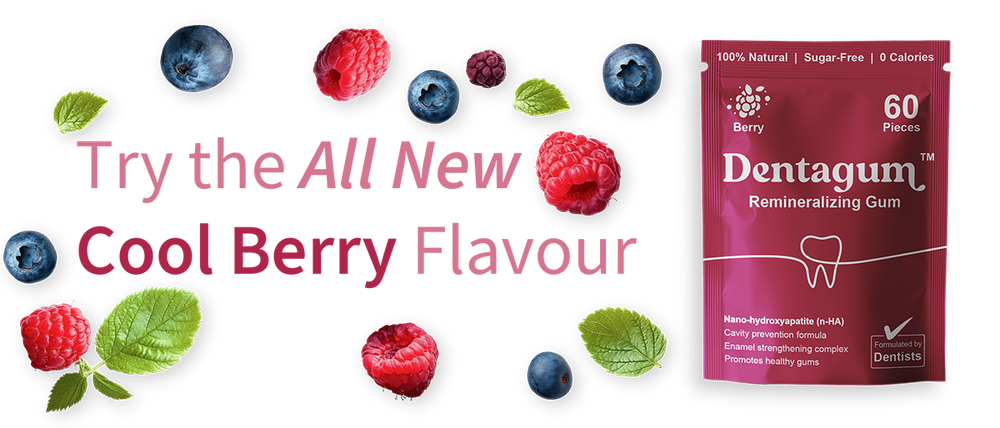
Dentagum's Remineralizing Chewing Gum is designed for the 10 to 20 minute post-meal window this guide covers, combining the mechanical saliva boost of chewing with nano-hydroxyapatite and organic xylitol. It is one practical lever within the broader framework above, not a replacement for diet, brushing, or professional dental care.
Frequently asked questions
Yes, within a specific scope. Early-stage enamel demineralization, before a cavity has formed, can be remineralized through diet, saliva stimulation, and good pH management. Once decay progresses into an actual cavity, natural remineralization cannot reverse it, and professional treatment is needed.
Meaningful, measurable improvement in early lesions typically develops over weeks to months of consistent habits, not days. The underlying pH recovery after each meal happens within about 20 to 60 minutes, but the cumulative mineral gain that reverses a visible white spot lesion builds gradually with repeated exposure.
No. There is no evidence supporting oil pulling as a remineralization method. It may offer modest plaque-related benefits from the mechanical swishing action, but dental researchers have found no biologic mechanism connecting it to enamel mineral repair.
Frequent sugary or acidic snacking is the main issue, since it repeatedly resets your mouth's pH into the demineralizing range before it can fully recover. It is less about avoiding any single food and more about limiting how often you re-trigger the acid cycle throughout the day.

The Bottom Line
Remineralizing teeth is a real, well-understood process: saliva redeposits calcium and phosphate into early enamel damage, and you support it by keeping pH above 5.5, eating the nutrients saliva needs, maximizing saliva flow around meals, and staying consistent over time. It works on early lesions, not on cavities that have already formed. Skip the unproven remedies like oil pulling and apple cider vinegar, and focus instead on diet, the post-meal window, and good daily habits, with a remineralizing gum as one practical tool that fits directly into that same mechanism.
Real remineralization, no magic required.
See how Dentagum supports this process at dentagum.coResearch Summary
- PMC narrative review: saliva's buffering capacity and role as a carrier of fluoride, calcium, and phosphate ions in enamel remineralization.
- PMC chemical perspective review: remineralization proceeds through intermediate amorphous calcium phosphate phases before forming stable hydroxyapatite.
- Stephan Curve research (dentalcare.com CE course; Dimensions of Dental Hygiene, 2024): pH drops within 5-20 minutes of eating and stays below 5.5 for approximately 20-40 minutes before recovering.
- Systematic review, Nutrients (2023), 7 studies, n=6,978: low vitamin D associated with enamel defects in 21.1% to 64% of children studied.
- Post-meal beverage pH recovery research: milk restored pH fastest, followed by water, then fruit juice slowest.
- Dental research and ADA commentary: no evidence supporting oil pulling for remineralization; apple cider vinegar's acidity can actively erode enamel with regular use.
References
- "The role of salivary contents and modern technologies in the remineralization of dental enamel: a narrative review." PMC. https://pmc.ncbi.nlm.nih.gov/articles/PMC7076334/
- "The Remineralization of Enamel from Saliva: A Chemical Perspective." PMC. https://www.ncbi.nlm.nih.gov/pmc/articles/PMC11592461/
- "The Role of Nutrition in Dental Caries." Dimensions of Dental Hygiene, 2024. https://dimensionsofdentalhygiene.com/article/the-role-of-nutrition-in-dental-caries/
- "Stephan Curve." Caries Process, Prevention and Management: The Diet, dentalcare.com Continuing Education. https://www.dentalcare.com/en-us/ce-courses/ce713/stephan-curve
- Vitamin D deficiency and enamel defects systematic review. Nutrients, 2023. https://www.vitadentlabs.com/vitamins-for-teeth-enamel/
- "Oil Pulling & Other Traditional Oral-Rinsing Methods: Benefits, Myths & Science." 2026. https://coloradodentalwellness.com/oil-pulling-benefits-myths-science/
- American Dental Association. "Experts provide latest science on apple cider vinegar." https://adanews.ada.org/huddles/experts-provide-latest-science-on-apple-cider-vinegar/
