
Energy Gum vs Coffee: Better for Focus and Teeth?
Caffeine gum feels faster than coffee, and there's real pharmacokinetics behind why. Here's the honest comparison, including what coffee actually does to your teeth.

Caffeine gum generally produces a faster perceived onset than coffee, often within 5 to 10 minutes, because some of the caffeine absorbs directly through the lining of the mouth rather than waiting to be digested. A landmark pharmacokinetic study found caffeine from gum reaching peak blood levels in 44 to 80 minutes, compared to 84 to 120 minutes for a swallowed capsule, and coffee follows a broadly similar digestive path to the capsule. The total amount of caffeine your body absorbs ends up similar either way. Where the two genuinely diverge is your teeth: coffee sits at a pH of roughly 4.85 to 5.10, well below the 5.5 threshold where enamel starts losing mineral, and its tannins are a leading cause of surface staining. A well-formulated sugar-free gum carries neither of those downsides.
Reaching for gum instead of a third coffee is a genuinely common swap for people chasing an afternoon focus boost without the crash, the bathroom trips, or the jittery overshoot. The comparison usually gets reduced to "which gives you more energy," but the more useful question is how each one actually gets caffeine into your system, and what each one does to your teeth along the way.
How caffeine gum actually works
The reason gum feels faster comes down to where the caffeine gets absorbed. When you chew caffeinated gum, a portion of the caffeine is absorbed directly through the buccal mucosa, the lining of your cheeks and gums, entering the bloodstream without first passing through your stomach and liver. Coffee and capsules have to be swallowed and digested before that same caffeine reaches circulation.

The clearest data on this comes from a widely cited pharmacokinetic study that compared caffeine delivered via chewing gum against capsules at matched doses. It found gum reaching peak blood concentration in 44 to 80 minutes, compared to 84 to 120 minutes for the capsule, roughly twice as fast to peak. Importantly, the total amount of caffeine absorbed over time, and how it was eventually cleared from the body, was not meaningfully different between the two. Gum does not give you more caffeine. It gets a portion of it into your system faster. The mechanism is the same one behind gum's other oral benefits, chewing itself triggers a cascade of physiological responses, including the sharp rise in saliva flow covered in our guide to what the ADA says about chewing gum.
How coffee compares for onset
Coffee follows a route closer to the capsule than the gum, since it has to be swallowed and absorbed through the digestive tract rather than the mouth lining. Regular coffee drinkers commonly report noticing an effect within 15 to 20 minutes, with caffeine reaching peak blood concentration generally somewhere in the 30 to 45 minute range, though this varies with stomach contents, individual metabolism, and how quickly the coffee itself is consumed. That puts coffee's typical onset somewhere between capsules and gum, since a hot beverage is absorbed a bit differently than a solid capsule, but it does not get the buccal-absorption shortcut that gum has.
A faster perceived onset is genuinely useful in specific situations: before a workout, heading into a meeting with no time to sip a full cup, or during a long drive when stopping isn't convenient. For a slow, unhurried afternoon, the difference matters a lot less.
What's actually in most energy and focus gum
Most caffeinated or "focus" gum on the market pairs caffeine with L-theanine, an amino acid naturally found in green tea. The combination is popular because L-theanine appears to smooth out some of caffeine's rougher edges, research on the pairing has shown improvements in both speed and accuracy on cognitive tasks compared to caffeine alone, with less of the jittery overshoot some people get from caffeine by itself. Caffeine content per piece varies widely by brand, generally landing somewhere between 40 and 100 mg, compared to roughly 95 mg in an average 8-ounce cup of brewed coffee.
The catch: not all energy gum is good for your teeth
Here is the part most energy gum marketing skips entirely. Caffeine content and L-theanine are only part of the formula. The sweetener and base matter just as much for your teeth as they do in any other gum, and a lot of energy gum brands lean on the same sweeteners and synthetic gum bases as conventional supermarket gum, since the focus of the formula is the caffeine payload, not the oral health profile.
Before assuming a caffeine gum is a "healthy" choice just because it is sugar-free, check whether xylitol is the primary sweetener rather than sorbitol or aspartame, and whether the gum base is disclosed. A functional caffeine payload does not automatically mean a functional oral care product.
Coffee's real problem: acid and tannins

Coffee's issue for your teeth has nothing to do with caffeine and everything to do with acidity and pigment. Coffee sits at a pH of roughly 4.85 to 5.10, meaningfully below the 5.5 threshold where enamel starts to lose mineral. Every cup you drink briefly drops your mouth's pH into that demineralizing range, and the effect compounds if you sip slowly over an hour rather than drinking it quickly.
On top of the acidity, coffee's tannins and chlorogenic acids are a well-documented cause of extrinsic staining, binding to the pellicle layer on your enamel and building up into the yellow-brown discoloration regular drinkers eventually notice. Sipping coffee throughout the day rather than drinking it in one sitting extends the acid exposure time, which most dentists consider more damaging than a brief, higher-acid exposure followed by recovery.
So which should you reach for?

For raw speed to feeling alert, gum has a real mechanistic edge thanks to buccal absorption, though the difference is measured in tens of minutes, not a dramatically different experience. For your teeth specifically, coffee carries a genuine, well-documented cost in acidity and staining that gum, chosen well, does not. The two are not really direct substitutes for most people since coffee is a ritual as much as a stimulant, but on a purely mouth-health basis, a well-formulated sugar-free gum is the gentler option, and it can also help offset some of coffee's impact if used right after your cup rather than instead of it.
Chewing sugar-free gum after finishing a coffee boosts saliva flow, which helps buffer the acid and clear some of the staining compounds before they have as much time to work on your enamel. For the fuller picture on protecting your smile from coffee, wine, and tea, see our guide on preventing everyday drink stains.
Frequently asked questions
Generally, yes, in terms of perceived onset. Some of the caffeine in gum is absorbed directly through the lining of the mouth, bypassing digestion, while coffee has to be swallowed and absorbed through the digestive tract. The total caffeine your body ultimately absorbs is similar either way.
It depends entirely on the formula, not the caffeine itself. Some energy gum brands use the same sugar-heavy or lower-quality sweetener systems as conventional gum. Check for xylitol as the primary sweetener and a disclosed gum base before assuming a caffeine gum is teeth-friendly.
Yes, in two separate ways. Its acidity, typically pH 4.85 to 5.10, sits below the 5.5 point where enamel begins losing mineral, and its tannins are a leading cause of surface staining over time. Neither effect is dramatic from a single cup, but both compound with daily, repeated exposure.
Most energy or focus gum contains roughly 40 to 100 mg of caffeine per piece, depending on the brand, compared to about 95 mg in an average 8-ounce cup of brewed coffee. The exact amount varies significantly by product.

The Bottom Line
Caffeine gum generally reaches your bloodstream faster than coffee thanks to buccal absorption, though the total caffeine you end up absorbing is roughly the same either way. The bigger difference is what each one does to your teeth: coffee's acidity and tannins are a genuine, cumulative cost that a well-formulated sugar-free gum simply does not carry. The smartest habit may not be choosing one over the other, but using the right kind of gum to protect your smile after the coffee you were always going to drink anyway.
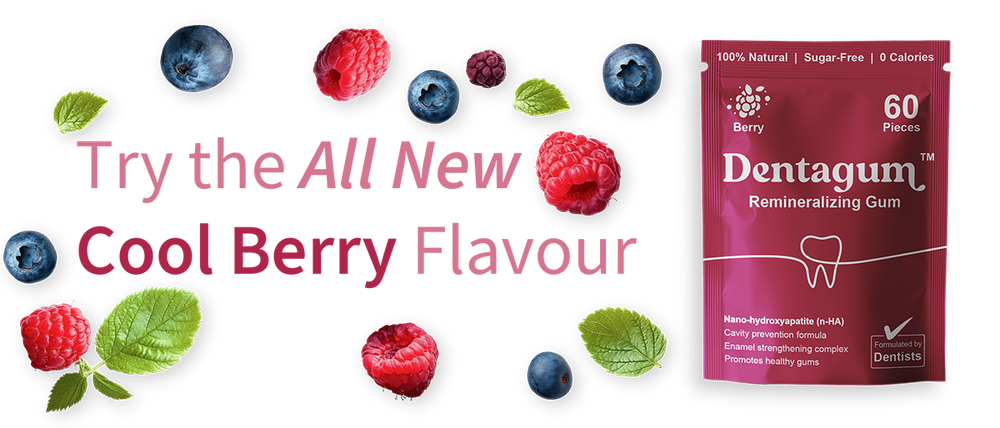
See how Dentagum supports your smile after coffee at dentagum.coResearch Summary
- Kamimori GH, et al. "The rate of absorption and relative bioavailability of caffeine administered in chewing gum versus capsules to normal healthy volunteers." Int J Pharm, 2002. Gum Tmax 44-80 min vs capsule Tmax 84-120 min; total absorption and clearance not significantly different.
- Sports Medicine review: caffeinated chewing gum absorbed quicker through the buccal mucosa than swallowed forms, though total caffeine absorption over time is unchanged.
- Coffee pH measured at approximately 4.85 to 5.10 across multiple dental erosion studies, below the 5.5 enamel demineralization threshold.
- Coffee tannins and chlorogenic acids documented as a leading cause of extrinsic tooth staining via pellicle binding.
References
- Kamimori GH, Karyekar CS, Otterstetter R, et al. "The rate of absorption and relative bioavailability of caffeine administered in chewing gum versus capsules to normal healthy volunteers." Int J Pharm, 2002. https://www.sciencedirect.com/science/article/abs/pii/S0378517301009589
- "Administration of Caffeine in Alternate Forms." Sports Medicine, 2018. https://link.springer.com/article/10.1007/s40279-017-0848-2
- Coffee pH and dental erosion research, multiple in vitro and clinical sources.
