
Can Chewing Gum Help After Coffee? What It Does to Teeth
Coffee sits at pH 4.8 to 5.1. Well below the 5.5 threshold where enamel starts losing mineral. The average American drinks 3 cups a day. Here's what that's doing to your teeth, why the 30 minutes after each cup matter most, and how chewing the right gum changes the outcome.

Yes, chewing sugar-free xylitol gum after coffee genuinely helps protect your teeth. Coffee has a pH of 4.8 to 5.1, below the 5.5 critical threshold at which enamel starts losing mineral. Every cup triggers a 30 to 40 minute recovery window where your enamel is vulnerable. Chewing gum immediately after finishing your coffee stimulates saliva to 10 to 12 times the resting rate, dramatically accelerating acid neutralization and pH recovery. A gum containing nano-hydroxyapatite also delivers enamel mineral directly during this window. For the 66% of Americans who drink coffee daily, an average of 3 cups per day, building this post-coffee habit is one of the highest-value things you can do for your enamel without changing anything else about your lifestyle.
Two-thirds of American adults drink coffee every single day. The National Coffee Association's Spring 2025 report confirmed that 66% of US adults had coffee the previous day, a 20-year high, and more than the percentage who drank bottled water, tea, juice, or soda. The average coffee drinker consumes three cups per day. Eighty-three percent drink it at breakfast.
Most of those people have never been told what happens to their teeth each time they do. Not because it's alarming, it isn't, but because there's a very simple habit that can meaningfully change the outcome, and almost nobody in the coffee-drinking world knows about it.
What Coffee Actually Does to Your Enamel

Coffee is acidic. Its pH sits between 4.8 and 5.1, depending on the variety, roast, and brewing method. To put that in context, the critical threshold for enamel demineralization is 5.5. Below that pH, the environment surrounding your teeth becomes undersaturated with respect to tooth mineral, and enamel begins releasing calcium and phosphate into the surrounding fluid. This is demineralization, and it happens every time your oral pH drops below that line.
Coffee pushes you below it within seconds of that first sip.
An in vitro study on beverage erosion found that coffee exposure caused an 8 to 9% loss of calcium and phosphate from enamel surfaces, confirming it as a meaningfully erosive beverage rather than simply an acidic-tasting one. The acid acts directly on enamel on contact, without needing bacterial metabolism as an intermediate step. Unlike the bacterial acid from sugar that takes minutes to build, coffee's pH drops your oral environment immediately.
The critical pH for enamel demineralization is 5.5. Coffee sits at pH 4.8 to 5.1, 0.4 to 0.7 points below it. Every sip puts enamel below the threshold. Black coffee is less erosive than coffee with added lemon, flavored syrups, or acidic creamers, which can push the pH lower still. Sweetened or flavored coffee adds a bacterial acid component on top of the direct dietary acid, increasing the cumulative risk.
The Sipping Problem: How Frequency Compounds Everything

A single cup of black coffee drunk in five minutes creates one acid exposure event. Your oral pH drops, your saliva begins buffering it, and the recovery window runs for 30 to 40 minutes before pH returns to a safe zone above 5.5. That's one Stephan Curve, one recovery window, one period of vulnerability.
The average American coffee drinker has three cups a day. If those cups are spaced out across the morning, each one creates its own Stephan Curve. Three cups, three recovery windows, potentially 90 to 120 minutes of cumulative enamel vulnerability across the day. That's a significant cumulative demineralization load, even from a beverage most people consider relatively innocuous for their teeth.
The sipping habit makes it meaningfully worse. A 2025 systematic review from Preprints.org covering 38 studies on acidic beverage erosion specifically identified sipping slowly and swishing beverages in the mouth as habits that exacerbate enamel exposure. A person who nurses a large coffee over 90 minutes at their desk doesn't create one Stephan Curve. They create near-continuous acid exposure that keeps pH depressed for the entire duration, with minimal recovery window between sips.
Why You Shouldn't Brush Right After Coffee
This is the most counterintuitive piece of oral health advice for coffee drinkers, and it's one of the most practically important.
After coffee, enamel is temporarily softened. The acid has partially dissolved the mineral structure of the surface layer, leaving it in a weakened, porous state. Brushing during this window doesn't clean your enamel. It physically abrades a softened surface and removes the mineral that saliva would otherwise redeposit during the natural recovery process. The British Dental Association and Academy of General Dentistry both recommend waiting at least 30 minutes after acidic exposure before brushing.
The instinct to brush away coffee immediately makes sense intuitively, but it's doing the opposite of what you want at exactly the moment when enamel is most vulnerable. The right response in the post-coffee window is something that accelerates acid clearance and supports remineralization, not something that abrades a softened surface.
Enamel is temporarily softened immediately after coffee exposure. Brushing during this window can remove mineral that saliva would otherwise redeposit during natural remineralization. Rinse with water, then chew remineralizing gum. Save brushing for at least 30 minutes after your last coffee, when the recovery window has had time to run and enamel has begun rehardening.
What Chewing Gum After Coffee Actually Does
The American Dental Association endorses chewing sugar-free gum for 20 minutes after meals specifically because of its effect on the post-meal oral environment. That same mechanism applies directly to the post-coffee window, and the science behind it is solid.
Chewing stimulates salivary flow to 10 to 12 times the resting rate. That surge of saliva does several critical things simultaneously after coffee.
It buffers the acid through saliva's bicarbonate system, accelerating the pH recovery that would normally take 30 to 40 minutes without mechanical stimulation. It delivers calcium and phosphate ions to enamel surfaces, supporting the remineralization process while the surface is still partially open and receptive to mineral deposition. It physically washes residual coffee acid from tooth surfaces, reducing continued exposure. And it dilutes the acid concentration remaining in the oral fluid.
The result is a significantly compressed recovery window. Where pH might take 30 to 40 minutes to recover through saliva alone at resting flow rate, chewing gum accelerates that recovery substantially. For a three-cup-per-day coffee drinker, compressing three post-coffee Stephan Curves from 30 to 40 minutes each down to 15 to 20 minutes each meaningfully reduces cumulative daily enamel exposure time.
Why Xylitol Specifically Matters for Coffee Drinkers
After coffee, you're managing two separate acid sources in your mouth: the coffee's own dietary acid and the bacterial acid that S. mutans and other cariogenic bacteria produce from any sugars or carbohydrates present in the oral environment. If your coffee contains any sugar, flavored syrup, or sweetened creamer, you've added a direct bacterial substrate on top of the dietary acid.
Xylitol addresses the bacterial component directly. S. mutans transports xylitol into its cells expecting to metabolize it, gets trapped in a futile energy cycle, and dies. Over time, repeated xylitol exposure progressively reduces the S. mutans population's ability to adhere to tooth surfaces and produce acid. A 2025 systematic review in BMC Oral Health found xylitol gum significantly reduced S. mutans counts in 12 of 14 clinical studies compared to sorbitol controls.
For someone having three coffees a day, particularly coffees with any amount of sweetener, using a xylitol gum after each one means three daily antibacterial interventions at the moments when bacterial acid production is highest. That's a meaningful cumulative reduction in the bacterial acid load that compounds on top of coffee's dietary acid.
The Nano-Hydroxyapatite Advantage for Coffee Drinkers
The daily acid load from three cups of coffee creates a pattern of cumulative mineral loss that saliva alone may not fully compensate for. This is where nano-hydroxyapatite adds a meaningful layer of protection beyond what standard sugar-free gum provides.
Nano-HAp is the mineral enamel is made of, produced at the nanoscale (20 to 100 nanometres). During the post-coffee chewing window, when oral pH is recovering and enamel surfaces are in the early stages of remineralization, nano-HAp particles deposit directly into the microporosities and early lesions created by the coffee's acid exposure. Where saliva delivers calcium and phosphate ions in solution, nano-HAp delivers pre-formed mineral particles directly to where they're needed.
A 2023 systematic review and meta-analysis by Limeback, Enax, and Meyer in Biomimetics, covering 44 clinical trials, found hydroxyapatite in gum format reduced dentin hypersensitivity by 6% to 80% compared to placebo depending on baseline severity and duration of use. The contact time during chewing is a key variable in that effect, which is why chewing for the full 10 to 20 minutes after each coffee, not just two or three minutes, captures the most benefit.
For coffee drinkers specifically, sensitivity to temperature is a common complaint that often traces back to cumulative enamel thinning from repeated acid exposure. Nano-HAp's tubule-sealing mechanism addresses this at the structural level rather than simply managing the pain signal.
Our full deep-dive on Everything You Need to Know About Nano-Hydroxyapatite covers the complete clinical evidence in detail.
How to Build the Post-Coffee Habit
The earlier in the Stephan Curve you intervene with saliva stimulation, the more of the 30 to 40 minute vulnerability window you protect. Starting to chew within a minute or two of finishing your coffee is significantly better than waiting until you remember 20 minutes later. Keep gum at your coffee station, on your desk, or wherever you drink your coffee.
This isn't arbitrary. The saliva stimulation benefit and the nano-HAp contact time both require sustained chewing. A piece of gum chewed for two minutes and discarded delivers a fraction of the protective benefit. For a three-cup-per-day habit, aim to chew after each one rather than only after your first morning coffee.
A 16oz coffee drunk over 90 minutes at your desk creates near-continuous acid exposure. The same coffee drunk in 15 to 20 minutes creates one Stephan Curve with a defined recovery window. If you love nursing a warm drink, consider switching to herbal tea (pH 6 to 7) for your slow-sipping ritual and reserving coffee for shorter, more concentrated consumption.
Sweetened coffee adds a bacterial acid component to the dietary acid. A quick water rinse before chewing removes residual sugars from the oral environment before xylitol starts its bacterial reduction work, giving the gum a slightly cleaner environment to operate in.
Brush before your first coffee in the morning, not immediately after. The pre-coffee brush removes overnight bacterial accumulation. The post-coffee window is when gum, not a toothbrush, is the right protective tool. Schedule your evening brush at least 30 minutes after your last coffee of the day.
What About Coffee Staining?
Staining is a separate mechanism from erosion, though the two are related. Coffee contains tannins, darkly pigmented polyphenolic compounds that bind to enamel proteins and the acquired pellicle coating teeth. The acidic pH of coffee weakens the enamel surface, making it slightly more porous and more receptive to tannin binding, which is why heavy coffee drinkers with more cumulative acid exposure tend to stain more significantly over time than occasional drinkers.
Chewing gum after coffee doesn't directly address staining, but by accelerating acid clearance and reducing the period of enamel softening, it indirectly reduces the window when tannins can bind most effectively to a compromised surface. Mastic gum's mild antimicrobial properties and calcium bentonite clay's adsorptive cleaning action during chewing also contribute to a cleaner oral environment, though neither replaces professional whitening for existing staining.
According to the National Coffee Association's Spring 2025 National Coffee Data Trends report, coffee consumption among American adults is at a 20-year high, with 66% drinking it daily and the average coffee drinker consuming 3 cups per day. At pH 4.8 to 5.1, that represents up to 90 to 105 minutes of cumulative enamel vulnerability per day for the average coffee drinker, before accounting for sipping habits that can extend this significantly.
How Dentagum Fits the Coffee Drinker's Routine

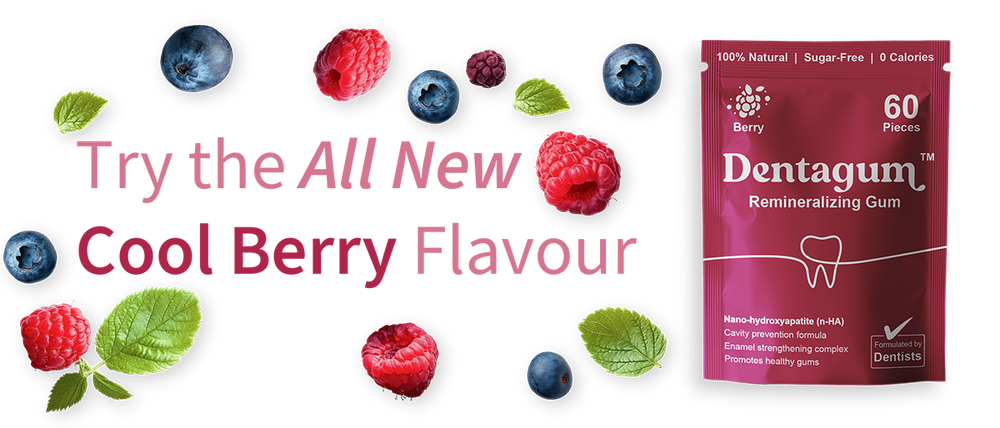
Dentagum is designed specifically for the post-meal, post-drink window where enamel is recovering and needs active support. For coffee drinkers, that window occurs up to three times a day by default. The formula combines organic xylitol and organic erythritol to address the bacterial acid component, nano-hydroxyapatite to deliver enamel mineral during the recovery window, organic mastic gum and natural propolis for additional antibacterial coverage, and an organic chicle and mastic gum base for sustained saliva stimulation throughout the chewing session.
In Dentagum's own clinical data, 83% of participants showed notable gains in enamel quality and mineral quantity and 91% reported significant reduction in cold sensitivity with consistent daily use. For coffee drinkers experiencing sensitivity to hot or cold, a common complaint among people who drink multiple cups daily, the sensitivity reduction outcome is particularly relevant.
Keep a pouch wherever you drink your coffee. The habit is as simple as finishing your cup and reaching for a piece. It takes no extra time, it fits seamlessly into the post-coffee routine, and it does meaningful work during a window that most coffee drinkers don't know exists.
For the full picture on what happens to enamel in the 30 to 40 minutes after acidic exposure, our article on What to Chew After Acidic Foods to Protect Your Enamel covers the Stephan Curve mechanism in depth. And if sensitivity after coffee is a concern, our guide on Can Gum Help Sensitive Teeth? explains how nano-HAp addresses it structurally.
Try Dentagum risk-free, 30-day guaranteeFrequently Asked Questions
Does coffee damage your teeth?
Coffee causes measurable enamel mineral loss with repeated exposure. Its pH of 4.8 to 5.1 sits below the 5.5 threshold at which enamel begins losing calcium and phosphate. An in vitro study found coffee exposure caused an 8 to 9% loss of calcium and phosphate from enamel surfaces. The risk is determined by frequency and duration of exposure: a single cup drunk quickly is very different from three cups sipped slowly across a morning. For most coffee drinkers, the damage is gradual and accumulates over years rather than being acutely alarming after any single cup.
Can you chew gum after coffee?
Yes, and it's one of the most effective things you can do for your teeth during the post-coffee window. Chewing sugar-free gum immediately after coffee stimulates salivary flow to 10 to 12 times the resting rate, significantly accelerating acid neutralization and pH recovery. A gum containing xylitol reduces the bacteria that produce additional acid from any sugars present. A gum containing nano-hydroxyapatite delivers enamel mineral directly during the recovery window. Start chewing within a minute or two of finishing your coffee and continue for 10 to 20 minutes.
Should you brush your teeth immediately after coffee?
No. After coffee, enamel is temporarily softened by the acid exposure. Brushing during this window abrades the softened surface and removes mineral that saliva would otherwise redeposit during natural remineralization. The British Dental Association recommends waiting at least 30 minutes after acidic exposure before brushing. The correct response in the post-coffee window is to chew sugar-free remineralizing gum to accelerate acid clearance and support enamel recovery, not to brush.
Is sipping coffee worse for teeth than drinking it quickly?
Yes, significantly. A 2025 systematic review on acidic beverages and enamel erosion specifically identified sipping slowly as a habit that exacerbates enamel exposure. Drinking a coffee in 15 minutes creates one 30 to 40 minute recovery window. Sipping the same coffee over 90 minutes creates near-continuous acid exposure that keeps pH depressed for the entire duration, with no meaningful recovery window between sips. If you enjoy nursing a hot drink, consider herbal tea (pH 6 to 7) for slow sipping and drinking coffee in a more concentrated sitting.
Does adding sugar or creamer to coffee make it worse for teeth?
Yes. Black coffee creates a dietary acid challenge. Coffee with sugar or sweetened creamer adds a bacterial acid component on top of it, the bacteria in plaque metabolize the sugar and produce lactic acid, compounding the pH drop. Sweetened coffee lowers oral pH from two directions simultaneously: the coffee's direct acidity and the bacteria-produced acid from the sugar substrate. The effect is greater and persists longer than black coffee. Using xylitol gum after sweetened coffee addresses both the direct acid and the bacterial component.
Does coffee cause tooth sensitivity?
Coffee can contribute to sensitivity over time through cumulative enamel thinning. As repeated acid exposure gradually removes enamel mineral, the dentinal tubules beneath become closer to the surface and eventually exposed, triggering sensitivity responses to temperature and pressure. Coffee drinkers who experience sensitivity to hot or cold drinks are often observing the cumulative result of years of repeated acid exposure. Nano-hydroxyapatite gum used consistently after coffee addresses this at the structural level by physically depositing mineral into exposed dentinal tubules.

The Bottom Line
Coffee is acidic. At pH 4.8 to 5.1, every cup pushes your enamel below the critical demineralization threshold and starts a 30 to 40 minute recovery window where mineral is being lost rather than gained. For the 66% of Americans who drink an average of three cups per day, that's up to 90 to 105 minutes of cumulative enamel vulnerability every day, before factoring in sipping habits that can extend it considerably.
The solution isn't to stop drinking coffee. It's to use the 10 to 20 minutes after each cup productively. Chewing remineralizing gum immediately after coffee stimulates the salivary surge that buffers acid faster than it clears naturally. Xylitol kills the bacteria adding their own acid on top. Nano-hydroxyapatite delivers enamel mineral during the recovery window when the surface is most receptive. That's a lot of protective work from a habit that takes no extra time and fits seamlessly into the post-coffee moment you were already having.
Try Dentagum risk-free, 30-day guarantee at dentagum.coResearch Summary
- National Coffee Association. Spring 2025 National Coffee Data Trends report. 66% of American adults drink coffee daily, 20-year high. Average coffee drinker consumes 3 cups per day. Coffee is more popular daily than bottled water, tea, juice, or soda.
- Drive Research 2024 survey. 73% of Americans drink coffee every day. 60% drink 1-2 cups daily, 36% drink 3-5 cups. 83% drink coffee during breakfast.
- Rockland Dental Specialists, 2026. Coffee pH falls in range of 4.8 to 5.1, below critical 5.5 enamel demineralization threshold. Effect worse the longer teeth are exposed. Sipping coffee all day creates higher acid risk than drinking quickly.
- In vitro beverage erosion study. Coffee exposure caused 8-9% loss of calcium and phosphate from enamel surfaces, confirming meaningful erosive potential.
- Preprints.org / BMC Oral Health, 2025. Systematic review 38 studies 2013-2025. Sipping slowly and swishing exacerbate enamel exposure. Using sugar-free gum to stimulate saliva after acidic drinks can help.
- Int J Community Medicine and Public Health, 2025. Brushing immediately after acidic beverages abrades softened enamel, waiting at least 30 minutes recommended.
- American Dental Association. Sugar-free gum chewed 20 minutes after meals stimulates saliva to 10-12x resting rate. Endorsed for cavity prevention.
- Söderling E et al. BMC Oral Health, 2025. Xylitol significantly reduced S. mutans in 12/14 studies vs sorbitol. Critical for coffee drinkers adding sweetener.
- Limeback H, Enax J, Meyer F. Biomimetics, 2023. 44 clinical trials. Nano-HAp in gum format reduced dentin hypersensitivity 6-80% vs placebo.
References
- National Coffee Association. "More Americans Drink Coffee Each Day Than Any Other Beverage." Spring 2025 National Coffee Data Trends. https://www.ncausa.org/Newsroom/
- "How Coffee Affects Your Teeth and Gums." Rockland Dental Specialists, 2026. https://www.rocklanddentalspecialists.com/the-effects-that-coffee-can-have-on-your-teeth/
- "Erosive Impact of Acidic 'Healthy' Beverages on Dental Enamel: A Systematic Review (2013-2025)." Preprints.org / BMC Oral Health, 2025. https://www.preprints.org/manuscript/202505.1016
- Pattem J et al. "The Dynamic Interplay of Dietary Acid pH and Concentration During Early-Stage Human Enamel and Dentine Erosion." Frontiers in Dental Medicine, 2022. https://www.frontiersin.org/journals/dental-medicine/articles/10.3389/fdmed.2022.1040565/full
- Söderling E et al. "Specific Effects of Xylitol Chewing Gum on Mutans Streptococci Levels." BMC Oral Health, 2025. https://link.springer.com/article/10.1186/s12903-025-06602-1
- Limeback H, Enax J, Meyer F. "Clinical Evidence of Biomimetic Hydroxyapatite in Oral Care Products for Reducing Dentin Hypersensitivity." Biomimetics, 2023. https://pmc.ncbi.nlm.nih.gov/articles/PMC9844412/
- American Dental Association. "Chewing Gum." Oral Health Topics. https://www.ada.org/resources/ada-library/oral-health-topics/chewing-gum
- Alsulaimani AF et al. "Assessing Long-Term Impact of Soft Drinks and Acidic Beverages on Dental Health." International Journal of Community Medicine and Public Health, 2025.
