
What to Chew After Acidic Foods to Protect Your Enamel
Every time you eat something acidic, your enamel enters a vulnerable window that lasts 30 to 40 minutes. What you do during that window determines how much damage accumulates. Here's the science behind acidic food and enamel erosion, and exactly what to chew after eating to protect your teeth.

The best thing to chew after acidic foods and drinks is sugar-free xylitol gum containing nano-hydroxyapatite, chewed for 10 to 20 minutes immediately after eating. Acidic foods drop your oral pH below 5.5, the threshold at which enamel begins losing mineral, and it takes 30 to 40 minutes for saliva alone to restore a safe pH. Chewing gum stimulates salivary flow to 10 to 12 times the resting rate, dramatically accelerating acid neutralization. Xylitol simultaneously reduces the bacteria producing additional acid. And nano-hydroxyapatite delivers enamel mineral directly during the window when your teeth need it most.
Most people know that sugary foods are bad for teeth. Fewer people realize that many foods considered healthy, including fruit juice, kombucha, sparkling water, yogurt, and coffee, are acidic enough to trigger enamel mineral loss every time you consume them.
And almost nobody knows that there's a 30 to 40 minute window after eating when your enamel is in recovery mode and what you do during that window can meaningfully change how much damage accumulates over a lifetime of eating and drinking.
What Happens to Your Enamel After Every Acidic Meal or Drink

Enamel begins to dissolve when oral pH drops below 5.5. This threshold, first established by researcher Robert Stephan in 1943 and confirmed consistently ever since, is the critical boundary between remineralization and mineral loss. Above 5.5, your saliva can deposit calcium and phosphate back into enamel. Below it, the process runs in reverse and enamel loses mineral into the surrounding fluid.
Acidic foods and drinks push your mouth below this threshold directly. Unlike the bacterial acid that forms from fermenting sugary foods, dietary acid acts immediately on contact with your teeth. A sip of lemon juice, kombucha, wine, or orange juice drops the pH of the oral environment within seconds. The lower the pH of the food or drink, the more aggressive the initial drop.
What follows is called the Stephan Curve: a rapid pH drop immediately after acid or sugar exposure, followed by a gradual recovery as saliva buffers the acid and restores the oral environment. That recovery takes 30 to 40 minutes under normal salivary conditions. During that entire window, your enamel is below or hovering near the critical threshold, losing mineral rather than gaining it.
The damage from a single exposure is small. The damage from multiple exposures across a day, repeated across years, is how enamel erosion becomes clinically significant. Frequency compounds the problem far more than intensity. Three small acidic exposures across a day create three separate Stephan Curves and up to two hours of cumulative demineralization time.
The Foods and Drinks Most People Don't Realize Are Acidic
The obvious culprits are well known: soda, energy drinks, sour candy. The less obvious ones are where most people accumulate unintentional enamel damage, because they're consumed habitually under the assumption that they're neutral or even beneficial.
A 2025 systematic review covering 38 studies from 2013 to 2025, published in preprint ahead of BMC Oral Health, evaluated the erosive impact of beverages marketed as healthy on dental enamel. Every category studied produced measurable enamel softening or surface loss. Fruit juices and smoothies (pH 3 to 4) and kombucha (pH 2.5 to 3.5) often exceeded carbonated soft drinks in their erosive potential. Sports and energy drinks (pH 3.1 to 3.6) showed strong associations with erosive tooth wear in active populations.
The pattern that causes the most damage isn't a single daily consumption event. It's habitual sipping over an extended period. A person who drinks their morning coffee over 45 minutes, has a glass of juice at lunch, sips kombucha in the afternoon, and has wine with dinner may spend three or more hours with their oral pH below the critical threshold across the day. Each sip resets the Stephan Curve. The enamel never gets a full recovery window.
Why You Should Not Brush Immediately After Acidic Foods

This is one of the most important and most counterintuitive pieces of oral health advice, and it directly shapes what you should do instead.
After acidic exposure, enamel is temporarily softened. The mineral structure has partially dissolved into the surrounding fluid and the surface is in a weakened state for 30 to 60 minutes. Brushing during this window doesn't clean your enamel. It physically abrades a softened surface and removes mineral that your saliva would otherwise redeposit during natural remineralization.
Dentists and the British Dental Association both recommend waiting at least 30 minutes before brushing after consuming acidic food or drinks. The Academy of General Dentistry suggests up to 60 minutes in cases of significant acid exposure like citrus or vinegar. Brushing immediately feels like the right protective response, but it's actually counterproductive at exactly the moment enamel is most vulnerable.
So if you shouldn't brush, what should you do? That's where the 30 to 40 minute post-meal window becomes your opportunity rather than just your risk.
What to Chew After Acidic Foods: The Full Explanation
Chewing sugar-free gum after meals is endorsed by the American Dental Association for cavity prevention specifically because of its effect on the post-meal oral environment. The ADA notes that chewing gum stimulates salivary flow to 10 to 12 times the resting rate. That surge of saliva does several things simultaneously during the critical recovery window.
It buffers the acid through bicarbonate systems in saliva, accelerating pH recovery toward the safe zone. It delivers calcium and phosphate ions to enamel surfaces, supporting remineralization while the tooth structure is still partially open from the acid exposure. It physically washes away residual food and acid. And it dilutes the acid concentration in the oral fluid surrounding the teeth.
A well-formulated gum adds active ingredients on top of the saliva stimulation benefit that address the post-acidic-meal environment specifically.
Xylitol: Reducing the Bacterial Acid on Top of Dietary Acid
After an acidic meal, you're dealing with two acid sources simultaneously: the dietary acid from the food itself and the bacterial acid that S. mutans and other cariogenic bacteria produce when they metabolize any carbohydrates from the meal. These two sources compound each other, keeping pH lower for longer than either would alone.
Xylitol addresses the bacterial component directly. S. mutans transports xylitol into its cells expecting to metabolize it, gets trapped in a futile energy cycle, and dies. A 2025 systematic review in BMC Oral Health found xylitol gum significantly reduced S. mutans counts in 12 of 14 clinical studies compared to sorbitol controls. Fewer bacteria producing acid means a faster pH recovery and a shorter window below the critical threshold after eating.
Nano-Hydroxyapatite: Mineral Delivery During the Recovery Window
Nano-hydroxyapatite is the mineral enamel is made of, produced in nanoparticle form (20 to 100 nanometres) small enough to penetrate the microporosities in enamel and deposit mineral directly into early lesions and weak spots. During the post-meal recovery window, when oral pH is rising and remineralization conditions are improving, nano-HAp provides a concentrated mineral payload that complements what saliva delivers naturally.
A 2023 systematic review and meta-analysis by Limeback, Enax, and Meyer published in Biomimetics analyzed 44 clinical trials and found hydroxyapatite in gum format reduced dentin hypersensitivity by 6% to 80% compared to placebo, with the contact time during chewing central to the clinical effect. The post-meal window, when pH is recovering and enamel surfaces are ready to accept mineral, is when nano-HAp can do the most work.
You can read the full detail on how nano-HAp deposits into enamel in our guide on Everything You Need to Know About Nano-Hydroxyapatite.
Mastic Gum and Propolis: Extra Antibacterial Coverage
After an acidic meal, the oral environment is temporarily more hospitable to bacterial growth. Lower pH and the presence of food residue create conditions where cariogenic bacteria can increase their activity. Mastic gum and propolis in a well-formulated functional gum provide additional antibacterial coverage during this window. A 2023 review in the Journal of Natural Medicine confirmed mastic gum displays antibacterial properties against oral pathogens across 14 clinical studies. Propolis has been compared favorably to chlorhexidine in some antimicrobial applications.
A Practical Timing Guide

This is the ideal moment. Start chewing within a minute or two of finishing your meal or drink. The earlier in the Stephan Curve recovery you intervene with saliva stimulation and active ingredients, the more of the 30 to 40 minute vulnerable window you can protect.
The ADA's recommendation of 20 minutes after meals isn't arbitrary. It reflects the time needed to sustain the salivary stimulation benefit, allow nano-HAp to deposit meaningfully on enamel surfaces, and maintain xylitol's antibacterial contact throughout the chewing session. Shorter sessions deliver a fraction of the benefit.
Chewing gum is the right response in that immediate post-acidic window, not brushing. Save brushing for morning and evening when enamel is no longer in the softened post-acid state. This is one of the most practically impactful habit changes for enamel protection.
After something very acidic like lemon juice, undiluted vinegar, or straight citrus, a quick water rinse before chewing helps dilute the initial acid concentration and gives the gum's saliva stimulation a slightly cleaner environment to work in. Spit out, don't swallow the rinse water, then start chewing.
A single glass of orange juice consumed in five minutes creates one Stephan Curve. The same glass sipped over 45 minutes creates a near-continuous acid exposure that keeps pH depressed for far longer. Finishing acidic drinks in one sitting rather than grazing them over time meaningfully reduces cumulative enamel exposure time.
Our in-depth article on Can Gum Help Neutralize Acids After Eating covers the full Stephan Curve science in detail, including the research on saliva buffering capacity and how different gum ingredients interact with the post-meal oral environment.
What Chewing Gum Cannot Do
Honest expectations matter here. Chewing gum after acidic meals accelerates acid clearance, reduces bacterial load, and delivers active ingredients during the recovery window. It does not neutralize extremely severe acid exposures instantly, reverse existing enamel erosion, or replace the protective benefits of brushing and flossing.
For people with a habit of extremely high-acid consumption, including regular apple cider vinegar shots, multiple coffees and citrus juices daily, or frequent sparkling water, the cumulative acid load may exceed what gum alone can offset. In those cases, the more impactful change is reducing the frequency and duration of acid exposure, not just adding gum afterward. Gum is most powerful as a buffer during normal dietary acid exposure, which for most people already represents several meaningful daily events.
If you're noticing symptoms of enamel erosion, including increased tooth sensitivity, translucency at the edges of front teeth, or visible surface changes, those warrant a conversation with your dentist about your specific erosion risk and what additional interventions make sense.
How Dentagum Fits Into This

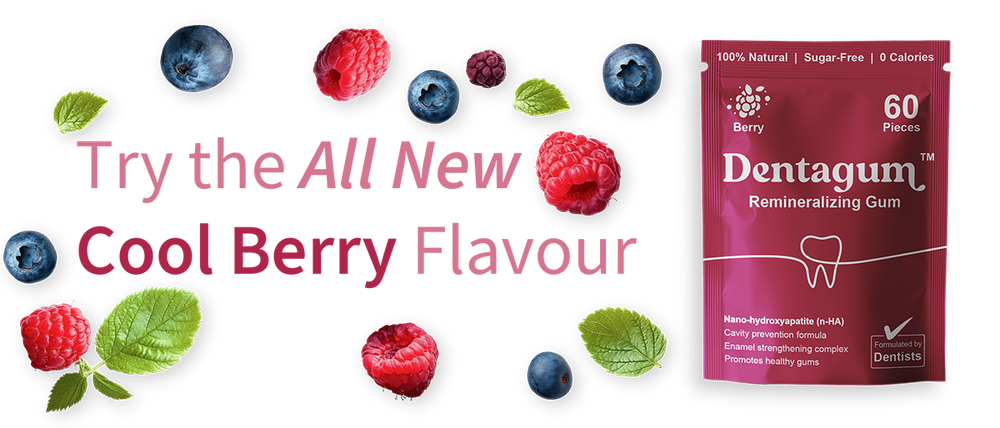
Dentagum's Remineralizing Chewing Gum is built around exactly the post-meal window described in this article. Organic xylitol and organic erythritol address the bacterial acid component. Nano-hydroxyapatite delivers enamel mineral during the recovery window. Organic mastic gum and natural propolis provide additional antibacterial coverage. Organic eggshell powder adds a supporting calcium source alongside the nano-HAp. The organic chicle and mastic gum base stimulates saliva mechanically throughout the full chewing session.
In Dentagum's own clinical data, 83% of participants showed notable gains in enamel quality and mineral quantity, and 87% were less susceptible to cavities with consistent daily use. Chewed for 10 to 20 minutes immediately after meals and acidic drinks, every active ingredient in the formula is working during the specific window where enamel protection matters most.
Try Dentagum risk-free — 30-day guaranteeFrequently Asked Questions
What should I chew after eating acidic foods?
Sugar-free xylitol gum, ideally one that also contains nano-hydroxyapatite, chewed for 10 to 20 minutes immediately after eating. Chewing stimulates salivary flow to 10 to 12 times the resting rate, which buffers post-meal acid and accelerates pH recovery. Xylitol reduces the cavity-causing bacteria that produce additional acid on top of the dietary acid from the food. Nano-hydroxyapatite delivers enamel mineral during the recovery window when conditions for remineralization are improving.
How long does enamel stay vulnerable after eating acidic food?
Approximately 30 to 40 minutes under normal salivary conditions. This is the Stephan Curve recovery period, first described by researcher Robert Stephan in 1943 and the basis for the ADA's recommendation to chew sugar-free gum for 20 minutes after meals. During this window, oral pH is below or recovering toward the critical 5.5 threshold and enamel is losing or not yet regaining mineral. Chewing gum accelerates this recovery significantly by stimulating saliva production.
Should I brush my teeth after eating acidic foods?
Not immediately. After acidic exposure, enamel is temporarily softened and physically vulnerable. Brushing during the first 30 to 60 minutes can abrade the softened surface and remove mineral that saliva would otherwise redeposit during natural remineralization. Dentists and the British Dental Association recommend waiting at least 30 minutes before brushing after acidic food or drink. Chewing sugar-free gum in that window is the correct protective response.
Is coffee acidic enough to damage enamel?
Yes. Coffee has a pH of approximately 4.0 to 5.0, below the critical 5.5 threshold at which enamel begins losing mineral. Habitual coffee sipping over an extended period creates a prolonged low-pH environment that extends the demineralization window well beyond what a single exposure would cause. Chewing gum immediately after finishing a coffee is one of the most practical protective habits for regular coffee drinkers. Our article on oral care for coffee drinkers covers this in more detail.
Is kombucha bad for teeth?
Yes, more than most people realize. Kombucha typically has a pH of 2.5 to 3.5, which a 2025 systematic review found often exceeds carbonated soft drinks in erosive potential. The combination of organic acids produced during fermentation makes it one of the more aggressive dietary acid exposures in a typical health-conscious diet. Drinking it quickly rather than sipping it slowly, rinsing with water afterward, and chewing remineralizing gum are the most practical protective measures.
Does sparkling water erode enamel?
Plain sparkling water (without added citrus or flavorings) has a pH of approximately 4.5 to 5.5, which puts it at or near the critical enamel threshold. The erosive risk from plain sparkling water is lower than from fruit juice, wine, or kombucha, but it is not zero. Flavored sparkling waters with citrus additions have a lower pH and a higher erosive potential. For people who drink significant volumes of sparkling water daily, the cumulative exposure is worth being aware of and managing with the same post-drink habits recommended for other acidic beverages.
The Bottom Line
The 30 to 40 minutes after eating or drinking anything acidic is the most important window in your daily oral health routine that most people aren't thinking about. Your enamel is losing mineral during that time, you shouldn't brush, and your saliva is working to recover but can benefit significantly from support.
The right response is straightforward: chew sugar-free xylitol gum immediately after eating, for at least 10 to 20 minutes. It stimulates saliva to neutralize acid faster. It reduces the bacteria adding their own acid on top. And a well-formulated gum delivers enamel mineral directly during the recovery window.
What you chew matters as much as when. Sorbitol gum provides saliva stimulation without the antibacterial benefit. Xylitol gum adds the bacterial reduction. A gum combining xylitol, erythritol, and nano-hydroxyapatite addresses the acid, the bacteria, and the enamel mineral all at once.
Try Dentagum risk-free — 30-day guarantee at dentagum.coResearch Summary
- Systematic review, Preprints.org / BMC Oral Health, 2025. 38 studies (2013-2025) on erosive impact of "healthy" acidic beverages. All categories produced measurable enamel softening. Kombucha (pH 2.5-3.5) and fruit juices (pH 3-4) often exceeded carbonated soft drinks in erosive potential. Sports/energy drinks (pH 3.1-3.6) associated with erosive tooth wear in active populations.
- Stephan RM. Oxford Reference. Stephan Curve first described 1943. pH drops below critical 5.5 threshold after acid exposure. Saliva takes 30-40 minutes to neutralize acid and return to safe zone. Frequency of exposure matters more than amount.
- dentalcare.com CE Course. Repeated intakes of acidic or fermentable carbohydrate cause low pH to be maintained for longer, preventing remineralization. Stephan Curve visualization of cariogenic potential established.
- American Dental Association. Chewing sugar-free gum for 20 minutes after meals endorsed for cavity prevention. Stimulates salivary flow to 10-12x resting rate.
- British Dental Association / Academy of General Dentistry. Recommend waiting at least 30 minutes before brushing after acidic food or drinks. Enamel is temporarily softened and brushing removes mineral that saliva would redeposit.
- Söderling E et al. BMC Oral Health, 2025. Xylitol gum significantly decreased S. mutans in 12/14 studies vs sorbitol controls.
- Limeback H, Enax J, Meyer F. Biomimetics, 2023. 44 clinical trials. Nano-HAp in gum format reduced dentin hypersensitivity 6-80% vs placebo.
- Alwadi MAM et al. Journal of Natural Medicine, 2023. Mastic gum antibacterial, anti-inflammatory, inhibits plaque across 14 clinical studies.
References
- "Erosive Impact of Acidic 'Healthy' Beverages on Dental Enamel: A Systematic Review (2013-2025)." Preprints.org / BMC Oral Health, 2025. https://www.preprints.org/manuscript/202505.1016
- "Stephan Curve." Oxford Reference. https://www.oxfordreference.com/display/10.1093/oi/authority
- "Stephan Curve." dentalcare.com Continuing Education. https://www.dentalcare.com/en-us/ce-courses/ce713/stephan-curve
- American Dental Association. "Chewing Gum." Oral Health Topics. https://www.ada.org/resources/ada-library/oral-health-topics/chewing-gum
- Söderling E et al. "Specific Effects of Xylitol Chewing Gum on Mutans Streptococci Levels, Plaque Accumulation and Caries Occurrence: A Systematic Review." BMC Oral Health, 2025. https://link.springer.com/article/10.1186/s12903-025-06602-1
- Limeback H, Enax J, Meyer F. "Clinical Evidence of Biomimetic Hydroxyapatite in Oral Care Products for Reducing Dentin Hypersensitivity." Biomimetics, 2023. https://pmc.ncbi.nlm.nih.gov/articles/PMC9844412/
- Alwadi MAM et al. "Mastic (Pistacia lentiscus) Gum and Oral Health: A State-of-the-Art Review." Journal of Natural Medicine, 2023. https://pubmed.ncbi.nlm.nih.gov/37147480/
