
Why Do I Get Cavities Even Though I Brush Twice a Day?
You brush twice a day, maybe even floss. And you still get cavities. You're not doing something wrong exactly. But brushing only covers two of the many daily windows when your enamel is under acid attack. Here's what's actually happening and the habits that close the gaps.

Brushing twice a day is necessary but not sufficient for cavity prevention. Cavities form during the 20 to 40 minute acid recovery windows after every meal, snack, and acidic drink across the day. Brushing removes plaque but cannot neutralize the acid already attacking your enamel between brushing sessions. The most common reasons people get cavities despite brushing are: high snacking frequency, diet high in fermentable carbohydrates, dry mouth reducing saliva's protective role, mouth breathing, and a high native S. mutans bacterial load. Each of these creates acid exposure in the windows that brushing doesn't cover.
If you've ever left the dentist with a new cavity and felt a combination of confusion and injustice, you're not alone. You brush every morning and night. Maybe you even floss. And yet there's another filling in your future. The dentist recommends brushing better, but you're already brushing twice a day. What's actually going on?
The honest answer is that twice-daily brushing, done well, is a critical foundation for oral health. But it covers only two moments in a day that contains dozens of acid exposure events. Understanding what creates cavities between those two brushing sessions is how you actually close the gap.
What Brushing Actually Does (and What It Doesn't)
Brushing removes the dental plaque that has built up on tooth surfaces since your last brushing. Plaque is the sticky biofilm of bacteria that accumulates continuously on teeth. Left undisturbed, those bacteria metabolize sugars and fermentable carbohydrates from food and produce lactic acid, which is what actually dissolves enamel. Brushing mechanically disrupts the plaque and removes the bacterial colonies before they can build into a more aggressive, mature biofilm.
What brushing cannot do is reach the period between brushing sessions. If you brush at 7am and again at 10pm, you have fifteen waking hours during which acid attacks are occurring every time you eat or drink anything with fermentable carbohydrates. Brushing at 7am does not prevent the acid attack from your 10am snack. And brushing at 10pm does not undo the cumulative mineral loss from those attacks during the day.
These are two different mechanisms. Plaque is removed mechanically by the bristles. Acid is neutralized by saliva's bicarbonate buffering system over 20 to 40 minutes after each eating event. Brushing after eating helps to some degree by removing food residue, but the pH of your oral environment after a meal is not restored by brushing. It's restored by saliva over time, or faster with the help of chewing sugar-free gum. This is why the habits between brushing sessions matter as much as the brushing itself.
The Real Cavity Mechanism: Frequency, Not Just Quantity

The most important and least understood concept in cavity prevention is the Stephan Curve, first described by researcher Robert Stephan in 1944 and confirmed consistently ever since.
Every time you eat or drink something containing fermentable carbohydrates, oral bacteria begin metabolizing it within minutes. The oral pH drops below the critical 5.5 threshold, the level at which enamel begins losing mineral, within as little as three minutes of consumption. Saliva then begins buffering the acid, and pH gradually recovers over 20 to 40 minutes before returning to the safe range above 5.5. During that entire recovery window, your enamel is losing mineral rather than gaining it.
Now consider what a typical day looks like. Breakfast. A mid-morning snack. Lunch. An afternoon coffee. A few crackers at 3pm. Dinner. A small dessert. That's seven or more separate acid attack events, each creating a 20 to 40 minute window of enamel vulnerability. At two minutes per brushing session twice a day, brushing directly addresses maybe four minutes of the day. The other 16 hours are shaped by everything else.
A 2024 review published in Dimensions of Dental Hygiene covering the role of nutrition in dental caries confirmed this directly: "The higher the frequency of fermentable carbohydrate consumption, the more acid is produced." A formal study published in PMC evaluating added sugar frequency and US adult dental caries confirmed that the number of eating occasions separated by at least 20 minutes (each representing a separate acid attack) was a clinically significant independent variable for caries prevalence. The issue isn't just what you eat. It's how often your oral pH is dropping below 5.5 across the day.
The Six Most Common Reasons You Still Get Cavities
1. Snacking frequency is too high

This is the single biggest gap between people who brush well and people who don't get cavities. Every snack creates its own Stephan Curve. A person who eats three square meals gets roughly three major acid attack windows per day. A person who grazes continuously keeps their oral pH below 5.5 for hours at a stretch, never giving enamel a full recovery window. The enamel balance at the end of that day is significantly negative.
Sticky snacks compound this further. Caramel, dried fruit, gummy snacks, and cereal bars cling to tooth surfaces for extended periods, maintaining fermentable substrate contact with bacteria long after the snack itself is finished. A 20-second chew creates a 20-minute acid window. Sticky residue that takes 40 minutes to clear naturally can double that window.
2. The inter-meal windows aren't covered
This is the gap that remineralizing gum directly addresses. Between meals is when most of the cavity-forming mineral loss occurs, because it's the period when saliva is recovering from each acid event without any active intervention. Chewing sugar-free gum immediately after meals stimulates salivary flow to 10 to 12 times the resting rate, dramatically accelerating the pH recovery that would otherwise take 20 to 40 minutes. A post-meal gum habit compresses each Stephan Curve recovery window significantly, reducing cumulative daily demineralization time.
3. Brushing technique misses key areas
Even diligent brushers commonly miss specific zones. The back molars, particularly the occlusal (chewing) surfaces with their deep grooves and fissures, are the most cavity-prone surfaces in the mouth. The gumline on the inside surfaces of lower front teeth. The area where tooth meets restoration. These aren't places where brushing fails in principle. They're places where two minutes of brushing twice a day simply may not provide enough contact time and pressure to fully disrupt the plaque that accumulates there every 24 hours.
Interproximal decay (cavities between teeth) is extremely common and develops precisely because toothbrush bristles cannot physically reach the contact areas between teeth. This is entirely a flossing gap, not a brushing gap. If your cavities are forming between teeth rather than on surfaces, the answer is not more brushing. It's consistent daily flossing or interdental brush use. Water flossers can be useful for people who find traditional string floss difficult to use consistently.
4. Dry mouth is reducing saliva's protective role
Saliva is not merely a passive rinse. It's an active chemical system that buffers acid through bicarbonate, delivers calcium and phosphate to enamel for continuous remineralization, suppresses cariogenic bacteria through antimicrobial proteins, and physically washes food debris from tooth surfaces. When saliva is reduced through medications (over 400 drug types list dry mouth as a side effect), dehydration, mouth breathing, or conditions like Sjogren's syndrome, all of these protective functions reduce simultaneously.
People with dry mouth can brush perfectly and still experience rampant decay because the continuous remineralization that saliva provides between brushing sessions is absent. If you are on regular medications and experiencing frequent cavities despite good oral hygiene, dry mouth is a likely contributing factor worth raising with both your dentist and prescribing physician.
5. A high native S. mutans load
Not everyone starts with the same oral microbiome. Streptococcus mutans, the primary cavity-causing bacterium, is not present at birth. It's acquired from caregivers early in life, and the level acquired can vary significantly. People who grew up in households with high S. mutans transmission have more aggressive bacterial populations that produce acid more rapidly and adhere more strongly to tooth surfaces. Genetics also influences enamel composition, saliva flow rate, and the shape of teeth including how deep their grooves are.
This explains why some people can eat relatively carelessly and rarely get cavities while others brush carefully and still get them. The bacterial composition and enamel composition you're working with are genuine variables. They don't mean cavities are inevitable, but they do mean the standard twice-daily brushing protocol may need additional support to overcome the baseline biological disadvantage.
6. Acidic diet eroding enamel before bacteria attack
Sugar isn't the only dietary cavity driver. Acidic foods and drinks (coffee at pH 4.8-5.1, wine at pH 3.0-3.5, citrus juice at pH 2.5-3.5, kombucha at pH 2.5-3.5) directly dissolve enamel on contact, without needing bacterial metabolism as an intermediary. This dietary acid erosion weakens enamel and makes it more susceptible to the subsequent bacterial acid attack. Someone whose diet is high in both sugar and acid is running two simultaneous enamel loss mechanisms that brushing addresses at neither source.
Building the Habits That Actually Close the Gaps
The good news about all of these factors is that most of them are addressable with specific, targeted habits. The changes that make the biggest practical difference are often not more brushing. They're different habits applied at different times of day.
The number of eating occasions creates the number of Stephan Curves. Going from six eating events to three is more protective than switching from chips to nuts, because frequency is an independent variable from sugar content. Each separate acid attack event requires 20 to 40 minutes of saliva buffering to resolve. Fewer attacks, fewer recovery windows, less cumulative demineralization. If you must snack, cluster snacks rather than grazing continuously, and choose low-fermentable options like nuts, cheese, and non-starchy vegetables.
Brushing immediately after eating while enamel is softened from the acid exposure abrades the surface rather than protecting it. The correct post-meal protocol is: rinse with water to clear residue, then chew sugar-free xylitol gum for 10 to 20 minutes. This stimulates the salivary surge that buffers acid, delivers antimicrobial proteins that reduce S. mutans, and if the gum contains nano-hydroxyapatite, delivers enamel mineral during the recovery window when the surface is most receptive. Then brush at your regular morning and evening times.
If your cavities are forming between teeth, this is your highest-priority change. Interproximal decay develops in exactly the spaces that no amount of better brushing can reach. One minute of daily flossing addresses the entire class of cavities that forms between teeth. If traditional string floss is difficult, water flossers are effective and significantly more comfortable for most people.
If you take medications daily and experience frequent cavities despite good oral hygiene, ask both your dentist and your prescribing physician about the dry mouth question. Your dentist can assess your salivary function and recommend whether saliva substitutes, prescription fluoride, or other interventions make sense. In the meantime, chewing xylitol gum between meals is one of the most evidence-backed approaches for stimulating saliva and compensating for reduced natural protection.
Sipping acidic drinks like coffee, juice, or sparkling water over long periods creates extended, near-continuous acid exposure. Finishing acidic drinks in a defined sitting and immediately chewing gum converts what would be a prolonged exposure into a single defined Stephan Curve with an active recovery intervention. Our guide on What to Chew After Acidic Foods to Protect Your Enamel covers the full science.
Where Nano-Hydroxyapatite and Xylitol Fit In
Understanding the cause of cavities makes the role of specific ingredients in a remineralizing gum straightforward to understand.
Xylitol addresses the bacterial component. S. mutans is what produces the acid that dissolves enamel. Xylitol starves and kills S. mutans through a specific metabolic disruption, reducing the bacterial acid-producing capacity of the oral biofilm directly. A 2025 systematic review in BMC Oral Health found xylitol gum significantly reduced S. mutans in 12 of 14 clinical studies versus sorbitol controls. For people with a high native S. mutans load, this daily antibacterial intervention addresses the root cause of their elevated cavity risk in a way that brushing alone cannot.
Nano-hydroxyapatite addresses the enamel mineral component. Each acid attack removes mineral from enamel. Each recovery window is an opportunity to redeposit mineral. Nano-HAp delivers the mineral enamel is made of at a particle size (20 to 100 nanometres) that can physically enter the microporosities left by acid exposure and deposit mineral directly. A 2023 systematic review and meta-analysis in Biomimetics covering 44 clinical trials found hydroxyapatite in oral care products reduced dentin hypersensitivity by 39.5% versus placebo and confirmed the physical remineralization mechanism. For people experiencing cumulative enamel loss from multiple daily acid attacks, nano-HAp during the post-meal recovery window directly compensates for what those attacks remove.
Together, they address the two mechanisms that brushing doesn't: the bacterial acid production between sessions and the enamel mineral loss that accumulates across those inter-meal windows. This is why remineralizing gum works as the "post-meal missing piece" of an oral care routine rather than as a replacement for any existing part of it.
You can read about why xylitol specifically outperforms sorbitol for these mechanisms in our detailed comparison of Sorbitol Gum vs Xylitol Gum, and the full nano-HAp evidence in our guide on Everything You Need to Know About Nano-Hydroxyapatite.
How Dentagum Fits Into a Complete Oral Care Routine

Dentagum isn't a replacement for brushing or flossing. It's a post-meal habit designed to cover the inter-meal windows that brushing leaves unaddressed.
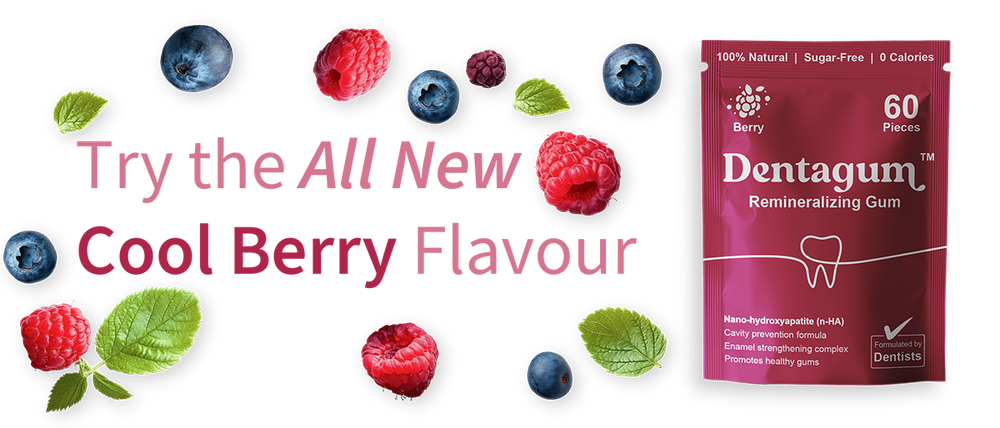
The formula combines organic xylitol and organic erythritol for the bacterial reduction component (active against S. mutans through two complementary mechanisms), nano-hydroxyapatite for enamel mineral delivery during the recovery window, organic mastic gum and natural propolis for additional antibacterial coverage, and calcium bentonite clay for mild physical cleaning action during chewing. The organic chicle and mastic gum base stimulates saliva throughout the session while avoiding the petroleum-derived synthetic polymers in conventional gum.
In Dentagum's own clinical data, 87% of participants were less susceptible to cavities with consistent daily use, and 83% showed notable gains in enamel quality and mineral quantity. Used after each main meal, it directly addresses the period of enamel vulnerability that creates the frustrating experience of getting cavities despite brushing.
Try Dentagum risk-free — 30-day guaranteeFrequently Asked Questions
Why do I still get cavities if I brush twice a day?
Because cavities form during the periods between brushing, not during brushing. Every meal, snack, and acidic drink creates a 20 to 40 minute window where your oral pH drops below the 5.5 threshold and enamel loses mineral. Brushing at 7am and 10pm does not prevent the acid attacks from every eating event across the day. The most common additional contributors are high snacking frequency, interproximal plaque that brushing can't reach (requiring flossing), dry mouth reducing saliva's protective role, and high native S. mutans bacterial counts.
What causes cavities besides sugar?
Several factors contribute independently of sugar intake. Acidic foods and drinks (coffee, wine, citrus juice, kombucha) directly dissolve enamel on contact without needing bacterial metabolism. High snacking frequency creates multiple daily acid attack windows regardless of whether the snacks are sugary or not. Dry mouth removes the protective saliva that continuously buffers acid and remineralizes enamel. Mouth breathing, GERD (stomach acid entering the mouth), and uncontrolled diabetes all create more acidic oral environments. Genetics influences enamel composition, tooth shape (groove depth), saliva flow rate, and native bacterial composition.
How does snacking frequency affect cavity risk?
Significantly. Every eating event where fermentable carbohydrates are consumed creates a separate Stephan Curve: a pH drop below 5.5 followed by a 20 to 40 minute recovery period. A 2024 review in Dimensions of Dental Hygiene confirmed that the higher the frequency of fermentable carbohydrate consumption, the more acid is produced. A person who eats three meals has roughly three major acid attack windows. A person who grazes continuously keeps pH depressed for hours. Reducing eating occasion frequency is as important as reducing sugar content for meaningful cavity prevention.
Does chewing gum help prevent cavities?
Yes, with the right ingredients. The ADA endorses sugar-free gum chewed for 20 minutes after meals for cavity prevention, citing the saliva stimulation benefit. A gum with xylitol adds an active antibacterial mechanism: xylitol kills S. mutans through a specific metabolic disruption that sorbitol (the sweetener in most commercial gum) does not provide. A 2025 systematic review in BMC Oral Health found xylitol gum significantly reduced S. mutans in 12 of 14 clinical studies versus sorbitol. A gum with nano-hydroxyapatite additionally delivers enamel mineral during the post-meal recovery window.
Does dry mouth cause cavities?
Yes, significantly. Saliva provides continuous protection against cavities through several mechanisms: bicarbonate buffering of acid, calcium and phosphate delivery for enamel remineralization, antimicrobial proteins that suppress S. mutans, and physical washing of food debris. When saliva is reduced through medications, dehydration, mouth breathing, or medical conditions, all of these protective functions reduce simultaneously. People with chronic dry mouth can develop rampant decay despite careful brushing because the between-session remineralization that saliva provides is absent. Over 400 drug types list dry mouth as a side effect.
Why are some people more cavity-prone than others?
Multiple biological variables contribute. S. mutans levels vary significantly between individuals based on early-life transmission from caregivers. Genetics influences enamel composition and thickness, tooth shape (deeper grooves collect more plaque), saliva flow rate, and saliva buffering capacity. People who naturally produce less saliva or saliva with lower buffering capacity have a structural disadvantage regardless of oral hygiene quality. These factors don't mean cavities are inevitable, but they explain why the same twice-daily brushing habit produces different outcomes in different people. Targeted interventions like xylitol gum reduce the impact of elevated native S. mutans counts specifically.
The Bottom Line
Brushing twice a day is non-negotiable for oral health. It removes the plaque that accumulates on tooth surfaces and provides the foundation for everything else. But it covers two brief windows in a day that contains dozens of acid events. Cavities form in the other windows.
The causes of cavities despite brushing come down to what's happening between brushing sessions: how many acid attack events occur, how quickly pH recovers after each one, whether interproximal spaces are being cleaned, whether saliva is functioning at full capacity, and what the baseline bacterial composition in your mouth looks like. Most of these are addressable with specific targeted habits that complement brushing rather than replace it.
A daily post-meal remineralizing gum habit is the single highest-leverage addition for the inter-meal windows that brushing doesn't cover. Xylitol reduces the bacteria producing the acid. Nano-hydroxyapatite delivers the mineral those acids remove. And the chewing action itself accelerates the saliva recovery that turns each Stephan Curve from a 40-minute vulnerability into a 15-minute one. That's a meaningful difference, compounding across every meal and snack, every day.
Try Dentagum risk-free — 30-day guarantee at dentagum.coResearch Summary
- Tuthill H, Lintag-Nguyen K. "The Role of Nutrition in Dental Caries." Dimensions of Dental Hygiene, April 2024. Stephan curve: pH drops to critical 5.5 within 3 minutes of fermentable carbohydrate consumption. Takes 20 minutes to buffer and return to normal. Frequency of consumption is an independent caries variable.
- PMC. "Amount and Frequency of Added Sugars Intake and Their Associations with Dental Caries in United States Adults." Eating occasions separated by at least 20 minutes reflect separate acid attacks per Stephan curve. Frequency confirmed as clinically significant independent variable for caries.
- PMC. "Clinical Statistical Study on the Prevalence of Carious Lesions in First Permanent Molars." 311 children. Both brushing frequency and snacking frequency independently influence caries prevalence at first permanent molars.
- Bristle Health, 2026. Comprehensive review of cavity causes beyond brushing: snacking frequency, saliva pH, dry mouth causing oral microbiome dysbiosis, mouth breathing, GERD, genetics, diabetes.
- Söderling E et al. BMC Oral Health, 2025. Xylitol gum significantly reduced S. mutans in 12 of 14 clinical studies vs sorbitol. S. mutans reduction is the mechanism for xylitol's cavity prevention benefit.
- Limeback H, Enax J, Meyer F. Biomimetics, 2023. 44 clinical trials. Hydroxyapatite in oral care products reduced dentin hypersensitivity 39.5% vs placebo. Physical remineralization mechanism confirmed.
- ADA. Sugar-free gum chewed 20 minutes after meals endorsed for cavity prevention. Stimulates salivary flow to 10-12x resting rate.
References
- Tuthill H, Lintag-Nguyen K. "The Role of Nutrition in Dental Caries." Dimensions of Dental Hygiene, April 2024. https://dimensionsofdentalhygiene.com/article/the-role-of-nutrition-in-dental-caries/
- "Amount and Frequency of Added Sugars Intake and Their Associations with Dental Caries in United States Adults." PMC. https://www.ncbi.nlm.nih.gov/pmc/articles/PMC9026961/
- "Clinical Statistical Study on the Prevalence of Carious Lesions in First Permanent Molars." PMC, 2025. https://www.ncbi.nlm.nih.gov/pmc/articles/PMC11818791/
- "Should We Wait to Brush Our Teeth? A Scoping Review Regarding Dental Caries and Erosive Tooth Wear." Caries Research, 2024. https://karger.com/cre/article/58/4/454/906224/
- Söderling E et al. "Specific Effects of Xylitol Chewing Gum on Mutans Streptococci Levels." BMC Oral Health, 2025. https://link.springer.com/article/10.1186/s12903-025-06602-1
- Limeback H, Enax J, Meyer F. "Clinical Evidence of Biomimetic Hydroxyapatite in Oral Care Products for Reducing Dentin Hypersensitivity." Biomimetics, 2023. https://pmc.ncbi.nlm.nih.gov/articles/PMC9844412/
- American Dental Association. "Chewing Gum." Oral Health Topics. https://www.ada.org/resources/ada-library/oral-health-topics/chewing-gum
