
The Best Gum for Braces and Aligners: What Actually Helps
White spot lesions, the chalky, opaque patches that appear on teeth after braces come off, affect a significant proportion of orthodontic patients. They're preventable. Here's what the clinical evidence says about using remineralizing gum during orthodontic treatment, and the important differences between braces and aligner use.

The best gum for people in orthodontic treatment is sugar-free xylitol gum containing nano-hydroxyapatite, chewed after meals for 10 to 20 minutes. For braces, use it with your orthodontist's approval, soft, sugar-free, chicle-based gum is far less likely to stick to brackets than synthetic-base gum. For Invisalign and clear aligners, always remove your aligners before chewing, then clean your teeth before reinserting. The case for using remineralizing gum during orthodontic treatment is compelling: white spot lesions affect a significant proportion of patients with fixed braces, and nano-hydroxyapatite is one of the most evidence-backed approaches for preventing and reversing them.
Orthodontic treatment is one of the best investments you can make in your smile. But it comes with a specific oral health risk that most patients don't find out about until their braces come off: white spot lesions. These chalky, opaque patches on the enamel surface are the visible evidence of mineral loss that occurred during treatment, and for many patients they're a source of real frustration after spending months or years in braces to improve how their teeth look.
The good news is that white spot lesions are largely preventable. The role of remineralizing gum in that prevention, and the important differences between how to use it with fixed braces versus clear aligners, is what this article covers.
What White Spot Lesions Are and Why Orthodontic Patients Get Them

White spot lesions (WSLs) are areas of subsurface enamel demineralization. They appear as opaque, chalky, or matte patches on the tooth surface because the porous, mineral-depleted enamel scatters light differently from healthy enamel. They're the same early-stage demineralization that can progress to cavities if left unaddressed, but they also represent an important window of reversibility, addressed early enough, the mineral can be partially or fully restored.
Orthodontic patients, particularly those with fixed metal brackets and wires, are at significantly elevated WSL risk for a specific structural reason. Brackets create retention points for dental plaque. Cleaning around brackets and wires thoroughly is considerably harder than cleaning smooth tooth surfaces, and even diligent patients struggle to remove all plaque from the tight spaces where brackets meet teeth. That persistent plaque produces acid continuously. The enamel directly around brackets, the area with the most plaque accumulation and the least effective brushing coverage, takes the brunt of it.
A systematic review published in Orthodontics & Craniofacial Research in 2025 confirmed that white spot lesions are one of the most significant complications of fixed orthodontic treatment. Demineralization can begin forming around brackets within weeks of placement if plaque control is inadequate. By the time braces come off, lesions that took months to develop are often clearly visible and cause genuine distress for patients who expected to reveal a better smile underneath.
Why Chewing Remineralizing Gum Matters Specifically for Orthodontic Patients
The challenges of orthodontic treatment, especially fixed appliances, create exactly the conditions where remineralizing gum's benefits are most relevant.
Brackets and wires physically obstruct effective brushing around the enamel surface where plaque accumulates most. No matter how conscientious a patient is, some plaque persists in bracket margins throughout treatment. That plaque continuously produces acid in the tight spaces between bracket and enamel, creating a microenvironment that's more acidic than the rest of the mouth.
Chewing remineralizing gum after meals addresses this microenvironment in two ways simultaneously. First, the mechanical chewing action stimulates salivary flow to 10 to 12 times the resting rate according to the ADA, flooding the oral environment with buffering bicarbonate and remineralizing calcium and phosphate. That saliva surge reaches into the areas around brackets that a toothbrush can't get to, neutralizing acid and delivering minerals to the enamel margins most at risk.
Second, nano-hydroxyapatite in the gum delivers concentrated enamel mineral directly to tooth surfaces during the chewing window. A 2025 study from PMC found that nano-HAP application significantly reduces enamel demineralization around orthodontic brackets in vitro, describing it as "a promising adjunctive strategy for preventing white spot lesions during orthodontic treatment." A 2024 systematic review registered with PROSPERO concluded that nano-HAp's effect on white spot lesion remineralization is potentially promising across in vivo and in situ studies.
Third, xylitol reduces the Streptococcus mutans population responsible for producing the acid that drives demineralization in the first place. A 2025 systematic review in BMC Oral Health found xylitol gum significantly reduced S. mutans counts in 12 of 14 clinical studies versus sorbitol gum. For orthodontic patients, where plaque accumulates more easily and brushing access is compromised, reducing the bacterial acid-producing capacity of that plaque is a meaningful protective measure.
A 2025 PMC study found that nanohydroxyapatite application in combination with regular care significantly reduces enamel demineralization around orthodontic brackets. The researchers described it as "a promising adjunctive strategy for preventing white spot lesions during orthodontic treatment", the specific clinical application that makes remineralizing gum most relevant for braces patients.
Gum With Braces: What's Safe and What Isn't
The traditional orthodontic advice was simple: no gum, ever, during treatment. Modern practice is more nuanced. Many orthodontists now cautiously approve specific types of sugar-free gum for patients who have demonstrated good oral hygiene, particularly once the initial adjustment period has passed.
The key distinctions are the sweetener, the gum base, and whether your specific orthodontist has approved it for your situation.
The Sweetener
Only sugar-free gum should be considered during orthodontic treatment. Sugary gum is unacceptable for anyone, but particularly for orthodontic patients where plaque accumulates around brackets. The bacteria in that plaque have a direct supply line to the enamel margins, and giving them a sugar substrate significantly accelerates the demineralization process.
Xylitol as the primary sweetener is the evidence-backed choice. Some orthodontists specifically recommend xylitol gum for patients during treatment because of its documented antibacterial effect against S. mutans. Never use gum with aspartame, which the WHO classified as possibly carcinogenic in 2023, or sorbitol as the lead sweetener, which lacks xylitol's active bacterial reduction benefit.
The Gum Base
This is where natural gum base makes a practically important difference for brace wearers. Conventional synthetic gum bases contain petroleum-derived polymers like polyvinyl acetate and polyisobutylene that have strong adhesive properties, they stick to things, including brackets and wires. This is the primary reason orthodontists have traditionally banned gum during treatment.
Natural chicle and mastic gum bases have meaningfully different adhesive properties. Chicle is a plant-derived latex with a softer, less sticky texture than synthetic base gum. Mastic gum is a Mediterranean tree resin that has been chewed for over 2,500 years without the petrochemical stickiness of modern synthetic bases. Natural-base gum is far less likely to adhere to orthodontic hardware than conventional commercial gum.
This distinction matters practically. A patient chewing Dentagum's organic chicle and mastic gum base after meals is at considerably lower risk of gum adhering to brackets than a patient chewing a synthetic-base commercial gum. Always check with your orthodontist, but the gum base question is a meaningful one to raise in that conversation.
Always Check With Your Orthodontist
The clinical guidance across multiple orthodontic sources is consistent: always get your orthodontist's specific approval before chewing any gum during fixed appliance treatment. Every patient's situation differs. Some bracket types, adhesive systems, or treatment phases make gum riskier than others. If your orthodontist approves, soft sugar-free gum with a natural base is the safest option. If they don't, respect that guidance, the potential benefit of gum isn't worth risking a bracket debond or damaged archwire that adds time and cost to your treatment.
Gum With Invisalign and Clear Aligners: The Rules Are Different

With clear aligners, the gum question is simpler in one sense and more nuanced in another.
The simple part: always remove your aligners before chewing gum. Gum sticks to the plastic aligner material. It gets trapped in the fit of the tray, creating areas where bacteria can accumulate without saliva reaching them. It can warp the tray. It can cloud the plastic. None of these outcomes are acceptable for a precision-fit device that works by applying controlled, calibrated pressure to specific tooth surfaces. One piece of gum chewed with aligners in can require an early tray replacement and delay your treatment timeline.
The nuanced part: aligners already reduce saliva contact with tooth surfaces for the hours they're in place. This is a recognized risk factor. Saliva is your teeth's primary protection system, it delivers minerals, buffers acid, and suppresses bacteria. When aligners cover your teeth for 20 to 22 hours a day, they reduce saliva access to enamel surfaces for most of each day.
This is precisely why the meals-and-gum window matters so much for aligner patients. When you remove your aligners to eat, you have a window where teeth are fully exposed to saliva and active oral care. Chewing remineralizing gum for 10 to 20 minutes before reinserting aligners does two important things: it floods enamel with saliva and nano-HAp mineral before the teeth are covered again, and the xylitol reduces the bacterial count that would otherwise be sealed against your enamel for hours under the aligner.
With Invisalign or clear aligners, you should be removing them for meals, typically three times per day. Each removal creates a window to eat, brush, and chew remineralizing gum before reinserting. Chewing nano-HAp gum for 10 to 20 minutes during this window delivers enamel mineral and reduces bacteria at the moment teeth are most accessible to active oral care. Reinserting aligners over teeth that have been actively remineralized is significantly better for enamel health than reinserting over teeth that have only been brushed.
What to Look for in a Gum for Orthodontic Patients
Not all sugar-free gums are appropriate or equally beneficial for people in orthodontic treatment. Here's what matters most:
This is the specific remineralizing benefit that makes a gum genuinely protective for orthodontic patients rather than just sugar-free. Nano-HAp deposits enamel mineral into early lesions and around bracket margins during the chewing window. Standard sugar-free gum doesn't include it. Look for "nano-hydroxyapatite" listed explicitly on the ingredient label.
Xylitol's active bacterial reduction against S. mutans is particularly valuable for orthodontic patients whose bracket margins create protected environments for bacterial accumulation. It must be the primary sweetener, listed prominently on the label. Trace amounts of xylitol at the end of an ingredient list won't produce the antibacterial effect.
Natural chicle and mastic gum bases are significantly less adhesive than synthetic polymer bases and are far less likely to stick to brackets and wires. If your orthodontist has approved gum use, a natural-base gum is the safest mechanical choice.
Sugar is an absolute disqualifier during orthodontic treatment. Aspartame was classified as possibly carcinogenic by the WHO in 2023. Sorbitol lacks xylitol's antibacterial mechanism. A clean sweetener profile matters more during orthodontic treatment than at any other time, because the plaque environment around brackets creates a direct pathway between bacterial activity and vulnerable enamel.
Building the Right Routine Around Your Treatment

For braces patients with orthodontist approval, and for aligner patients during their removal windows, here's the routine that makes remineralizing gum most effective:
After every meal: Rinse with water first to dislodge any food particles. Then chew remineralizing gum for 10 to 20 minutes. The chewing stimulates a saliva surge that reaches into bracket margins and around bracket edges. Then brush thoroughly. This sequence, rinse, gum, brush, is more protective than brush alone because the saliva surge and nano-HAp delivery happen before brushing disturbs the remineralizing environment.
For aligner patients specifically: Remove aligners for meals. Eat. Rinse. Chew remineralizing gum for 10 to 20 minutes. Brush and floss. Reinsert aligners. That meal and gum window is your primary opportunity for active enamel protection each day. Use it fully.
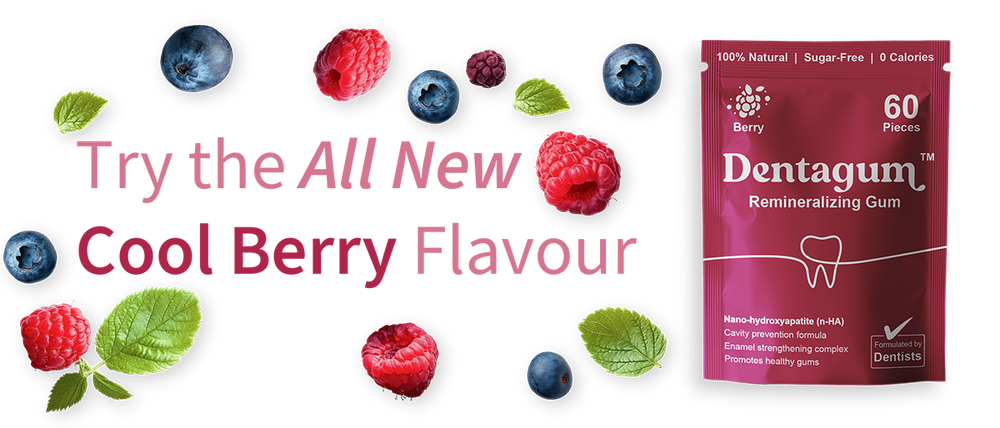
Dentagum's Remineralizing Chewing Gum combines nano-hydroxyapatite, organic xylitol and erythritol, organic mastic gum, and natural propolis in an organic chicle base, low-stick by design, with no synthetic polymer base adhesives. It addresses all three of the protection priorities that orthodontic patients have: active bacterial reduction, enamel mineral delivery, and anti-inflammatory gum tissue support through the mastic gum's documented properties.
In Dentagum's own clinical data, 83% of participants showed notable gains in enamel quality and mineral quantity, and 87% were less susceptible to cavities with consistent daily use. For orthodontic patients where enamel quality is under continuous pressure from bracket-adjacent plaque, those outcomes are particularly relevant.
Try Dentagum risk-free, 30-day guaranteeYou can also read more about how nano-HAp works specifically on early enamel lesions in our guide What Happens During Enamel Demineralization, and the full clinical evidence behind nano-HAp in our deep-dive on Everything You Need to Know About Nano-Hydroxyapatite.
Frequently Asked Questions
Can you chew gum with braces?
With your orthodontist's specific approval, yes, but only sugar-free gum with a natural base and xylitol as the primary sweetener. Many orthodontists now cautiously approve soft sugar-free gum for patients who demonstrate good oral hygiene, particularly natural-base gums that are less adhesive than synthetic polymer gums. The rule is: always ask your orthodontist first. Never chew sugary gum during orthodontic treatment regardless of approval.
Can you chew gum with Invisalign?
Yes, but only with your aligners removed. Gum will stick to the plastic aligner material, warping or clouding the tray and creating bacterial traps where saliva can't reach. The correct protocol is to remove your aligners, chew gum after meals for 10 to 20 minutes, brush and floss, then reinsert. With aligners requiring 20 to 22 hours of daily wear, this meal window is your primary opportunity for active enamel protection, using remineralizing gum during it makes the most of the limited time teeth are fully exposed to saliva and active care.
What are white spot lesions and how common are they with braces?
White spot lesions are areas of subsurface enamel demineralization that appear as chalky, opaque patches on the tooth surface. They occur because brackets create plaque retention sites that are difficult to clean thoroughly, creating a persistently acidic microenvironment against the enamel around bracket margins. A 2025 systematic review confirmed WSLs are one of the most significant complications of fixed orthodontic treatment, with demineralization capable of beginning within weeks of bracket placement in patients with inadequate plaque control.
Does nano-hydroxyapatite help with white spot lesions from braces?
Yes, with growing clinical evidence. A 2025 PMC study found nano-HAP significantly reduces enamel demineralization around orthodontic brackets in vitro, describing it as a promising adjunctive strategy for preventing white spot lesions during treatment. A 2024 systematic review registered with PROSPERO concluded that nano-HAp's effect on white spot lesion remineralization is potentially promising across in vivo and in situ studies. Nano-HAp deposits enamel mineral into early lesions before they progress to visible white spots or cavities.
Why is the gum base important for braces patients?
Because conventional synthetic gum bases, made from petroleum-derived polymers like polyvinyl acetate and polyisobutylene, have adhesive properties that cause them to stick to orthodontic brackets and wires. Natural gum bases, primarily chicle and mastic, are plant-derived resins with significantly lower adhesion to metal hardware. Chicle has been chewed safely for thousands of years without the stickiness issues of modern synthetic base gum. If your orthodontist has approved gum use, a natural-base gum is the mechanically safer choice.
How does chewing gum after meals protect teeth during orthodontic treatment?
Through three overlapping mechanisms. Chewing stimulates saliva to 10 to 12 times the resting rate, flooding bracket margins and surrounding enamel with buffering bicarbonate and remineralizing calcium and phosphate that brushing alone can't deliver to tight bracket spaces. Xylitol reduces the S. mutans bacteria that produce acid in plaque around brackets. Nano-hydroxyapatite delivers enamel mineral directly to surfaces during the chewing window, supporting the remineralization process that persistent bracket-adjacent plaque continuously works against.
The Bottom Line
White spot lesions are one of the most common and most preventable complications of orthodontic treatment. The mechanism is well understood: brackets create plaque retention sites, that plaque produces acid against enamel margins, and without consistent remineralization support, mineral loss accumulates into visible white spots over months of treatment.
Remineralizing gum addresses this directly. Nano-hydroxyapatite delivers enamel mineral to bracket margins where saliva and brushing have limited access. Xylitol reduces the bacteria producing the acid that drives the demineralization. A natural chicle and mastic base is less adhesive than synthetic gum base and more appropriate for use with fixed appliances. And the post-meal chewing window, with aligners removed for aligner patients, with orthodontist approval for braces patients, is exactly when these benefits have the most impact.
Dentagum is dentist-formulated, Prop 65 tested through Lightlabs, and built around the post-meal window where orthodontic enamel protection matters most.
Try Dentagum risk-free, 30-day guarantee at dentagum.coResearch Summary
- Hussain et al. "Prevalence, Incidence and Risk Factors of White Spot Lesions Associated With Orthodontic Treatment." Orthodontics & Craniofacial Research, 2025. Systematic review and meta-analysis confirming WSLs as a major complication of fixed orthodontic treatment. Demineralization can begin within weeks of bracket placement.
- University of Baghdad RCT, 2025. "Effectiveness of a Hydroxyapatite-Containing Toothpaste Versus Mouthwash in Preventing White-Spot Lesions During Fixed-Appliance Orthodontic Treatment." Brackets act as retention sites for plaque, making oral hygiene maintenance more challenging and significantly increasing WSL risk.
- PMC, 2025. "The Effect of Nanohydroxyapatite Serum and Toothpaste on Prevention of Enamel Demineralization Around Orthodontic Brackets." Nano-HAP application significantly reduces enamel demineralization around orthodontic brackets in vitro. Described as "a promising adjunctive strategy for preventing white spot lesions during orthodontic treatment."
- ScienceDirect / PROSPERO CRD42022336809, 2024. "The Effect of Nano-Hydroxyapatite on White Spot Lesions: A Systematic Review and Meta-Analysis." Concluded nano-HAp effect on WSL remineralization is potentially promising across in vivo and in situ studies.
- BMC Oral Health, 2026. "Efficacy of Various Interventions for the Management of White Spot Lesions Associated With Fixed Orthodontic Treatment: Systematic Review and Network Meta-Analysis of RCTs."
- Söderling E et al. BMC Oral Health, 2025. Xylitol gum significantly reduced S. mutans in 12/14 studies vs sorbitol. Critical for orthodontic patients where bracket-adjacent plaque accumulates more easily.
- Limeback H, Enax J, Meyer F. Biomimetics, 2023. 44 clinical trials. Hydroxyapatite in gum format reduced dentin hypersensitivity 6-80% vs placebo. Physical tubule occlusion confirmed as primary mechanism.
- Multiple orthodontic clinical sources (2025-2026). Sugar-free xylitol gum cautiously approved by many orthodontists for braces patients. Natural gum base significantly less adhesive to orthodontic hardware than synthetic polymer base. Aligners must always be removed before chewing gum.
References
- Hussain et al. "Prevalence, Incidence and Risk Factors of White Spot Lesions Associated With Orthodontic Treatment." Orthodontics & Craniofacial Research, 2025. https://onlinelibrary.wiley.com/doi/10.1111/ocr.12888
- "The Effect of Nanohydroxyapatite Serum and Toothpaste on Prevention of Enamel Demineralization Around Orthodontic Brackets: An In Vitro Study." PMC, 2025. https://www.ncbi.nlm.nih.gov/pmc/articles/PMC12522361/
- "The Effect of Nano-Hydroxyapatite on White Spot Lesions: A Systematic Review and Meta-Analysis." ScienceDirect, 2024. https://www.sciencedirect.com/science/article/abs/pii/S0300571224005724
- "Efficacy of Various Interventions for the Management of White Spot Lesions Associated With Fixed Orthodontic Treatment: A Systematic Review and Network Meta-Analysis." BMC Oral Health, 2026. https://link.springer.com/article/10.1186/s12903-026-07755-3
- Söderling E et al. "Specific Effects of Xylitol Chewing Gum on Mutans Streptococci Levels." BMC Oral Health, 2025. https://link.springer.com/article/10.1186/s12903-025-06602-1
- Limeback H, Enax J, Meyer F. "Clinical Evidence of Biomimetic Hydroxyapatite in Oral Care Products for Reducing Dentin Hypersensitivity." Biomimetics, 2023. https://pmc.ncbi.nlm.nih.gov/articles/PMC9844412/
- American Dental Association. "Chewing Gum." Oral Health Topics. https://www.ada.org/resources/ada-library/oral-health-topics/chewing-gum
- "White Spot Lesions in Fixed Orthodontics: A Literature Review." Cureus, 2023. https://www.cureus.com/articles/274331
