
A Teen's Guide to Healthy Teeth (Without the Nagging)
Teenagers have the highest cavity rates of any age group partly because of how they eat and drink: sports drinks with a pH of 2.5-3.5, continuous snacking that prevents oral pH from recovering, and for teens in braces, white spot lesion risk around brackets that can leave permanent marks. This guide covers the specific mechanisms and the low-friction habit that addresses all three: remineralizing gum after meals.

Quick Answer
Teenagers have some of the worst cavity rates of any age group in the US: 57% of adolescents aged 12 to 19 have had cavities in their permanent teeth, according to NHANES data published by NIDCR. The reasons are specific and well-documented: sports drinks and energy drinks with a pH of 2.5 to 3.5 that attack enamel on every sip; irregular snacking patterns that keep oral pH low for hours; and for teens in braces, the dramatically elevated risk of white spot lesions, the early-stage enamel damage that forms around brackets. The silver lining is that these risks are highly addressable, and remineralizing gum is one of the rare oral health habits that actually fits a teenage lifestyle: zero prep, done in seconds, and it works while you're just hanging out after lunch.
Last updated: June 2026 | Reviewed against NIDCR, CDC, and current adolescent oral health literature
This one is for both the teen and the parent. Teens: we're not going to lecture you. You know brushing matters. The part you probably haven't heard is why the specific things you're drinking and doing are hitting your teeth harder than most adults realize, and what actually works to counter it with minimal effort. Parents: the nagging rarely helps. The useful thing is understanding the actual risk pattern and putting one low-friction counter-measure in place.
Why Teenagers Are a High-Risk Group for Cavities
The NIDCR's national data is clear: nearly 57% of adolescents aged 12 to 19 have had dental caries in their permanent teeth. The CDC's 2024 Oral Health Surveillance Report confirmed that about 10% of teens in this age range have untreated decay in permanent teeth right now. These are not small numbers, and they are not explained by brushing habits alone.

Adolescence creates a perfect storm of dental risk factors that operate simultaneously. Teens eat and drink more frequently than they did as young children, they are more likely to consume heavily acidic beverages, they are more likely to snack continuously rather than at defined mealtimes, and a significant proportion are in orthodontic treatment that dramatically elevates the mechanical difficulty of cleaning their teeth. Add reduced parental supervision of oral hygiene and a developmental stage where the future consequences of present habits feel abstract, and the cavity rate makes complete biological sense.
The encouraging reality is that enamel is not passive. It demineralizes when challenged by acid and remineralizes when the environment returns to neutral and saliva delivers the calcium and phosphate ions needed for repair. The key is making sure that repair window actually happens, and happens consistently. Most teen cavity risk is not about brushing frequency. It is about the duration and frequency of acid exposure, which is a different problem with different solutions.
Teen Oral Health: The Numbers
- 57% of adolescents aged 12 to 19 have had cavities in permanent teeth (NIDCR/NHANES)
- 10% have untreated decay in permanent teeth right now (CDC 2024 Oral Health Surveillance Report)
- 25 to 46% of teens in fixed braces develop white spot lesions (early-stage enamel decay around brackets)
- Sports drinks are consumed by approximately 62% of US teens at least once per week (survey data)
- Energy drinks have a pH of 2.5 to 3.5, well below the 5.5 threshold at which enamel begins to demineralize
The Sports and Energy Drink Problem
This is where a significant portion of teen enamel damage actually comes from, and it is worth understanding exactly why.
Enamel begins to demineralize when oral pH drops below 5.5. Sports drinks and energy drinks have a pH typically ranging from 2.5 to 3.5. That is not mildly acidic. It is highly acidic, more corrosive than orange juice, and the marketing framing of "hydration" and "performance" does not change the chemistry. Every sip lowers oral pH substantially below the demineralization threshold. Saliva then works to buffer the pH back toward neutral, which normally takes 20 to 40 minutes. If sipping continues throughout a practice, game, or workout, oral pH never recovers. The teeth spend hours in a sustained demineralizing environment.

A systematic review published in PMC examining the erosive potential of sports drinks and energy drinks in athletes found dental erosion prevalence ranging from 19.4% to 100% in athletic populations, with 52.4% to 75.2% of athletes showing enamel-level erosion and 24% to 57.1% showing erosion extending into dentin. These are not worst-case scenarios. They are documented in people doing exactly what teen athletes do: sipping sports drinks throughout training and competition.
Energy drinks add a second erosive mechanism beyond acid: many contain citric acid as a flavoring, which chelates calcium directly from enamel and accelerates demineralization beyond what pH alone would predict. A 2025 review noted that the critical pH of dentin and cementum is even higher than enamel (around 6.0 to 6.7), meaning teens who consume these beverages risk damage to multiple tooth surface types simultaneously.
What Actually Happens to Enamel
It helps to understand the timeline. When oral pH drops below 5.5, acid diffuses between the enamel rods and dissolves the hydroxyapatite mineral, releasing calcium and phosphate ions into the saliva and plaque fluid. The enamel surface looks intact, but the subsurface is becoming porous. When pH returns to neutral with adequate saliva, those ions can be redeposited and the lesion can remineralize. The window for this reversal is narrow: early-stage enamel lesions are reversible, but once a lesion progresses past a certain depth, it becomes a cavity requiring restorative treatment.
For a teen sipping a sports drink during a two-hour practice and then having a post-practice snack on the way home, that neutral pH recovery window may not arrive until bedtime. The enamel spends the entire afternoon in a compromised state.
The Acid Timeline: What Happens After Each Sports Drink Sip
- Immediately: Oral pH drops to 2.5-3.5 around the tooth surface. Well below the 5.5 demineralization threshold.
- Minutes 0-20: Enamel is actively losing mineral. Saliva is working to buffer the acid back toward neutral.
- Minutes 20-40: With adequate saliva and no further acid, pH returns toward 7.0 and early mineral loss can begin to reverse.
- If sipping continues: pH never recovers. The tooth stays in a demineralizing environment for the entire duration. Each sip resets the clock.
- After practice snacks: If the next acid challenge begins before recovery is complete, the cumulative damage compounds with each session.
Practical Adjustments That Actually Make a Difference
Eliminating sports drinks from athletic training is not realistic for most teenagers. The practical adjustments are different: drink them in one sitting rather than sipping throughout practice, use water as the primary hydration during training and reserve the sports drink for post-game or post-practice, rinse with water after consuming them, and wait at least 30 minutes before brushing (brushing on acid-softened enamel accelerates erosion). Chewing functional gum after the drink is finished stimulates saliva to buffer the acid and kickstarts the remineralization window.
The Snacking Pattern Problem
Diet quality matters for teeth, but the research shows that frequency of eating matters more than what you eat. Every time food or drink enters the mouth, oral pH drops as bacteria metabolize the carbohydrates and produce acid. The recovery takes 20 to 40 minutes. Grazing continuously, which is exactly how many teenagers eat through a school day, means oral pH never fully recovers between challenges. The teeth spend more time below the demineralization threshold per day than they do in the remineralizing range.
A PMC study on adolescent caries risk found that including enamel caries, prevalence could be over 80% among populations aged 12 to 15. High frequency sugar consumption was specifically identified as one of the strongest associated factors for greater caries experience in both 12- and 15-year-olds in large-scale UK children's dental health surveys.
The practical implication is not necessarily "eat less sugar" as a message. It is "eat at defined times rather than continuously." Three meals and a snack or two with nothing in between is dramatically better for oral pH management than the same total food consumption spread across the day in a continuous grazing pattern. The teeth need the 40-minute windows between eating to recover.
For teens who cannot control their eating environment, such as those with busy schedules moving between classes and activities, the counter-measure is using those transitions as prompts to do something that helps: rinse with water, or chew a piece of functional gum, which actively buffers the acid and then keeps the remineralization window open through saliva stimulation.
Braces and White Spot Lesions

For the approximately four million Americans currently in braces, oral health risk is elevated in a very specific way that every orthodontic patient should understand before the brackets come off.
White spot lesions (WSLs) are areas of enamel demineralization that appear as opaque white patches on the tooth surface, usually around the edges of brackets. They are the most common iatrogenic complication of orthodontic treatment, affecting 25 to 46% of patients with fixed appliances in most clinical studies. In some studies of specific populations, the incidence is higher. A 2025 study found a 35.5% WSL incidence in clear aligner-treated adolescents specifically, with the number of anterior attachments identified as an independent risk factor.
They form because brackets and wires create areas where plaque accumulates and cannot be removed by normal brushing. In these plaque-protected microenvironments, bacteria produce acid continuously, creating a sustained low-pH zone directly adjacent to the enamel surface. WSLs can develop within as little as four weeks of plaque accumulation, which is why orthodontists emphasize hygiene so strongly, and why teens who start eating gummy snacks in braces tend to see the consequences relatively quickly.
The critical thing to understand about WSLs: they are visible permanent marks that remain after braces come off. When the bracket is removed, the area of enamel that was protected has a different surface texture and reflectivity than the demineralized zone around it. The result is a ring of white opacity around the tooth surface that was previously covered. These marks can fade with remineralization over months to years, but they do not disappear quickly, and severe cases may require professional treatment. You can get straight teeth and permanently marked enamel at the same time. Prevention during treatment is the only effective strategy.
What the Evidence Shows on Remineralization During Braces
A 2026 network meta-analysis published in BMC Oral Health synthesizing randomized controlled trials on WSL prevention in fixed orthodontic patients found that nano-hydroxyapatite significantly improved enamel surface microhardness, mineral content, and showed comparable remineralization ability to fluoride based on clinical monitoring scores. Xylitol varnish showed promising results in the same analysis, attributed to its dual role in reducing Streptococcus mutans and enhancing salivary flow. A 2025 literature review on WSL prevention confirmed that hydroxyapatite-containing oral care products demonstrate preventive outcomes comparable to or better than fluoride without the associated systemic side effects.
For teens in braces, the practical application is clear: use remineralizing products consistently throughout treatment. Nano-HAp in any delivery format, whether toothpaste, gel, or gum, provides remineralization support to the enamel surfaces that fixed appliances make harder to clean and easier to damage. Chewing remineralizing gum after meals is particularly relevant because the gum stimulates saliva, which mechanically clears the bracket areas that brushing misses, and delivers remineralization support for up to 20 minutes per session.
Why Braces Create Such High WSL Risk
- Plaque traps around brackets: Brackets and wires create protected zones where bacteria accumulate and produce acid continuously against the enamel surface
- Reduced self-cleaning: Normal salivary flow and tongue action that clears bacteria from enamel surfaces cannot access the areas directly around brackets
- Fast development: WSLs can form within 4 weeks of inadequate plaque control, and can progress to cavitated lesions if untreated
- Permanent mark if severe: White opacities on enamel after braces can take months to years to fade; severe cases require professional intervention
- Nano-HAp evidence: 2026 BMC Oral Health network meta-analysis found nano-HAp significantly improved enamel microhardness and mineral content, comparable to fluoride in remineralization ability
What Actually Helps
Teenagers respond to strategies that fit their actual lives. Here is what the evidence supports and what is realistic to implement.
Change the Drinking Pattern, Not Necessarily the Drink
Switching from sports drinks to water is ideal but often unrealistic for teen athletes who have been using sports drinks during training for years and whose coaches may actively encourage them. The more achievable change: finish the sports drink in one sitting rather than sipping throughout practice, and follow it with water. This dramatically reduces the duration of acid exposure even without eliminating the drink entirely. For teens willing to make a larger change, water with electrolyte tablets provides similar hydration without the enamel-damaging acid and sugar.
Create a Post-Meal Habit, Not a New Routine
Adding a new oral hygiene step to a teen's life is hard. Replacing what they are already doing after a meal, which is usually nothing, with a single piece of gum is not. The ADA endorses sugar-free gum after meals specifically because the chewing motion stimulates saliva, which buffers the post-meal acid attack and begins the remineralization window. For teenagers, this converts a passive post-meal window into an active one with zero added friction. It requires no prep, no bathroom access, and no additional time.
Use Nano-HAp Products During Braces
For any teen in orthodontic treatment, adding nano-HAp to the oral care routine addresses the WSL risk specifically. Whether through a nano-HAp toothpaste used twice daily or remineralizing gum used after meals, consistent mineral delivery to enamel surfaces helps counterbalance the sustained demineralization risk that fixed appliances create around brackets.
Rinse With Water After Acid Exposure
Rinsing with plain water after a sports drink, acidic food, or meal costs nothing and takes ten seconds. It dilutes the acid concentration in the mouth and reduces the duration of the acid challenge, giving saliva a better chance of buffering back to neutral before the next challenge arrives. It is not a replacement for other strategies but it is the easiest possible addition to a teen's routine.
Why Remineralizing Gum Is a Habit Teens Actually Keep
Most oral health advice aimed at teenagers fails because it asks them to do something that requires meaningful behavior change: brush more carefully, floss every day, stop drinking sports drinks. These are all good recommendations. Most teens do not consistently follow any of them.

Remineralizing gum is different. Teenagers already chew gum. The behavior exists. The change is chewing a better version of it at a slightly more intentional moment. After lunch at school, after practice, after a meal at home: these are natural cues that already exist in a teenager's day. Attaching a new product to an existing behavior is fundamentally easier than building a new behavior from scratch, which is why gum compliance tends to be higher than flossing compliance in every age group that has been studied.
For teens specifically, a few attributes matter for whether a daily habit sticks: it cannot be embarrassing to do in front of friends, it cannot require privacy or special equipment, it cannot taste bad, and it needs to feel optional enough that it doesn't trigger resistance. Chewing gum meets all four of these criteria. It is socially normal in school environments, requires nothing but the gum itself, and feels like a personal choice rather than a parental requirement.
Xylitol in the gum actively suppresses Streptococcus mutans through a metabolic disruption specific to that bacterium, and does so independently of brushing frequency. A 2025 systematic review confirmed xylitol gum reduced S. mutans counts in 12 of 14 clinical studies. For a teenager whose brushing habits are inconsistent, having xylitol working against the primary cavity-causing bacterium for 10 to 20 minutes multiple times per day is doing meaningful work that brushing alone cannot replicate.
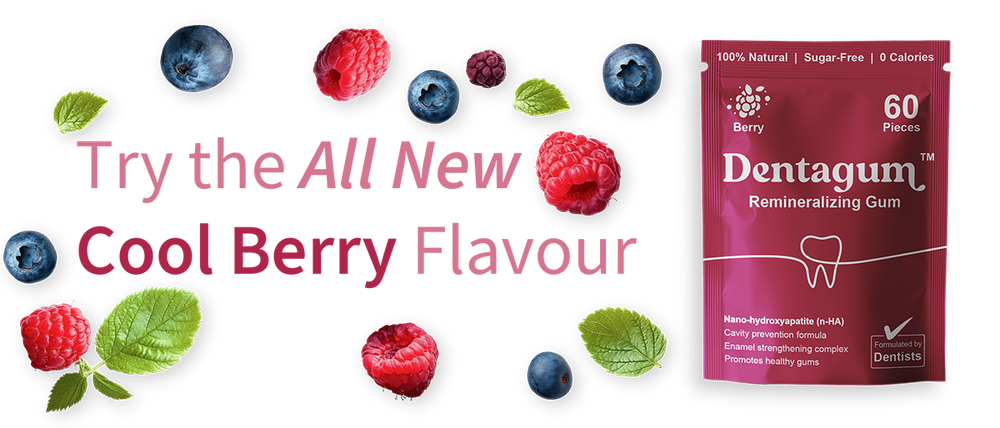
Nano-HAp in the gum provides between-meal remineralization support at the exact moments when enamel is most in need of mineral delivery: after acid challenges from food, drinks, or the bacterial acid in braces plaque. For a complete look at how remineralization actually works and what nano-HAp does at the enamel level, see our article on what nano-hydroxyapatite is and why it's in oral care.
For teens in braces specifically, the added saliva stimulation from chewing mechanically assists in clearing the plaque-protected areas around brackets that regular saliva flow and tongue action cannot reach well. It doesn't replace rigorous brushing around brackets, but it adds an active protective layer during the long hours between brushing sessions.
Why the Gum Habit Works for Teenagers
- Zero friction: Attaches to an existing behavior (chewing gum) rather than creating a new one. No bathroom, no prep, no equipment.
- Xylitol is brushing-independent: Suppresses S. mutans through metabolic disruption. Still works even when brushing is inconsistent or rushed.
- Nano-HAp acts between meals: Provides remineralization support during the long gaps between brushing sessions when enamel is most vulnerable.
- Socially neutral: Chewing gum in school or with friends is normal. It requires no explanation or privacy.
- ADA-endorsed category: Sugar-free gum after meals is explicitly recommended by the ADA for acid buffering and saliva stimulation.
- Braces-compatible: Natural chicle gum base is less sticky than synthetic polymer gum bases, reducing the concern about gum adhering to brackets
Figures from ingredient-level research. Not Dentagum product trials.
For Parents: What to Actually Do
If you've been the parent doing the nagging, here's the honest summary of what the research supports as the highest-leverage interventions that don't require daily battles.
First, the conversation about sports drinks is worth having once, clearly, rather than repeatedly. Show them the pH chart. Teenagers respond better to understanding why than to being told what to do, and "this is as acidic as battery acid" tends to land differently than "that's bad for your teeth." The conversation is about the mechanism, not about compliance.
Second, keeping remineralizing gum visible and accessible removes the decision-making overhead. If it's in the car, in the bag, in the kitchen, it gets used. If it requires deliberate effort to find and access, it doesn't. This is the same principle as putting healthy food at eye level in the refrigerator. Environment shapes habit more reliably than intention does.
Third, if your teen is in braces, the orthodontist conversation is worth having specifically about remineralization strategy. Many orthodontists now recommend nano-HAp products explicitly because the evidence on WSL prevention during fixed appliance treatment has strengthened considerably in recent years. Asking the orthodontist to reinforce the recommendation adds the authority that makes the habit more likely to stick than parental reminders do.
Finally, the most important thing you can put in place is more frequent dental visits during the highest-risk years: the active braces period and the year or two immediately following, when any WSLs that developed need monitoring and remineralization support to fade rather than progress. Twice yearly is the minimum; quarterly is worth discussing for teens in fixed appliances with a history of dietary acid exposure.
For context on how gum disease and systemic health connect, and why good oral habits during adolescence matter beyond just cavities, see our article on gum disease and heart health. Oral habits formed in the teen years tend to persist into adulthood, in both directions.
Frequently Asked Questions
Why do teenagers get so many cavities?
The cavity rate in teenagers, around 57% of 12 to 19 year-olds having had cavities in permanent teeth (NIDCR/NHANES), reflects a specific combination of risk factors: sports and energy drinks with pH of 2.5 to 3.5 consumed frequently, continuous snacking patterns that keep oral pH below the 5.5 demineralization threshold for extended periods, and for the millions in braces, dramatically elevated plaque accumulation around brackets. The cavity risk is mostly about the frequency and duration of acid exposure rather than brushing alone.
Do sports drinks really damage teeth?
Yes, significantly. Sports drinks typically have a pH of 2.5 to 3.5, well below the 5.5 threshold at which enamel begins to demineralize. A systematic review found dental erosion prevalence ranging from 19.4% to 100% in athletic populations who consumed sports drinks regularly. The problem is not a single bottle but the pattern of continuous sipping throughout practice, which keeps oral pH in the damaging range for hours. Finishing a sports drink in one sitting rather than sipping throughout activity dramatically reduces the enamel exposure time.
What are white spot lesions and how do you prevent them during braces?
White spot lesions (WSLs) are areas of enamel demineralization that appear as white opaque patches around where brackets were attached. They affect 25 to 46% of teens in fixed braces and can develop within four weeks of poor plaque control. They are often permanent marks visible after braces come off. Prevention requires meticulous cleaning around brackets and consistent use of remineralizing products. A 2026 BMC Oral Health network meta-analysis found nano-hydroxyapatite significantly improved enamel microhardness and mineral content, showing comparable remineralization ability to fluoride. Xylitol also showed WSL benefit in the same analysis through its effect on S. mutans and saliva stimulation.
Is chewing gum actually good for teeth?
Sugar-free gum, yes. The ADA explicitly endorses chewing sugar-free gum after meals because the chewing motion stimulates saliva, which buffers post-meal acids and initiates the remineralization window. Gum containing xylitol goes further: xylitol suppresses Streptococcus mutans through a specific metabolic disruption, reducing the primary cavity-causing bacterium independently of brushing frequency. A 2025 systematic review confirmed xylitol gum reduced S. mutans in 12 of 14 clinical studies. Gum with nano-HAp also delivers remineralization support between meals. Regular sugar gum does the opposite: it feeds cavity-causing bacteria.
Can you chew remineralizing gum with braces?
It depends on the type of gum and the type of braces. For fixed metal or ceramic bracket braces, most orthodontists advise against regular commercial gum because synthetic polymer gum bases are sticky and can pull at brackets. Dentagum uses an organic chicle base, which is a natural plant resin that is significantly less adhesive than synthetic alternatives. Many teens use it without issue, but the safest approach is to ask your orthodontist, who knows your specific bracket bonding and situation. For teens in clear aligner treatment (Invisalign-style), gum should not be chewed while the aligners are in, but can be used during the aligner-out windows after meals.
What is the most practical oral health habit a teenager can build?
Chewing sugar-free xylitol gum after meals and after acidic drinks. It requires no bathroom, no equipment, and fits naturally into existing social contexts. The ADA endorses the category for acid buffering and saliva stimulation. Xylitol adds direct antibacterial activity against the primary cavity-causing bacterium. Nano-HAp adds between-meal enamel mineral support. The habit attaches to something teenagers already do (chew gum) and converts it into something productive, which is why compliance tends to be higher than other oral health recommendations for this age group.
Bottom Line
Teenagers have high cavity rates because of specific, predictable risk factors: acidic drinks consumed in patterns that keep oral pH dangerously low for hours, snacking habits that prevent the recovery windows enamel needs, and for millions of teens in braces, plaque-trap environments that accelerate enamel demineralization in the most visible parts of their mouths. None of this requires willpower-intensive behavior change to address. It requires smarter habits attached to things teenagers already do.
Chewing remineralizing gum after meals is the single highest-leverage, lowest-friction addition to a teen's oral health routine. It buffers the acid, suppresses the bacteria, and delivers remineralization support between brushings, all during the time teens would otherwise be doing nothing for their teeth. The gum is already part of their world. Make it a better version.
Try Dentagum: Built for After Every MealResearch Summary
This article draws on nationally representative epidemiological data and peer-reviewed clinical research. Key sources include: NIDCR adolescent caries statistics (57% of 12-19 year-olds with caries, NHANES data); CDC 2024 Oral Health Surveillance Report (10% untreated teen decay); PMC systematic review on sports drink erosive potential in athletes (19.4-100% erosion prevalence); BMC Oral Health network meta-analysis, 2026 (nano-HAp in WSL prevention: significantly improved enamel microhardness and mineral content, comparable to fluoride); WSL literature review PMC 2025 (25-46% WSL incidence in fixed braces; 35.5% in clear aligner patients); Söderling et al., BMC Oral Health, 2025 (xylitol vs. S. mutans, 12 of 14 studies); Wu et al., Frontiers in Nutrition, 2022 (xylitol gum microbiome study); Limeback, Enax, Meyer, Biomimetics, 2023 (44 clinical trials, 39.5% dentin hypersensitivity reduction); UK Children's Dental Health Survey 2013 (frequency of sugar consumption as independent caries risk factor in 12 and 15 year-olds). All Dentagum ingredient statistics are from ingredient-level published research and are not claims about the Dentagum product formula.
References
- National Institute of Dental and Craniofacial Research (NIDCR). Dental Caries in Adolescents (Ages 12 to 19): Data and Statistics. nidcr.nih.gov. [Nearly 57% of adolescents 12-19 have had caries in permanent teeth; 17% with untreated decay]
- CDC. 2024 Oral Health Surveillance Report: Selected Findings. cdc.gov. October 2024. [~10% of adolescents 12-19 with untreated permanent tooth decay; 12.1% in 16-19 year-olds]
- CDC. Caregiver-Reported Sugar-Sweetened Beverage Consumption and Cavities in Children. Preventing Chronic Disease. 2025. [57% of 12-19 year-olds with at least 1 permanent tooth cavity, citing NHANES 2011-2016]
- Abdi MS, Ghasemi M, Mahboobi N et al. Erosive Potential of Sports, Energy Drinks, and Isotonic Solutions on Athletes' Teeth: A Systematic Review. PMC. 2025. PMC11820644. [Dental erosion 19.4-100% in athletic populations; 52.4-75.2% enamel-level; 24-57.1% enamel and dentin]
- Makris M, Papagiannopoulou V et al. Efficacy of various interventions for the management of white spot lesions associated with fixed orthodontic treatment: systematic review and network meta-analysis. BMC Oral Health. 2026. DOI: 10.1186/s12903-026-07755-3 [Nano-HAp: significantly improved enamel microhardness, mineral content; comparable to fluoride; xylitol varnish reduced S. mutans and enhanced salivary flow]
- Prevention of White Spot Lesions Induced by Fixed Orthodontic Therapy: A Literature Review. PMC. 2025. [WSL incidence 25-46% in fixed appliances; forms within 4 weeks; nano-HAp preventive outcomes comparable to fluoride]
- Liu X et al. Clear aligner WSL incidence 35.5%; anterior attachment number independent risk factor (OR=2.192). Referenced in: BMC Oral Health. DOI: 10.1186/s12903-025-07497-8. 2025.
- PMC review on adolescent caries risk factors. PMC7399199. [Over 80% caries prevalence including enamel caries in ages 12-15 in most populations; frequency of sugar consumption identified as strongest caries risk factor in UK Children's Dental Health Survey 2013]
- Söderling E et al. Specific Effects of Xylitol Chewing Gum on Mutans Streptococci. BMC Oral Health. 2025. [Xylitol reduced S. mutans in 12 of 14 studies vs. sorbitol gum]
- Wu Y-F, Salamanca E, Chen I-W et al. Xylitol-Containing Chewing Gum Reduces Cariogenic and Periodontopathic Bacteria in Dental Plaque. Front Nutr. 2022;9:882636. DOI: 10.3389/fnut.2022.882636
- Limeback H, Enax J, Meyer F. Clinical Evidence of Biomimetic Hydroxyapatite in Oral Care Products for Reducing Dentin Hypersensitivity. Biomimetics. 2023. PMC9844412. [44 clinical trials; 39.5% dentin hypersensitivity reduction]
- Paszynska E, Pawinska M, Gawriolek M et al. Nano-HAp RCT: 18-month fluoride non-inferiority for cavity prevention. Front Public Health. 2023. DOI: 10.3389/fpubh.2023.1199728
- American Dental Association. Chewing Gum. ada.org. [Sugar-free gum endorsed after meals for saliva stimulation, acid buffering, cavity prevention]
- Dental caries thresholds among adolescents in England, Wales, and Northern Ireland, 2013. PMC. PMC7980596. [High-frequency sugar consumption and irregular dental attendance independently associated with greater caries experience in 12 and 15 year-olds]
