
The Problem With Most Sugar-Free Gum
Most sugar-free gum is still packed with artificial sweeteners, synthetic gum bases, and heavily processed additives. Learn why more consumers are switching to healthier chewing gum alternatives with cleaner ingredients and functional oral care benefits.

Why More Consumers Are Questioning Traditional Chewing Gum
For decades, chewing gum has been marketed as a harmless everyday product associated with fresh breath, convenience, and oral cleanliness.
Most consumers never stopped to question what was actually inside the gum they chew every single day.
But that is rapidly changing.
As ingredient awareness grows across the wellness industry, more people are beginning to look closely at the ingredients found in conventional chewing gum products.
Searches for terms like:
- Healthy chewing gum
- Gum without aspartame
- Natural chewing gum
- Sugar free gum for teeth
- Best gum for teeth
have increased dramatically over the past few years.
Consumers are becoming far more conscious about artificial sweeteners, synthetic ingredients, and the overall quality of products they use daily.
Many people assume that all sugar-free gum is automatically healthy.
Unfortunately, that is not always the case.
While removing sugar is certainly a positive step, many mainstream sugar-free gums still contain highly processed ingredients, synthetic gum bases, artificial sweeteners, preservatives, and additives that health-conscious consumers increasingly try to avoid.
This article explores the hidden problems with many conventional sugar-free gums, why ingredient quality matters, and why healthier chewing gum alternatives like Dentagum are gaining popularity among modern consumers.
The Rise of Sugar-Free Gum
Sugar-free gum originally became popular because of growing awareness around the negative effects of sugar on teeth.
Dentists and researchers began encouraging alternatives that would not feed cavity-causing bacteria the same way traditional sugar products do.
This led to the rise of sugar substitutes such as:
- Aspartame
- Sorbitol
- Sucralose
- Acesulfame potassium
- Xylitol
- Erythritol
On the surface, sugar-free gum appeared to solve the problem.
And in some ways, it certainly did.
Removing sugar generally reduces the ability of oral bacteria to produce enamel-eroding acids.
However, over time, consumers started paying closer attention to the full ingredient lists of mainstream gum products.
That is when many people realized that removing sugar did not necessarily mean the gum itself was truly healthy.
What Is Actually Inside Most Mainstream Gum?
One of the biggest surprises for many consumers is discovering how heavily processed conventional chewing gum often is.
Most large commercial gum brands contain ingredients that consumers rarely think about.
These commonly include:
- Synthetic gum bases
- Artificial sweeteners
- Artificial flavors
- Artificial colors
- Preservatives
- Petroleum-derived compounds
- Emulsifiers
- Titanium dioxide
The term “gum base” itself is often surprisingly vague.
In many products, manufacturers are not required to disclose the exact composition of their gum base formulations.
This means consumers frequently have little idea what they are actually chewing.
Historically, chewing gum was made from natural tree saps like chicle.
Modern mass-produced gum, however, often uses synthetic rubber-like compounds designed for cost efficiency and shelf stability.
This growing awareness is one reason why searches for healthy chewing gum and natural chewing gum continue increasing every year.
The Concern Around Artificial Sweeteners
One of the most discussed ingredients in mainstream sugar-free gum is aspartame.
Aspartame is an artificial sweetener widely used in:
- Sugar-free gum
- Diet soda
- Low-calorie products
- Sugar-free candies
- Processed foods
While regulatory authorities around the world continue to consider aspartame approved for use within established intake limits, many consumers still prefer to avoid it.
This preference has become even more common in the clean-label wellness movement.
As a result, searches for:
- Gum without aspartame
- Aspartame free gum
- Healthy chewing gum
- Natural gum
have grown rapidly.
For many consumers, the concern is not necessarily based on one specific ingredient alone.
Instead, it reflects a broader desire to reduce overall exposure to heavily processed additives and artificial formulations.
People increasingly want simpler ingredient lists and products that feel more aligned with modern wellness lifestyles.
Why Ingredient Transparency Matters
Consumers today are far more educated than previous generations.
People now routinely read ingredient labels before purchasing:
- Food
- Supplements
- Skincare
- Oral care products
- Wellness products
Chewing gum is beginning to receive the same level of scrutiny.
Many consumers are surprised to discover that some gums marketed as “healthy” still contain:
- Artificial sweeteners
- Synthetic fillers
- Artificial colors
- Highly processed additives
- Questionable preservatives
This has created demand for gum products focused on:
- Simpler formulas
- Cleaner ingredients
- Natural sweeteners
- Plant-based gum bases
- Functional oral care ingredients
In many ways, chewing gum is now following the same clean-label evolution already seen in:
- Protein bars
- Supplements
- Beverages
- Skincare
- Functional foods
Consumers increasingly want products that support wellness rather than simply avoid sugar.
Why More Consumers Want Natural Chewing Gum
Traditional chewing gum existed long before synthetic gum bases were invented.
Historically, many cultures chewed natural tree resins and plant saps for oral freshness and enjoyment.
Modern natural chewing gum products often use ingredients such as:
- Chicle gum
- Mastic gum
- Spruce gum
These ingredients have become increasingly popular among consumers looking for alternatives to heavily processed gum products.
Natural chewing gum appeals to consumers because it often aligns better with broader wellness values such as:
- Cleaner ingredients
- Minimal processing
- Traditional materials
- Plant-based formulations
- Fewer artificial additives
This is one reason why many modern consumers now search specifically for healthy chewing gum rather than simply sugar-free gum.
Sugar-Free Does Not Automatically Mean Healthy
One of the most important things consumers should understand is that “sugar free” is only one piece of the equation.
A gum product can technically be sugar free while still containing:
- Artificial sweeteners
- Synthetic fillers
- Artificial dyes
- Preservatives
- Highly processed gum bases
This is why ingredient quality matters.
Health-conscious consumers increasingly evaluate products based on the overall formulation rather than a single claim on the front label.
Many people today are looking for gum that is:
- Sugar free
- Aspartame free
- Naturally flavored
- Made with cleaner gum bases
- Designed for oral wellness
- Functional beyond fresh breath
This shift has helped create the rapidly growing category of functional chewing gum.
The Rise of Functional Chewing Gum
Functional chewing gum is one of the fastest-growing categories in modern wellness.
Instead of acting purely as candy, functional gum products are designed around specific wellness goals.
Some modern gum products now focus on:
- Oral health
- Saliva stimulation
- Enamel support
- Energy
- Relaxation
- Vitamins
- Cognitive support
- Breath freshness
In the oral wellness space specifically, ingredients like:
- Xylitol
- Erythritol
- Nano hydroxyapatite
- Natural gum bases
have become increasingly popular.
These ingredients are commonly associated with:
- Sugar-free oral care
- Reduced acid exposure
- Cleaner ingredient formulations
- Healthier oral routines
This is why terms like “remineralizing gum” and “xylitol gum for teeth” have seen major growth in search volume.
Why Xylitol Gum Became So Popular
Xylitol is one of the most researched ingredients in modern oral care.
Unlike regular sugar, many cavity-associated bacteria cannot properly metabolize xylitol in the same way.
Research suggests that xylitol-containing products may help support a healthier oral environment when used consistently as part of a complete oral hygiene routine. (pmc.ncbi.nlm.nih.gov)
Chewing xylitol gum may also help stimulate saliva production.
Healthy saliva plays a major role in:
- Neutralizing acids
- Supporting enamel mineral balance
- Washing away food particles
- Maintaining oral pH
- Supporting fresher breath
This is one reason why many dentists recommend sugar-free gum after meals.
However, consumers today increasingly want xylitol gum combined with cleaner formulations overall.
They are not just searching for “xylitol gum.”
They are searching for healthier chewing gum.
What Is Nano Hydroxyapatite?
Another ingredient growing rapidly in oral care is nano hydroxyapatite.
Hydroxyapatite is the same mineral naturally found in tooth enamel.
Nano hydroxyapatite refers to hydroxyapatite particles engineered at an extremely small size.
Research surrounding nano hydroxyapatite has increased significantly over the past decade.
Studies suggest it may help support enamel remineralization and sensitivity reduction under certain conditions. (pmc.ncbi.nlm.nih.gov)
This ingredient has become increasingly popular in:
- Toothpaste
- Mouth rinses
- Remineralizing gum
- Sensitive teeth products
When combined with xylitol and saliva stimulation, nano hydroxyapatite contributes to the growing category of functional oral wellness products.
What Makes Dentagum Different?
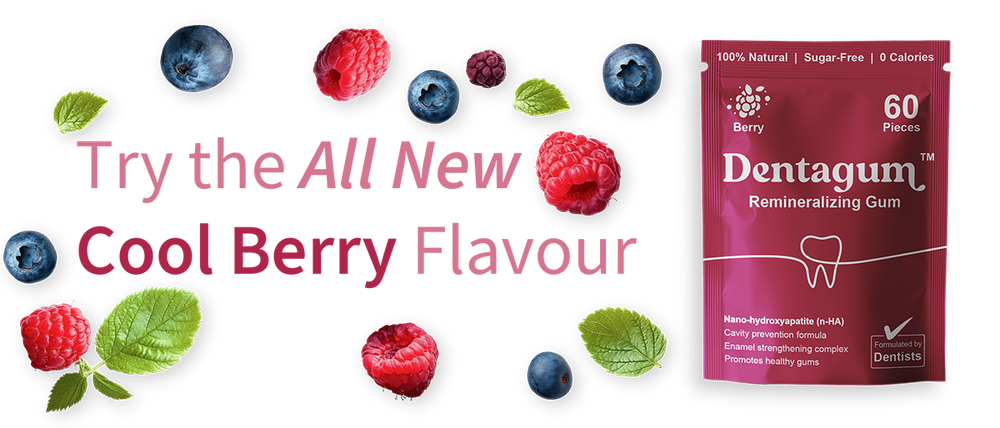
Dentagum was developed specifically around the idea of healthier, functional chewing gum.
Instead of functioning like conventional candy-style gum, Dentagum combines modern oral wellness ingredients into one cleaner formulation.
Dentagum includes:
- Xylitol
- Nano hydroxyapatite
- Erythritol
- Mastic gum
- Chicle gum
- Spruce gum
- Natural flavorings
Dentagum is also:
- Sugar free
- Aspartame free
- Fluoride free
- Designed for everyday oral wellness routines
Rather than focusing only on temporary fresh breath, Dentagum was created to support:
- Saliva production
- Cleaner ingredient habits
- Functional oral wellness
- Enamel-supportive routines
- Modern health-conscious lifestyles
This aligns closely with the broader consumer shift toward cleaner wellness products.
Why More Consumers Are Replacing Conventional Gum
Many consumers are now actively moving away from traditional chewing gum because they no longer want products filled with:
- Artificial sweeteners
- Synthetic gum bases
- Artificial colors
- Candy-style formulations
Instead, people increasingly want:
- Functional ingredients
- Simpler labels
- Natural gum bases
- Cleaner sweetness sources
- Wellness-oriented products
This trend is likely to continue growing as ingredient awareness expands.
The same consumer who carefully evaluates skincare ingredients or supplement labels is increasingly evaluating chewing gum ingredients too.
How to Choose a Healthier Chewing Gum
Consumers searching for healthier chewing gum often look for products that are:
- Sugar free
- Aspartame free
- Naturally flavored
- Made with xylitol
- Made with cleaner gum bases
- Free from unnecessary additives
- Focused on oral wellness
While no gum is perfect, many consumers now prioritize overall ingredient quality rather than just flavor alone.
The Future of Healthy Chewing Gum
Chewing gum is evolving far beyond its original purpose.
Consumers increasingly want products that support broader wellness goals.
This includes:
- Cleaner ingredients
- Functional benefits
- Oral wellness support
- Better daily habits
- Ingredient transparency
That is exactly why searches for terms like:
- Healthy chewing gum
- Gum without aspartame
- Natural chewing gum
- Remineralizing gum
- Best gum for teeth
continue growing rapidly.
The future of chewing gum is likely centered around products that combine:
- Functional ingredients
- Cleaner formulations
- Better oral wellness support
- More transparent labeling
Functional oral care gum represents a major shift away from conventional candy-style gum products.
Final Thoughts
Many consumers assume that all sugar-free gum is healthy.
But when you look closely at the ingredient lists of many mainstream gum products, the reality is often more complicated.
Artificial sweeteners, synthetic gum bases, preservatives, and heavily processed additives have led many consumers to start searching for healthier alternatives.
This growing awareness has fueled the rise of healthy & natural chewing gum.
Products like Dentagum reflect this new direction.
Instead of functioning like candy, modern functional gum products are increasingly designed around cleaner ingredients, oral wellness support, and healthier everyday habits.
As ingredient awareness continues growing, healthier chewing gum is likely to become a major long-term category in modern oral care.
References
-
Xylitol in Preventing Dental Caries: A Systematic Review and Meta-Analysis. PMC.
-
Nano-hydroxyapatite and its applications in preventive dentistry.
-
Oral health effects of saliva stimulation and sugar-free chewing gum.
-
Clinical research on xylitol-containing chewing gum and plaque reduction.
-
Reviews examining consumer trends toward clean-label wellness products.
