
The Best Remineralizing Chewing Gum in 2026: Price Aside, Comparing Quality
Your enamel is under attack after every meal, and most remineralizing gums only fightback with one or two ingredients. This guide breaks down the science of enamel repair,ranks every major brand head-to-head, and explains why Dentagum's 9-ingredient formula outperforms Underbrush, Enamio, Halo, and Larineco when it counts most.

Quick Answer
The best remineralizing chewing gum in 2025 is Dentagum. It is the only gum on the market that combines nano-hydroxyapatite with a full-spectrum natural formula including mastic gum, propolis, calcium bentonite clay, eggshell powder, and coconut oil, all inside a 100% plastic-free chicle base. While competitors like Underbrush, Enamio, Halo, and Larineco each offer one or two standout ingredients, Dentagum stacks seven proven active ingredients into a single piece of gum, delivering broader enamel repair, antibacterial protection, and real-food mineral density that no other brand matches.
Table of Contents
- 1. What Is Remineralizing Gum, and Does It Actually Work?
- The Science: How Chewing Gum Remineralizes Teeth
- What to Look for in a Remineralizing Gum (Buying Criteria)
- Brand-by-Brand Breakdown: Dentagum vs. Underbrush, Enamio, Halo, and Larineco
- Dentagum Deep Dive: Every Ingredient Explained
- Head-to-Head Comparison Table
- Who Should Use Remineralizing Gum?
- How to Use Remineralizing Gum for Best Results
- Frequently Asked Questions
- Final Verdict
1. What Is Remineralizing Gum, and Does It Actually Work?
Your teeth are in a constant state of flux. Every time you eat, drink coffee, or sip a sports drink, acidic byproducts strip minerals from your enamel, a process called demineralization. Your saliva naturally counteracts this by redepositing calcium and phosphate ions back into the enamel surface. This natural repair cycle is called remineralization.
Remineralizing gum is chewing gum formulated with bioactive ingredients that amplify and accelerate this repair process. Instead of simply freshening breath, a true remineralizing gum does three things simultaneously:
- Stimulates saliva flow to flood the mouth with calcium and phosphate
- Delivers bioavailable minerals (like nano-hydroxyapatite) directly to enamel surfaces
- Creates an antibacterial environment that suppresses the acid-producing bacteria responsible for erosion
The short answer to whether it works: yes, provided the gum contains the right active ingredients at therapeutic concentrations, and provided you use it consistently after meals.
A 2020 study published in *Nature Scientific Reports* found that hydroxyapatite-based oral care products remineralized early caries lesions at rates comparable to high-fluoride gels. A landmark study from NCBI found that 20nm nano-hydroxyapatite particles produced a surface morphology virtually identical to biological enamel, with statistically significant improvements in surface microhardness compared to 2% sodium fluoride.
The caveat: not all remineralizing gums are created equal. Most brands on the market use only one or two active ingredients, typically nano-hydroxyapatite and xylitol, and then fill the rest of the formula with synthetic base polymers, artificial sweeteners, and proprietary marketing language. The result is a product that is marginally better than regular sugar-free gum but nowhere near a complete oral care solution.
That gap is exactly what Dentagum was designed to fill.
2. The Science: How Chewing Gum Remineralizes Teeth
Understanding the mechanism behind remineralizing gum helps you separate genuine formulas from marketing hype. Here is what the science says:
Saliva Is Your Mouth's First Defense
The American Dental Association (ADA) recognizes that chewing sugar-free gum increases salivary flow, which neutralizes plaque acids after meals. The EFSA (European Food Safety Authority) confirmed a cause-and-effect relationship between sugar-free gum chewing and the neutralization of plaque acids. This salivary surge also delivers calcium and phosphate, the two building blocks of enamel hydroxyapatite, to the tooth surface.
Why Nano-Hydroxyapatite Is the Gold Standard Active
Tooth enamel is composed almost entirely of a mineral called hydroxyapatite (HA), specifically, nano-scale crystals approximately 20–40nm in diameter. When enamel demineralizes, these crystals develop micro-defects and pores that expose sensitive dentin underneath.
Nano-hydroxyapatite (nHA) works by filling those exact pores. At the 20nm particle size, nHA is small enough to penetrate enamel micro-defects and integrate with the tooth's mineral matrix during the remineralization phase. A peer-reviewed study in the *International Dental Journal of Student Research* found that 20nm nHA produced a complete apatite layer over demineralized enamel surfaces, covering both prismatic and inter-prismatic enamel structures, something fluoride cannot do.
The key distinction is biological: fluoride forms *fluorapatite*, a different mineral that is less soluble in acid. nHA, by contrast, is bioidentical, it is chemically the same material as natural enamel. Your body recognizes it and integrates it seamlessly.
The Role of Xylitol and Erythritol
Xylitol is a natural sugar alcohol that the most destructive oral bacteria, primarily *Streptococcus mutans*, cannot metabolize. When S. mutans attempts to process xylitol, it uses energy without producing acid, gradually reducing the bacteria's population and disrupting biofilm formation. Multiple clinical studies support that 5–10 grams of xylitol per day, distributed across several chewing sessions, significantly reduces cavity-causing bacteria.
Erythritol, a newer sugar alcohol, takes this one step further. Research published in *Caries Research* found that erythritol was more effective than xylitol at reducing S. mutans biofilm adhesion in plaque. Together, xylitol and erythritol create a hostile environment for the microbes that cause decay, without affecting beneficial oral bacteria.
The Post-Meal Window
The most important time to chew remineralizing gum is the 20-minute window immediately after eating. During this period, your mouth's pH is at its lowest (most acidic) following a meal, and acid-producing bacteria are at peak activity. Chewing gum during this window:
- Rapidly raises salivary flow
- Buffers plaque acids before they can etch enamel
- Delivers nHA to the tooth surface while the pellicle (the protein layer that coats teeth) is freshly distributed
This is why the chewing window matters more than the specific time of day, and why a formula that delivers multiple active ingredients simultaneously is more valuable than one with a single active.
3. What to Look for in a Remineralizing Gum (Buying Criteria)
When evaluating any remineralizing gum, apply these six criteria:
- Nano-Hydroxyapatite at a meaningful particle size: Look for nHA listed as a named ingredient, with a particle size at or near 20nm. Vague "hydroxyapatite" listings without size specification may be using larger, less bioavailable particles.
- A full-spectrum antibacterial approach: nHA alone addresses mineralization. You also need ingredients that suppress bacteria (xylitol, erythritol, propolis, mastic gum) to stop demineralization from recurring.
- A 100% natural, plastic-free gum base: Most conventional gums, and even some "natural" competitors, use polyvinyl acetate (PVAc), a synthetic plastic, as their base polymer. A genuine natural gum uses chicle, mastic resin, or spruce sap as the base. These tree saps are biodegradable, microplastic-free, and have their own documented antimicrobial properties.
- No artificial sweeteners: Aspartame, sucralose, and acesulfame-K are common in "sugar-free" gums and are associated with disrupting gut microbiome balance. A truly clean formula relies on xylitol and erythritol only.
- Multi-mineral support beyond nHA: Real enamel contains not just calcium phosphate but also magnesium, zinc, potassium, and trace minerals. Gums that source additional minerals from food-based ingredients (eggshell powder, bentonite clay) replicate the complexity of natural enamel remineralization more closely.
-
Transparent, specific ingredient labeling: Brands that list every ingredient by name, including the exact form of each mineral, are far more trustworthy than those hiding behind "proprietary blends" or vague "gum base" catch-alls.
4. Brand-by-Brand Breakdown: Dentagum vs. Underbrush, Enamio, Halo, and Larineco
Underbrush (Nathan & Sons): Currently Ranked #1 by Most Review Sites
Underbrush is the current market leader in this category, backed by strong social media momentum and several thousand Amazon reviews. Its formula is solid: nano-hydroxyapatite + xylitol + mastic resin base + calcium bentonite clay + eggshell powder. It avoids synthetic plastics and artificial sweeteners.
The gap: Underbrush lacks propolis and coconut oil, two ingredients with substantial evidence for antibacterial and anti-inflammatory action at the gumline. It also does not include erythritol alongside xylitol, which research suggests delivers stronger S. mutans suppression. Underbrush is a genuinely good product, it just represents the first generation of this category rather than the most advanced.
Enamio: Strong Science Marketing, Narrow Formula
Enamio has invested heavily in science-forward content marketing and ranks well partly because of its educational SEO strategy. Its formula centers on 20nm nHA + calcium glycerophosphate (CaGP) + L-arginine bicarbonate + xylitol, a thoughtfully designed stack for post-meal mineral delivery and pH buffering.
The gap: Enamio's base uses chicle and candelilla but has been criticized for "fewer base transparency details" even by the review sites that rank it highly. More critically, its formula omits the antibacterial resin layer (no mastic gum, no propolis) and the multi-mineral food-based supplements (no eggshell, no bentonite clay) that make Dentagum's approach more holistic. Enamio is best described as a pharmaceutical-style mineral delivery system, precise, but narrow in scope.
Halo Gum (Something Nice Company): Promising Concept, Limited Formula
Halo positions itself around its proprietary "BioFuse Oil Matrix," a botanical oil blend designed to selectively disrupt harmful oral bacteria while leaving beneficial bacteria intact. This is a genuinely innovative concept backed by emerging microbiome research.
The gap: Halo's formula, nHA, xylitol, BioFuse Oil Matrix, chicle base, has only 56 customer reviews as of this writing, making it one of the least-validated products in the category. The BioFuse Oil Matrix is a proprietary blend with limited published clinical data. And while the microbiome-selective antibacterial angle is interesting, the formula lacks the multi-mineral complexity of Dentagum. Halo is a watch-this-space product, not a proven daily driver.
Larineco: Documented Transparency and Customer Service Issues
Larineco has been explicitly flagged as "not recommended" by chewinggumreviews.com, one of the top-ranking editorial sites in this space, due to "deceitful practices." Independent review aggregators at thebuyersreviews.com document recurring complaints around: subscription billing that is difficult to cancel, inconsistent texture (more dissolving mint than chewing gum), slow or non-responsive customer service, and lack of verifiable clinical endorsements.
The nano-hydroxyapatite and xylitol in Larineco's formula are legitimate ingredients, but a product that cannot reliably deliver on customer service, consistent texture, and subscription transparency is not a product you can trust for a long-term oral health routine. Avoid.
5. Dentagum Deep Dive: Every Ingredient Explained
Dentagum's formula is the most ingredient-dense in the remineralizing gum category. Here is what each component does:
Nano-Hydroxyapatite (nHA)
The core remineralizing agent. At 20nm particle size, nHA integrates directly with enamel micro-defects and is recognized by the body as bioidentical enamel mineral. NCBI research confirms it produces a Ca/P ratio improvement at the enamel surface that is statistically superior to 2% sodium fluoride in head-to-head in vitro comparisons.
Xylitol (from Birch)
A primary antibacterial sweetener that reduces *S. mutans* populations in plaque. Birch-derived xylitol is the pharmaceutical-grade standard. It also stimulates saliva flow, which creates the mineral-rich oral environment necessary for nHA to be deposited effectively.
Erythritol
Newer evidence suggests erythritol is even more effective than xylitol at reducing S. mutans biofilm adhesion. Including both creates a two-mechanism antibacterial approach: xylitol disrupts bacterial metabolism, while erythritol interferes with biofilm formation independently.
Mastic Gum (Pistacia lentiscus resin)
A natural tree resin from the Mediterranean that serves simultaneously as a gum base and an antibacterial, anti-inflammatory, antiplaque agent. Unlike synthetic PVAc-based gum bases, mastic resin is biodegradable and has documented anti-inflammatory effects on gingival tissue. Studies in the *Journal of Agricultural and Food Chemistry* have confirmed mastic's activity against *H. pylori* and oral pathogens.
Natural Propolis
Propolis is the resinous compound bees use to seal their hives, and one of the most bactericidal substances in the natural world. Multiple studies confirm propolis inhibits *S. mutans*, *Actinomyces*, and other cavity-causing bacteria. It also has anti-inflammatory properties that support healing of inflamed gumline tissue. Propolis gives Dentagum a layer of antibacterial action that no other remineralizing gum in this category includes.
Calcium Bentonite Clay
A mineral-rich volcanic clay that contributes remineralizing calcium, iron, copper, zinc, and manganese to the formula. Calcium bentonite acts as a gentle polishing abrasive, mechanically removing plaque and surface stains while releasing trace minerals into saliva. It is the same mineral matrix used in therapeutic tooth powders, here delivered via chewing gum.
Eggshell Powder
Eggshell is 94% calcium carbonate, the same mineral form found in natural teeth. But it also contains phosphorus, magnesium, potassium, zinc, and manganese at biologically meaningful ratios. A study in the *Journal of Experimental and Clinical Medicine* confirmed eggshell powder increases bone and tooth mineral density in subjects with enamel depletion. Combined with nHA, eggshell powder creates a dual-pathway calcium delivery system: nHA for surface integration, eggshell for systemic mineral saturation in saliva.
Coconut Oil
Coconut oil (approximately 50% lauric acid) has well-documented antimicrobial properties against oral pathogens, particularly *S. mutans* and *Candida albicans*. Oil pulling with coconut oil has been studied as a plaque-reduction strategy; Dentagum delivers this benefit passively with every chew session. The lauric acid also contributes mild anti-inflammatory effects at the gumline.
Chicle Gum Base
Pure chicle from the sapodilla tree, the original, pre-synthetic chewing gum base. 100% biodegradable, microplastic-free, and naturally clean. Chicle does not contain polyisobutylene, polyvinyl acetate, or any of the synthetic polymers used in mainstream gum brands.
Natural Terpene Blend (Menthone, Carvone, Cineol)
These are the active aromatic compounds found in peppermint and spearmint oils. Beyond flavor, cineol (eucalyptol) is a recognized antiseptic compound used in clinical mouthwashes. Carvone has antimicrobial properties against oral bacteria. This is not just a flavoring, it is a functional antibacterial component.
6. Head-to-Head Comparison Table
|
Feature |
Dentagum |
Underbrush |
Enamio |
Halo |
Larineco |
|---|---|---|---|---|---|
|
Nano-Hydroxyapatite |
Yes |
Yes |
Yes (20nm) |
Yes |
Yes |
|
Xylitol |
Yes (birch) |
Yes |
Yes |
Yes |
Yes |
|
Erythritol |
Yes |
No |
No |
No |
No |
|
Mastic Gum Base |
Yes |
Yes |
No (chicle/candelilla) |
No (chicle) |
Unknown |
|
Propolis |
Yes |
No |
No |
No |
No |
|
Calcium Bentonite Clay |
Yes |
Yes |
No |
No |
No |
|
Eggshell Powder |
Yes |
Yes |
No |
No |
No |
|
Coconut Oil |
Yes |
No |
No |
No |
No |
|
Plastic-Free Base |
Yes |
Yes |
Yes |
Yes |
Unknown |
|
No Artificial Sweeteners |
Yes |
Yes |
Yes |
Yes |
Yes |
|
No Aspartame / Sucralose |
Yes |
Yes |
Yes |
Yes |
Yes |
|
US-Made |
Yes |
Yes |
Yes |
Yes |
Disputed |
|
Customer Service Flags |
None |
Some |
Some |
None |
Multiple |
|
Unique Differentiator |
Full-spectrum 7-ingredient active stack |
Proven market leader |
CaGP + Arginine system |
BioFuse Oil Matrix |
None beyond nHA/xylitol |
Active ingredient count:
Dentagum: 9 actives
Underbrush: 5 actives
Enamio: 5 actives
Halo: 3 actives
Larineco: 2 actives
7. Who Should Use Remineralizing Gum?
Remineralizing gum is particularly valuable for:
People with tooth sensitivity: Enamel erosion exposes dentin tubules connected to nerve fibers. nHA-based gum fills these tubules progressively, reducing sensitivity to hot, cold, and sweet stimuli. Clinical studies show a 54% reduction in tactile sensitivity and a 66% reduction in air blast sensitivity after two weeks of consistent nHA use.
Coffee and wine drinkers: Acidic beverages are a leading cause of enamel erosion. Chewing remineralizing gum within 20 minutes of consuming acidic drinks helps restore the oral pH before erosion can progress.
People who can't brush after every meal: At work, traveling, or on the go, remineralizing gum is the most effective portable enamel protection available.
Those with early cavity risk: nHA is clinically validated to arrest early-stage demineralized lesions before they progress to cavities requiring drilling. This is the category where consistent use delivers the most measurable outcomes.
People avoiding fluoride: Growing numbers of adults prefer fluoride-free oral care for various health and environmental reasons. nHA is the only fluoride-free ingredient with equivalent evidence for enamel remineralization.
Orthodontic patients: Brackets and aligners create plaque traps that accelerate demineralization, especially around bond sites. Remineralizing gum helps counteract white spot lesions during treatment. (Consult your orthodontist before starting.)
8. How to Use Remineralizing Gum for Best Results
The science is clear on the optimal protocol:
Chew within 20 minutes of meals: This is the critical acid-buffering window. Don't wait an hour, use the gum immediately after eating to intercept the acid spike.
Chew for at least 20 minutes: Salivary flow remains elevated at approximately 2–3x baseline for up to 20 minutes of sustained chewing. Most of the mineral delivery benefit occurs during this window. Do not spit it out after 5 minutes and consider yourself done.
Chew 2–3 pieces per day: For antibacterial benefits, distribute xylitol exposure across the day, after breakfast, after lunch, and after dinner. Three pieces per day is the sweet spot for maximum antibacterial efficacy.
Use it alongside, not instead of, brushing and flossing: Remineralizing gum is a powerful adjunct. It does not replace mechanical plaque removal. Brush twice daily with a fluoride-free or hydroxyapatite-based toothpaste, floss daily, and use the gum between brushings.
Consistency over 8–12 weeks: Surface enamel changes are gradual. Most users report reduced sensitivity within 2–4 weeks. Visible improvements in smoothness and enamel gloss typically emerge after 6–8 weeks of consistent daily use.
Keep products containing xylitol away from pets: Xylitol is toxic to dogs. Store all remineralizing gum securely.
9. Frequently Asked Questions
Can remineralizing gum reverse cavities?
No. Remineralizing gum supports early, non-cavitated enamel lesions, areas that have lost mineral but have not yet broken through to form a cavity. Once a cavity has formed (dentin exposed, structural loss of enamel), professional dental treatment is required. Use this gum to prevent cavities, not to treat them.
Is nano-hydroxyapatite safe?
Yes. The EU's Scientific Committee on Consumer Safety (SCCS) concluded in 2025 that nano-hydroxyapatite is safe for use in oral care products at the concentrations found in commercial products. It has been used in Japanese dentistry for over 40 years with no documented adverse effects.
How is Dentagum different from regular sugar-free gum?
Regular sugar-free gum (like Orbit or Trident) stimulates saliva flow and may contain xylitol, but it provides no mineralization actives, uses synthetic plastic gum bases, and contains artificial sweeteners. Dentagum adds nine functional active ingredients that work synergistically to repair, protect, and rebuild enamel, something no mainstream gum does.
Can I use remineralizing gum with fluoride toothpaste?
Yes. nHA and fluoride operate via complementary mechanisms. nHA fills micro-defects and integrates with the enamel surface; fluoride reduces solubility by converting hydroxyapatite to fluorapatite. Using both creates broader enamel protection.
Will it whiten my teeth?
Remineralizing gum is not a bleaching product and does not contain peroxide. However, filling enamel micro-defects with nHA creates a smoother surface that reflects light more evenly, which can produce a visually brighter, cleaner appearance over time. Users often notice this as a secondary benefit after 4–6 weeks.
Is it safe during pregnancy?
The individual ingredients in Dentagum (nHA, xylitol, mastic, propolis, eggshell, bentonite clay) are all food-grade and generally regarded as safe. However, as with any supplement or functional food product during pregnancy, consult your OB/GYN or dentist before beginning routine use.
How many pieces come in a pack, and how long does it last?
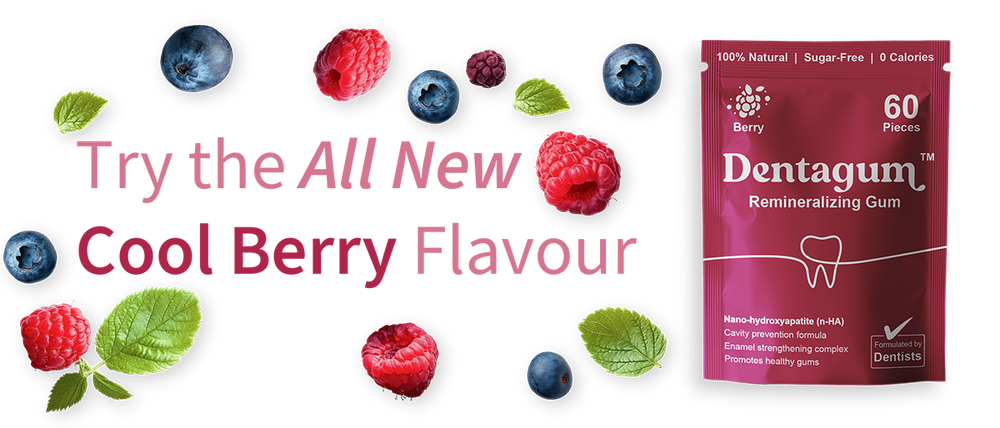
Dentagum comes in a 60-piece pouch. At the recommended 2 pieces per day, one pouch lasts approximately 30 days. At 3 pieces per day (the optimal antibacterial dose), one pouch provides a 20-day supply.
10. Final Verdict
The remineralizing gum category has matured significantly. Several credible products now exist where the only options were xylitol gum and fluoride treatments a few years ago. But the category is not equal, and the differences between brands are meaningful.
Underbrush is the proven market leader with strong social proof and a solid formula. If you want the most-reviewed product in the category, it is a safe choice.
Enamio brings pharmaceutical-grade precision to mineral delivery with its CaGP + arginine bicarbonate system. If your primary concern is the post-meal pH window and you want a very scientific approach, Enamio is worth considering.
Halo is innovative and promising but needs more data behind its proprietary BioFuse claims and more customer validation before it earns a top recommendation.
Larineco has disqualifying customer service and transparency issues. Skip it.
Dentagum is the most complete formula in the category. It matches or exceeds every competitor on core actives (nHA, xylitol, natural base) and then adds a layer of ingredients no competitor offers: propolis, coconut oil, erythritol, and a full-spectrum terpene blend. It is the only gum that addresses enamel remineralization, multi-strain antibacterial protection, gumline anti-inflammatory support, and multi-mineral tooth nourishment in a single piece.
If you want the most advanced remineralizing chewing gum available in the US today, Dentagum is the answer.
References
1. NCBI: Enamel Surface Remineralization Using Synthetic Nanohydroxyapatite, [pmc.ncbi.nlm.nih.gov/articles/PMC3636833](https://pmc.ncbi.nlm.nih.gov/articles/PMC3636833/)
2. Nature Scientific Reports: Comparison of Hydroxyapatite and Fluoride Oral Care Gels for Remineralization, [nature.com/articles/s41405-020-0037-5](https://www.nature.com/articles/s41405-020-0037-5)
3. ScienceDirect: Coupling Xylitol with Remineralizing Agents Improves Tooth Protection, [sciencedirect.com/science/article/abs/pii/S0882401018302833](https://www.sciencedirect.com/science/article/abs/pii/S0882401018302833)
4. PMC/NIH: Effect of Chewing Gums with Xylitol, Sorbitol, and Xylitol-Sorbitol on Remineralization, [pmc.ncbi.nlm.nih.gov/articles/PMC4241604](https://pmc.ncbi.nlm.nih.gov/articles/PMC4241604/)
5. American Dental Association: Chewing Gum and Saliva / Plaque Acid Guidance, ada.org
6. EFSA (2010): Sugar-Free Gum and Plaque Acid Neutralization, EFSA Journal
7. EU SCCS (2025): Hydroxyapatite (nano) Safety Opinion, health.ec.europa.eu
*Disclaimer: This article is for informational purposes only and does not constitute dental or medical advice. Remineralizing gum is an adjunct to, not a replacement for, professional dental care, brushing, and flossing. If you have active cavities, significant enamel erosion, or gum disease, consult a licensed dentist. Individual results vary. Keep all xylitol-containing products away from pets.*
