
Natural Chewing Gum vs Regular Gum: Is There a Difference?
The ingredient listed as "gum base" on most chewing gum labels is petroleum-derived plastic. Here's what that actually means, what natural gum uses instead, and whether the difference matters for your daily oral health.

Yes, there is a meaningful difference. Regular commercial chewing gum uses a synthetic gum base made from petroleum-derived polymers including polyvinyl acetate and polyisobutylene — the same class of materials found in glue, tires, and industrial adhesives. Natural chewing gum uses plant-derived resins like chicle and mastic gum, which have been chewed safely by humans for thousands of years. Beyond the material difference, mastic gum specifically has documented antibacterial properties against cavity-causing bacteria across multiple clinical studies, meaning the base in a natural gum can actively support oral health rather than simply providing texture.
Most people have never thought about what the chewy part of their gum is actually made of. The sweeteners dissolve. The flavour fades. But the base — the rubbery, elastic material that stays springy for twenty minutes of chewing — that's what you're actually putting in your mouth.
The answer, for most commercial gum, is plastic. Specifically, petroleum-derived synthetic polymers approved by the FDA under the vague label "gum base." And a growing body of research is asking whether that matters for your health.
What "Gum Base" Actually Means on a Label

The FDA allows gum manufacturers to list their base ingredient simply as "gum base" without specifying what's in it. A 2022 paper in Food Additives and Contaminants described this as a "compositional black box" — which is the scientific community's polite way of saying the system is built to obscure.
Under US law, approved gum base ingredients include polyvinyl acetate, polyisobutylene, polyethylene, butadiene-styrene rubber, and petroleum wax, among others. These aren't obscure additives. Polyvinyl acetate is the polymer in wood glue. Polyisobutylene is used in the inner tubes of car tires and in industrial adhesives and sealants. Butadiene-styrene rubber is the same compound used in the heels of your shoes.
The FDA approves these at specific molecular weights for food contact. They are classified as Generally Recognized As Safe (GRAS) at those specifications. But that classification predates modern microplastics research, and the safety designation applies to the polymer itself, not to the microplastic particles it releases during chewing.
The reason you don't see "polyisobutylene" on your gum label isn't because it isn't there. It's because the FDA's "gum base" designation allows manufacturers to group all of it under two words without further disclosure. Brands using synthetic bases have no incentive to be specific, and the regulatory framework doesn't require them to be.
The Microplastics Question
In March 2025, researchers from UCLA presented findings at the American Chemical Society Spring meeting that reframed the gum base conversation significantly. Sanjay Mohanty and Lisa Lowe, from UCLA's Samueli School of Engineering, tested five brands each of synthetic and natural chewing gum to measure microplastic particle release into saliva during chewing.
The initial hypothesis was that synthetic gum would release substantially more microplastics than natural gum, because the synthetic base is a petroleum-derived plastic. The results were more nuanced. Synthetic gum released an average of 104 microplastic particles per gram during chewing. Natural gum released 96 per gram. The difference was smaller than expected. The researchers noted this might be because the natural gum contamination was coming from environmental sources during processing rather than from the chicle base itself.
A separate 2025 study from Queen's University Belfast found even higher figures, with some brands releasing hundreds of thousands of microplastic particles per piece. The variation between studies reflects real differences in brands, chewing protocols, and measurement methods. The direction of the finding, however, is consistent: chewing commercial gum exposes you to microplastics, and that exposure happens in the oral cavity, one of the most absorptive surfaces in the body.
What the UCLA study didn't resolve is why natural gum also released particles. The researchers' hypothesis about processing contamination is important: it suggests that chicle itself, as a plant latex, is not an inherent source of microplastics, but that the manufacturing and handling environment introduces them. This distinction matters for understanding the risk profile of natural gum bases versus synthetic ones over the long term.
Microplastics research as a whole is still developing. A 2024 study found microplastics exposure may increase the risk of cardiovascular events in people with existing heart disease. Animal studies have linked microplastic accumulation to disrupted gut microbiome, reduced reproductive health markers, and impaired learning and memory. Extrapolating these findings directly to humans requires caution. What is clear is that the science on microplastics is moving faster than the regulatory framework, and that the FDA's GRAS classifications for gum base ingredients predate this research entirely.
What Natural Gum Base Is Actually Made Of
Natural chewing gum bases use plant-derived resins and latexes that have been chewed by humans for centuries or millennia. The two most significant in modern natural functional gums are chicle and mastic.
Chicle: The Original Commercial Gum

Chicle is a natural latex harvested from the sapodilla tree (Manilkara zapota), native to Central American rainforests. The Maya and Aztec civilizations harvested and chewed it for thousands of years before it became the basis of the first commercial chewing gum in the nineteenth century. The word "chiclet" derives directly from chicle.
Commercial gum manufacturers shifted away from chicle in the mid-twentieth century, replacing it with synthetic polymers that were cheaper, more consistent, and easier to produce at industrial scale. Chicle became a niche ingredient rather than a standard one. Its return in natural and functional gum brands reflects a consumer movement away from synthetic inputs in everyday consumables.
Chicle is a plant-derived latex, not a petroleum-derived polymer. It is biodegradable, unlike synthetic gum bases which persist in the environment for decades. And because it comes from a tree rather than a refinery, it doesn't carry the structural kinship with tire rubber and industrial adhesives that polyisobutylene and polyvinyl acetate do.
Mastic Gum: The Active Base

Mastic gum is a resin harvested from the Pistacia lentiscus tree, native to the Greek island of Chios and wider Mediterranean region. It has been chewed medicinally for over 2,500 years. The ancient Greeks used it for dental problems and digestive conditions. The word "masticate" derives from the Greek word for mastic.
What makes mastic gum more than just a cleaner alternative to synthetic base is that it's biologically active. A 2023 state-of-the-art review published in the Journal of Natural Medicine, covering 14 independent clinical studies, found that mastic gum displays antibacterial and antimicrobial properties, inhibits plaque accumulation, and has anti-inflammatory properties relevant to periodontal health. A clinical study published in ScienceDirect evaluated mastic gum's antibacterial effect against Streptococcus mutans, the primary cavity-causing bacterium, both in vitro and in 25 periodontally healthy volunteers, finding a significant inhibitory effect compared to placebo gum.
A synthetic gum base holds the formula together. A mastic gum base holds the formula together and reduces the bacteria that cause tooth decay while you chew. That's a meaningful functional difference that no petroleum-derived polymer can replicate.
Our article on Why Dentagum Uses a Natural Gum Base covers the full chicle and mastic story, including the sustainability and sourcing side of both ingredients.
What Else Is Different Between Natural and Regular Gum
The gum base gets the most attention, but there are other meaningful differences between natural and conventional commercial gum worth understanding.
Sweeteners
Most commercial sugar-free gum uses sorbitol as its primary sweetener. Sorbitol is a sugar alcohol that doesn't feed cavity-causing bacteria the way sucrose does, but it provides no antibacterial benefit of its own. It can be partially fermented by oral bacteria, and its protective effect compared to plain sugar is passive rather than active.
The best natural functional gums use xylitol as the primary sweetener. Xylitol actively kills Streptococcus mutans through a specific metabolic disruption: the bacteria transport xylitol into their cells expecting to metabolize it, get trapped in a futile energy cycle, and die. Repeated exposure reduces S. mutans' ability to adhere to tooth surfaces over time. It's the difference between a sweetener that avoids feeding bacteria and one that actively kills them.
Some natural gums also include erythritol alongside xylitol, adding a second antibacterial polyol with a slightly different mechanism and better digestive tolerance at higher doses. This is a meaningful addition that most conventional gums don't include at all.
Active Ingredients vs Flavour Only
Conventional commercial gum is essentially a delivery mechanism for sweetener and flavour. The formula is designed for palatability and shelf life. There's no clinical intent behind the ingredient list.
Natural functional gums are built around active ingredients with documented oral health mechanisms. Nano-hydroxyapatite deposits enamel mineral during the chewing window. Xylitol kills S. mutans. Mastic gum reduces plaque and inflammation. Propolis adds antimicrobial coverage. These ingredients are present because of what they do, not just how they taste.
The ADA endorses sugar-free gum chewed for 20 minutes after meals for cavity prevention, citing the saliva stimulation benefit. But stimulating saliva is what any chewing gum does. The active ingredients in a well-formulated natural gum stack additional protective mechanisms on top of that baseline, during the same 20-minute window.
Artificial Sweeteners and Additives
Mainstream commercial gum often contains aspartame, acesulfame-K, sucralose, or combinations of these artificial sweeteners. In July 2023, the WHO's International Agency for Research on Cancer classified aspartame as "possibly carcinogenic to humans" based on limited evidence. The classification was at the lowest level of the IARC scale, and most regulatory bodies maintain it's safe at typical consumption levels. But for people chewing gum multiple times a day as a daily oral health habit, the cumulative exposure question is reasonable.
Natural gums using xylitol, erythritol, and monk fruit as sweeteners avoid artificial sweetener concerns entirely. For a habit designed to support long-term oral health, what you're not putting in your mouth daily matters alongside what you are.
Does "Natural" Always Mean Better?
The honest answer is: not automatically. The UCLA study's finding that natural gum released nearly as many microplastics as synthetic is a fair reminder that "natural" labeling doesn't guarantee a clean product. Processing, sourcing, and manufacturing standards matter as much as the base ingredient itself.
A natural gum that uses chicle and mastic but contains trace amounts of xylitol rather than a meaningful clinical dose isn't delivering the antibacterial benefit its label implies. A natural gum that hasn't been independently tested for heavy metals or contaminants offers a different kind of uncertainty than synthetic gum, but it's still uncertainty.
What makes a natural gum genuinely better isn't just the base material. It's the combination of a natural base, active evidence-backed ingredients at meaningful concentrations, independent safety verification, and transparent sourcing. Natural is a starting point, not a destination.
If you want a framework for evaluating any gum in this category, our article on What Makes a Good Gum for Oral Health walks through exactly what to look for.
How Dentagum Approaches the Gum Base
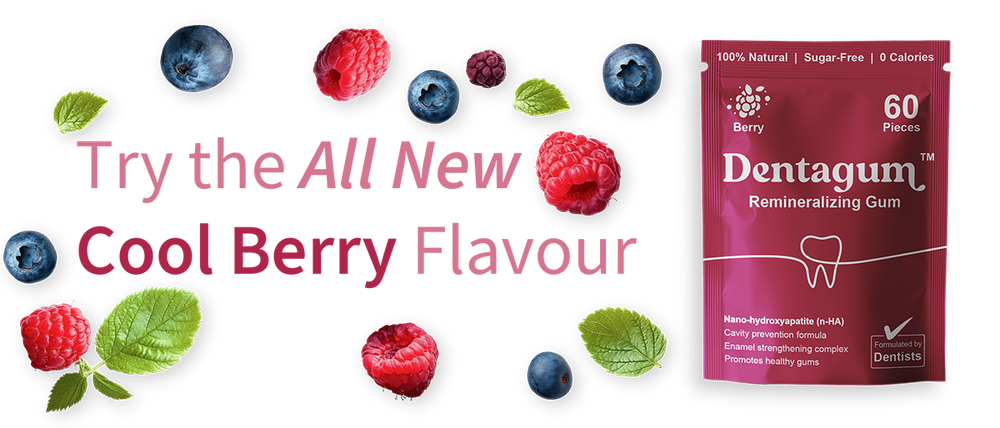
Dentagum uses an organic chicle and organic mastic gum base — no synthetic polymers, no petroleum-derived elastomers. The chicle is plant-derived latex from sustainably sourced sapodilla. The mastic gum is a biologically active resin that works against S. mutans throughout the chewing session alongside the xylitol and erythritol in the formula.
The combination of a clean natural base with active remineralizing ingredients (nano-hydroxyapatite, organic eggshell powder) and a multi-layer antibacterial system (xylitol, erythritol, mastic gum, propolis) means the gum base isn't passive. Every minute of chewing, the base itself is contributing to the oral health outcome the formula is designed to produce.
Dentagum is also Prop 65 tested through Lightlabs, an accredited third-party laboratory. Results are publicly accessible at lightlabs.com. For a product you're putting in your mouth multiple times a day, that independent verification matters regardless of whether the base is natural or synthetic.
Try Dentagum risk-free — 30-day guaranteeFrequently Asked Questions
Is regular chewing gum made from plastic?
Yes, in most cases. The "gum base" ingredient listed on mainstream commercial gum typically contains petroleum-derived synthetic polymers including polyvinyl acetate, polyisobutylene, and polyethylene. These are approved by the FDA as Generally Recognized As Safe at specific molecular weights for food contact, but they are chemically the same class of materials used in industrial adhesives, tire inner tubes, and plastic products. Manufacturers are not required to list specific polymer names — the FDA allows all of these to be grouped under "gum base" on the label.
Does natural chewing gum release fewer microplastics than regular gum?
Slightly, but less than expected. A 2025 UCLA study found synthetic gum released an average of 104 microplastic particles per gram during chewing, while natural gum released 96 per gram. The researchers noted the smaller-than-expected difference in natural gum may be due to environmental contamination during processing rather than the chicle base itself. A separate 2025 Queen's University Belfast study found even higher figures. The research is ongoing and under peer review, but the direction is consistent: both types release microplastics, with synthetic gum releasing modestly more.
What is chicle and why is it used in natural gum?
Chicle is a natural latex harvested from the sapodilla tree (Manilkara zapota), native to Central American rainforests. It was the basis of commercial chewing gum before synthetic polymers replaced it in the mid-twentieth century for cost and efficiency reasons. Unlike petroleum-derived gum bases, chicle is a plant-derived latex that is biodegradable and has been safely chewed by humans for thousands of years. It provides the elastic, chewy texture of gum without synthetic polymer additives.
Does mastic gum have oral health benefits beyond being a natural base?
Yes, meaningfully so. Mastic gum is biologically active, not just a cleaner alternative to synthetic base. A 2023 state-of-the-art review in the Journal of Natural Medicine covering 14 clinical studies confirmed mastic gum displays antibacterial and antimicrobial properties, inhibits plaque accumulation, and has anti-inflammatory properties relevant to gum tissue health. A clinical study found it inhibits Streptococcus mutans, the primary cavity-causing bacterium, compared to placebo gum in healthy volunteers. A synthetic gum base provides none of these benefits.
Is natural chewing gum always better than regular gum?
Not automatically. "Natural" on a gum label means the base is plant-derived rather than petroleum-derived, but it doesn't guarantee meaningful active ingredients at clinical doses, independent safety testing, or clean manufacturing practices. A natural gum with trace xylitol and no independent testing is a step up from conventional gum on the base material question, but it's not delivering the full oral health benefit that a well-formulated, independently tested natural functional gum provides. Natural is a better starting point, but the full formula and testing credentials are what determine whether a product is worth using daily.
What sweeteners should I look for in natural gum?
Xylitol should be the primary sweetener, listed prominently on the ingredient label. Xylitol actively kills Streptococcus mutans through a metabolic disruption that sorbitol, the primary sweetener in most commercial gum, does not provide. Erythritol as a secondary sweetener adds complementary antibacterial coverage with better digestive tolerance at higher doses. Avoid gum that lists sorbitol as the primary sweetener, and avoid any gum containing aspartame, acesulfame-K, or sucralose if you're using the product as a daily oral health habit rather than an occasional breath freshener.

The Bottom Line
The difference between natural and regular chewing gum is real, and the gum base is the clearest part of it. Most commercial gum is made from petroleum-derived polymers grouped under "gum base" on the label. Natural gums use plant-derived resins — primarily chicle and mastic — that have been chewed safely for millennia and, in mastic's case, actively reduce the bacteria that cause tooth decay.
The microplastics research adds a new dimension to this question that is still developing. Both synthetic and natural gums release microplastics during chewing, with synthetic gum releasing modestly more. The honest answer is that the full picture on microplastic health risk from gum is not yet complete. What is clear is that a natural gum base has a longer safety track record, no petroleum-derived polymer content, and in the case of mastic, clinical evidence for oral health benefits that synthetic bases simply cannot provide.
Beyond the base, the sweetener system, active ingredients, and independent safety testing are what separate a genuinely functional natural gum from one that's simply using cleaner-sounding labels. Dentagum combines organic chicle and mastic gum base with nano-hydroxyapatite, organic xylitol and erythritol, and Prop 65 verified testing through Lightlabs.
Try Dentagum risk-free — 30-day guarantee at dentagum.coResearch Summary
- Mohanty S, Lowe L. UCLA/ACS Spring 2025 study. Chewing gum releases microplastics into saliva. Synthetic gum: 104 particles/gram average. Natural gum: 96 particles/gram average. Study under peer review. Researchers noted natural gum contamination likely from processing environment, not chicle base itself.
- Queen's University Belfast, 2025. Second independent study confirming chewing gum releases hundreds to hundreds of thousands of microplastic particles per piece depending on brand and type.
- Food Additives and Contaminants, 2022. Gum base described as a "compositional black box." FDA allows manufacturers to list all synthetic polymer ingredients simply as "gum base" without disclosure.
- Alwadi MAM et al. "Mastic (Pistacia lentiscus) Gum and Oral Health: A State-of-the-Art Review." Journal of Natural Medicine, 2023. Mastic gum antibacterial, anti-inflammatory, inhibits plaque, 14 clinical studies confirmed.
- ScienceDirect clinical study. Mastic gum antibacterial activity against S. mutans in vitro and in vivo in 25 healthy volunteers. Significant inhibitory effect vs placebo gum.
- Medical News Today / Soliman, 2024. 120 compounds isolated in mastic gum. 2,500 years documented human use. Antibacterial activity against H. pylori confirmed.
- Mäkinen KK et al. International Journal of Dentistry, 2016. Xylitol antibacterial mechanism against S. mutans. Erythritol comparable efficacy, better digestive tolerance.
- WHO/IARC, July 2023. Aspartame classified as "possibly carcinogenic to humans" (Group 2B). Lowest tier of IARC classification; maintained safe at typical consumption levels by most regulatory bodies.
References
- Mohanty S, Lowe L. "Chewing Gum Can Shed Microplastics into Saliva." ACS Spring 2025 Meeting presentation. https://www.acs.org/pressroom/presspacs/2025/march/
- "Study Shows Chewing Gum Releases Thousands of Microplastics, Whether Gum is Synthetic or Natural." Food Safety Magazine, April 2025. https://www.food-safety.com/articles/10285
- "Is Chewing Gum Releasing Microplastics in Your Mouth?" Environmental Working Group, May 2025. https://www.ewg.org/news-insights/news/2025/05/chewing-gum-releasing-microplastics-your-mouth
- Alwadi MAM et al. "Mastic (Pistacia lentiscus) Gum and Oral Health: A State-of-the-Art Review." Journal of Natural Medicine, 2023. https://pubmed.ncbi.nlm.nih.gov/37147480/
- Aksoy A et al. "In vitro and in vivo antimicrobial effects of mastic chewing gum against Streptococcus mutans and mutans streptococci." ScienceDirect. https://www.sciencedirect.com/science/article/abs/pii/S0003996905002669
- Soliman M (medical review). "Mastic Gum: Uses, Benefits, Side Effects." Medical News Today, updated August 2024. https://www.medicalnewstoday.com/articles/mastic-gum
- Mäkinen KK et al. "Erythritol Is More Effective Than Xylitol and Sorbitol in Managing Oral Health Endpoints." International Journal of Dentistry, 2016. https://www.ncbi.nlm.nih.gov/pmc/articles/PMC5011233/
- WHO/IARC. "Aspartame Hazard and Risk Assessment Results Released." July 2023. https://www.who.int/news/item/14-07-2023-aspartame-hazard-and-risk-assessment-results-released
- Lightlabs. Dentagum Prop 65 heavy metals testing results. lightlabs.com
