
What Makes a Good Gum for Oral Health?
The difference between regular gum and a genuinely good gum for oral health comes down to a handful of specific ingredients and how they work together. Here's exactly what to look for, and why it matters.

Not all sugar-free gum is the same, and the gap between gum that tastes fresh and gum that actually supports your teeth is wider than most people realize. The first category delivers breath freshness and maybe some saliva stimulation. The second actively reduces the bacteria responsible for cavities, supports enamel remineralization, and contributes to gum health between brushing sessions. Understanding what separates them makes choosing the right one straightforward.
Here's what the science says actually matters, ingredient by ingredient.
Start With the Baseline: Sugar-Free Is Non-Negotiable
Before getting into active ingredients, the absolute foundation of any gum for oral health is this: it must contain no sugar.
Sugar feeds Streptococcus mutans, the primary cavity-causing bacterium in your mouth. When S. mutans metabolizes sugar, it produces lactic acid as a byproduct. That acid lowers oral pH, and when pH drops below 5.5, enamel begins to dissolve. Chewing sugary gum is arguably worse than not chewing gum at all, because it combines the saliva stimulation that increases bacterial activity with the substrate those bacteria thrive on.
The American Dental Association is explicit: only sugar-free chewing gums are eligible for the ADA Seal of Acceptance, and clinical studies support chewing sugar-free gum for 20 minutes after meals to help prevent tooth decay. That's the minimum threshold. Everything below builds on it.
The Sweetener Matters More Than Most People Think
Sugar-free doesn't automatically mean the sweetener is doing anything useful for your teeth. This is where the real separation between functional gum and regular gum begins.
Xylitol: The Gold Standard
Xylitol is a naturally occurring sugar alcohol derived from plant sources including birch trees, corn cobs, and various fruits. It's been studied extensively in oral health research for decades, and its mechanism against cavity-causing bacteria is specific and well-documented.
S. mutans transports xylitol into its cells expecting to metabolize it like sugar. It can't. The bacterium burns energy trying to process something useless, gets caught in a futile metabolic cycle, and eventually dies. Bacteria exposed to xylitol repeatedly lose their ability to adhere to tooth surfaces, which reduces plaque formation at the source rather than just managing it after the fact.
A 2022 microbiome investigation from Taipei Medical University published in Frontiers in Nutrition took this further. Researchers used 16S rDNA sequencing to analyze plaque composition in 24 adults before and after two weeks of xylitol gum use. The xylitol group showed reductions not just in cariogenic bacteria like S. mutans, but also in periodontopathic bacteria associated with gum disease. That's a broader oral health benefit than most people associate with chewing gum.
The 2023 review in Frontiers in Oral Health confirmed that chewing gum as an anti-cariogenic agent is endorsed by the ADA, the FDI World Dental Federation, and the European Food Safety Authority, with xylitol consistently the strongest-performing sweetener in clinical trials.
Erythritol: A Strong Supporting Sweetener
Erythritol is another sugar alcohol with meaningful oral health credentials. Research has found that erythritol effectively decreases plaque weight, inhibits S. mutans adhesion to tooth surfaces, and reduces caries incidence. It's also better tolerated digestively than xylitol at higher doses, making it a practical complement in a dual-sweetener formula.
What to Avoid
Sorbitol is the most common sweetener in mainstream sugar-free gum. It can be partially fermented by oral bacteria, which limits its antibacterial effect compared to xylitol. It's not harmful, but it's passive. Aspartame, saccharin, and acesulfame potassium are synthetic alternatives with no active oral health benefit and varying levels of ongoing consumer concern. None of them do anything for your teeth beyond avoiding direct sugar damage.
The Remineralizing Ingredient: Nano-Hydroxyapatite
A genuinely good gum for oral health goes beyond reducing harmful bacteria. It also actively supports enamel repair during the chewing window.
Nano-hydroxyapatite (nano-HAp or nHA) is a synthetic form of the mineral that makes up around 97% of your tooth enamel, produced in nanoparticle sizes small enough to penetrate the microporosities in enamel and deposit directly where repair is needed. Every meal temporarily lowers your oral pH and causes a small amount of mineral loss from enamel. Saliva naturally delivers calcium and phosphate to begin remineralization, but nano-HAp amplifies that process by delivering the same minerals in a concentrated, bioavailable form during the 10-20 minutes you're chewing.
A 2022 review published in Biomimetics from a research team at the University of Texas Health San Antonio and Dr. Kurt Wolff GmbH confirmed that hydroxyapatite and xylitol are effective combination ingredients in oral care, with hydroxyapatite providing remineralization and xylitol providing the antibacterial mechanism. The same research team's 2023 systematic review and meta-analysis found that hydroxyapatite added to chewing gum reduced dentin hypersensitivity by 6% to 80% compared to placebo.
The gum format is particularly well-suited to delivering nano-HAp because of contact time. Toothpaste is in your mouth for two minutes. A well-formulated gum chewed for 10-20 minutes after meals gives the remineralizing particles sustained access to enamel surfaces during the post-meal window when they're most needed.
The Gum Base: More Important Than It Sounds
Most people never think about what the chewable material in their gum actually is. They should.
Standard commercial gum uses a synthetic petroleum-derived polymer base. It's made from materials in the same family as synthetic rubber and certain industrial adhesives. The base is classified as food-safe, but it introduces synthetic polymers into sustained contact with your oral tissues for 10-20 minutes, multiple times a day.
Natural alternatives have been used in chewing since long before synthetic bases existed. Chicle, derived from the sap of the sapodilla tree, was the original commercial gum base material until supply economics pushed manufacturers toward cheaper synthetic alternatives in the mid-20th century. Mastic gum, from the Pistacia lentiscus tree native to the Mediterranean, serves a similar purpose and brings genuine oral health benefits to the formula itself.
A 2023 state-of-the-art review published in the Journal of Natural Medicine found that mastic gum displayed antibacterial and antimicrobial properties and inhibited plaque accumulation across 14 included clinical studies, constituting what the researchers called "a beneficial adjuvant in caries prevention." The review also found anti-inflammatory properties relevant to periodontal health. A gum base that actively fights bacteria is a meaningful upgrade from one that simply holds everything else together.
Supporting Ingredients That Make a Real Difference
Beyond the headline ingredients, a well-formulated oral health gum includes supporting actives that address different aspects of oral wellness.
Natural Propolis
Propolis is a resinous compound bees produce from plant resins to protect the hive. In oral health research, it's demonstrated broad-spectrum antimicrobial activity. Referenced literature has noted propolis is more effective against certain oral bacteria than chlorhexidine and Listerine in some comparisons. A 2022 double-blinded randomized clinical trial published in the International Journal of Dental Hygiene found meaningful reductions in plaque index and gingival bleeding scores in gingivitis patients using propolis-based oral care. In a gum format, it delivers sustained antimicrobial contact with the oral environment throughout the chewing window.
Calcium Bentonite Clay
Bentonite clay has natural adsorptive properties, meaning it binds to and lifts impurities and bacterial deposits from surfaces. In a gum context, it contributes a mild physical cleaning effect while chewing, complementing the antibacterial and remineralizing work of the other ingredients.
Organic Eggshell Powder
Eggshell is composed primarily of calcium carbonate, providing an additional source of calcium to support remineralization alongside nano-HAp. It's a natural, biocompatible calcium source that works with the body's existing mineral exchange process rather than introducing synthetic compounds.
Chewing Time: The Factor Most Brands Don't Mention
The best ingredients in the world underdeliver if you spit the gum out after two minutes. Chewing time is one of the most consistently underemphasized factors in oral health gum effectiveness.
The ADA's recommendation is 20 minutes after meals. That duration isn't arbitrary. It reflects the time needed to maximize saliva stimulation, allow remineralizing ingredients to deposit on enamel surfaces, and sustain the antibacterial contact needed for xylitol and propolis to work. A piece of gum chewed for three minutes and discarded delivers a fraction of the potential benefit.
The post-meal timing matters equally. The 20-30 minutes after eating is when oral pH is at its lowest, bacteria are most active, and enamel is temporarily more vulnerable. Brushing immediately after acidic meals isn't recommended because softened enamel is more susceptible to abrasion. Chewing a well-formulated gum fills that gap practically and effectively.
Third-Party Testing: The Trust Signal Worth Checking
Ingredient lists tell you what a brand claims is in the formula. Third-party testing tells you whether those claims are accurate. For a product you're putting in your mouth multiple times a day, that's a meaningful distinction.
Brands that invest in independent third-party verification of their formulas are making a verifiable commitment to ingredient accuracy and safety. It's not a universal standard in the gum category yet, which is exactly why it's worth checking for.
Putting It All Together: The Checklist
A genuinely good gum for oral health should meet all of these criteria:
Sugar-free: Non-negotiable. Any sugar counteracts every other benefit.
Primary sweetener is xylitol or erythritol: Not just sorbitol, not aspartame or other synthetic sweeteners. Xylitol specifically has the strongest evidence base for antibacterial action in the oral cavity.
Contains nano-hydroxyapatite: The remineralizing ingredient that deposits enamel's own mineral back into early lesions and weak spots during the chewing window.
Natural gum base: Chicle or mastic gum rather than synthetic petroleum-derived polymers.
Active supporting ingredients: Propolis, mastic gum, or similar ingredients with documented antibacterial or anti-inflammatory properties that go beyond passive sweetening.
Clear chewing guidance: Brands confident in their formula tell you how long to chew and when. Ten to twenty minutes after meals is the clinically supported recommendation.
Third-party tested: Independent verification of what's actually in the product.
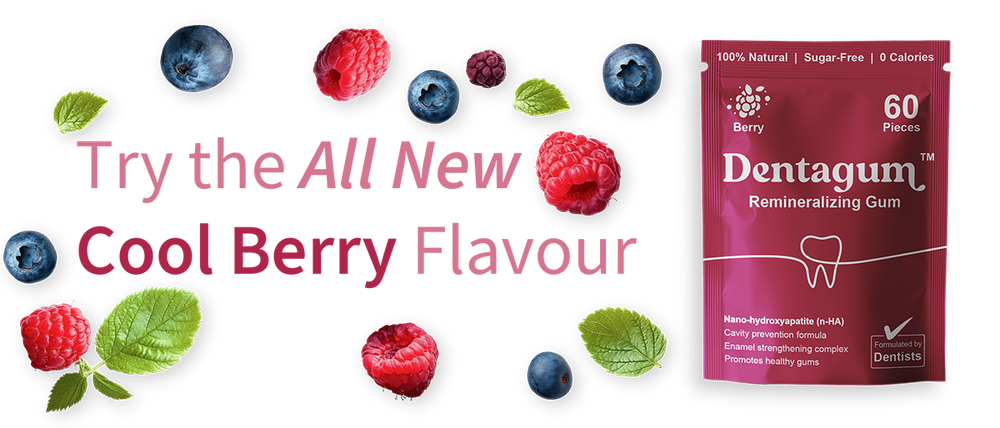
Dentagum's Remineralizing Chewing Gum is built to meet every item on that list. Sweetened with organic xylitol and organic erythritol, formulated with nano-hydroxyapatite, built on an organic chicle base, and including organic mastic gum, natural propolis, organic eggshell powder, and calcium bentonite clay. Dentist-formulated and 3rd-party tested. In Dentagum's own clinical data, 83% of participants showed notable gains in enamel quality and mineral quantity, and 87% were less susceptible to cavities compared to non-users with consistent daily use. Try it risk-free with a 30-day guarantee at dentagum.co.
Frequently Asked Questions
What is the best gum for oral health?
The best gum for oral health is sugar-free, sweetened primarily with xylitol, and contains active remineralizing ingredients like nano-hydroxyapatite. The ADA recommends chewing sugar-free gum for 20 minutes after meals. Gums that combine xylitol's antibacterial mechanism with nano-HAp's remineralizing action, on a natural gum base, represent the most complete oral health formula currently available.
What is the difference between regular gum and functional gum?
Regular sugar-free gum delivers saliva stimulation and breath freshening. Functional gum adds active ingredients that work on oral health directly: xylitol reduces cavity-causing bacteria, nano-hydroxyapatite rebuilds enamel mineral, mastic gum and propolis contribute antibacterial and anti-inflammatory effects. The chewing action and saliva benefit are the same. What differs is what the formula does during and after those 10-20 minutes of contact with your teeth.
Is xylitol gum actually better for teeth than other sugar-free gum?
Yes, meaningfully. Xylitol's mechanism against Streptococcus mutans is specific and well-documented in clinical trials. A 2022 microbiome study found xylitol gum reduced both cariogenic and periodontopathic bacteria in plaque. Sorbitol, the most common alternative sweetener, can be partially fermented by oral bacteria and shows consistently weaker results in head-to-head comparisons. Aspartame is a passive sweetener with no active oral health benefit.
How long should you chew gum for oral health benefits?
The ADA recommends 20 minutes after meals. That duration maximizes saliva stimulation, allows remineralizing ingredients adequate contact time with enamel, and sustains the antibacterial effects of ingredients like xylitol and propolis. Chewing for a shorter period reduces the benefit. Timing after meals matters too: that post-meal window is when oral pH is lowest and teeth most need the buffering and remineralizing support.
Does the gum base matter for oral health?
The gum base doesn't directly affect oral health outcomes in the way active ingredients do. But it determines what materials are in sustained contact with your oral tissues for 10-20 minutes at a time. Natural bases like chicle and mastic gum avoid the synthetic polymers found in conventional gum, and mastic gum specifically has documented antibacterial properties. For people who care about what they're putting in their bodies, the base is worth checking.
Can gum for oral health replace brushing and flossing?
No. The ADA is clear that gum is an adjunct to, not a replacement for, twice-daily brushing with fluoride toothpaste and daily flossing. Gum works during the windows of the day when brushing isn't practical, particularly after meals. Established plaque and food debris between teeth require the mechanical action of a toothbrush and floss to remove. Used consistently alongside your regular routine, a well-formulated oral health gum fills meaningful gaps in your daily oral care.
Key Takeaways
The gap between a piece of mainstream sugar-free gum and a genuinely good gum for oral health comes down to a small number of specific ingredients and whether they're present in meaningful amounts. Sugar-free is the baseline. Xylitol is the sweetener with the strongest evidence behind it. Nano-hydroxyapatite is what turns chewing time into remineralizing time. A natural gum base removes unnecessary synthetic contact. And active supporting ingredients like mastic gum and propolis extend the formula's reach into antibacterial and anti-inflammatory territory.
None of that requires complex habits. The same 10-20 minutes after meals you might already chew gum. The difference is what those minutes are doing for your teeth.
Dentagum's Remineralizing Chewing Gum is dentist-formulated with organic xylitol, nano-hydroxyapatite, organic mastic gum, and natural propolis, designed to be chewed for 10-20 minutes after meals. Try it risk-free with a 30-day guarantee at dentagum.co.
References
- Yeung CY, Chu CH, Yu OY. "A Concise Review of Chewing Gum as an Anti-Cariogenic Agent." Frontiers in Oral Health, 2023. https://www.frontiersin.org/journals/oral-health/articles/10.3389/froh.2023.1213523/full
- Wu Y-F et al. "Xylitol-Containing Chewing Gum Reduces Cariogenic and Periodontopathic Bacteria in Dental Plaque: Microbiome Investigation." Frontiers in Nutrition, 2022. https://www.ncbi.nlm.nih.gov/pmc/articles/PMC9131035/
- Enax J et al. "Overview on Adjunct Ingredients Used in Hydroxyapatite-Based Oral Care Products." Biomimetics, 2022. https://www.ncbi.nlm.nih.gov/pmc/articles/PMC9775056/
- Limeback H, Enax J, Meyer F. "Clinical Evidence of Biomimetic Hydroxyapatite in Oral Care Products for Reducing Dentin Hypersensitivity: An Updated Systematic Review and Meta-Analysis." Biomimetics, 2023. https://pmc.ncbi.nlm.nih.gov/articles/PMC9844412/
- American Dental Association. "Chewing Gum." Oral Health Topics. https://www.ada.org/resources/ada-library/oral-health-topics/chewing-gum
- Alwadi MAM et al. "Mastic (Pistacia lentiscus) Gum and Oral Health: A State-of-the-Art Review." Journal of Natural Medicine, 2023. https://pubmed.ncbi.nlm.nih.gov/37147480/
- Nasseripour M et al. "A Systematic Review and Meta-Analysis of the Role of Sugar-Free Chewing Gum on Plaque Quantity in the Oral Cavity." Frontiers in Oral Health, 2022. https://www.ncbi.nlm.nih.gov/pmc/articles/PMC9006880/
