
How Often Should You Chew Remineralizing Gum for Best Results?
The clinical evidence on xylitol dosing and nano-hydroxyapatite contact time points to a clear answer: 2-4 times per day after meals, for 10-20 minutes per session. Here's exactly what the research says, why timing matters as much as frequency, and how to build a routine that actually sticks.

Chew remineralizing gum 2 to 4 times per day, immediately after meals and acidic drinks, for 10 to 20 minutes per session. The California Dental Association considers 3 to 5 daily exposures to 5 grams of xylitol optimal for cavity prevention. A frequency RCT found a linear reduction in S. mutans with increasing chewing frequency, with 3 to 4 sessions per day producing statistically significant bacterial reduction while 2 sessions per day was not significant. The ADA recommends 20 minutes of chewing after meals for maximum salivary benefit. For nano-hydroxyapatite specifically, longer contact time per session produces greater enamel mineral deposition.
Most people who buy remineralizing gum use it the same way they use regular gum: when they feel like it, for as long as it tastes good, roughly whenever. This approach will produce some benefit. It won't produce the benefit the clinical evidence is built around.
The research on both xylitol and nano-hydroxyapatite is specific about frequency, timing, and duration. These aren't arbitrary recommendations on a product label. They're the parameters under which the clinical studies showing meaningful outcomes were conducted. Understanding why they matter makes the habit significantly easier to build and maintain, because it turns vague advice into a concrete protocol with a clear rationale.
Why Frequency Matters More Than You Might Expect

The first thing to understand is that remineralizing gum isn't a supplement you take once and the benefit accumulates passively. It works during the chewing window. The xylitol's antibacterial effect requires sustained contact with S. mutans during the chewing session. The nano-HAp deposits during the period of active chewing. The saliva stimulation that buffers post-meal acid happens during the chewing session. When the gum is gone, those active mechanisms stop.
This means frequency determines how many of your daily acid attack windows you cover with active protection. A person who chews after breakfast and lunch is covering two of four or five daily acid events. A person who chews after breakfast, lunch, and dinner is covering three. Each additional covered window represents another period of the day when S. mutans is being reduced, nano-HAp is being deposited, and post-meal acid is being buffered at 10 to 12 times the resting salivary rate.
Every meal, snack, and acidic drink drops your oral pH below the 5.5 critical threshold, starting a 20 to 40 minute recovery window where enamel is losing mineral. Chewing remineralizing gum immediately after each event compresses that recovery window and adds active antibacterial and mineral-delivery support. Missing a window means that recovery runs without support. Over days and weeks, covered windows versus missed ones accumulate into meaningfully different outcomes.
The Xylitol Dosing Evidence: What "Effective" Actually Requires
The clinical evidence on xylitol is more specific about dosing than most people realize, and understanding it explains exactly why the frequency recommendation exists.
The California Dental Association's patient guidance states that xylitol gum or mints used 3 to 5 times daily for a total intake of 5 grams is considered optimal for cavity prevention. A 2022 meta-analysis by ALHumaid and Bamashmous published in the Journal of International Society of Preventive and Community Dentistry, reviewing the evidence on xylitol effectiveness, confirmed 5 to 10 grams per day across 3 to 5 daily exposures as the clinical consensus for meaningful caries prevention benefit.
Critically, these are not just quantity targets. The California Dental Association explicitly notes that "frequency and duration of exposure is important," alongside the total dose. The reason relates directly to how xylitol works. S. mutans continuously transports available sweeteners from the oral environment into its cells. If xylitol is present frequently, the bacterium is continuously cycling it in and expending energy on the futile metabolic cycle. If xylitol is present only once or twice a day, the bacteria have long periods to recover their energy and resume normal acid production between exposures.
A randomized controlled trial published in BMC Oral Health studied 132 participants chewing a fixed total daily dose of 10.32g of xylitol across different daily frequencies over five weeks. The results showed a linear reduction in S. mutans in both plaque and unstimulated saliva with increasing chewing frequency. Participants chewing 3 times per day showed statistically significant reduction. Participants chewing 4 times per day showed greater reduction. Crucially, participants chewing 2 times per day showed a reduction consistent with the linear model but the difference was not statistically significant. Two sessions per day at the same total daily dose wasn't enough frequency for the antibacterial effect to cross the threshold of statistical significance.
This is the clinical basis for the 3 to 4 times per day recommendation. It's not about marketing or using more product. It's about the frequency required for the antibacterial mechanism to produce a measurable outcome.
Why Duration Per Session Also Matters
Frequency gets you enough daily exposures. Duration per session determines how much work each exposure actually does.
The ADA's recommendation of 20 minutes of chewing after meals reflects the time needed to maximize the salivary benefit, allow nano-HAp to deposit meaningfully on enamel surfaces, and sustain xylitol's contact with S. mutans through the peak of its effect. A 2023 systematic review and meta-analysis in Biomimetics covering 44 clinical trials confirmed that contact time is a key variable in nano-HAp's clinical effectiveness. Longer sessions mean more mineral deposition. The 6 to 80% range of sensitivity reduction seen across trials in part reflects differences in formulation and contact time.
The California Dental Association's guidance notes that gum should be chewed for approximately 5 minutes as a minimum. Five minutes is where the salivary benefit begins to accumulate. The ADA's 20-minute recommendation reflects the full benefit window. The practical sweet spot for most people is 10 to 20 minutes per session: long enough to achieve meaningful benefit, short enough to fit into a normal post-meal routine without feeling burdensome.
Most people chew gum until the flavor fades and then spit it out, which in many commercial gums happens within 2 to 5 minutes. At that point the salivary stimulation is just beginning to peak, nano-HAp has had minimal contact time, and xylitol has had limited antibacterial contact. The 10 to 20 minute window is where the clinical outcomes documented in the research occur. Treating remineralizing gum like a breath mint rather than an oral health tool significantly underdelivers the benefit.
When to Chew: Timing Is the Third Variable
Frequency and duration are about how much and how long. Timing is about when in the day the chewing session falls relative to the oral events that create the need for it.
The clinical evidence consistently points to post-meal timing as the highest-leverage window. Immediately after eating is when oral pH is at its lowest, enamel is most vulnerable to mineral loss, and bacterial activity (from metabolizing the food just consumed) is at its peak. This is when saliva stimulation has the most acid to buffer, when nano-HAp can deposit into the enamel that has just been demineralized, and when xylitol's antibacterial action is most needed.
Chewing before eating provides the saliva benefit but misses the post-meal acid. Chewing an hour after eating means the Stephan Curve has already run its course without support. Chewing immediately after eating catches the window when all three active mechanisms (acid buffering, mineral delivery, bacterial reduction) are most needed simultaneously.
The Practical Protocol: Building It Into Your Day

Translating the clinical evidence into a daily habit that people actually maintain requires reducing friction. The protocol that fits most people's lives without requiring significant behavior change looks like this.
The minimum effective protocol: 3 sessions per day. After breakfast, after lunch, and after dinner. This is where the frequency RCT found statistically significant S. mutans reduction. It covers the three main acid attack events of the day. It requires keeping gum accessible at wherever you eat those meals. Three pieces, three times, approximately 30 to 60 minutes of total chewing per day.
The optimal protocol: 3-5 sessions per day. Add a session after any significant snack or acidic drink (coffee, juice, wine). Cover the additional acid attack windows that the three-meal minimum misses. For coffee drinkers who have 2 to 3 coffees per day, adding a session after each coffee meaningfully reduces cumulative enamel exposure time.
The realistic adjustment for real life. Three sessions is the floor. Missing one occasionally doesn't undo the cumulative benefit. The habit is most effective when it's consistent over weeks and months, not when every single session is perfect. A person who chews 3 times per day every day will see meaningfully better outcomes than a person who chews 5 times per day three days per week and forgets the rest of the time.
The clinical outcomes documented in xylitol research, including the 23% caries risk reduction in the one-year RCT by Cocco et al. and the significant S. mutans reductions in the 12/14 studies reviewed by Söderling et al., reflect daily habitual use over extended periods. The mechanism works cumulatively. Missing a session occasionally has minimal impact. Missing sessions consistently means the antibacterial effect never reaches its threshold. The most important thing is establishing the post-meal trigger, not achieving a specific number of sessions per day.
How Long Until You Notice a Difference?
This is one of the most common questions, and the clinical evidence gives a reasonably clear answer for different outcomes.
Sensitivity reduction: Most people notice improvement within 2 to 4 weeks of consistent daily use. Nano-HAp deposits into exposed dentinal tubules progressively. As coverage builds, the fluid movement that triggers sensitivity pain reduces. The 2023 Biomimetics meta-analysis documented sensitivity reduction beginning within weeks and continuing to improve with sustained use.
S. mutans reduction: Measurable reductions in cariogenic bacteria appear within 2 to 5 weeks in clinical studies. The frequency RCT showed significant differences at 5 weeks. Söderling et al.'s systematic review found studies documenting reductions across trial periods ranging from several weeks to months.
Cavity reduction: The Cocco et al. one-year RCT found significant caries experience reduction at the 2-year follow-up. Cavity prevention is cumulative and reflects months of consistent use. No single daily session prevents a specific cavity. The daily habit shifts the odds over time.
Enamel quality improvement: Dentagum's own clinical data found 83% of participants showed notable gains in enamel quality and mineral quantity with consistent daily use. Clinical improvements in enamel microhardness are typically measured over 3 to 6 months in research settings.
Adjusting Your Protocol for Specific Situations

The 3 to 4 times per day post-meal baseline applies to most people in most situations. A few specific circumstances warrant adjustment.
If you have dry mouth: Increase sessions, prioritize consistency, and chew longer per session. Dry mouth patients have both elevated cavity risk and reduced natural saliva protection. Each chewing session substitutes for some of what saliva would normally provide. Our guide on The Best Chewing Gum for Dry Mouth covers the specific considerations for dry mouth users.
If you're new to xylitol: Start with 1 to 2 pieces per day and increase gradually over the first week. Xylitol is metabolized slowly in the large intestine and can cause digestive discomfort in people unaccustomed to it if introduced at full dose suddenly. Building up gradually over 7 to 10 days avoids this entirely.
If you have orthodontic braces: Follow your orthodontist's guidance on gum use during treatment. If approved, the timing recommendations are the same: immediately after meals when the benefit is highest and the acid event creates the greatest need. See our guide on The Best Gum for Braces and Aligners for the specific considerations.
If you're pregnant: The ACOG-endorsed optimal protocol during pregnancy is after every meal and snack, given the elevated cavity risk and the additional benefit documented for S. mutans reduction in reducing transmission to newborns. See our full guide on Is Chewing Gum Safe During Pregnancy for the clinical evidence.
How Dentagum Fits the Protocol

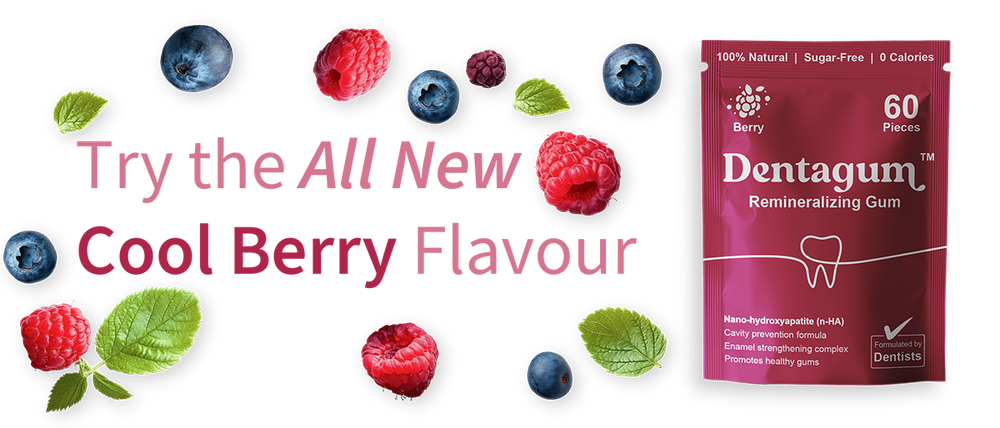
Dentagum's Remineralizing Chewing Gum is designed around exactly this protocol. Each piece is intended to be chewed for 10 to 20 minutes after meals or acidic drinks. The formula delivers organic xylitol and organic erythritol for the antibacterial mechanism, nano-hydroxyapatite for enamel mineral delivery, organic mastic gum and natural propolis for additional antibacterial support, and a natural chicle and mastic base for sustained saliva stimulation throughout the session.
At 60 pieces per pouch and a recommended 2 to 4 pieces per day, each pouch provides 15 to 30 days of consistent use depending on your specific protocol. The $0.55 per piece price makes the daily habit one of the lowest-cost oral health investments available.
New to xylitol? Start with 1 piece per day for the first three days, then 2 pieces per day for the next four days, then move to your full post-meal schedule from week 2. This gradual introduction avoids any digestive adjustment period and lets you find the timing that fits your meals most naturally.
Try Dentagum risk-free — 30-day guaranteeFrequently Asked Questions
How often should you chew remineralizing gum?
The clinical evidence points to 3 to 4 times per day after meals as the optimal protocol for most people. A frequency RCT found a linear reduction in S. mutans with increasing chewing frequency, with 3 times per day producing statistically significant bacterial reduction. The California Dental Association considers 3 to 5 daily exposures to 5 grams of xylitol optimal for cavity prevention. After each main meal is the minimum protocol; adding a session after significant snacks or acidic drinks covers additional acid exposure windows.
How long should you chew remineralizing gum for?
10 to 20 minutes per session. The ADA recommends 20 minutes after meals for maximum salivary benefit. The California Dental Association specifies a minimum of approximately 5 minutes for any meaningful effect. For nano-hydroxyapatite, longer contact time produces greater enamel mineral deposition, as confirmed by the 2023 Biomimetics meta-analysis of 44 clinical trials. Chewing for 2 to 3 minutes and discarding delivers a fraction of the clinical benefit compared to the full 10 to 20 minute window.
When is the best time to chew remineralizing gum?
Immediately after meals and acidic drinks. Post-meal timing captures the peak of oral acid exposure, when pH is at its lowest, bacterial activity is highest, and enamel is most in need of active mineral support. Chewing before eating provides saliva benefit without addressing the post-meal acid event. Chewing an hour after eating means the Stephan Curve recovery has already run without support. The post-meal window is when all three active mechanisms of remineralizing gum (acid buffering, mineral delivery, bacterial reduction) are needed simultaneously.
How many pieces of xylitol gum should you chew per day?
This depends on the xylitol content per piece. The target is 5 to 10 grams of xylitol per day across 3 to 5 sessions. For a gum with meaningful xylitol concentration (listed first or second on the ingredient list), 1 piece per session across 3 to 5 sessions is the typical protocol. For gums with trace xylitol, significantly more pieces would be needed to reach the threshold, and even then the total dose may be insufficient. Check whether xylitol is the primary sweetener before calculating your daily dose.
How long does it take for remineralizing gum to work?
It depends on the outcome. Fresh breath and a cleaner mouth feel can be noticed immediately. Sensitivity reduction typically begins within 2 to 4 weeks of consistent daily use as nano-HAp progressively occludes dentinal tubules. Measurable S. mutans reduction appears within 2 to 5 weeks in clinical studies. Enamel quality improvement is typically measured over 3 to 6 months. Cavity risk reduction is a cumulative outcome built over months and years of consistent use. The habit is an investment with returns that build over time, not a product that produces immediate dramatic change.
Can you chew too much remineralizing gum?
For most people, no. The clinical studies on xylitol use consistent daily protocols without documented harm from the chewing frequency itself. The practical upper limit is digestive tolerance of xylitol: amounts significantly above 10 grams per day can cause loose stools or digestive discomfort in some people, particularly those new to xylitol. Starting with 1 to 2 pieces per day and building up gradually avoids this. Jaw fatigue is a minor consideration for people who chew many sessions of 20 minutes or more daily. There is no clinical evidence of harm from 3 to 5 daily sessions of 10 to 20 minutes each.
The Bottom Line
The clinical evidence gives a clear answer to how often you should chew remineralizing gum: 3 to 4 times per day, immediately after meals, for 10 to 20 minutes per session. This protocol delivers the xylitol exposure frequency that produces statistically significant S. mutans reduction in RCTs, the contact time that allows nano-HAp to deposit meaningfully on enamel, and the post-meal timing that places active protection at the moments of highest daily enamel vulnerability.
Two sessions per day isn't enough frequency for the antibacterial mechanism to produce significant bacterial reduction. Two minutes of chewing isn't enough duration. Chewing before meals rather than after misses the most important window. None of these are arbitrary recommendations. They're the parameters the research was built around.
Build the habit around your three main meals and it becomes automatic. Add sessions after significant snacks or acidic drinks and you cover more of your daily acid load. Stay consistent over weeks and months and the cumulative outcomes the clinical literature documents become the outcomes you experience.
Try Dentagum risk-free — 30-day guarantee at dentagum.coResearch Summary
- California Dental Association patient guide. Xylitol gum 3-5 times daily for 5g total daily intake is considered optimal. Frequency and duration of exposure both important. Minimum chewing time approximately 5 minutes.
- ALHumaid J, Bamashmous M. "Meta-analysis on the Effectiveness of Xylitol in Caries Prevention." J Int Soc Prev Community Dent, 2022. Confirmed 5-10g per day across 3-5 exposures as clinical consensus for meaningful caries prevention.
- Frequency RCT, BMC Oral Health. 132 participants, 10.32g xylitol/day. Linear reduction in S. mutans with increasing frequency. 3x/day and 4x/day: statistically significant. 2x/day: not statistically significant. Confirms frequency as independent variable.
- Pienihäkkinen K et al. European Archives of Paediatric Dentistry, 2024. Systematic review. All 10 xylitol chewing gum RCTs showed statistically significant preventive effect vs control. 9 of 10 showed clinically significant preventive fraction.
- Cocco F et al. Clinical Oral Investigations, 2017. 179 high-caries-risk adults. 1 year of xylitol gum (even low dose 2.5g/day) produced 23% caries risk reduction at tooth level vs sorbitol polyol gum.
- Limeback H, Enax J, Meyer F. Biomimetics, 2023. 44 clinical trials. Contact time during chewing is key variable for nano-HAp clinical effectiveness. 6-80% sensitivity reduction range reflects formulation and duration differences.
- Söderling E et al. BMC Oral Health, 2025. Xylitol gum significantly reduced S. mutans in 12/14 studies. Consistent with frequency evidence on daily habitual use requirement.
- American Dental Association. 20 minutes of sugar-free gum chewing after meals endorsed for cavity prevention. Stimulates salivary flow to 10-12x resting rate.
References
- California Dental Association. "Xylitol." Patient information guide. https://www.cda.org/wp-content/uploads/xylitol_english.pdf
- ALHumaid J, Bamashmous M. "Meta-analysis on the Effectiveness of Xylitol in Caries Prevention." Journal of International Society of Preventive and Community Dentistry, 2022. https://pubmed.ncbi.nlm.nih.gov/35573619/
- "The Dose-Response Relationship of Xylitol." BMC Oral Health. 132 participants, frequency RCT. Linear reduction in S. mutans with increasing chewing frequency. https://link.springer.com/article/10.1186/1472-6831-6-6
- Pienihäkkinen K et al. "The Effect of Xylitol Chewing Gums and Candies on Caries Occurrence in Children: A Systematic Review." European Archives of Paediatric Dentistry, 2024. https://www.nature.com/articles/s41432-024-01018-2
- Cocco F et al. "The Caries Preventive Effect of 1-Year Use of Low-Dose Xylitol Chewing Gum." Clinical Oral Investigations, 2017. https://link.springer.com/article/10.1007/s00784-017-2075-5
- Limeback H, Enax J, Meyer F. "Clinical Evidence of Biomimetic Hydroxyapatite in Oral Care Products for Reducing Dentin Hypersensitivity." Biomimetics, 2023. https://pmc.ncbi.nlm.nih.gov/articles/PMC9844412/
- Söderling E et al. "Specific Effects of Xylitol Chewing Gum on Mutans Streptococci Levels." BMC Oral Health, 2025. https://link.springer.com/article/10.1186/s12903-025-06602-1
- American Dental Association. "Chewing Gum." Oral Health Topics. https://www.ada.org/resources/ada-library/oral-health-topics/chewing-gum
