
The Clean Oral Care Movement: What It Means and What to Look For
The clean beauty movement in skincare is crossing into oral care. Most people read skincare labels now. Very few read the labels on the products they brush with, chew on, or swish around their mouths twice daily. That gap is closing. Here's what clean oral care actually means, which ingredients deserve scrutiny, what to look for instead, and how to tell genuine clean formulation from surface-level marketing.

The clean oral care movement applies the same ingredient scrutiny that transformed skincare to what goes in your mouth. Clean oral care means products formulated without ingredients linked to health concerns (SLS, triclosan, aspartame, parabens, synthetic gum bases) and with active, evidence-backed ingredients that genuinely support oral health. It's not anti-science: the best clean oral care products replace harmful or unnecessary ingredients with clinically validated alternatives like nano-hydroxyapatite, xylitol, and plant-derived gum bases. The clean beauty market, which explicitly includes oral care as a segment, was valued at $9.21 billion in 2025 and is projected to reach $37.49 billion by 2035. Oral care is the segment where consumer ingredient scrutiny has been slowest to arrive and where the gap between what's in products and what consumers know about it is widest.
Most people read food labels. Increasingly, they read skincare labels. Very few read the labels on the products they brush with, chew on, or swish around their mouths twice daily, products that sit in direct contact with mucosal tissue, enter saliva, and in some cases are partially swallowed.
That gap is closing. The same consumer shift that drove ingredient-conscious consumers to check their moisturizer for parabens and their shampoo for sulfates is now moving into oral care. And when it does, it finds a category that has, by and large, been operating without the same level of consumer scrutiny that transformed skincare over the past decade.
This guide explains what clean oral care actually means, why it matters, which ingredients are worth avoiding, what to look for instead, and where Dentagum fits in the movement.
1. What Clean Oral Care Actually Means
Clean oral care doesn't have a legal definition, which is both its weakness and its opportunity. Without a regulatory standard, brands can use the label however they like, which creates the greenwashing risk discussed later in this article. But the underlying concept is clear enough: clean oral care means products formulated without ingredients that have documented health or safety concerns, and with active ingredients that do what they claim.
What it is not: clean oral care is not anti-science, anti-fluoride, or anti-evidence. The clean beauty movement that produced it has sometimes drifted in that direction in skincare, and the same risk exists in oral care. Removing a genuinely useful ingredient because it sounds chemical, while replacing it with something ineffective but "natural," is not clean formulation. It's substitution theater. The evidence-based version of clean oral care asks: does this ingredient serve a purpose? Is that purpose supported by research? Are there documented concerns about its safety? What alternatives exist that achieve the same function with fewer concerns?
That framework produces a different list of priorities than either "use everything conventional" or "avoid everything synthetic." It produces targeted scrutiny: some conventional ingredients are fine, some deserve replacement, and some are simply filler that serves no oral health purpose at all.
Multiple market research firms now explicitly include oral care as a segment of the clean beauty market. InsightAce Analytic valued the global clean beauty market, including oral care, at $9.21 billion in 2025, projecting $37.49 billion by 2035 at a 15.2% CAGR. Technavio projects the market to increase by $7.65 billion at a 13.2% CAGR between 2024 and 2029. North America leads globally, contributing an estimated 35% of market growth. A 2024 study found 72% of consumers globally check ingredient safety before purchasing personal care products. The movement has reached oral care: the question is which oral care brands are ready for that scrutiny.
2. How Clean Beauty Crossed Into Oral Care
The clean beauty movement in skincare was driven by a simple observation: the products people use daily on their skin contain ingredients that, with repeated long-term exposure, have documented health concerns. This observation spread consumer behavior: people started reading ingredient labels, researching specific compounds, and choosing products that replaced concerning ingredients with safer alternatives that still worked.
Euromonitor International was among the first major market research firms to document the crossover, noting in its oral health and sustainability analysis that "the clean beauty trend seen in skin care is also becoming popular in oral care." The dynamics are the same: daily-use products in intimate contact with body tissue, repeated long-term exposure patterns, and a historical absence of consumer-facing ingredient scrutiny.
The oral care crossover has been slower than skincare for a few reasons. Skin is visible: consumers can see reactions, irritation, and changes. Oral effects are harder to attribute directly to specific products. Regulatory frameworks for toothpaste and mouthwash (classified as over-the-counter drugs in the US for their active ingredients) are more stringent than cosmetics, which gives the category an air of regulatory safety even where ingredients raise questions. And oral care products have shorter contact time per use than a face serum or moisturizer that sits on skin for hours.
But the trend is real and accelerating. The oral care market is increasingly blurring lines with beauty and lifestyle, with demand surging for multifunctional, wellness-oriented products as consumers increasingly view oral hygiene as an integral part of overall wellbeing. Berlin Packaging's 2025 oral care trends report documents rising demand for natural ingredients and eco-friendly formulations specifically in oral care. The consumer who scrutinizes their serum is now scrutinizing their toothpaste, and then their gum.
3. Ingredients Worth Scrutinizing in Oral Care

The following ingredients have documented concerns that justify scrutiny in oral care products. The level of concern varies: some have been regulatory-action targets, some have conflicting evidence, and some are simply without dental benefit while adding potential risk. Each entry reflects the actual evidence base rather than fear-based dismissal.
Sodium Lauryl Sulfate (SLS)
SLS is a foaming detergent used in the majority of mainstream toothpastes because it creates the lather consumers associate with cleaning. The foaming action has no clinical benefit for plaque removal: abrasion and brushing technique remove plaque, not foam. SLS strips mucosal protection and causes irritation in sensitive individuals, affecting approximately 10% of the population prone to canker sores. For this 10%, daily SLS exposure is a meaningful, direct-contact irritant for one of the most sensitive mucosal tissues in the body. For people who don't develop canker sores, the concern is lower, but the absence of any dental benefit alongside the documented irritation potential in a significant minority makes SLS a clear candidate for replacement.
Triclosan
Triclosan was removed from US toothpastes in 2019 after the FDA required evidence that it was safe for long-term daily use and more effective than plain soap in hand washes. The concern: endocrine disruption and antibiotic resistance. It's worth knowing about because older formulations and some international products still contain it, and the mechanism of concern (repeated daily oral mucosal exposure to an endocrine-disrupting antimicrobial) is exactly the type of risk the clean oral care movement exists to address.
Aspartame and Saccharin
Artificial sweeteners are used in toothpaste, mouthwash, and chewing gum to provide sweetness without sugar. They serve no dental health function. The concern with aspartame has been escalating: studies have linked aspartame consumption to headaches, poor memory, and depression. A 2014 study found that higher intakes increased depressive levels and mood swings, with lower intakes still linked to negative effects on cognition. The WHO's International Agency for Research on Cancer classified aspartame as "possibly carcinogenic to humans" (Group 2B) in 2023. The evidence is not definitive, but for a sweetener that provides no oral health benefit, the risk-benefit analysis favors alternatives with a better safety profile. Xylitol is the natural sugar alcohol with the strongest oral health evidence, actively killing S. mutans through a targeted metabolic mechanism while providing sweetness.
Parabens
Parabens (methylparaben, propylparaben) were FDA-approved but are increasingly phased out of formulations due to endocrine disruption potential at high doses. They are used as preservatives in water-based formulations. In oral care, paraben-free preservation alternatives are widely available and used in clean formulations. For a twice-daily product with oral mucosal contact, phasing out parabens in favor of alternatives is a straightforward formulation improvement.
Titanium Dioxide
Titanium dioxide is FDA-approved in the US but was restricted by the EU in 2022 due to genotoxicity concerns. It's used as a whitening agent in toothpaste. The regulatory divergence between the US and EU on this ingredient reflects genuine scientific disagreement rather than settled evidence. Clean-oriented formulations typically avoid it in favor of physical abrasives and whitening actives without the genotoxicity concern.
Synthetic Petroleum-Derived Gum Bases
This one rarely appears in ingredient-to-avoid lists, which is notable given how central it is to conventional chewing gum. Most commercial chewing gum uses a synthetic gum base consisting of petroleum-derived polymers (polyvinyl acetate, polyisobutylene, polyethylene) that are food-safe but not biodegradable. These polymers are what creates the "gum stuck to pavement" problem: they don't biodegrade because they're essentially plastic. From a clean oral care perspective, a gum base derived from petroleum-based synthetic polymers is a clear candidate for replacement with natural plant-derived alternatives, which exist (chicle gum from the sapodilla tree, mastic resin) and have been used as gum bases for centuries before synthetic gum bases became the industry standard for cost reasons.
4. What to Look For Instead
Clean oral care is not just about what's missing. The best clean formulations replace conventional ingredients with alternatives that are either better-evidenced, better-tolerated, or both. Here's what active, research-backed clean oral care looks like ingredient by ingredient.
Nano-Hydroxyapatite Instead of (or Alongside) Fluoride
Nano-hydroxyapatite (nano-HAp) is the mineral enamel is primarily made from, engineered at 20 to 100 nanometre particle sizes that allow active mineral deposition into enamel microporosities. An 18-month randomized controlled trial published in Frontiers in Public Health (2023) found fluoride-free nano-HAp non-inferior to standard 1,450 ppm fluoride toothpaste for cavity prevention in adults. A systematic review and meta-analysis by Limeback, Enax, and Meyer published in Biomimetics (2023) analyzed 44 clinical trials and confirmed nano-HAp's significant reduction of dentin hypersensitivity. Nano-HAp is the active remineralizing ingredient most aligned with clean oral care principles: it replaces or reduces fluoride dependence, has no known toxicity concerns, and actively delivers the mineral enamel is made from rather than simply inhibiting acid attack.
Xylitol as Primary Sweetener
Xylitol replaces aspartame and saccharin with a sweetener that has the strongest oral health evidence of any sugar alcohol. Its mechanism: S. mutans transports xylitol into its cells expecting to metabolize it, fails, expends energy in a futile cycle, and dies. A 2025 systematic review in BMC Oral Health (Söderling et al.) found xylitol significantly reduced S. mutans in 12 of 14 clinical studies. A 2024 meta-analysis in the European Archives of Paediatric Dentistry found the most effective protocol was 100% xylitol consumed three to five times per day after meals at a total daily dose of 5 to 10 grams. In clean oral care, xylitol is not just a safer sweetener. It is an active antibacterial agent. Figures from ingredient research.
Natural Gum Bases: Chicle and Mastic
Chicle gum is the sap of the Central American sapodilla tree, used as the original chewing gum base before petroleum-derived synthetic polymers replaced it for cost reasons in the mid-20th century. It is fully biodegradable. Mastic resin, from the Greek island of Chios, has 14 documented clinical studies showing antibacterial, anti-inflammatory, and anti-plaque properties beyond simply providing gum texture. Replacing synthetic polymer gum bases with chicle and mastic simultaneously addresses the environmental concern (biodegradability) and adds active oral health benefit from the mastic component, a clean formulation win in both dimensions.
Propolis, Coconut Oil, and Plant Antimicrobials
Natural broad-spectrum antimicrobials with documented oral health evidence are the clean alternative to synthetic antimicrobials with endocrine disruption concerns. Propolis has been compared favorably to chlorhexidine in some studies for antibacterial effect against S. mutans and has documented enamel microhardness benefits. Coconut oil's lauric acid content has antibacterial activity and is the basis for the oil-pulling practice with clinical evidence for gum inflammation reduction. Cineol (from terpene blends and eucalyptus) has documented antimicrobial properties in oral care applications.
Third-Party Testing as a Non-Negotiable
Clean oral care is incomplete without verified safety. Natural ingredients can carry heavy metal contamination from agricultural soil. Plant-derived compounds can carry pesticide residues. Mineral ingredients carry trace elemental content from their geological source. A product can contain only clean-label ingredients and still contain undisclosed contamination if it has never been independently tested. Genuine clean oral care includes independent, ISO/IEC 17025-accredited heavy metal testing with published COA results. A "natural" label without third-party verification is an unaudited claim.
5. How to Spot Greenwashing in Clean Oral Care

The clean beauty market's rapid growth has attracted the full range of responses, from genuine formulation reformulation to surface-level "natural" labeling with no meaningful ingredient changes. The industry faces challenges related to consumer trust and greenwashing, where brands falsely market themselves as eco-friendly or clean without adhering to genuine sustainability standards. Here's how to evaluate claims rather than take them at face value.
"Natural" without specifics. "Natural" has no legal definition in personal care in the US. A product can use the word without any ingredient requirement being met. The meaningful question is not "is this natural?" but "what specifically does the formulation contain and not contain?" Read the ingredient list, not the front label.
"Free from" marketing without replacing with something better. Removing SLS and replacing it with another synthetic surfactant with its own concerns is not clean formulation. "SLS-free" means only that SLS specifically is absent. What replaced it matters equally. Look at what's in the product, not just what's been removed.
Ingredient token amounts. A chewing gum that lists xylitol but has sorbitol first in the sweetener ingredients contains primarily sorbitol. The oral health benefit of xylitol requires it to be the primary sweetener at clinically meaningful concentrations (5 to 10 grams per day total). Token xylitol inclusion at the end of the ingredient list does not deliver the antibacterial mechanism.
No third-party testing. Any clean oral care brand serious about safety should publish its COA data from an accredited independent laboratory. The absence of published testing is the most important greenwashing signal in the category. If a brand can't point you to a specific laboratory, method, and result, "clean" is a marketing claim without verification.
Founder or dentist-formulated claims without evidence. "Dentist-formulated" means a dentist participated in developing the product. It does not mean the product has been clinically tested, third-party verified, or peer-reviewed. Similarly, "founder-formulated" oral care without clinical data or third-party testing is a brand story, not a product claim. Look for published lab results, referenced ingredient research with appropriate disclaimers, and transparent sourcing information.
6. The Gum Base Problem Most People Miss
If there is one clean oral care issue that has received almost no consumer attention relative to its significance, it is the gum base in conventional chewing gum. Chewing gum is an unusual product: it is held in the mouth, chewed, and expelled without being swallowed. But the gum base component, the insoluble polymer matrix that gives gum its chewable texture, is in sustained contact with oral tissue for the entire chewing session, typically 10 to 20 minutes.
Conventional gum bases are composed of synthetic polymers including polyvinyl acetate, polyisobutylene, and polyethylene: all petroleum derivatives. They are food-safe, meaning they've passed regulatory review for human consumption without acute toxicity concern. They are not biodegradable, which is why gum is the second most common litter worldwide. And in the context of clean oral care, they raise the same question that synthetic ingredients in any daily-use oral product raise: is this necessary, and is a better alternative available?
The answer is yes and yes. Chicle (organic chicle gum from the sapodilla tree) is fully biodegradable, used as the original gum base before petroleum-derived alternatives replaced it for cost and consistency reasons. Mastic resin, used alongside chicle in premium natural gum bases, adds documented antibacterial and anti-inflammatory properties specific to oral health. A gum base that is both plastic-free and actively beneficial for oral health represents a genuine formulation improvement over conventional synthetic bases, not merely an aesthetic or environmental preference. You can read more on this in our dedicated article on why Dentagum uses a natural gum base.
7. Where Dentagum Fits

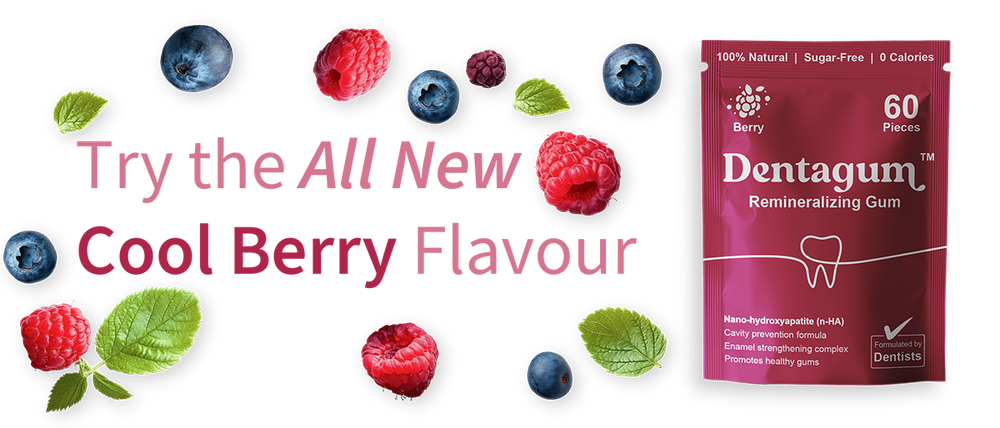
Dentagum Remineralizing Chewing Gum was formulated as a clean oral care product from the ground up: not a conventional chewing gum reformulated to add a wellness claim, but a product built around what clean, evidence-backed oral care ingredients actually look like assembled together.
The gum base is organic chicle gum (from the sapodilla tree) and mastic gum (from Pistacia lentiscus): both plant-derived, both biodegradable, and mastic carrying 14 clinical studies of its own for antibacterial, anti-plaque, and anti-inflammatory oral health properties. There are no petroleum-derived synthetic polymers in the base.
The sweetener system is organic xylitol (primary) and organic erythritol (secondary), both chosen for oral health benefit rather than cost. No aspartame. No saccharin. No sorbitol. Xylitol at meaningful concentrations kills S. mutans through the documented PTS metabolic mechanism. Erythritol complements by inhibiting S. mutans adhesion to tooth surfaces. The sweeteners are doing oral health work, not just providing flavor.
The remineralizing active is nano-hydroxyapatite, the same mineral enamel is made from, at 5% concentration (~90mg per piece) in a particle size range that allows active mineral deposition into enamel microporosities. Supporting it is organic eggshell powder (natural calcium carbonate) and natural calcium bentonite clay, which provides adsorptive debris-lifting during chewing.
Propolis provides broad-spectrum antimicrobial coverage with evidence comparable to chlorhexidine in some studies, without chlorhexidine's staining, taste alteration, and microbiome disruption. Coconut oil adds lauric acid anti-inflammatory support. The terpene blend (menthone, carvone, cineol) provides natural flavoring with cineol's documented antimicrobial properties as a bonus.
And the safety is independently verified. Dentagum's heavy metal testing is conducted by Light Labs (ISO/IEC 17025 accredited, PJLA #128155) using ICP-MS/MS, the gold standard method. The COA is published. Arsenic: 500 times below California Prop 65 limits. Cadmium: more than 1,360 times below. Lead: 5.5 times below the strictest consumer product standard in the world. Mercury: not detected.
This is what genuine clean oral care looks like in 2026: not a marketing claim, but a verifiable formulation decision at every ingredient and a published lab result that anyone can check. You can explore the full ingredient rationale in our article on what remineralizing gum is and how it works, and see the heavy metal test results on our product page.
No SLS. No synthetic polymer gum base. No aspartame or saccharin. No artificial colors. No parabens. No triclosan. Sweetened with organic xylitol and erythritol (both with documented oral health benefit). Gum base: organic chicle + mastic (biodegradable, plastic-free). Active: nano-hydroxyapatite at ~90mg per piece. Antimicrobials: propolis and terpene blend (natural, documented). Safety: COA from ISO 17025-accredited Light Labs, all four heavy metals in-spec against Prop 65 limits. Available at $32.97 for 60 pieces at dentagum.co and on Amazon.
8. Frequently Asked Questions
What does clean oral care mean?
Clean oral care means products formulated without ingredients with documented health or safety concerns (such as SLS, triclosan, aspartame, synthetic polymer gum bases, and parabens) and with active, evidence-backed ingredients that genuinely support oral health. It's the application of the same ingredient scrutiny that drove the clean beauty movement in skincare to what goes in and around your mouth. Importantly, clean oral care is evidence-based, not anti-science: the goal is replacing problematic ingredients with better-evidenced alternatives, not removing useful ingredients because they sound chemical.
Is SLS in toothpaste harmful?
SLS (sodium lauryl sulfate) causes oral mucosal irritation in approximately 10% of the population, manifesting as increased canker sore frequency. For this group, daily SLS exposure in toothpaste is a direct, repeated irritant to sensitive mucosal tissue. For the other 90%, the concern is lower, but SLS provides no dental benefit (the foaming action does not improve plaque removal), making the risk-benefit analysis favor SLS-free formulations. Multiple toothpastes use SLS-free formulas without any reduction in cleaning efficacy.
Is natural chewing gum better than regular gum?
For daily oral health use, yes, in several meaningful ways. Conventional gum uses petroleum-derived synthetic polymer gum bases that are non-biodegradable. Natural gum bases (chicle from the sapodilla tree, mastic resin) are biodegradable and, in the case of mastic, have documented antibacterial and anti-plaque properties. Conventional gum is typically sweetened with sorbitol, which is caries-neutral but provides no antibacterial benefit. Natural remineralizing gum uses xylitol as primary sweetener, which actively kills S. mutans through a targeted metabolic mechanism. The combination of clean base, active sweetener, and remineralizing actives (nano-HAp) makes evidence-based natural remineralizing gum a meaningfully better daily oral health product than conventional commercial gum.
How do I know if a clean oral care product is actually clean?
Check four things: the full ingredient list (not just the front label claims), whether a third-party COA from a named ISO 17025-accredited laboratory has been published, whether active ingredient claims reference specific named research, and whether xylitol is listed before sorbitol or other polyols in sweetened products. The absence of any of these is a meaningful signal. A brand that claims clean formulation but cannot point to a published COA from an independent accredited lab is offering an unverified claim, not a verified fact.
What ingredients should I avoid in chewing gum?
The main ones: aspartame and saccharin (artificial sweeteners with no oral health benefit and documented health concerns); synthetic petroleum-derived gum bases (non-biodegradable polymer matrices listed as "gum base" without sourcing transparency); sorbitol as the primary sweetener (caries-neutral but not actively antibacterial, and often used to justify a "sugar-free" claim without the oral health benefit of xylitol); artificial colors and flavors with no function beyond aesthetics. What to look for instead: xylitol as primary sweetener, organic chicle or mastic gum base, natural plant-based flavoring, and a published third-party COA for heavy metals.
Is the clean beauty trend affecting oral care?
Yes, and the growth data reflects it. Multiple clean beauty market reports now explicitly segment oral care alongside skincare and haircare. The clean beauty market, including oral care, was valued at $9.21 billion in 2025 with projected 15%+ annual growth. Euromonitor International documented the skincare clean beauty trend moving into oral care, and Berlin Packaging's 2025 oral care trends report found rising consumer demand for natural ingredients and transparent formulations specifically in the oral care category. The consumer who reads skincare labels is starting to read oral care labels too, and that behavior shift is accelerating.

The Bottom Line
The clean oral care movement is real, growing, and a decade behind the equivalent shift in skincare: the same consumer scrutiny, the same ingredient questions, the same demand for transparency and evidence, arriving now for the products people use in their mouths every day. The core ask is straightforward: no ingredients with documented health concerns, active ingredients with genuine oral health evidence, and independently verified safety data that anyone can check.
What to look for: SLS-free, no aspartame or saccharin, no synthetic polymer gum base in gum products, xylitol as primary sweetener at meaningful concentrations, nano-hydroxyapatite as the remineralizing active, and a published COA from a named ISO 17025-accredited laboratory. These aren't aspirational standards. They're what the best clean oral care products deliver today. See how Dentagum stacks up in our article on what makes Dentagum the best remineralizing gum.
Shop Dentagum Remineralizing Gum — 30-Day GuaranteeResearch Summary
- InsightAce Analytic (2026). Clean Beauty Market valued at $9.21B in 2025, projected $37.49B by 2035 at 15.2% CAGR. Oral care explicitly included as product segment.
- Technavio (2025). Clean beauty market forecast to increase $7.65B at 13.2% CAGR 2024-2029. North America contributing 35% of global growth.
- Euromonitor International. Clean beauty trend documented crossing from skincare into oral care. "No fluoride" becoming sought-after claim in US, China, Germany, UK.
- Berlin Packaging (2025). Oral care trends report: demand surging for multifunctional, wellness-oriented products with natural ingredients and transparent formulation.
- Vitadent Labs / FDA records (2025-2026). Triclosan removed from US toothpastes 2019. SLS documented mucosal irritation in ~10% population. Titanium dioxide EU-restricted 2022 (genotoxicity concern). Parabens increasingly phased out (endocrine disruption potential).
- WHO IARC (2023). Aspartame classified Group 2B "possibly carcinogenic to humans." Joins category with other widely used food additives under ongoing regulatory review.
- Söderling E et al. BMC Oral Health (2025). Xylitol significantly reduced S. mutans in 12 of 14 clinical studies. Systematic review. Figures from ingredient research.
- European Archives of Paediatric Dentistry (2024). Meta-analysis: most effective xylitol protocol 100% xylitol, 3-5x per day after meals, 5-10g total daily dose. Figures from ingredient research.
- Limeback H, Enax J, Meyer F. Biomimetics (2023). Systematic review and meta-analysis of 44 clinical trials. Nano-HAp significantly reduces dentin hypersensitivity by 39.5% vs placebo. Figures from ingredient research.
- Frontiers in Public Health (2023). 18-month RCT: fluoride-free nano-HAp non-inferior to 1,450 ppm fluoride toothpaste for adult cavity prevention. Figures from ingredient research.
- Mastic gum clinical literature. 14 documented studies on antibacterial, anti-inflammatory, and anti-plaque properties. Active oral health benefit from natural gum base component.
- Light Labs COA (June 18, 2026). Heavy metals: As 0.02 mcg/serving (500x below Prop 65 NSRL), Cd 0.003 mcg (1,367x below MADL), Pb 0.09 mcg (5.5x below MADL), Hg ND. ISO/IEC 17025 accredited (PJLA #128155). Method: LLMTDA1 (ICP-MS/MS).
References
- InsightAce Analytic. Global Clean Beauty Market Report 2026 to 2035. 2026. Available at: insightaceanalytic.com
- Technavio. Clean Beauty Market Growth Analysis — Size and Forecast 2024-2029. 2025. Available at: technavio.com
- Euromonitor International. Oral Health, Clean Beauty and Sustainability: What's Next? 2023. Available at: euromonitor.com
- Berlin Packaging. Oral Care Trends 2025: Natural & Gut Health. 2025. Available at: berlinpackaging.com
- Vitadent Labs. Toothpaste Ingredients to Avoid: FDA & EU Guide (2026 Update). Available at: vitadentlabs.com
- US Food and Drug Administration. Triclosan: What Consumers Should Know. FDA ban from hand soaps 2016; removal from toothpastes 2019. Available at: fda.gov
- WHO / IARC. IARC Monographs on the Identification of Carcinogenic Hazards to Humans — Aspartame. Group 2B classification. 2023. Available at: iarc.who.int
- European Chemicals Agency. Titanium Dioxide — Restriction. EU restriction effective 2022. Available at: echa.europa.eu
- Söderling E et al. Effect of xylitol on the levels of Streptococcus mutans: a systematic review. BMC Oral Health. 2025. doi:10.1186/s12903-025-06602-1
- Zhan L et al. Xylitol chewing gum and caries prevention — systematic review and meta-analysis. European Archives of Paediatric Dentistry. 2024.
- Limeback H, Enax J, Meyer F. Biomimetic hydroxyapatite and caries prevention: a systematic review and meta-analysis. Biomimetics. 2023. doi:10.3390/biomimetics8010059
- Meyer F, Enax J. Hydroxyapatite in oral care — comparative RCT with fluoride toothpaste. Frontiers in Public Health. 2023.
- Light Labs. Certificate of Analysis — Dentagum Remineralizing Gum, Mint. Heavy Metals. Test 82908. June 18, 2026. PJLA Accreditation #128155.
