
Chewing Gum for Receding Gums: What Helps and What Doesn't
Gum recession is irreversible without surgical intervention. No chewing gum can regrow lost gum tissue. But the bacterial inflammation that causes recession and drives it further is something a well-formulated gum can meaningfully address. Here's an honest look at what helps and what doesn't.

Chewing gum cannot reverse gum recession. Gum tissue that has pulled away from teeth does not regenerate on its own, Cleveland Clinic and the American Dental Association are unambiguous on this point. Only professional periodontal treatment, including gum grafting or pinhole surgical technique, can restore receded tissue. What certain gum ingredients can do is address the bacterial inflammation that causes recession and drives it further. Mastic gum has documented antibacterial activity specifically against periodontal pathogens. Propolis shows significant reduction in gingival inflammation across a 2025 PROSPERO-registered systematic review and meta-analysis. Xylitol reduces the plaque at the gumline that triggers gingivitis. These aren't cures. They're meaningful daily support for gum tissue health alongside proper brushing, flossing, and professional care.
If you've noticed your gums pulling back from your teeth, you've probably also noticed the internet is full of products claiming to help. Essential oils. Special toothpastes. Remineralizing gum. Oil pulling. The claims range from plausible to implausible to outright false.
This article tells you the honest version. Gum recession is a one-way process without professional intervention. No gum, toothpaste, or rinse can reverse it. But the bacterial processes that drive it are genuinely addressable with the right daily habits, and certain ingredients have real clinical evidence behind them for gum tissue health specifically.
What Gum Recession Actually Is
Gum recession is the process by which gingival tissue pulls away from tooth surfaces, exposing the root beneath. The exposed root is not protected by enamel, it's covered by cementum, a much softer and more vulnerable tissue. This makes receded areas significantly more susceptible to sensitivity, cavities, and further tissue loss.
The causes are multiple and often overlapping. Periodontal disease is the most common driver, the chronic bacterial infection of gum tissue causes inflammation that destroys the connective tissue and bone supporting the gums, leading to recession over time. Aggressive toothbrushing is the second most common cause, physically abrading gum tissue away with the wrong technique or too much pressure. Bruxism, thin gum tissue genetics, certain medications, and poorly aligned teeth can all contribute.
Cleveland Clinic is direct: once gum tissue is lost, it does not grow back on its own. Unlike skin, gum tissue doesn't have the regenerative capacity to heal over recession. Professional options, gum grafting or the minimally invasive pinhole surgical technique, can restore the gum line surgically. No topical product, dietary intervention, or chewing habit can replace lost tissue. If you're seeing meaningful recession, your first step is a periodontal evaluation, not a product search.
How Common Is Gum Disease in the US?
More common than most people realize. The CDC reports that 42.2% of US adults aged 30 and older have some form of periodontitis, the advanced stage of gum disease that involves bone and tissue loss. The Stroke journal published in 2026 estimated that periodontal disease affects over one billion people globally, making it one of the most prevalent chronic conditions on earth.
Gingivitis, the earlier, reversible form of gum disease characterized by gum inflammation and bleeding without bone loss, is even more prevalent. The CDC explicitly notes that gingivitis is largely preventable and treatable with good oral hygiene and professional cleanings. This distinction matters practically: gingivitis is the last stage before irreversible damage begins. Addressing bacterial inflammation at the gingivitis stage is where daily habits, including ingredient-specific ones, have their greatest impact.
The Bacterial Driver: Why Plaque at the Gumline Is the Core Problem
Understanding why certain ingredients matter for gum health requires understanding the mechanism behind gum disease itself.
Periodontal disease begins with plaque, the biofilm of bacteria that accumulates on tooth surfaces and, critically, at and below the gumline. When plaque accumulates at the gumline without adequate disruption through brushing and flossing, certain bacteria establish themselves and trigger an immune response in the surrounding tissue. That immune response is inflammation. The gums swell, redden, and bleed. That's gingivitis.
If plaque remains, the specific bacteria involved in periodontitis, Porphyromonas gingivalis, Aggregatibacter actinomycetemcomitans, Fusobacterium nucleatum, Prevotella intermedia, and others, burrow below the gumline into the periodontal pocket. There they release toxins and trigger a more destructive inflammatory cascade that breaks down the connective tissue and bone holding the gum in place. The gum recedes. That destruction is irreversible.
This is why addressing bacterial load at the gumline is the core of gum disease prevention. Not whitening. Not remineralizing. Specifically reducing the bacterial species that trigger periodontal inflammation, before they can establish in the subgingival environment and begin the tissue destruction sequence.
What Mastic Gum Does for Periodontal Health

Mastic gum is where the evidence for functional chewing gum and periodontal health becomes genuinely compelling, and where most articles on this topic completely miss the point by focusing only on the chewing action rather than the base material's biological activity.
A 2023 state-of-the-art review published in the Journal of Natural Medicine, covering 14 independent clinical studies on Pistacia lentiscus and oral health, confirmed that mastic gum displays antibacterial and antimicrobial properties and inhibits plaque accumulation. The review specifically noted that Pistacia lentiscus essential oil provided effective antibacterial activity against a variety of periodontal bacteria and anti-inflammatory properties relevant to periodontal disease treatment and prevention.
A clinical study investigating mastic extract against the specific bacteria responsible for periodontal disease found a significantly higher inhibition effect on P. gingivalis, S. oralis, A. actinomycetemcomitans, F. nucleatum, and P. intermedia compared with 3% hydrogen peroxide (p ≤ 0.016). Crucially, while chlorhexidine, the gold standard antimicrobial mouthwash in periodontics, showed cytotoxic effects on epithelial cell lines, mastic extract had a beneficial effect on epithelial cell viability. The gum tissue cells exposed to mastic extract showed significantly higher viability than cells treated with either hydrogen peroxide or chlorhexidine.
In clinical testing, mastic extract showed significantly higher inhibition of P. gingivalis, S. oralis, A. actinomycetemcomitans, F. nucleatum, and P. intermedia compared with 3% hydrogen peroxide (p ≤ 0.016), the five primary bacterial species responsible for driving periodontal disease progression and gum tissue destruction. Unlike chlorhexidine, mastic was also found to support rather than damage epithelial cell viability.
This matters for chewing gum specifically because the gum base is in sustained contact with gingival tissue during the entire chewing session. A mastic gum base doesn't just sit on enamel, it contacts the tissue at and near the gumline where periodontal pathogens establish themselves. The antibacterial activity of the mastic base is working throughout that contact time.
Standard synthetic gum bases (polyvinyl acetate, polyisobutylene) have no biological activity against periodontal bacteria. They hold the formula together. A mastic gum base holds the formula together and actively works against the specific bacteria that drive gum disease. That's a functional difference that matters when gum health is the concern.
What Propolis Contributes to Gum Inflammation
Propolis, the resinous compound produced by bees from plant sources, has one of the more robust evidence bases for gum inflammation specifically.
A 2025 systematic review and meta-analysis published in the Journal of Functional Biomaterials, registered with PROSPERO (CRD42023467573) and conducted according to PRISMA guidelines, evaluated propolis-containing mouthwashes and toothpastes across randomized controlled trials and observational studies through May 2025. The review concluded that propolis-containing products significantly reduced both dental plaque and gingival inflammation.
Separate research published in PMC used propolis in a clinical application for gum recession itself, specifically as a conditioning agent in the pinhole surgical technique for root coverage, leveraging its anti-infective, anti-inflammatory, and antioxidant properties to support gum tissue healing post-procedure.
For daily use in a chewing gum format, propolis adds a meaningful antibacterial and anti-inflammatory layer that directly targets the gingival inflammation component of gum disease. It can't replace what was lost, but it addresses the ongoing bacterial and inflammatory processes that would continue to cause further loss without intervention.
What Xylitol Does for Gum Health
Xylitol's role in gum health is less direct than mastic gum or propolis but no less important. The bacteria that cause gingivitis and periodontitis, while distinct from S. mutans, are supported by the same plaque biofilm environment that cariogenic bacteria create. Reducing total plaque accumulation at the gumline reduces the bacterial substrate from which periodontal pathogens operate.
A 2025 systematic review in BMC Oral Health found xylitol gum significantly reduced S. mutans and plaque in 12 of 14 clinical studies. Plaque reduction at the gumline is directly relevant to gingivitis prevention, the ADA's position on sugar-free gum specifically cites the role of saliva stimulation in washing bacteria from gumline areas between brushing sessions.
Xylitol also stimulates salivary flow through the mechanical chewing action, and saliva contains antimicrobial proteins, lactoferrin, and secretory IgA that have documented inhibitory effects on periodontal pathogens. The post-meal window when xylitol gum is most effective is the same window when bacterial activity around the gumline is highest.
What Gum Cannot Do for Receding Gums
Honesty is more useful here than optimism, so let's be direct about the limits.
Chewing gum cannot regrow lost gum tissue. Once gum tissue has receded, it does not regenerate. The root surface that has been exposed stays exposed without a surgical procedure. Gum grafting, in which donor tissue is placed over exposed roots, is the established treatment for meaningful recession. The pinhole surgical technique, a minimally invasive alternative, repositions existing gum tissue without grafts. Both require a periodontist or trained dentist. No daily product replaces either intervention.
Chewing gum cannot treat active periodontitis. Advanced gum disease with bone loss requires professional treatment, scaling and root planing, antibiotic therapy, and potentially surgical debridement. Daily habits are adjunctive support for professionally treated disease, not alternatives to treatment.
Chewing gum cannot substitute for brushing and flossing. The mechanical disruption of plaque below the gumline through correct brushing technique and interdental cleaning is the primary defence against gingivitis. Gum addresses the post-meal window and provides active ingredient support. It works alongside the mechanical routine, not instead of it.
Gingivitis involves gum inflammation without bone or tissue loss, it's fully reversible with improved oral hygiene and professional cleaning. Periodontitis involves bone loss and tissue destruction, it's irreversible, only manageable. Chewing gum with mastic, propolis, and xylitol has its greatest supportive value at the gingivitis stage: reducing the bacterial load and inflammation before irreversible tissue destruction begins. Once periodontitis has progressed significantly, professional treatment takes priority and gum becomes a supportive adjunct rather than a meaningful primary intervention.
What Actually Stops Gum Recession from Getting Worse

Since prevention is everything with gum recession, the practical question is: what daily habits stop it from progressing?
Aggressive horizontal scrubbing is the leading non-bacterial cause of gum recession. Use a soft-bristled brush, angle it at 45 degrees toward the gumline, and use gentle circular or rolling strokes. Electric toothbrushes with pressure sensors are genuinely useful for people who tend to over-brush. This one change addresses the mechanical damage component entirely.
The bacteria that drive periodontal disease establish primarily in the interdental areas and the gingival sulcus, the spaces a toothbrush cannot reach. Flossing disrupts the biofilm in these spaces before it can mature into a plaque community that triggers inflammation. If you have existing recession with exposed roots and sensitivity, water flossers can be more comfortable than string floss in affected areas.
Recession visible to you suggests tissue has already been lost. A periodontist can assess the extent, identify the cause, and determine whether the current rate of recession is stable or progressing. Scaling and root planing removes subgingival calculus and bacteria that no amount of brushing can address. If significant recession is present, this professional intervention is the highest-priority step, before any product discussion.
After meals is when bacterial activity at the gumline peaks. Chewing gum with mastic gum base, propolis, and xylitol during this window provides active antibacterial and anti-inflammatory support to the gingival tissue at the moment when those properties are most useful. This isn't a treatment for recession. It's evidence-backed daily support for the gum health conditions that determine whether gingivitis develops and whether periodontitis progresses.
Reduced saliva flow creates the conditions where periodontal bacteria thrive. Saliva's antimicrobial proteins, buffering capacity, and physical washing action are all protective against gumline bacteria. Dry mouth from medications, mouth breathing, or systemic conditions removes these protections. Chewing xylitol gum to stimulate saliva is one of the most evidence-supported management strategies for medication-induced dry mouth specifically.
Nano-Hydroxyapatite and Exposed Root Surfaces
One additional benefit of nano-HAp that's directly relevant for people with gum recession deserves its own mention. When gum tissue recedes, the root surface beneath is exposed. Root surfaces are covered in cementum rather than enamel. Cementum demineralizes at a higher pH than enamel, making exposed root surfaces significantly more vulnerable to acid erosion and cavity formation.
Nano-hydroxyapatite deposits into the microporosities of root surfaces as well as enamel, providing mineral support to the exposed areas that recession has left vulnerable. This doesn't address the recession itself, the root is still exposed, but it provides active protection for the surface that's now at risk, reducing both the sensitivity that exposed roots produce and the cavity risk that accompanies them.
If you experience sensitivity on exposed root surfaces, our article on Can Gum Help Sensitive Teeth? covers the nano-HAp mechanism for sensitivity reduction in full clinical detail.
How Dentagum Supports Gum Health

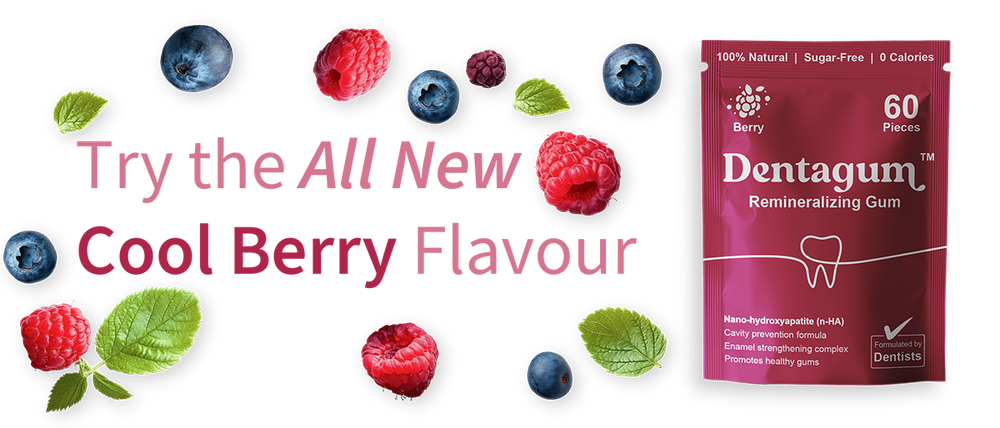
Dentagum's formula combines the specific ingredients with the most relevant evidence for gum tissue health in a single post-meal chewing habit. The organic mastic gum base is in direct contact with gingival tissue throughout the chewing session, actively working against P. gingivalis, A. actinomycetemcomitans, F. nucleatum, and the other primary periodontal pathogens during that contact time. Natural propolis adds broad-spectrum antimicrobial and anti-inflammatory action documented across a 2025 PROSPERO-registered systematic review. Organic xylitol and organic erythritol reduce the plaque accumulation at the gumline that drives gingivitis. Nano-hydroxyapatite protects exposed root surfaces that recession has left vulnerable.
In Dentagum's own clinical data, 79% of participants experienced a clinical reduction in gum inflammation with consistent daily use. This is the outcome most directly relevant to gum health: reducing the inflammation that, left unaddressed, is what drives recession further.
That said, Dentagum is a daily support product, not a periodontal treatment. If you have visible recession, bleeding gums, or persistent gum soreness, the right first step is professional evaluation, not a product search. Dentagum works best as part of a complete oral care routine that includes correct brushing technique, daily flossing, and regular professional care.
Try Dentagum risk-free, 30-day guaranteeFrequently Asked Questions
Can chewing gum reverse gum recession?
No. Gum tissue that has receded does not regenerate on its own. Cleveland Clinic is unambiguous: once gum tissue is lost, it does not grow back without surgical intervention. Chewing gum cannot replace what was lost. What certain gum ingredients can do is address the bacterial inflammation that drives recession further, mastic gum actively inhibits the periodontal pathogens responsible, propolis reduces gingival inflammation, and xylitol reduces the plaque accumulation that triggers gingivitis. These are meaningful daily supports for gum health, not treatments for existing recession.
Does mastic gum help with gum disease?
Yes, with documented clinical evidence. A 2023 state-of-the-art review in the Journal of Natural Medicine covering 14 clinical studies confirmed mastic gum displays antibacterial and antimicrobial properties, inhibits plaque accumulation, and shows anti-inflammatory properties relevant to periodontal disease. A separate clinical study found mastic extract showed significantly higher inhibition of the five primary periodontal pathogens, P. gingivalis, A. actinomycetemcomitans, F. nucleatum, P. intermedia, and S. oralis, compared with 3% hydrogen peroxide (p ≤ 0.016). As a gum base, it's in sustained contact with gingival tissue during chewing, providing active antibacterial support at the gumline.
What is the difference between gingivitis and gum recession?
Gingivitis is inflammation of the gums caused by bacterial plaque at the gumline. It involves redness, swelling, and bleeding but no tissue or bone loss, and is fully reversible with improved oral hygiene and professional cleaning. Gum recession is the physical pulling away of gum tissue from the tooth, exposing the root beneath. Recession is irreversible without surgery and is often caused by untreated periodontitis or mechanical damage from aggressive brushing. The connection: untreated gingivitis can progress to periodontitis, which causes the inflammation and tissue destruction that leads to recession.
How common is gum recession?
Very common. The CDC reports that 42.2% of US adults aged 30 and older have some form of periodontitis, the advanced gum disease that leads to recession. A 2026 study in the journal Stroke estimated periodontal disease affects over one billion people globally. Gingivitis is even more prevalent and far more manageable, it's fully reversible and largely preventable with consistent oral hygiene and professional cleanings.
Can chewing gum help with gingivitis?
Yes, as a supportive daily habit alongside brushing and flossing. The three relevant mechanisms: chewing stimulates saliva that washes bacteria from gumline areas and delivers antimicrobial proteins; mastic gum base actively inhibits the periodontal pathogens that drive gingivitis; and propolis reduces gingival inflammation directly. A 2025 PROSPERO-registered systematic review and meta-analysis confirmed propolis-containing oral care products significantly reduce both dental plaque and gingival inflammation. Xylitol's plaque reduction effect adds a third antibacterial layer. None of this replaces the mechanical plaque disruption of proper brushing and flossing, but it meaningfully complements it during the post-meal windows when bacterial activity is highest.
What should I do if I have receding gums?
First, see a dentist or periodontist for evaluation. Recession that's visible to you suggests tissue has already been lost, and professional assessment is needed to determine the cause, severity, and whether it's stable or progressing. Scaling and root planing removes subgingival calculus and bacteria that daily oral care can't address. For significant recession, gum grafting or pinhole surgical technique can restore the gum line. Alongside professional care: switch to a soft-bristled brush and correct technique, floss daily, and consider a gum with mastic, propolis, and xylitol for post-meal bacterial and anti-inflammatory support.

The Bottom Line
Gum recession is irreversible without surgery. No chewing gum changes that fact, and any product claiming otherwise is overstating the evidence considerably.
What is well-evidenced is that the bacterial processes driving gum disease, the accumulation of specific periodontal pathogens at the gumline, the inflammation they trigger, the plaque biofilm they inhabit, are genuinely addressable through daily habits including the right chewing gum ingredients. Mastic gum inhibits the specific bacteria responsible for periodontal disease. Propolis reduces gingival inflammation as confirmed by a 2025 PROSPERO-registered systematic review. Xylitol reduces the plaque that gingivitis begins with. Together they represent meaningful daily support for gum health at the stage where prevention still works, before irreversible tissue destruction begins.
If you already have visible recession, start with professional evaluation. If you're managing gum health proactively, daily habits built around the right ingredients make a real difference. Dentagum combines all three gum-specific active ingredients in a post-meal chewing habit designed to support the gingival environment when bacterial activity is highest.
Try Dentagum risk-free, 30-day guarantee at dentagum.coResearch Summary
- Alwadi MAM et al. "Mastic (Pistacia lentiscus) Gum and Oral Health: A State-of-the-Art Review." Journal of Natural Medicine, 2023. 14 studies confirmed mastic gum antibacterial, antimicrobial, inhibits plaque, effective against periodontal bacteria with anti-inflammatory properties.
- Clinical Education review. Mastic extract showed significantly higher inhibition of P. gingivalis, S. oralis, A. actinomycetemcomitans, F. nucleatum, P. intermedia vs 3% H₂O₂ (p ≤ 0.016). Beneficial effect on epithelial cell viability, better than chlorhexidine.
- Sycinska-Dziarnowska M et al. "Propolis as a Natural Remedy in Reducing Dental Plaque and Gingival Inflammation: A Systematic Review and Meta-Analysis." Journal of Functional Biomaterials, 2025. PROSPERO CRD42023467573. Propolis products significantly reduce dental plaque and gingival inflammation.
- Mostafa D, Mandil OA. PMC, 2021. Propolis used in pinhole surgical technique for gum recession root coverage. Anti-infective, anti-inflammatory, antioxidant properties applied to gum tissue healing.
- CDC. 42.2% of US adults 30+ have some form of periodontitis. Gingivitis largely preventable and treatable. Periodontitis involves bone loss and is irreversible.
- Stroke journal, 2026. Periodontal disease affects over 1 billion individuals globally. Multifactorial causation including bacterial biofilm, systemic diseases, aging, and smoking.
- Cleveland Clinic, 2025. Gum recession cannot be reversed, gum tissue does not grow back without surgery. Only gum grafting or pinhole surgical technique can restore receded tissue.
- Söderling E et al. BMC Oral Health, 2025. Xylitol gum significantly reduced S. mutans and plaque accumulation in 12/14 studies. Plaque reduction directly relevant to gingivitis prevention.
References
- Alwadi MAM et al. "Mastic (Pistacia lentiscus) Gum and Oral Health: A State-of-the-Art Review." Journal of Natural Medicine, 2023. https://pubmed.ncbi.nlm.nih.gov/37147480/
- "Recent Study Validates Cultural Use of Mastic Gum for Oral Health." Clinical Education. https://www.clinicaleducation.org/news/recent-study-validates-cultural-use-of-mastic-gum-for-oral-health/
- Sycinska-Dziarnowska M et al. "Propolis as a Natural Remedy in Reducing Dental Plaque and Gingival Inflammation: A Systematic Review and Meta-Analysis." Journal of Functional Biomaterials, 2025. PROSPERO CRD42023467573. https://www.ncbi.nlm.nih.gov/pmc/articles/PMC12470411/
- Mostafa D, Mandil OA. "Treatment of Gingival Recession Defects Using Non-Invasive Pinhole Technique With Propolis Application, a Case Report." PMC, 2021. https://www.ncbi.nlm.nih.gov/pmc/articles/PMC8188386/
- CDC. "About Periodontal (Gum) Disease." Oral Health. https://www.cdc.gov/oral-health/about/gum-periodontal-disease.html
- "From Gums to Brain: Unveiling the Hidden Inflammatory Connection Between Periodontal and Cerebrovascular Diseases." Stroke, 2026. https://www.ahajournals.org/doi/abs/10.1161/STROKEAHA.125.053382
- Cleveland Clinic. "Gum Recession: Causes, Prevention, Surgery & Treatment." Updated November 2025. https://my.clevelandclinic.org/health/diseases/22753-gum-recession
- Söderling E et al. "Specific Effects of Xylitol Chewing Gum on Mutans Streptococci Levels." BMC Oral Health, 2025. https://link.springer.com/article/10.1186/s12903-025-06602-1
