
What to Do for Your Teeth When You Can't Brush After Meals
You finish lunch at your desk, you're at a restaurant, you're on a flight. Brushing isn't an option. The ADA has a direct answer for this situation. Here's what the evidence says works when you can't reach a toothbrush, ranked by effectiveness.

When you can't brush after a meal, chewing sugar-free xylitol gum for 20 minutes is the best evidence-backed alternative. The American Dental Association explicitly states: "If you cannot brush your teeth immediately after a meal, then chewing gum can help." Chewing stimulates salivary flow to 10 to 12 times the resting rate, neutralizing post-meal acid and washing food debris from tooth surfaces before it can fuel bacterial activity. A water rinse is the second-best option if gum isn't available. Doing nothing means the post-meal acid attack runs its full 30 to 40 minute course without any intervention, which compounds over dozens of meals per week into meaningful cumulative enamel loss.
You're eating lunch at your desk. You're at a restaurant. You're on a long-haul flight. You grabbed something to eat between meetings and your toothbrush is at home. This situation happens to everyone, multiple times per week, and almost no one knows what the evidence actually says to do about it.
The answer isn't complicated, but it is specific. This article covers the ranked options, why each one works (or doesn't), and how to build a simple portable habit that genuinely protects your teeth during the hours you're away from your toothbrush.
Why the Post-Meal Window Matters

Every time you eat, the bacteria in your mouth metabolize the sugars and fermentable carbohydrates from your food and produce acid. That acid drops your oral pH below the 5.5 critical threshold, the point at which enamel begins losing mineral, within a few minutes of eating. Your saliva then begins buffering the acid and pH gradually recovers over 20 to 40 minutes. This is the Stephan Curve: the cycle of pH drop and recovery that repeats with every eating event across the day.
During that 20 to 40 minute recovery window, your enamel is in a net demineralization state. Calcium and phosphate are leaving enamel rather than entering it. Bacterial activity is at its peak as the food substrate is fresh. If you have acidic food or drink with your meal, the pH drop is deeper and the recovery window longer.
Brushing immediately after a meal addresses some of this, but only if your meal wasn't acidic and only for the mechanical plaque removal component. For most people in most real-world situations, brushing after every meal isn't feasible. The question is what does meaningful protective work when it isn't.
If neither gum, water, nor any other intervention follows a meal, the Stephan Curve runs its full course without any support. Saliva recovers pH on its own over 20 to 40 minutes, but at resting flow rate rather than the stimulated rate that chewing produces. Food debris remains on tooth surfaces longer. Bacterial activity is uninterrupted for the full window. For someone eating three meals and two snacks per day, that's five unassisted acid events per day, roughly 35 per week, compounding into meaningful cumulative enamel loss and bacterial buildup over months and years.
The Ranked Options: Best to Least Effective
Not every option available when you can't brush is equally effective. Here's the honest ranking based on what the clinical evidence supports.
Option 1: Sugar-Free Gum (The ADA-Endorsed Choice)
The ADA's position on this situation is explicit and direct. From their Oral Health Topics page on chewing gum: "If you cannot brush your teeth immediately after a meal, then chewing gum can help." This isn't a hedge or a tentative suggestion. It's the ADA's direct answer to exactly the question this article addresses.
The mechanism is the same one that makes the post-meal window so important in the first place: saliva. Chewing stimulates salivary flow to 10 to 12 times the resting rate. That surge of saliva does the following in rapid succession.
It buffers the post-meal acid through saliva's bicarbonate system, accelerating the pH recovery from the 20 to 40 minute unassisted timeline. It physically washes food debris from tooth surfaces and between teeth, removing the substrate that bacteria would otherwise metabolize over the coming hour. It delivers calcium and phosphate ions to enamel surfaces, supporting the remineralization process during the recovery window. And it contains antimicrobial proteins including lactoferrin, lysozyme, and secretory IgA that directly inhibit many of the bacteria responsible for caries and gum disease.
A 2025 study cited across multiple dental practice reviews found that sugar-free gum chewing produced a 32 to 37% improvement in plaque and gingival inflammation measures over a 14-day trial. That's a meaningful clinical effect from a habit that takes no equipment, no sink, and no private space.
A clinical study on sugar-free gum use found measurable improvements in both plaque accumulation and gingival inflammation within just two weeks of consistent post-meal gum chewing. This reflects the cumulative effect of the saliva stimulation mechanism working repeatedly across multiple daily eating events, compounding over the two-week period into a clinically detectable difference.
The ADA recommendation is for 20 minutes of chewing after meals. This duration isn't arbitrary. Five minutes of chewing produces some benefit. Twenty minutes sustains the elevated salivary flow and mechanical effects long enough to meaningfully reduce the acid exposure window and support remineralization during the period when enamel is most receptive to mineral deposition.
Why Xylitol Gum Is Better Than Sorbitol Gum in This Situation
Any sugar-free gum provides the salivary stimulation benefit. Xylitol gum provides that plus an active antibacterial effect that sorbitol gum does not.
S. mutans, the primary cavity-causing bacterium, transports xylitol into its cells expecting to metabolize it the way it does sucrose. It cannot. The xylitol creates a futile energy cycle that kills the bacterium. Repeated xylitol exposure progressively reduces S. mutans populations and their ability to produce acid. A 2025 systematic review in BMC Oral Health found xylitol gum significantly reduced S. mutans in 12 of 14 clinical studies versus sorbitol controls.
In the context of a meal where you can't brush, this matters specifically because the food debris remaining on tooth surfaces after eating creates elevated bacterial activity. S. mutans and other cariogenic bacteria are actively metabolizing whatever carbohydrate residue is present. Xylitol's active reduction of these bacteria during the post-meal window addresses the bacterial acid component directly rather than only buffering it through saliva. For someone having lunch at their desk three or four days a week with no way to brush afterward, consistent xylitol gum use meaningfully reduces the cumulative bacterial acid exposure from those missed brushing windows.
What Nano-Hydroxyapatite Adds When Brushing Isn't an Option
Standard brushing with fluoride toothpaste delivers fluoride to enamel surfaces and provides mechanical plaque removal. When brushing isn't possible, a gum containing nano-hydroxyapatite partially compensates for one of those two components: the mineral delivery.
Nano-HAp particles at 20 to 100 nanometres in diameter deposit into the microporosities of enamel surfaces during the chewing session. Where brushing would have delivered fluoride to remineralize surfaces, nano-HAp gum delivers enamel mineral directly during the post-meal window when the surface is slightly demineralized and most receptive to mineral uptake. A 2023 systematic review and meta-analysis in Biomimetics covering 44 clinical trials confirmed contact time during chewing as the key variable for nano-HAp's effectiveness, making the 20-minute post-meal chewing window the optimal delivery period.
Nano-HAp gum doesn't replace brushing. The mechanical plaque removal component of brushing can't be replicated by chewing. But for the mineral delivery component specifically, nano-HAp gum during the post-meal window is meaningful compensation for the missed brushing session's remineralizing effect.
Option 2: Water Rinse
If gum isn't available, a thorough water rinse is the next best option. Swirling water vigorously around your mouth for 30 seconds after a meal does two useful things: it dilutes the acid concentration in the oral fluid, and it dislodges food particles from tooth surfaces and the spaces between teeth before they can settle and fuel extended bacterial activity.
Water rinsing doesn't stimulate the salivary surge that chewing produces, so it doesn't deliver the buffering calcium and phosphate or the antimicrobial proteins that saliva carries. It doesn't reduce bacterial populations through any active mechanism. It's essentially a passive dilution and mechanical clearance step. That's meaningfully better than nothing but significantly less comprehensive than gum.
For someone in a situation where gum isn't practical (a formal dinner, a meeting, somewhere that chewing gum would be inappropriate), excusing yourself to rinse with water at a sink is a practical middle step that still meaningfully reduces the post-meal acid load compared to sitting with the meal residue undisturbed.
A passive sip and swallow of water provides minimal benefit. Swirling water actively and forcefully around all tooth surfaces for 20 to 30 seconds before spitting maximizes the mechanical clearance and dilution effect. If you're rinsing with water as your only post-meal option, make it count.
What Doesn't Help (and What Makes Things Worse)

It's worth being direct about the options that seem helpful but aren't, because they're commonly reached for in exactly this situation.
Sugary mints and sugary gum make the situation worse. They provide a brief breath-freshening effect from the flavoring and then leave a sugar substrate for S. mutans to metabolize into lactic acid. The post-mint oral environment has higher bacterial acid production than before the mint. For cavity prevention purposes, a sugary mint after lunch is a negative intervention.
Mouthwash (if not available for brushing) is not as useful as gum in this context and significantly less convenient to carry. Most over-the-counter mouthwashes mask bacteria temporarily and provide some antiseptic effect but don't address the acid buffering that the post-meal window primarily requires. If mouthwash is available and gum isn't, it's a reasonable option. It's not a superior one.
Eating an apple or other fibrous food at the end of a meal has a mild mechanical cleaning effect on tooth surfaces. It's been suggested as a "nature's toothbrush" approach. The evidence for this is modest at best. Apples are also acidic (pH 3.3 to 3.9), so finishing a meal with an apple adds an acid exposure event. The mechanical effect doesn't compensate for the acid contribution for most people.
If you've had an acidic meal (anything with vinegar, citrus, wine, soda, coffee) and you do have access to a toothbrush, do not use it immediately. Acid temporarily softens enamel and brushing during this window abrades the softened surface. The correct sequence is to rinse with water, then ideally chew gum for 10 to 20 minutes, then brush. The ADA and multiple dental authorities recommend waiting at least 30 minutes after acidic exposure before brushing. In the meantime, gum is the appropriate tool.
Practical Situations and What to Do in Each
Desk lunch at work
The most common scenario. Keep a pouch of xylitol and nano-HAp gum in your desk drawer, bag, or lunch bag. Finish lunch, take one piece, chew for 10 to 20 minutes while you're back at your computer. No equipment needed, no time cost, done as a passive habit alongside whatever you'd otherwise be doing post-lunch. This is the lowest-friction implementation of the post-meal gum habit that exists.
Restaurant meal
A water rinse in the restaurant restroom addresses the immediate post-meal window. If you carry gum in your bag or pocket, chewing it after paying and leaving the restaurant covers the remainder of the recovery window during travel home or back to the office. Restaurant meals often involve more acidic foods and drinks (wine, citrus-based sauces, soft drinks) than typical desk lunches, making the water rinse step before gum more important for reducing tannin and acid residue.
Air travel and long commutes

Cabin pressure reduces salivary flow, making the dry, low-humidity air environment a particularly high-risk period for enamel. Chewing gum also helps equalize ear pressure during ascent and descent. Keeping gum in your carry-on means you have the post-meal tool available for any food consumed on the plane. The reduced salivary environment of a pressurized cabin makes the saliva stimulation from chewing particularly valuable.
After coffee at the office
Coffee's pH of 4.8 to 5.1 creates an acid exposure event even without food. Keeping gum at your desk means the post-coffee window is covered with the same routine you use after meals. Our full guide on The Best Oral Care Routine for Coffee Drinkers covers this situation in detail.
School lunches
For children and teenagers, the post-lunch brushing option essentially doesn't exist in most school environments. Age-appropriate xylitol gum after lunch is one of the most practical evidence-backed interventions for school-age oral health. Multiple xylitol studies have documented significant caries reduction in children through school-based xylitol gum programs. The ADA's position provides straightforward guidance for parents asking about this situation.
How to Build the On-the-Go Habit
Toothbrushes live in bathrooms. That's where most people think about oral care. But the post-meal window happens at a desk, in a car, at a restaurant table. Putting gum in the places where you eat (desk drawer, bag, car, jacket pocket) makes the habit automatic rather than requiring you to remember to carry it separately.
The habit works best when it's cued by finishing eating rather than by remembering later. The moment of pushing away your plate, closing a takeaway container, or paying a bill is a natural trigger for reaching for gum. Habits attached to existing routines are sustained far more reliably than habits that require independent willpower to remember.
The ADA's recommendation of 20 minutes reflects the full benefit window. If your situation means you can only chew for 10 minutes before heading into a meeting, that's still meaningful. The salivary surge happens immediately when chewing begins. Ten minutes of elevated salivary flow covers more of the recovery window than zero minutes. Don't skip the habit because 20 minutes isn't achievable; do what's possible within the window available.
A quick water rinse immediately after finishing a meal clears the most easily dislodged food particles and dilutes residual acid before the gum step. The gum then works on a slightly cleaner oral environment. This two-step takes 30 extra seconds and meaningfully improves the outcome compared to gum alone.
How Dentagum Fits the On-the-Go Situation

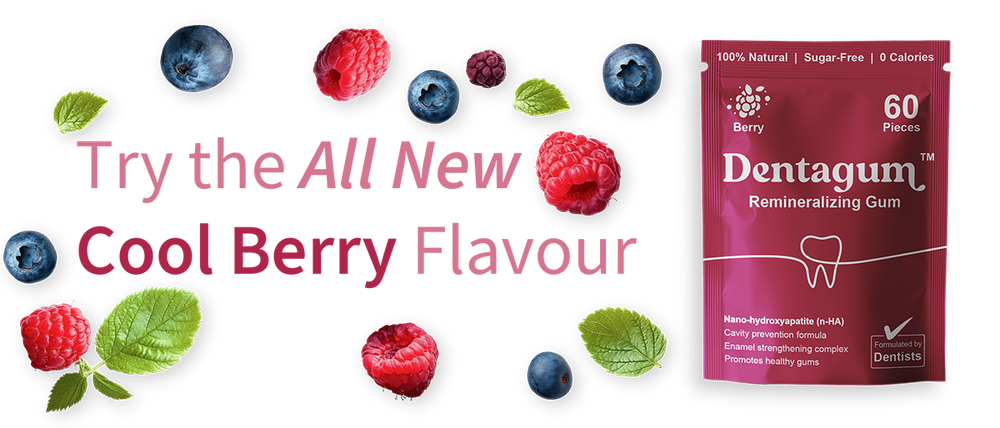
Dentagum's compact pouch format fits in a bag, desk drawer, jacket pocket, or laptop bag without taking meaningful space. Each pouch contains 60 pieces, providing around 15 to 30 days of consistent post-meal use depending on how many meals per day you're covering away from home. The formula combines the ADA-endorsed saliva stimulation mechanism with organic xylitol's active antibacterial effect against S. mutans, nano-hydroxyapatite for enamel mineral delivery during the chewing window, organic mastic gum and natural propolis for additional antibacterial coverage, and an organic chicle and mastic base that sustains the salivary stimulation without the synthetic polymer stickiness of conventional commercial gum.
At $0.55 per piece, covering lunch at work five days a week with one piece per lunch costs $2.75 per week. That's one of the lowest-cost oral health habits available for one of the highest-frequency oral health situations most people encounter.
For a complete picture of the clinical evidence behind the post-meal habit, our articles on Can Gum Help Neutralize Acids After Eating and Why Do I Get Cavities Even Though I Brush Twice a Day cover the mechanism and clinical evidence in depth.
Try Dentagum risk-free — 30-day guaranteeFrequently Asked Questions
What should I do for my teeth when I can't brush after eating?
Chew sugar-free gum for 20 minutes. The ADA explicitly states that "if you cannot brush your teeth immediately after a meal, then chewing gum can help." The saliva stimulation from chewing neutralizes post-meal acid, washes food debris from tooth surfaces, and delivers calcium and phosphate for enamel remineralization. Xylitol gum provides the additional benefit of actively reducing S. mutans bacteria. If gum isn't available, rinse vigorously with water for 30 seconds. These aren't substitutes for brushing but they meaningfully protect your teeth during the post-meal window when brushing isn't possible.
Is chewing gum after lunch as good as brushing?
No, but it's the best available alternative. Brushing provides mechanical plaque removal that gum cannot replicate. Gum provides acid buffering, saliva's antimicrobial proteins, and (with xylitol) active bacterial reduction that complements what brushing provides. Gum also provides enamel mineral delivery if it contains nano-hydroxyapatite. The right framing is that sugar-free gum after lunch when you can't brush is significantly better than doing nothing, and meaningful protective action rather than a compromise.
How long should you chew gum after eating?
The ADA recommends 20 minutes. This duration sustains the elevated salivary flow and mechanical effects long enough to meaningfully reduce the acid exposure window and support remineralization during the period when enamel is most receptive to mineral deposition. If 20 minutes isn't achievable in a given situation, 10 minutes still provides meaningful benefit. The key is starting the chewing immediately after finishing the meal, not waiting until the post-meal acid window is already partly through its course.
Does rinsing with water after meals help your teeth?
Yes, modestly. A vigorous 30-second water rinse after eating dilutes post-meal acid in the oral environment and dislodges food debris from tooth surfaces before it can fuel extended bacterial activity. It's significantly less effective than sugar-free gum because it doesn't stimulate the salivary surge that provides buffering, antimicrobial proteins, and mineral delivery. Water rinse is the best available option when gum isn't practical, and it's meaningfully better than doing nothing.
Is it bad to eat a mint or sugary gum after a meal instead of brushing?
For cavity prevention, yes. Sugary mints and sugary gum provide a brief fresh sensation and then leave a sugar substrate for cariogenic bacteria to metabolize into lactic acid. The post-mint oral environment has higher bacterial acid production than before the mint. For breath, the freshening effect is temporary and provides no protective value for enamel. Sugar-free gum with xylitol provides the breath freshening effect plus genuine oral health benefit. Sugary gum or mints provide the breath freshening effect while actively worsening the bacterial environment.
Can I chew gum instead of brushing my teeth?
No. The ADA is explicit that gum is not a substitute for the regular oral hygiene routine of twice-daily brushing with fluoride toothpaste and daily flossing. Gum cannot replicate the mechanical plaque disruption of brushing, which removes the mature biofilm that develops over hours on tooth surfaces. Gum is a post-meal bridge for the times when brushing genuinely isn't possible. It belongs in your routine alongside brushing and flossing, not instead of either.
The Bottom Line
The ADA has a direct answer for this situation: chewing sugar-free gum for 20 minutes after meals when you can't brush. Not a vague suggestion to try to brush more. A specific, evidence-backed alternative for the specific situation.
The mechanism is saliva. Chewing stimulates a surge of saliva that buffers post-meal acid faster than resting saliva alone, washes food debris from tooth surfaces, delivers minerals for remineralization, and carries antimicrobial proteins that directly inhibit cariogenic bacteria. Xylitol adds active bacterial killing on top of that. Nano-HAp adds targeted enamel mineral delivery during the chewing window.
The habit is straightforward: keep gum wherever you eat, not just wherever you brush. Chew immediately after finishing a meal for as long as the situation allows. Build the trigger around the moment of finishing eating rather than trying to remember later. For anyone eating lunch at a desk, traveling frequently, or in any other situation where post-meal brushing isn't realistic, this is the most evidence-backed, lowest-friction oral health habit available for that window.
Try Dentagum risk-free — 30-day guarantee at dentagum.coResearch Summary
- American Dental Association. Oral Health Topics: Chewing Gum. "If you cannot brush your teeth immediately after a meal, then chewing gum can help." Sugar-free gum endorsed for cavity prevention when brushing isn't possible. 20 minutes after meals recommended. Stimulates saliva to neutralize acids, wash away food particles.
- Multiple ADA-citing dental practice sources, 2024-2026. Chewing sugarless gum for 20 minutes after meals reduces tooth decay risk. Saliva delivers calcium and phosphate for remineralization. ADA Seal on sugar-free gum only.
- Clinical study on sugar-free gum, cited across dental practice reviews 2025. 32-37% improvement in plaque and gingival inflammation measures in 14-day trial of consistent post-meal gum use.
- Söderling E et al. BMC Oral Health, 2025. Xylitol gum significantly reduced S. mutans in 12/14 studies vs sorbitol. Active antibacterial advantage over sorbitol-only gum for post-meal bacterial management.
- Limeback H, Enax J, Meyer F. Biomimetics, 2023. 44 clinical trials. Contact time during chewing is key variable for nano-HAp effectiveness. Post-meal window is optimal for enamel mineral delivery.
- Ameritas / ADA guidance. Wait at least 30 minutes after acidic foods before brushing. Water rinsing, flossing, or chewing sugar-free gum are appropriate interim actions.
References
- American Dental Association. "Chewing Gum." Oral Health Topics. https://www.ada.org/resources/ada-library/oral-health-topics/chewing-gum
- "Does Chewing Gum Actually Help Clean Your Teeth?" Dental Associates, reviewed April 2026. https://www.dentalassociates.com/blog/does-chewing-gum-actually-help-clean-your-teeth
- "Brushing and Rinsing: Best Dental Hygiene Practices." Ameritas, 2025. https://www.ameritas.com/insights/brushing-and-rinsing-best-practices-for-dental-hygiene/
- Söderling E et al. "Specific Effects of Xylitol Chewing Gum on Mutans Streptococci Levels." BMC Oral Health, 2025. https://link.springer.com/article/10.1186/s12903-025-06602-1
- Limeback H, Enax J, Meyer F. "Clinical Evidence of Biomimetic Hydroxyapatite in Oral Care Products for Reducing Dentin Hypersensitivity." Biomimetics, 2023. https://pmc.ncbi.nlm.nih.gov/articles/PMC9844412/
