
Why Dentists Recommend Xylitol for Oral Health
Xylitol has decades of clinical research behind it, and dentists have taken notice. Here's why this sugar alcohol does things for your teeth that regular gum simply can't.

RESEARCH SUMMARY
- Söderling & Pienihäkkinen. "Effects of xylitol chewing gum and candies on the accumulation of dental plaque: a systematic review." Clinical Oral Investigations, 2021. Found xylitol gum reduces plaque mass more effectively than sorbitol gum across 14 fair-to-high quality studies.
- BMC Oral Health systematic review (published July 2025). Xylitol gum significantly decreased mutans streptococci counts in 12 of 14 studies compared with sorbitol gum.
- Loimaranta et al. "Xylitol and erythritol inhibit real-time biofilm formation of Streptococcus mutans." BMC Microbiology, 2020. Confirmed xylitol disrupts biofilm matrix composition and surface attachment quality of Streptococcus mutans.
- Evidence-Based Dentistry systematic review, 2024 (evaluating RCTs from 1974-2022). Xylitol chewing gum showed statistically significant caries-reducing effects across all 10 included chewing gum studies.
- Nayak et al. "The effect of xylitol on dental caries and oral flora." Clinical, Cosmetic and Investigational Dentistry, 2014. Documented xylitol's mechanism of disrupting Streptococcus mutans energy production, leading to a futile metabolic cycle and bacterial cell death.
- Canadian Dental Association. Sugar-free chewing gum guidance. Updated 2025.
Dentists recommend xylitol because it actively works against the bacteria that cause tooth decay, not just as a passive sugar replacement. Unlike regular sugar, xylitol can't be fermented by the harmful bacteria in your mouth, which disrupts their ability to survive, multiply, and damage your enamel. That's not a marketing claim. It's the conclusion of decades of peer-reviewed research.
If you've noticed "xylitol" on the label of your dentist-recommended gum, mints, or toothpaste, here's exactly why it's there and what it's actually doing when it enters your mouth.
What Is Xylitol?
Xylitol is a naturally occurring sugar alcohol found in small amounts in fruits, vegetables, and birch trees. It tastes sweet like sugar but behaves completely differently once it's in your mouth. Your body absorbs it slowly, it has about 40% fewer calories than regular sugar, and most importantly, the bacteria in your mouth can't ferment it.
That last part is the whole game.
When you eat regular sugar, the bacteria in your mouth (particularly Streptococcus mutans) feed on it, produce lactic acid, and that acid erodes your enamel. With xylitol, that process doesn't happen. The bacteria attempt to metabolize it, get stuck in a futile energy cycle that drains their resources, and eventually die off. Your mouth gets the sweetness. The bacteria get nothing useful.
What Does the Research Actually Say?
The evidence for xylitol is more robust than most dental ingredients you'll find on store shelves.
A 2021 systematic review published in Clinical Oral Investigations analyzed randomized controlled trials going back decades and found that habitual xylitol gum use reduces dental plaque mass more effectively than sorbitol gum or no gum at all. The review noted that xylitol's effect on plaque goes beyond the mechanical action of chewing, pointing to a specific antibacterial mechanism.
A separate systematic review published in BMC Oral Health in 2025 looked at 14 studies measuring xylitol's effect on mutans streptococci counts. In 12 of those 14 studies, xylitol gum significantly reduced mutans streptococci levels compared to sorbitol gum. That's a consistent signal across a large body of independent research.
What makes this particularly compelling is a 2024 review in Evidence-Based Dentistry that evaluated randomised controlled trials published between 1974 and 2022. Every single one of the 10 included studies on xylitol chewing gum showed a statistically significant caries-reducing effect. That's not a handful of promising studies. That's a wall of consistent evidence built over 50 years.
How Xylitol Actually Works Against Bacteria
Most people understand that xylitol is "tooth-friendly," but fewer know the precise mechanism, and it's worth understanding because it's genuinely clever biology.
Streptococcus mutans, the primary cavity-causing bacterium in your mouth, transports xylitol into its cells just as it would regular sugar. But once inside, the bacterium can't break it down. According to research published in Clinical, Cosmetic and Investigational Dentistry, this creates what's called a futile energy cycle: the cell burns energy trying to process something it can't metabolize, becomes exhausted, and dies. The bacterium is essentially tricked into working itself to death.
Beyond killing bacteria outright, xylitol also disrupts how Streptococcus mutans behaves at the structural level. Research from the University of Turku, published in BMC Microbiology in 2020, found that xylitol alters the composition of the biofilm matrix that bacteria use to stick to tooth surfaces. Less adhesion means less plaque formation. Less plaque means less acid. Less acid means less enamel erosion.
There's another benefit that often gets overlooked: xylitol does not appear to harm the beneficial bacteria in your mouth. A randomized, double-blind crossover trial found that habitual xylitol consumption reduced cariogenic streptococci without affecting protective streptococcal species like S. sanguinis, which is associated with caries-free tooth surfaces. That selectivity matters. You're not just clearing out bacteria indiscriminately. You're tipping the microbial balance in your mouth toward health.
What Form of Xylitol Works Best?
Not all xylitol products deliver the same results, and the research is clear on why.
Xylitol Gum
Chewing gum is the most studied and consistently effective delivery format. The act of chewing stimulates saliva production, which helps neutralize acid and remineralize enamel. Combined with xylitol's antibacterial action, you get a compounding effect. The Canadian Dental Association (updated guidance, 2025) recommends sugar-free gum, with xylitol being the standout ingredient for oral health benefit.
The 2021 Clinical Oral Investigations systematic review specifically noted that xylitol gum outperformed xylitol candies for plaque reduction, likely because of the saliva stimulation that comes with chewing. If you're going to use xylitol for oral health purposes, gum is your best format.
Xylitol Toothpaste and Rinses
Toothpaste containing xylitol gives you daily exposure during your brushing routine. While the contact time is shorter than gum (you're rinsing rather than chewing for five minutes), it still contributes to reducing the bacterial load in your mouth over time, and it complements your gum use rather than replacing it.
Xylitol Candies and Mints
These show more variable results in the literature. The 2021 systematic review found that xylitol candies did not produce statistically significant plaque reductions, though they likely still reduce acid exposure compared to sugary alternatives. Think of them as a better-than-nothing option, not a frontline tool.
How Much Xylitol Do You Need?
Dosage matters more than most people realize. The research on xylitol generally points to a minimum effective dose of around 5-6 grams per day, spread across multiple exposures rather than taken all at once.
That translates practically to chewing xylitol gum two to three times a day, ideally after meals. A typical xylitol gum piece contains about 1-1.5 grams of xylitol, so two pieces after each meal gets you into the effective range. Consistency matters more than quantity. Daily habitual use is what drives the reduction in Streptococcus mutans counts documented in the research. Occasional use won't produce the same results.
One thing worth knowing: very high amounts of xylitol can cause digestive discomfort in some people, particularly if you're not used to it. Starting with a moderate amount and building up is sensible. Your dentist can give you a personalised recommendation based on your oral health status.
Is Xylitol Safe?
Yes, for humans. It's been used in food and dental products for decades and is approved by regulatory bodies including the FDA. The ADA has long recognized xylitol as a non-cariogenic sweetener, meaning it doesn't contribute to tooth decay.
One important note if you have a dog: xylitol is highly toxic to dogs, even in small amounts. Keep xylitol products stored safely away from pets.
If you have any questions about incorporating xylitol products into your oral health routine, your dentist is the best person to guide you based on your individual risk factors and current oral health.
Why Dentist-Recommended Gum Tends to Contain Xylitol
When dentists recommend a specific gum for oral health, xylitol is typically the reason. It's not just that the gum is sugar-free. Plenty of sugar-free gums use sorbitol as the primary sweetener. Sorbitol can be fermented to a limited degree by oral bacteria, and the research consistently shows it underperforms compared to xylitol for plaque and bacterial reduction.
Xylitol gum labeled as dentist-recommended earns that description because the clinical evidence supports it specifically, not sugar-free gum as a general category.
[SOCIAL PROOF]
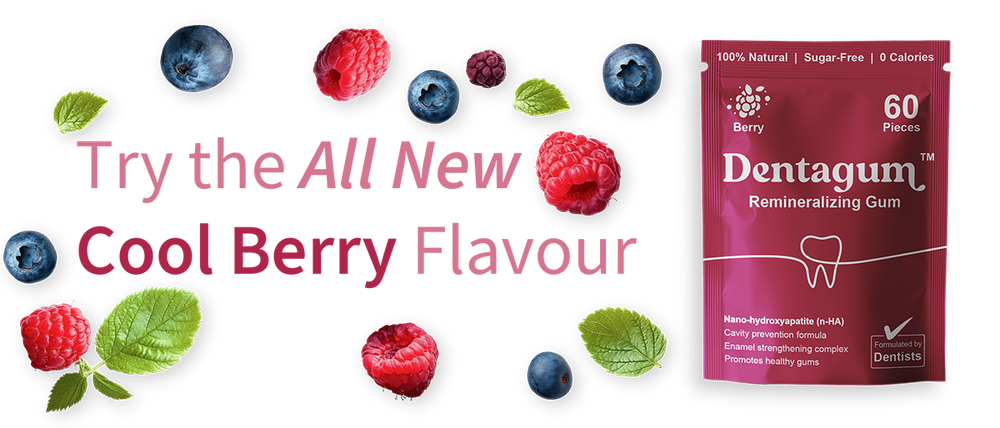
Explore our xylitol gum range, formulated with the clinically supported dose per piece to make hitting your daily target straightforward.
Frequently Asked Questions
What does xylitol do for your teeth?
Xylitol reduces the levels of Streptococcus mutans, the primary cavity-causing bacterium in your mouth. It does this by trapping bacteria in a futile metabolic cycle that drains their energy and causes cell death. It also disrupts bacterial adhesion to tooth surfaces, reducing plaque formation and the acid that erodes enamel.
How much xylitol per day do you need for oral health benefits?
Research points to a minimum of 5-6 grams per day, spread across multiple uses rather than taken all at once. Chewing two pieces of xylitol gum after each main meal is a practical way to reach this range consistently. Daily habitual use is what produces the bacterial reductions seen in clinical studies.
Is xylitol gum better than regular sugar-free gum?
Yes, when the alternative is sorbitol-based gum. Sorbitol can be partially fermented by oral bacteria and shows weaker results in head-to-head studies. Xylitol gum has consistently outperformed sorbitol gum for reducing mutans streptococci counts and plaque accumulation across multiple systematic reviews.
How long does it take for xylitol to reduce cavity-causing bacteria?
Clinical studies suggest that consistent daily xylitol use over several weeks begins to reduce Streptococcus mutans levels in saliva and plaque. The effect compounds with continued use. This isn't an overnight fix, it's a habit that gradually shifts the bacterial balance in your mouth toward a healthier state.
Can xylitol replace brushing and flossing?
No. Xylitol is a complement to your oral hygiene routine, not a replacement. Brushing twice daily with fluoride toothpaste, flossing, and regular dental check-ups remain the foundation of good oral health. Xylitol gum after meals adds meaningful antibacterial support on top of that foundation.
The Bottom Line
Xylitol has earned its place in dentist-recommended products the honest way: through consistent, replicable clinical evidence built over decades. It doesn't just avoid feeding harmful bacteria the way regular sugar does. It actively works against them, disrupting their energy production, reducing their adhesion to tooth surfaces, and lowering their overall counts in your mouth.
Gum is the best-studied delivery format, daily use matters more than occasional use, and 5-6 grams spread across the day is the dosage the research supports. If your gum has xylitol listed as the primary sweetener, your dentist's recommendation has science behind it.
References
- Söderling E, Pienihäkkinen K. "Effects of xylitol chewing gum and candies on the accumulation of dental plaque: a systematic review." Clinical Oral Investigations, 2021. https://www.ncbi.nlm.nih.gov/pmc/articles/PMC8791908/
- Söderling E et al. "Specific effects of xylitol chewing gum on mutans streptococci levels, plaque accumulation and caries occurrence: a systematic review." BMC Oral Health, 2025. https://link.springer.com/article/10.1186/s12903-025-06602-1
- Loimaranta V, Mazurel D, Deng D, Söderling E. "Xylitol and erythritol inhibit real-time biofilm formation of Streptococcus mutans." BMC Microbiology, 2020. https://www.ncbi.nlm.nih.gov/pmc/articles/PMC7325245/
- Evidence-Based Dentistry. "Do chewing gums and sweets containing xylitol prevent caries in children?" 2024. https://www.nature.com/articles/s41432-024-01018-2
- Nayak PA, Nayak UA, Khandelwal V. "The effect of xylitol on dental caries and oral flora." Clinical, Cosmetic and Investigational Dentistry, 2014. https://www.dovepress.com/the-effect-of-xylitol-on-dental-caries-and-oral-flora-peer-reviewed-fulltext-article-CCIDE
- Canadian Dental Association. "Sugar-free chewing gum." Updated 2025. https://www.cda-adc.ca/en/oral_health/cfyt/gum/index.asp
