
Why Aspartame-Free Gum Is Trending in Oral Wellness
In July 2023, the WHO's cancer research agency classified aspartame as possibly carcinogenic. Since then, the search for gum without aspartame has surged. Here's what the science says and what the better alternatives actually are.

Something shifted in July 2023. The World Health Organization's cancer research arm classified aspartame, the artificial sweetener found in most mainstream sugar-free gum, as "possibly carcinogenic to humans." The ruling was nuanced, based on limited evidence, and did not change daily intake recommendations. But for millions of consumers already scrutinizing ingredient labels, it was enough to prompt a serious rethink.
The result has been a visible and sustained shift toward gum without aspartame, driven not just by the WHO news, but by a broader cultural move toward ingredient transparency in everything people put in their mouths daily. This article looks at what the science actually says, why the trend is bigger than one headline, and what alternatives are worth reaching for instead.
What Is Aspartame and Where Does It Show Up in Gum?
Aspartame is a synthetic artificial sweetener approximately 200 times sweeter than sugar. It's been used in food and beverage products since the 1980s and appears in thousands of products including diet sodas, dairy desserts, medications, and chewing gum. In the gum category specifically, it's one of the most common sweetening agents, used to deliver sweetness without the sugar that feeds cavity-causing bacteria.
The appeal from a manufacturing standpoint is obvious. Aspartame is cheap to produce, intensely sweet in tiny quantities, and calorie-free. For decades, it sat comfortably within regulatory limits and was classified as safe by the FDA and other bodies globally.
That picture became more complicated in 2023.
What the WHO Classification Actually Means
In July 2023, the International Agency for Research on Cancer (IARC), the WHO's cancer research body, classified aspartame as Group 2B: "possibly carcinogenic to humans." The classification was based on limited evidence from human studies, primarily observational data linking aspartame consumption to hepatocellular carcinoma (liver cancer), alongside animal studies.
It's worth being precise about what Group 2B means. It is the third of four hazard levels, sitting below Group 2A (probably carcinogenic) and Group 1 (carcinogenic). Group 2B includes substances where there is some evidence of a link, but not enough consistent data to draw firm conclusions. Coffee was classified as Group 2B from 1991 until 2016, when it was removed after further evidence failed to confirm the association.
At the same time, JECFA, the joint WHO and FAO committee that evaluates food additives, reviewed the same body of evidence and reaffirmed the acceptable daily intake of 40mg/kg body weight, roughly equivalent to 9 to 14 cans of diet soda per day for a 70kg adult. The FDA did not change its safety classification following the IARC announcement.
Experts at Harvard T.H. Chan School of Public Health noted that the cancer risk associated with aspartame "has not been well studied" because measuring exact consumption levels in real populations is genuinely difficult. The science is unsettled, not damning.
That said, unsettled is exactly where many health-conscious consumers stop and ask: if there are alternatives without this uncertainty, why not choose them?
Why the Trend Is About More Than One Classification
The aspartame story doesn't exist in isolation. It's part of a broader ingredient-consciousness movement that has reshaped how a significant portion of consumers approach packaged food and personal care products.
The same consumers reading aspartame labels are also checking for artificial colors, synthetic preservatives, and petroleum-derived gum bases. They're comparing products across TikTok, Reddit, and wellness communities where ingredient scrutiny has become a near-sport. For this group, the IARC classification wasn't a revelation. It was confirmation of a direction they were already moving.
The oral wellness category has felt this particularly acutely. Gum sits in an unusual position: it's consumed multiple times daily, the ingredients are in sustained contact with oral tissues, and it's often marketed as a health-positive behavior. The gap between "sugar-free" as a health claim and "actually good for you" has become increasingly obvious to a more ingredient-savvy audience.
Searches for gum without aspartame climbed noticeably after July 2023 and have stayed elevated. The demand isn't fading. It's becoming a baseline expectation for a growing segment of the market.
The Honest Picture on Aspartame in Gum Specifically
Here's something the trend conversation often skips: the amounts of aspartame in chewing gum are genuinely small. A typical piece of gum contains roughly 6 to 8mg of aspartame. To hit the JECFA acceptable daily intake for a 70kg adult, you'd need to chew around 350 pieces in a single day.
For most people, aspartame in gum is not a meaningful exposure risk at current intake recommendations. The FDA's position hasn't changed, and scientists at Harvard and other institutions have been clear that the IARC classification reflects limited evidence rather than established harm.
Why does this matter? Because honest content builds trust. The trend toward aspartame-free gum is legitimate and worth taking seriously, but the case for switching doesn't require overstating what the science says. The real argument isn't that aspartame in gum will hurt you. It's that alternatives exist which do more for your oral health, taste just as good, and come with none of the ongoing debate attached.
What the Better Alternatives Actually Do
Swapping aspartame for a natural sweetener doesn't just remove an ingredient people are uncomfortable with. The best replacements actively support oral health in ways aspartame never did.
Organic Xylitol
Xylitol is a sugar alcohol derived from plants including birch trees, corn cobs, and various fruits and vegetables. It's been used in oral care for decades and has a strong evidence base behind it.
Its mechanism against cavity-causing bacteria is specific and well-documented. Streptococcus mutans, the primary cariogenic bacterium in the mouth, transports xylitol into its cells expecting to metabolize it. It can't. The futile energy cycle exhausts the bacterium and leads to cell death. Bacteria that repeatedly encounter xylitol lose their ability to adhere to tooth surfaces, reducing plaque formation over time.
A 2022 systematic review published in Clinical Oral Investigations found that xylitol gum decreased plaque accumulation in 13 of 14 randomized controlled clinical trials reviewed. Unlike aspartame, no research has linked xylitol at gum-dose levels to serious health issues.
One note worth including: a 2024 study published in the European Heart Journal found that elevated circulating xylitol levels in blood were associated with higher cardiovascular event risk in a study of over 1,000 individuals. This finding generated significant coverage. The important context is that it reflects xylitol consumed in large quantities across processed foods, not the small amounts in a piece of gum. The authors did not conclude that gum use posed a cardiovascular risk. As with any ingredient, using it as intended and at reasonable levels is the relevant frame.
Organic Erythritol
Erythritol is another sugar alcohol with strong oral health credentials. Research published in PMC found that erythritol effectively decreased dental plaque weight, inhibited S. mutans adhesion to tooth surfaces, and reduced the overall number of dental caries. The same review concluded that erythritol demonstrated better efficacy than sorbitol and comparable results to xylitol for improving oral health endpoints.
Erythritol has approximately zero calories, is absorbed and excreted without significant metabolic processing, and has a substantial safety record established in toxicology studies going back decades. Similar cardiovascular questions were raised about erythritol in 2023, again in the context of high dietary exposure rather than gum use specifically. The same principle applies: dose and context matter.
The combination of xylitol and erythritol in a single gum formula gives you complementary antibacterial mechanisms working together, with better tolerability for most people than either alone.
What About Stevia?
Stevia is a plant-derived sweetener increasingly used as an aspartame alternative in gum. It's FDA-approved, calorie-free, and non-cariogenic. A 2025 study published in PMC confirmed that stevia can successfully replace aspartame in gum formulation without affecting texture or structural properties. It doesn't have the specific antibacterial mechanism that xylitol provides, so it functions more as a clean sweetener than an active oral health ingredient. Still, as a flavoring agent in a gum that leads with xylitol or erythritol, it's a solid choice.
Why the Gum Base Matters Too
Consumers switching away from aspartame often discover that the sweetener wasn't the only questionable ingredient. Most commercial chewing gum uses a synthetic petroleum-derived polymer base. It's the material that gives gum its chewable texture, and it's made from the same family of compounds used in rubber production.
Natural alternatives exist and are increasingly available. Chicle, derived from the sap of the sapodilla tree, is the original chewing gum material used for centuries in Mesoamerica and by early commercial gum manufacturers before synthetic bases took over. Mastic gum, from the Pistacia lentiscus tree, serves a similar function and brings its own antibacterial and anti-inflammatory properties to the formula.
For consumers motivated by ingredient consciousness, switching from aspartame gum to a gum with a natural base is a logical next step once they've started reading labels.
What to Look for in a Genuinely Healthier Gum
Not everything marketed as aspartame-free or natural delivers real oral health benefit. Here's a practical checklist.
Primary sweetener: Organic xylitol or erythritol, not sorbitol (which can be partially fermented by oral bacteria) and not just stevia alone.
Gum base: Chicle or mastic gum rather than synthetic polymer.
No artificial sweeteners at all: Check for acesulfame potassium (Ace-K), sucralose, and saccharin alongside aspartame. They're all synthetic alternatives that appear in many "aspartame-free" products.
Active ingredients: Nano-hydroxyapatite for remineralization, mastic gum for antibacterial properties, and propolis for gum health move a gum from "not harmful" to "actively beneficial."
Third-party tested: Brands willing to have their formulas independently verified are making a verifiable commitment to what's in the product.
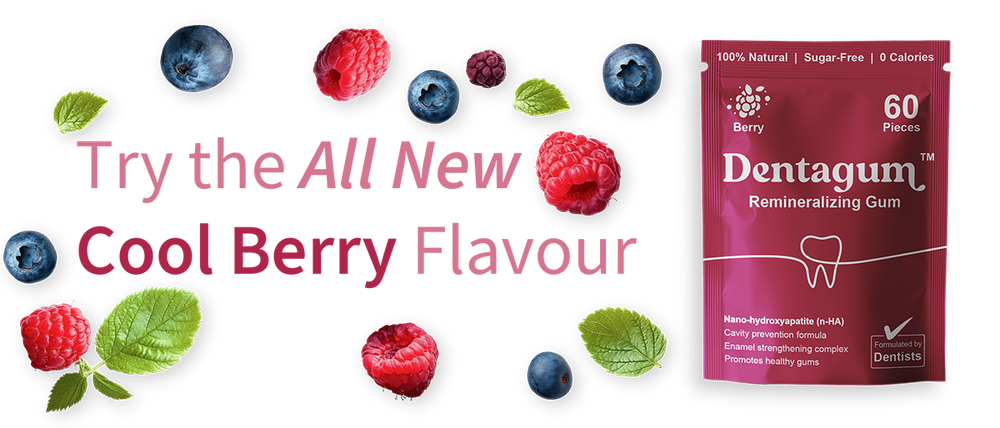
Dentagum's Remineralizing Chewing Gum contains no aspartame, no synthetic sweeteners, and no petroleum-derived gum base. It's sweetened with organic xylitol and organic erythritol, built on an organic chicle base, and formulated with nano-hydroxyapatite, mastic gum, natural propolis, and organic eggshell powder. Dentist-formulated and 3rd-party tested. In Dentagum's own clinical data, 87% of participants were less susceptible to cavities compared to non-users with consistent daily use. Try it risk-free with a 30-day guarantee at dentagum.co.
Frequently Asked Questions
Why is aspartame-free gum trending?
The main driver was the WHO's IARC classifying aspartame as "possibly carcinogenic" in July 2023, based on limited evidence from human studies. Combined with a broader consumer shift toward ingredient transparency and natural oral care products, demand for gum without aspartame has grown steadily since. The trend reflects both the specific WHO news and a wider appetite for products people feel genuinely comfortable putting in their mouths daily.
Is aspartame in chewing gum actually dangerous?
At typical gum consumption levels, the exposure is very small. A standard piece of gum contains around 6-8mg of aspartame, and the JECFA acceptable daily intake for a 70kg adult is 2,800mg. The FDA has not changed its safety classification. The IARC's "possibly carcinogenic" classification reflects limited evidence rather than confirmed harm. The case for switching isn't that aspartame in gum will hurt you. It's that better alternatives exist with stronger oral health benefits and no ongoing scientific debate attached.
What sweeteners should I look for in aspartame-free gum?
Organic xylitol is the standout option, with strong clinical evidence for reducing cavity-causing bacteria and plaque accumulation. Organic erythritol is an effective complement with its own antibacterial properties. Stevia is a clean natural sweetener without the specific oral health mechanism of xylitol, but is a solid ingredient in a formula that leads with xylitol or erythritol. Avoid gums that simply swap aspartame for sorbitol, acesulfame potassium, or sucralose.
Does xylitol gum actually clean teeth better than aspartame gum?
Yes, meaningfully. Aspartame is a passive sweetener with no active effect on oral bacteria. Xylitol actively disrupts the metabolism of Streptococcus mutans, the primary cavity-causing bacterium, reducing bacterial counts and plaque accumulation over time. A 2022 systematic review found xylitol gum decreased plaque in 13 of 14 clinical trials reviewed. Aspartame has no equivalent evidence in oral health benefit.
What else should I check when buying aspartame-free gum?
Look at the gum base. Most commercial gum, including many marketed as natural or aspartame-free, uses a synthetic petroleum-derived base. Natural alternatives like chicle or mastic gum are cleaner options. Also check for other synthetic sweeteners that commonly appear in aspartame-free products: acesulfame potassium, sucralose, and saccharin are all artificial alternatives worth avoiding if clean ingredients matter to you.
Is xylitol gum safe for children?
Yes, at appropriate amounts. Xylitol is non-toxic in the small quantities found in gum, and is particularly well-suited to children because it actively reduces the cavity-causing bacteria that children are most vulnerable to. One important note: xylitol is highly toxic to dogs, even in small amounts. Keep any xylitol-containing product well out of reach of pets.
In Conclusion
The shift toward aspartame-free gum reflects something real: a growing segment of consumers who want to understand what they're putting in their mouths and choose products that actively support their health rather than just avoid doing obvious harm.
The science on aspartame doesn't support panic. At gum doses, current evidence doesn't establish a meaningful risk. But the question of whether to chew something with a contested classification when genuinely better alternatives exist has a pretty straightforward answer for most people.
Xylitol, erythritol, and clean natural gum bases don't just remove an ingredient people are uncomfortable with. They replace it with ingredients that actively reduce cavity-causing bacteria, support remineralization, and contribute to long-term oral health. That's not a marketing claim. It's where the clinical evidence consistently points.
Dentagum's Remineralizing Chewing Gum is dentist-formulated with organic xylitol, organic erythritol, nano-hydroxyapatite, and mastic gum, with no aspartame, no synthetic sweeteners, and no artificial anything. Try it risk-free with a 30-day guarantee at dentagum.co.
References
- World Health Organization / IARC. "Aspartame Hazard and Risk Assessment Results Released." July 2023. https://www.who.int/news/item/14-07-2023-aspartame-hazard-and-risk-assessment-results-released
- Harvard T.H. Chan School of Public Health. "Aspartame's Cancer Risk Unclear." July 2023. https://hsph.harvard.edu/news/aspartame-cancer-risk-unclear/
- U.S. Food and Drug Administration. "Aspartame and Other Sweeteners in Food." Updated 2023. https://www.fda.gov/food/food-additives-petitions/aspartame-and-other-sweeteners-food
- Söderling E, Pienihäkkinen K. "Effects of Xylitol Chewing Gum and Candies on the Accumulation of Dental Plaque: A Systematic Review." Clinical Oral Investigations, 2022. https://link.springer.com/article/10.1007/s00784-021-04225-8
- Mäkinen KK et al. "Erythritol Is More Effective Than Xylitol and Sorbitol in Managing Oral Health Endpoints." International Journal of Dentistry, 2016. https://www.ncbi.nlm.nih.gov/pmc/articles/PMC5011233/
- Witkowski M et al. "Xylitol Is Prothrombotic and Associated With Cardiovascular Risk." European Heart Journal, 2024.
- "Developing Sugar-Free Chewing Gum With Stevia as an Aspartame Alternative." PMC, 2025. https://pmc.ncbi.nlm.nih.gov/articles/PMC12079022/
