
What Mouth Breathing Is Doing to Your Oral Health
If you regularly wake up with a dry mouth, bad breath, or sensitive teeth, your breathing pattern at night might be the reason. Here's what mouth breathing does to your oral health, why it matters more than most people think, and what you can do about it.

Waking up with a dry, sticky mouth is easy to dismiss. You drink some water, brush your teeth, and get on with the day. But if it's happening regularly, your mouth is telling you something worth listening to.
Chronic mouth breathing, particularly during sleep, quietly undermines your oral health in ways that don't become obvious until the damage has already accumulated. Higher cavity rates. Inflamed gums. Accelerated enamel erosion. Persistent bad breath that doesn't respond to brushing. These aren't random or unrelated. They're connected, and they trace back to one mechanism: the absence of adequate saliva.
Understanding what mouth breathing actually does to your oral environment, and why saliva's role is so central to all of it, gives you a clearer picture of what's happening and what genuinely helps.
How Common Mouth Breathing Actually Is
Most people assume they breathe through their nose. Many of them are wrong, at least some of the time.
A 2020 study found that 17.2% of adults mouth breathe at least some of the time. Prevalence in children ranges from 11% to 56% depending on the population studied, according to a 2022 concise review published in Frontiers in Public Healthfrom Wuhan University. These figures are almost certainly underestimates, because most people have no idea they're doing it during sleep. You can't observe your own breathing pattern at night, and mouth breathing rarely wakes you up or produces the kind of obvious symptoms that prompt a doctor's visit.
The signs often show up at the dentist instead.
What Mouth Breathing Does to Your Oral Environment
The core problem is dehydration of the oral mucosa. When you breathe through your mouth, airflow evaporates the thin film of saliva coating your teeth, gums, and soft tissues. Do this for eight hours every night and you wake up in a genuinely compromised oral environment.
This matters because saliva isn't just moisture. It's a sophisticated biological system that does several critical jobs simultaneously. It buffers acid, neutralizing the pH drops that drive enamel demineralization. It delivers calcium and phosphate ions that continuously repair microscopic mineral loss from enamel. It contains antimicrobial proteins including lysozyme and lactoferrin that suppress bacterial populations. It forms the acquired pellicle, a protective protein film that coats enamel and slows acid attack. And it physically washes away food debris and loose bacteria, maintaining a cleaner oral environment between brushing sessions.
When mouth breathing reduces saliva flow, all of these functions are compromised at once. The oral environment becomes drier, more acidic, more bacterially active, and more vulnerable to the exact conditions that drive cavities, gum disease, and enamel erosion.
The Cavity Connection
Saliva's most immediate protective function is acid buffering. After eating, bacteria in dental plaque produce lactic acid that drops oral pH below 5.5, the threshold at which enamel begins to lose mineral. Saliva's bicarbonate system neutralizes that acid and restores pH to a safe range, typically within 20 to 40 minutes.
During sleep, eating has stopped. But oral pH isn't simply neutral and stable while you sleep. The bacteria in your plaque continue their metabolic activity, and without stimulated saliva flow to buffer their output, the oral environment remains more acidic overnight than it would in someone with adequate nasal breathing and salivary function.
Research on mouth-breathing adolescents found a measurable reduction in salivary buffering capacity alongside elevated Streptococcus mutans counts compared to nasal-breathing controls. S. mutans is the primary cavity-causing bacterium in the human mouth, and studies have found mouth breathers are up to four times more likely to develop high levels of S. mutans colonies than people who breathe nasally. More bacteria, weaker acid buffering, and a drier environment overnight is a combination that accumulates into a meaningfully higher cavity rate over time.
The Gum Disease Risk
Gum disease starts with gingival inflammation, and gingival inflammation is driven by bacteria in plaque that haven't been adequately controlled. Saliva's antimicrobial proteins normally help keep this bacterial load in check. Reduce saliva flow through chronic mouth breathing, and the bacterial population around the gumline has more room to grow.
The physical drying of the gum tissue itself is also a factor. Dry gums become more susceptible to irritation and infection. Chronically dry gingival tissue shows measurable changes in its immune response to bacterial challenge. Researchers have concluded that mouth breathing increases the risk of developing periodontal disease specifically through the mechanism of reduced saliva and its protective effects.
In clinical practice, dentists often see a characteristic pattern in mouth-breathing patients: inflamed gums concentrated in the upper front of the mouth, where airflow is most direct during oral breathing, with less inflammation further back. That regional pattern, more inflammation in the area most exposed to airflow, is a clinical signal that how someone breathes may be contributing to how their gums look.
Enamel Erosion and Sensitivity
Chronic dryness changes the chemistry of the oral environment over time. Without adequate saliva continuously delivering calcium and phosphate to enamel surfaces, the natural remineralization cycle that repairs daily acid-driven mineral loss becomes impaired. Enamel that should be replacing lost mineral every day isn't doing so at the rate it needs to.
The result is gradual net mineral loss that accumulates into enamel thinning. Thinned enamel is more susceptible to further acid erosion, more prone to sensitivity because the dentinal tubules beneath it are closer to the surface, and less capable of protecting the tooth from the bacterial and acid challenges it faces every day.
Sensitivity to cold, heat, or sweet foods, particularly in the morning, is often connected to overnight mouth breathing because that's when the protective saliva film is absent for the longest uninterrupted period. Eight hours of reduced saliva flow means eight hours during which enamel is receiving less mineral support and gum tissue is more vulnerable to inflammation.
The Bad Breath Nobody Tells You About
Bad breath linked to mouth breathing is one of the most persistent and frustrating oral health complaints, because it often doesn't fully respond to brushing, flossing, or mouthwash.
Saliva has a constant physical cleansing action, washing bacterial metabolic byproducts and food debris away from teeth and soft tissues. When mouth breathing reduces this cleansing flow overnight, volatile sulfur compounds produced by bacteria accumulate on the tongue, between teeth, and in the soft tissue folds of the mouth. These are the primary source of breath odor.
People who wake up with significant morning breath despite excellent oral hygiene routines often find that treating the mouth breathing itself, rather than adding more oral hygiene products, is what actually makes the difference. You can brush and rinse after the fact, but you can't undo eight hours of bacterial accumulation in a dry, low-saliva environment.
What Causes Mouth Breathing
Understanding the cause matters because different causes have different solutions, and treating the symptom without addressing the root isn't effective long-term.
Nasal obstruction is the most common structural driver. Allergies, a deviated septum, nasal polyps, or chronic sinusitis all reduce nasal airflow and force compensatory oral breathing. Enlarged adenoids and tonsils are the most common cause in children.
Habit is the next most common driver in adults. Even after a structural obstruction is resolved, the breathing pattern can persist because it's become an unconscious default. Functional nasal breathing needs to be consciously re-established.
Sleep position plays a role. Sleeping on your back allows the jaw to drop open, facilitating oral breathing regardless of nasal patency. Side sleeping tends to reduce mouth breathing naturally.
Sleep-disordered breathing including obstructive sleep apnea is both a cause and a consequence of mouth breathing. A 2025 umbrella review found that mouth breathing may act as both a predisposing and aggravating factor for obstructive sleep apnea, while OSA itself may contribute to the persistence of the breathing pattern. If you snore, wake frequently, or feel unrefreshed after sleeping, an ENT evaluation is worth pursuing.
Stress and anxiety temporarily reduce nasal airflow through nasal congestion driven by the sympathetic nervous system, encouraging oral breathing during waking hours.
The Signs Worth Paying Attention To
Many people don't know they're mouth breathing until someone tells them or until a dentist notices the oral signs. Some things to look for:
Waking up with a noticeably dry mouth, a sticky or coated feeling on the tongue, or cracked lips. Morning breath that's significantly worse than it is after meals. Sensitivity that's worse in the morning. Gum inflammation or bleeding concentrated around the upper front teeth. Snoring or restless sleep reported by a partner. Fatigue despite what appears to be adequate sleep duration.
In children, the signs can include the characteristic "adenoid face" with a slightly open-mouthed resting posture, dark circles under the eyes, and in more pronounced cases changes in facial development over time if the pattern is not addressed. A 2022 review from Wuhan University confirmed that uncorrected mouth breathing in children can result in abnormal dental and maxillofacial development if left untreated.
None of these symptoms alone is diagnostic. But several of them together, particularly in combination with consistent morning dry mouth, is a pattern worth bringing to both your dentist and your GP or ENT.
How to Support Your Oral Health If You Mouth Breathe
Addressing the underlying cause of mouth breathing is the most important step. But while you're working on that, there are practical habits that support your oral health in the meantime and reduce the damage accumulation.
Hydration throughout the day. Adequate fluid intake supports salivary gland function. Sipping water regularly during waking hours improves the baseline moisture level your oral tissues start the night with.
Nasal breathing practices during the day. Consciously breathing through your nose during waking hours, including during exercise where oral breathing is tempting, helps re-establish the habit and supports nasal mucosa health.
Humidification overnight. A bedroom humidifier doesn't restore salivary flow, but it reduces the rate at which oral tissues dehydrate during sleep. It's a supportive measure, not a solution.
Supporting saliva production after meals. Chewing sugar-free xylitol gum after meals stimulates salivary flow to 10 to 12 times the resting rate, according to the ADA. For people whose salivary function is compromised by chronic dry mouth, that post-meal stimulus is particularly valuable. It accelerates acid neutralization at exactly the time when oral pH is at its lowest, and it delivers the remineralizing minerals that chronic dry mouth conditions make less available.
Xylitol's specific role here matters. As well as stimulating saliva mechanically through chewing, xylitol actively reduces the S. mutans population that chronic mouth breathing tends to allow to flourish. For people whose oral environment skews more acidic and more bacterially active because of how they breathe, xylitol gum is one of the most practical and clinically supported habits they can add.
Nano-hydroxyapatite complements this by delivering enamel mineral directly during the chewing window, supporting the remineralization cycle that dry mouth conditions impair. A formula that combines both, alongside mastic gum and propolis for antibacterial support, is doing meaningful work for exactly the oral environment that mouth breathing creates: lower saliva, higher bacterial activity, and reduced natural remineralization capacity.
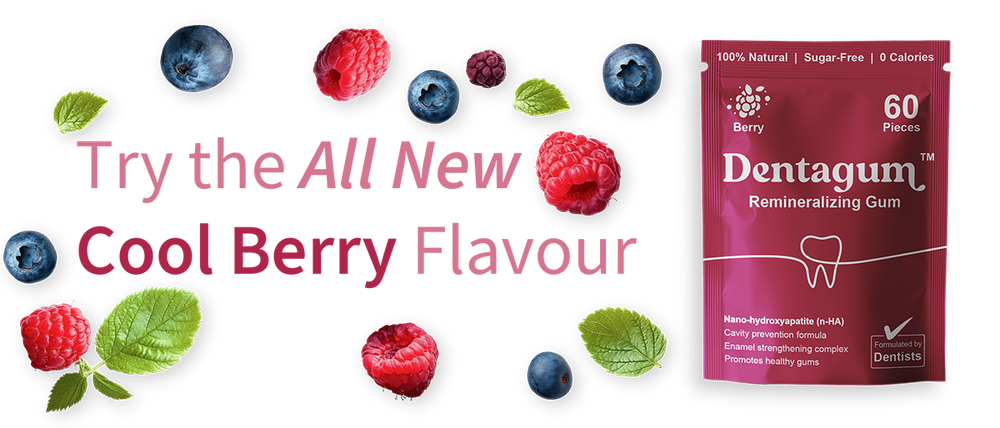
Dentagum's Remineralizing Chewing Gum combines organic xylitol, nano-hydroxyapatite, organic mastic gum, and natural propolis in an organic chicle base, designed to be chewed for 10 to 20 minutes after meals. For people dealing with the oral health consequences of mouth breathing, it fits directly into the post-meal window when saliva support matters most. In Dentagum's own clinical data, 91% of participants reported significant reduction in cold sensitivity and 79% experienced a clinical reduction in gum inflammation with consistent daily use. Try it risk-free with a 30-day guarantee at dentagum.co.
When to See a Professional
If you suspect mouth breathing is affecting your oral health or your sleep, three types of professionals are worth seeing.
Your dentist can assess the oral signs of chronic mouth breathing and recommend specific protective strategies for your teeth and gums. They can also refer you to the appropriate specialist.
An ENT specialist (ear, nose, and throat) can diagnose the structural cause of your mouth breathing and discuss treatment options including medication, allergy management, or surgical correction where appropriate.
A sleep specialist is worth consulting if you snore, experience significant fatigue, or have a partner reporting breath-holding or gasping during sleep. Obstructive sleep apnea is a serious medical condition with consequences well beyond oral health, and the relationship between mouth breathing and OSA runs in both directions.
Self-diagnosing and self-treating is not the right approach for chronic mouth breathing, because the causes are varied and some of them, like sleep apnea, need proper medical evaluation. What you can do in the meantime is support your oral health as actively as possible while getting the right professional input.
Frequently Asked Questions
Does mouth breathing cause cavities?
Yes, through a well-documented mechanism. Mouth breathing reduces salivary flow and buffering capacity, lowering oral pH and creating a more acidic environment where Streptococcus mutans thrives. Research has found mouth breathers are up to four times more likely to develop high S. mutans colonies compared to nasal breathers, and studies link mouth breathing with nearly double the risk of cavities and gingivitis. The mechanism is primarily the absence of saliva's acid-buffering and antimicrobial functions.
What are the signs of mouth breathing at night?
The most common signs are waking with a dry, sticky mouth or coating on the tongue, significantly worse morning breath than at other times of day, cracked or dry lips upon waking, morning tooth sensitivity, and inflamed gums particularly around the upper front teeth where airflow is most direct during oral breathing. Partners may report snoring or observed oral breathing during sleep. Persistent fatigue despite adequate sleep duration can also indicate sleep-disordered breathing connected to mouth breathing.
Can mouth breathing cause gum disease?
Yes. Chronic mouth breathing reduces the saliva that normally suppresses bacterial populations around the gumline. The physical drying of gum tissue also increases its susceptibility to infection and inflammation. Researchers have concluded that mouth breathing increases the risk of developing periodontal disease through the saliva-reduction mechanism. Dentists often observe a characteristic pattern of gum inflammation in the upper front of the mouth in mouth-breathing patients.
Does chewing gum help with dry mouth from mouth breathing?
Yes, within limits. Chewing sugar-free xylitol gum stimulates salivary flow to 10 to 12 times the resting rate during the chewing session. For people with dry mouth from mouth breathing, this provides a meaningful saliva stimulus after meals when oral pH is at its lowest. Xylitol also actively reduces the S. mutans bacteria that tend to proliferate in dry-mouth conditions. Chewing gum doesn't address the underlying cause of mouth breathing, but it supports the oral environment that chronic dry mouth compromises.
What causes mouth breathing?
The most common cause is nasal obstruction from allergies, a deviated septum, nasal polyps, chronic sinusitis, or enlarged adenoids and tonsils in children. Habitual oral breathing can persist even after structural causes are resolved. Sleep position, particularly sleeping on the back, facilitates mouth opening. Obstructive sleep apnea is both a cause and consequence of mouth breathing. Stress and anxiety can temporarily reduce nasal airflow and encourage oral breathing during waking hours.
Is mouth breathing harmful to children's teeth?
Yes, and the developmental consequences in children can extend beyond the teeth. A 2022 review from Wuhan University published in Frontiers in Public Health confirmed that uncorrected mouth breathing can result in abnormal dental and maxillofacial development in children, including malocclusion and changes in jaw shape. The oral health consequences, including higher cavity and gum disease risk through the same saliva-reduction mechanism as in adults, are also present. Early evaluation by a dentist or ENT is recommended if mouth breathing is suspected in a child.
The Bottom Line
Mouth breathing is more than a breathing pattern. It's a chronic modification of your oral environment that removes or reduces the protective systems your teeth and gums depend on every day. Less saliva means less acid buffering, less antimicrobial activity, less mineral delivery to enamel, and a drier environment where bacteria thrive and gum tissue becomes more vulnerable.
The damage accumulates quietly. By the time it shows up as a cavity, inflamed gums, visible enamel erosion, or persistent sensitivity, it's usually been building for a long time.
The right response is addressing the cause, with your dentist, ENT, or sleep specialist, while actively supporting your oral health in the meantime. Staying well hydrated, practicing nasal breathing during the day, and using a well-formulated xylitol and nano-hydroxyapatite gum after meals are practical habits that work with your oral biology rather than simply treating symptoms.
Dentagum's Remineralizing Chewing Gum is dentist-formulated with organic xylitol, nano-hydroxyapatite, and mastic gum, designed to be chewed for 10 to 20 minutes after meals. Try it risk-free with a 30-day guarantee at dentagum.co.
RESEARCH SUMMARY
- Lin L et al. "The Impact of Mouth Breathing on Dentofacial Development: A Concise Review." Frontiers in Public Health, 2022. Wuhan University. Mouth breathing prevalence ranges from 11% to 56% in children. Uncorrected mouth breathing results in abnormal dental and maxillofacial development. Often results from upper airway obstruction, enlarged adenoids or tonsils.
- Mummolo S et al. "Salivary Markers and Microbial Flora in Mouth Breathing Late Adolescents." PMC, 2018. 6-month case-control study. Mouth breathing adolescents showed reduction of salivary buffering capacity and flow rate. Associated with increased S. mutans and Lactobacilli colonization.
- Katy Gentle Dentists clinical review, 2026. Studies link mouth breathing with nearly double the risk of cavities and gingivitis compared to nasal breathing. Clinical signs include dry cracked lips, inflamed gums, coated tongue, and faster progression of enamel erosion.
- White Tooth Dental / mouth breathing adults review, 2025. Chewing stimulates salivary flow to 10-12 times resting rate. Mouth breathing dramatically reduces saliva flow and its protective benefits, creating open invitation for dental problems.
- OrthoTech / Orthopracticeus. Mouth breathing contributes to gum disease, dental cavities, and bad breath. Prevalence understudied but a 2020 study reported 17.2% of adults mouth breathe at least some of the time.
- Umbrella review. MDPI, 2025. Mouth breathing may act as both a predisposing and aggravating factor for obstructive sleep apnea, while OSA itself may contribute to persistence of the breathing pattern.
- ADA. Saliva increases to 10-12 times resting rate when chewing gum. Sugar-free gum chewed for 20 minutes after meals neutralizes plaque acid and supports enamel remineralization.
- Limeback H, Enax J, Meyer F. Biomimetics, 2023. HAP significantly reduced dentin hypersensitivity by 39.5% vs placebo. HAP in gum format reduced hypersensitivity 6-80% vs placebo.
References
- Lin L et al. "The Impact of Mouth Breathing on Dentofacial Development: A Concise Review." Frontiers in Public Health, 2022. https://www.ncbi.nlm.nih.gov/pmc/articles/PMC9498581/
- Mummolo S et al. "Salivary Markers and Microbial Flora in Mouth Breathing Late Adolescents." PMC, 2018. https://www.ncbi.nlm.nih.gov/pmc/articles/PMC5859862/
- "Mouth Breathing and Obstructive Sleep Apnea in Children: An Umbrella Review." MDPI, 2025. https://www.mdpi.com/2694-2526/51/2/13
- OrthoTech / Orthopracticeus. "Correct Oral Breathing: Important for Whole-Body Health." https://orthopracticeus.com/ce-articles/how-the-family-dentist-can-identify-and-correct-oral-breathing
- American Dental Association. "Chewing Gum." Oral Health Topics. https://www.ada.org/resources/ada-library/oral-health-topics/chewing-gum
- Limeback H, Enax J, Meyer F. "Clinical Evidence of Biomimetic Hydroxyapatite in Oral Care Products for Reducing Dentin Hypersensitivity." Biomimetics, 2023. https://pmc.ncbi.nlm.nih.gov/articles/PMC9844412/
