
The Role of Calcium and Phosphate in Keeping Your Teeth Strong
Tooth enamel is 96% mineral by weight, primarily hydroxyapatite crystals made of calcium and phosphate. Every acid event from food or bacteria pulls some of that mineral out. Saliva brings it back. Here's the full mineral cycle that determines the long-term health of your enamel and what you can do to support it.

Tooth enamel is approximately 96% mineral by weight, primarily hydroxyapatite crystals made of calcium and phosphate ions in a ratio of roughly 1.67:1 (Ca:P). Every time you eat, bacterial acid production drops oral pH below 5.5, the critical threshold at which enamel begins losing calcium and phosphate to the surrounding fluid. Saliva reverses this: it is normally supersaturated with calcium and phosphate at resting pH, so as acid clears and pH recovers, calcium and phosphate deposit back into enamel. This is the remineralization-demineralization cycle that determines your enamel's long-term mineral status. The post-meal window, where saliva is buffering acid and working to restore the calcium-phosphate balance, is where nano-hydroxyapatite (direct particulate mineral delivery), eggshell calcium (dissolved Ca2+ from acid-triggered CaCO3 dissolution), and elevated saliva flow from chewing (10 to 12 times resting rate) all contribute meaningfully to tipping the balance toward remineralization.
Your teeth are mineral structures. Not hard tissue in a vague biological sense: actual crystalline mineral, the same class of material as gemstones and geological formations, organized into an architecture so precise that a single enamel crystal is a few nanometres across and billions of them are arranged in a specific interlocking pattern that makes enamel the hardest biological tissue on earth.
That mineral structure is not static. It's in constant chemical exchange with the fluid around it. Calcium and phosphate flow in and out of enamel in response to the chemistry of the oral environment: pH, ion concentrations, the presence of protective or disruptive compounds. Understanding that flow is understanding what actually determines whether your teeth get stronger or weaker over time, and why the timing of oral care interventions matters so much.
What Enamel Actually Is: The Mineral Structure
Tooth enamel is approximately 96% inorganic mineral by weight (the remaining fraction is water and a small amount of organic protein matrix). The mineral is primarily hydroxyapatite, a calcium phosphate ceramic with the chemical formula Ca10(PO4)6(OH)2. It's the same mineral that forms the inorganic component of bone, though enamel hydroxyapatite is more crystalline and more highly mineralized than bone mineral.
Hydroxyapatite crystals in enamel are organized into enamel rods (also called prisms): long, tightly packed columns of parallel crystals that run from the enamel-dentin junction to the tooth surface. Each rod is approximately 5 micrometres in diameter. The rods in adjacent layers run in different directions, creating an interlocking structure that distributes mechanical stress and resists fracture. This architecture is why enamel is hard without being brittle under normal loading conditions.
The critical point about enamel's mineral structure is its dependence on ion concentration in the surrounding fluid. Hydroxyapatite crystals are in continuous equilibrium with the calcium and phosphate ions in saliva. When the surrounding fluid has more calcium and phosphate than the crystal surface (supersaturation), ions deposit onto the crystal, growing or repairing it. When the surrounding fluid has less (undersaturation), ions leave the crystal surface, dissolving it. This equilibrium shifts with pH because acid consumes phosphate ions (converting PO4 3- to HPO4 2- and H2PO4-), disrupting the balance.
Stoichiometrically pure hydroxyapatite has a calcium-to-phosphate molar ratio of 1.67 (10 calcium ions to 6 phosphate groups in the unit cell formula Ca10(PO4)6(OH)2). Dental enamel in practice has a slightly lower ratio due to carbonate and other ion substitutions. Monitoring changes in the Ca:P ratio of enamel is one of the ways researchers assess remineralization: an increasing Ca:P ratio (moving toward 1.67) indicates mineral restoration. This is the same metric used in the 2024 BMC Oral Health study on eggshell powder and the 2026 Odontology meta-analysis, where Ca:P ratio improvement was one of the confirmed outcomes alongside microhardness.
The Remineralization-Demineralization Cycle

Every eating event initiates a cycle that dental researchers call the Stephan Curve (after Robert Stephan, who first described the pH changes following eating in 1944). The sequence is well-established and directly determines your enamel's mineral status over time.
Phase 1: Demineralization. When you eat, bacteria in your mouth metabolize the fermentable carbohydrates from your food and produce lactic acid. This acid, combined with any dietary acid from the food itself, drops the oral pH from its resting level of approximately 6.5 to 7.0 down toward and often below the 5.5 critical threshold. Below 5.5, enamel begins losing calcium and phosphate to the surrounding fluid. The crystal surface dissolves slightly. Microporosities develop or expand.
Phase 2: Recovery. Saliva is an alkaline buffer. Its bicarbonate system neutralizes the acid in the oral environment, and pH gradually rises. At the same time, saliva contains calcium and phosphate at concentrations that, at neutral to mildly alkaline pH, exceed the solubility of hydroxyapatite. This supersaturation means saliva is actively trying to deposit mineral onto enamel surfaces. As pH recovers above 5.5, the thermodynamic balance shifts from demineralization back to remineralization, and calcium and phosphate from saliva begin redepositing into the microporosities created during the acid phase.
Phase 3: The window. The 20 to 40 minutes of pH recovery between the acid nadir and the return to neutral are the window where remineralization is most active. Enamel surfaces that were partially demineralized are now receptive to mineral uptake, and salivary calcium and phosphate are available to supply it. This is the window that gum chewing extends and enriches: saliva flow at 10 to 12 times the resting rate means dramatically more calcium and phosphate in the oral fluid environment, accelerating pH recovery and supplying more mineral for the remineralization process.
Saliva: The Primary Calcium and Phosphate Delivery System
Saliva is a remarkable fluid from a mineral chemistry perspective. At resting oral pH (6.5 to 7.0), human saliva is supersaturated with respect to hydroxyapatite: it contains more calcium and phosphate than the concentration needed to maintain equilibrium with enamel at that pH. This means that at resting conditions, saliva is continuously attempting to deposit mineral onto enamel surfaces. Remineralization between eating events is not a therapy. It's the default state.
Saliva achieves this supersaturation through several mechanisms. Salivary proteins including statherin, proline-rich proteins (PRPs), and cystatins bind calcium ions and keep them in solution at concentrations that would otherwise precipitate. Without these proteins, saliva's calcium content would exceed solubility and precipitate as calcium phosphate on tooth surfaces (exactly what happens in dental calculus formation when this balance is disrupted). The proteins allow the high calcium and phosphate concentrations necessary for remineralization to be maintained in soluble form until they contact the enamel surface.
The volume and composition of saliva matters as much as its chemistry. Salivary flow rate determines how much calcium and phosphate is delivered to enamel surfaces per unit time. At the resting rate of 0.3 to 0.4 mL/minute, the supply of mineral ions is limited. During chewing, stimulated salivary flow increases to 3 to 4 mL/minute (the 10 to 12 times the resting rate cited by the ADA). That flow increase dramatically amplifies the calcium and phosphate delivery to enamel surfaces during the post-meal window when remineralization demand is highest.
The ADA's endorsement of sugar-free gum for 20 minutes after meals is based on this mechanism. Chewing stimulates salivary flow from the resting rate of approximately 0.3-0.4 mL/minute to 3-4 mL/minute. At this stimulated rate, the calcium and phosphate delivery to enamel surfaces is proportionally increased, the acid buffering capacity of saliva is amplified through the bicarbonate buffer system, and the mechanical washing action clears food debris from tooth surfaces. All three effects contribute to accelerating the transition from demineralization back to remineralization during the post-meal recovery window.
When the System Fails: How Cavities Actually Form
Cavities (dental caries) are not caused by a single acid attack. They're caused by the accumulated net deficit between demineralization and remineralization over many months or years of unbalanced mineral cycles. At any given eating event, some mineral is lost. If the subsequent remineralization fully restores that mineral, the enamel ends the day at roughly the same mineral status as it started. If daily demineralization events chronically outpace the remineralization that follows them, the net balance is negative: enamel loses mineral over time, progressively weakening the crystal structure until subsurface porosity grows enough to create a white spot lesion, and eventually a cavity.
Several factors push the balance toward net demineralization. High frequency of eating events (more acid attacks with less time for recovery between them). High sugar or acid content in the diet. Reduced salivary flow from dry mouth, dehydration, or medications. High S. mutans bacterial load producing more acid per eating event. Absence of fluoride (which would reduce enamel's acid solubility by incorporating into the crystal as fluorapatite). And crucially, no post-meal interventions to accelerate the remineralization side of each cycle.
Cavities at the molecular level are a calcium and phosphate deficit. More calcium and phosphate left enamel over weeks and months than returned to it. Every intervention that increases the calcium and phosphate returning to enamel during remineralization windows directly addresses this fundamental deficit.
The Calcium and Phosphate Sources That Support Remineralization
Understanding the mineral cycle makes it clear why different calcium and phosphate delivery mechanisms have been developed for oral care, and why they work in complementary rather than competing ways.
Saliva (stimulated by chewing)
The primary and continuous source. Saliva's calcium and phosphate are bioavailable immediately, supersaturated at normal pH, and delivered in increasing volume when chewing stimulates the major salivary glands. The ADA's endorsement of sugar-free gum is based on this mechanism. It's free (in the sense that no additional product is required beyond the gum), and it works at exactly the right time: during the post-meal recovery window when remineralization demand is highest.
Nano-hydroxyapatite
Pre-formed hydroxyapatite particles at 20 to 100 nanometres in diameter. Rather than delivering soluble calcium and phosphate ions that then need to organize into crystal structure, nano-HAp delivers the complete, pre-organized mineral in particle form directly into the microporosities and tubules of partially demineralized enamel. The 2023 Biomimetics meta-analysis of 44 clinical trials confirmed contact time during chewing as the key variable: more chewing contact equals more nano-HAp deposition. This is the most direct and evidence-rich calcium-phosphate delivery mechanism available in non-prescription oral care products.
Eggshell calcium
Calcium carbonate (CaCO3) from organic eggshell. In the acidic post-meal oral environment (pH below 5.5), CaCO3 dissolves and releases Ca2+ ions into the oral fluid, adding to the pool of soluble calcium available for enamel uptake. The 2026 Odontology meta-analysis of 17 in vitro studies confirmed significant improvements in enamel microhardness and Ca:P ratio, with performance comparable to fluoride varnish. Current evidence is in vitro; the mechanism (pH-responsive calcium release exactly when enamel needs it) is mechanistically sound. As a supporting calcium source alongside nano-HAp, it adds dissolved calcium to the remineralization environment during the same post-meal window when nano-HAp is depositing directly.
Fluoride (from toothpaste)
Not a calcium source, but the most important existing oral care adjunct to remineralization. Fluoride (F-) incorporates into the enamel crystal structure in place of hydroxyl groups, forming fluorapatite (Ca10(PO4)6F2). Fluorapatite is significantly more acid-resistant than hydroxyapatite: its critical dissolution pH is approximately 4.5 compared to 5.5 for hydroxyapatite. This means fluoride doesn't return more calcium and phosphate to enamel, but it makes the mineral that's there much harder to remove. Brushing with fluoride toothpaste and the "spit, don't rinse" technique (allowing fluoride to stay in contact with enamel overnight) is the bedrock of cavity prevention for exactly this reason.
How Dietary Calcium and Phosphate Contribute

The calcium and phosphate in saliva come ultimately from the blood, which derives them from dietary intake and from bone mineral reserves. Adequate systemic calcium intake supports salivary calcium concentration: people with low dietary calcium tend to have lower salivary calcium, which means less calcium available for remineralization during each recovery cycle.
The relevant dietary sources are well-established. Dairy products (milk, cheese, yogurt) provide highly bioavailable calcium alongside phosphate. Dairy casein proteins also bind calcium in a form that supports tooth mineral status, which is one reason milk specifically has been associated with caries-protective effects. Leafy greens, nuts, and legumes provide calcium with lower bioavailability. Phosphate is present in virtually all protein-containing foods and is rarely deficient in typical diets.
The connection between dietary calcium and oral health is real but operates over weeks and months rather than the immediate mineral cycle of each meal. The post-meal calcium and phosphate in saliva available for remineralization are influenced by long-term dietary adequacy, not by what was in the specific meal just consumed. This is why adequate calcium intake across the diet is an oral health recommendation, even though it doesn't provide direct post-meal remineralization support the way topical calcium delivery does.
Why the Post-Meal Window Is the Most Leverage Point
The mineral cycle repeats with every eating event. For most people, that's three meals and two or more snacks per day, creating five or more Stephan Curves daily, each with a 20 to 40 minute demineralization-to-remineralization transition. Brushing twice a day with fluoride toothpaste addresses two specific moments in the day: morning (removes overnight plaque, deposits fluoride) and evening (removes day's plaque, deposits fluoride for overnight). But it doesn't address any of the individual post-meal recovery windows between those two sessions.
The post-meal window is where the mineral cycle is most active and most amenable to intervention. Enamel has just lost mineral. Saliva is working to restore it. The oral environment is transitioning from undersaturation back toward supersaturation. This is when:
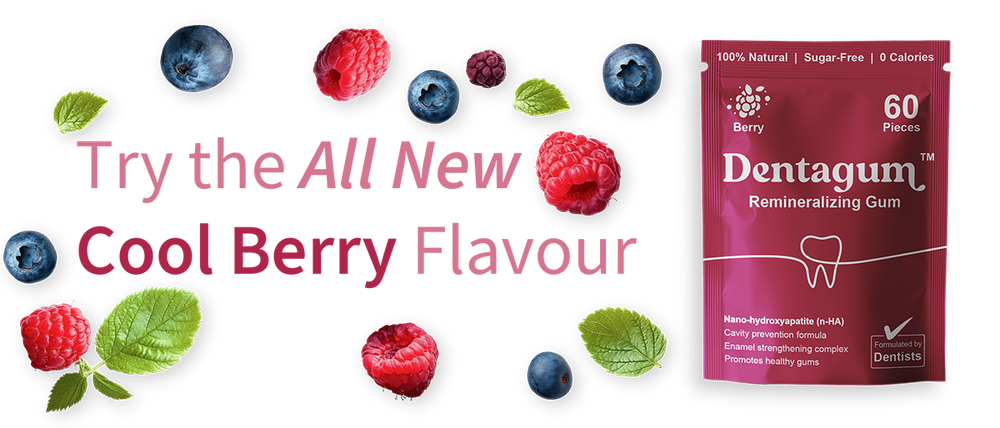
Chewing gum stimulates the salivary surge that most accelerates the transition. Nano-HAp in gum deposits mineral directly into the microporosities that the acid event just created or enlarged. Eggshell calcium releases Ca2+ at exactly the moment when the acidic conditions trigger its dissolution. Xylitol reduces the bacteria that would otherwise continue producing the acid driving demineralization.

Each of these mechanisms operates at the same moment: the post-meal recovery window. None of them need a separate dedicated time slot. They all run during the 20 minutes of gum chewing after eating, which happens alongside whatever you were already doing after the meal.
Try Dentagum risk-free — 30-day guaranteeFrequently Asked Questions

What is the role of calcium in teeth?
Calcium is the primary structural mineral in tooth enamel, making up the majority of hydroxyapatite (Ca10(PO4)6(OH)2), the crystalline mineral that constitutes approximately 96% of enamel by weight. Calcium ions in the hydroxyapatite crystal lattice give enamel its hardness and structural integrity. Calcium in saliva maintains the supersaturation needed for passive remineralization between acid events. When calcium ions leave the enamel crystal during acid attacks, the crystal weakens: the return of calcium from saliva or topical calcium sources is the remineralization that partially repairs this damage. Sufficient dietary calcium intake also maintains salivary calcium concentration, supporting the saliva's remineralization capacity.
What is the critical pH for tooth enamel?
5.5 is the critical pH for hydroxyapatite, the mineral that makes up tooth enamel. Below pH 5.5, enamel begins losing calcium and phosphate to the surrounding fluid (demineralization). Above 5.5, the equilibrium shifts toward remineralization. Fluorapatite, which forms when fluoride incorporates into enamel, has a lower critical pH of approximately 4.5, making fluoride-rich enamel significantly more acid-resistant. After eating, oral pH typically drops below 5.5 within a few minutes and takes 20 to 40 minutes to recover above it without intervention. Post-meal gum chewing accelerates this recovery through saliva stimulation.
How does remineralization work?
Remineralization is the process by which calcium and phosphate ions from saliva or topical sources redeposit into enamel that has been partially demineralized by acid. Enamel is in continuous chemical equilibrium with the surrounding fluid. At normal oral pH (6.5 to 7.0), saliva is supersaturated with calcium and phosphate, meaning the concentrations exceed enamel's equilibrium solubility, and mineral deposits onto enamel spontaneously. After eating, acid drops pH below 5.5 and the equilibrium reverses: mineral leaves enamel. As saliva buffers the acid and pH recovers, the supersaturation is restored and remineralization resumes. Chewing sugar-free gum after meals amplifies this process by stimulating 10 to 12 times the resting salivary flow rate.
What is nano-hydroxyapatite and how does it help teeth?
Nano-hydroxyapatite (nano-HAp) consists of hydroxyapatite mineral particles at 20 to 100 nanometres in size, matching the mineral composition of tooth enamel exactly. When delivered during a chewing session, these particles deposit into the microporosities and exposed dentinal tubules left by acid demineralization, physically filling the spaces where mineral was lost. A 2023 systematic review and meta-analysis in Biomimetics covering 44 clinical trials confirmed nano-HAp's effectiveness for sensitivity reduction and enamel mineral delivery, with contact time during chewing as the key variable. It addresses the structural mineral deficit directly, rather than providing soluble ions that still need to organize into crystal structure.
Does eating dairy products help your teeth?
Yes, through several mechanisms. Dairy products are rich in calcium and phosphate, maintaining dietary calcium intake that supports salivary calcium concentration over time. Casein proteins in milk specifically bind calcium and phosphate in a form that can be deposited on enamel surfaces. Milk also buffers oral acid to some degree, moderating the post-meal pH drop. Studies have found dairy consumption associated with reduced caries risk. Cheese in particular has been shown to raise salivary pH and increase enamel remineralization. The benefits are modest compared to brushing with fluoride toothpaste, but real and worth understanding as part of the broader dietary picture.
Can enamel remineralize naturally?
Yes, continuously, at the early stages of mineral loss. Saliva is the primary remineralization vehicle: it is supersaturated with calcium and phosphate at normal oral pH and continuously deposits mineral onto enamel between eating events. Early demineralization (white spot lesions, subsurface microporosity) can be fully or partially reversed by sustained remineralization over weeks and months. Once demineralization progresses to a cavitated cavity, the structural collapse cannot be reversed by remineralization alone and requires restorative treatment. Supporting remineralization through fluoride toothpaste, stimulated salivary flow from chewing, and topical calcium-phosphate delivery is most effective at early-stage mineral loss, before the tipping point into irreversible structural damage.
The Bottom Line
Enamel mineral status is determined by the running balance between demineralization (acid attacks pulling calcium and phosphate out) and remineralization (saliva and topical sources putting it back). Every eating event is a demineralization event. Every post-meal recovery period is a remineralization opportunity. Whether your enamel gets stronger or weaker over time depends on which side of that balance dominates across thousands of daily cycles.
Saliva is the primary calcium and phosphate delivery system, and chewing gum is the most practical way to amplify it. Nano-hydroxyapatite adds direct particulate mineral delivery into the specific microporosities that each acid event creates. Eggshell calcium adds pH-responsive calcium ion release at exactly the moment post-meal acid triggers it. Fluoride from toothpaste makes the crystal itself more resistant to future acid attacks.
None of these are separate interventions requiring separate time allocations. They work together during the same post-meal recovery window that is already the highest-leverage moment in every enamel mineral cycle. The habit that covers that window consistently is the single most important addition most people can make to the oral care routine they already have.
Try Dentagum risk-free — 30-day guarantee at dentagum.coResearch Summary
- Stephan RM. "Changes in the hydrogen-ion concentration on tooth surfaces and in carious lesions." JADA, 1944. The foundational description of pH changes following eating (Stephan Curve). Post-meal pH drop below 5.5, recovery over 20-40 minutes through salivary buffering.
- American Dental Association. Chewing Gum Oral Health Topics. Chewing stimulates saliva to 10-12x resting flow rate. Saliva neutralizes acids, delivers calcium and phosphate for remineralization, washes food particles. 20 minutes after meals endorsed.
- Limeback H, Enax J, Meyer F. "Clinical Evidence of Biomimetic Hydroxyapatite in Oral Care Products for Reducing Dentin Hypersensitivity." Biomimetics, 2023. 44 clinical trials. Contact time during chewing is key variable for nano-HAp clinical effectiveness. Enamel mineral delivery confirmed across extensive clinical literature.
- Naveenraj NS et al. "In vitro remineralization effectiveness of eggshell extract on human teeth: a systematic review and meta-analysis." Odontology, 2026. PROSPERO CRD420251015581. 17 in vitro studies. Enamel microhardness improvement (Cohen's d = 0.45, p less than 0.05), Ca:P ratio improved, comparable to fluoride varnish. In vitro only.
- Enamel composition. Hydroxyapatite Ca10(PO4)6(OH)2: 96% of enamel by dry weight. Critical dissolution pH 5.5 (hydroxyapatite) vs 4.5 (fluorapatite). Ca:P molar ratio 1.67 in pure hydroxyapatite. Salivary proteins (statherin, PRPs) maintain calcium supersaturation in solution.
- ADA. Sugar-free gum for 20 minutes after meals endorsed for cavity prevention. Mechanism: saliva stimulation to 10-12x resting rate, acid neutralization, calcium and phosphate delivery, food particle clearance.
References
- American Dental Association. "Chewing Gum." Oral Health Topics. https://www.ada.org/resources/ada-library/oral-health-topics/chewing-gum
- Limeback H, Enax J, Meyer F. "Clinical Evidence of Biomimetic Hydroxyapatite in Oral Care Products for Reducing Dentin Hypersensitivity." Biomimetics, 2023. https://pmc.ncbi.nlm.nih.gov/articles/PMC9844412/
- Naveenraj NS et al. "In vitro remineralization effectiveness of eggshell extract on human teeth: a systematic review and meta-analysis." Odontology, 2026. https://link.springer.com/article/10.1007/s10266-025-01265-4
- Stephan RM. "Changes in the hydrogen-ion concentration on tooth surfaces and in carious lesions." Journal of the American Dental Association, 1944. The foundational Stephan Curve paper. doi:10.14219/jada.archive.1944.0012
- Featherstone JDB. "The Science and Practice of Caries Prevention." JADA, 2000. Remineralization-demineralization balance in caries etiology. https://jada.ada.org/article/S0002-8177(00)23683-4/abstract
