
The Best Oral Care Routine for Coffee Drinkers
If you drink coffee every day, your standard oral care routine isn't enough. Coffee's acid starts attacking enamel within seconds of your first sip, and its tannins create staining that compounds over years. Here's the complete daily routine built around protecting your teeth from coffee, step by step.

The best oral care routine for daily coffee drinkers adds three habits to the standard brush-and-floss baseline: brush before your first coffee (not after), rinse with water immediately after finishing each cup, and chew xylitol and nano-hydroxyapatite gum for 10 to 20 minutes after each coffee. Coffee drops oral pH to 4.8 to 5.1, below the 5.5 enamel critical threshold, within seconds of the first sip. Brushing while enamel is softened from coffee acid abrades the surface. Water rinse clears tannins before they bind. Remineralizing gum then buffers the remaining acid, reduces the bacteria that compound the acid load, and delivers enamel mineral during the recovery window when teeth need it most.
Coffee is the most consumed daily beverage in America. According to the National Coffee Association's Spring 2025 data, 66% of US adults drink coffee every single day, averaging three cups. Most of them are following an oral care routine designed for people who don't drink coffee: brush twice a day, floss, rinse. Done.
That routine wasn't built around an acidic, tannin-rich beverage being consumed multiple times daily. It doesn't address the 30 to 40 minute post-coffee acid recovery window. It doesn't account for tannin binding during that softened-enamel period. And it almost certainly includes the single most counterproductive coffee-related habit: brushing immediately after drinking coffee.
This guide is the routine that a dentist who drinks coffee would follow. Step by step, morning through evening, built around the actual chemistry of what coffee does to your teeth and what undoes it.
What Coffee Actually Does to Your Teeth: The Two Mechanisms

Understanding the routine requires understanding why it's structured the way it is. Coffee damages teeth through two separate but compounding mechanisms, and the routine addresses each one specifically.
Mechanism 1: Acid erosion
Coffee has a pH of 4.8 to 5.1, well below the 5.5 critical threshold at which enamel begins losing mineral. Within seconds of your first sip, your oral pH drops into the demineralization zone. Enamel begins releasing calcium and phosphate. The surface layer softens. A 2026 dental resource from Rockland Dental Specialists confirmed that the effect worsens the longer teeth are exposed: sipping coffee over 45 minutes creates near-continuous acid exposure that keeps pH depressed for the entire period, while drinking the same coffee in 15 minutes creates one Stephan Curve with a defined recovery window.
Three cups of coffee consumed across a day can create 90 to 120 minutes of cumulative enamel vulnerability, even with a standard oral care routine. Most of that window is completely uncovered by conventional brushing protocols.
Mechanism 2: Tannin staining
Coffee contains tannins, natural polyphenolic compounds that bind to the acquired pellicle (the thin protein film that coats tooth surfaces) and to enamel itself. The ADA notes that these compounds easily bind to tooth enamel and leave visible stains. Initially these stains are surface-level and removable by professional cleaning. Over years of daily coffee consumption without adequate countermeasures, they become increasingly persistent.
The acid component of coffee compounds the staining problem directly. As acid softens and slightly demineralizes the enamel surface, the surface becomes more porous and more receptive to tannin binding. The worst staining happens in the window immediately after coffee, when enamel is softened by acid and tannins have maximum opportunity to bind. This is exactly the window when most people make their most damaging mistake.
After coffee, enamel is temporarily softened by the acid exposure. Brushing during this window abrades the softened enamel surface, physically removes mineral that saliva would otherwise redeposit during remineralization, and pushes tannins further into enamel microporosities rather than clearing them. Multiple dental authorities including the British Dental Association and the Academy of General Dentistry recommend waiting at least 30 minutes after acidic exposure before brushing. The post-coffee window is exactly when gum and water are the right tools, not a toothbrush.
The Complete Oral Care Routine for Coffee Drinkers
What follows is a step-by-step daily routine organized around how most coffee drinkers actually consume their coffee. Adjust timing to your specific pattern.
Step 1: Brush before your first coffee, not after
This is the single most important structural change for coffee drinkers. Brushing before coffee rather than after means you're removing overnight plaque and bacteria when enamel is not in a softened, post-acid state. It also means any toothpaste fluoride or nano-HAp remains on tooth surfaces to help protect against the first coffee of the day rather than being rinsed away by coffee immediately after brushing.
If you've always brushed immediately after your first coffee, this will feel counterintuitive. The clinical reasoning is clear: acid from coffee temporarily softens enamel, and brushing during that window removes mineral that saliva would otherwise redeposit. Brushing before coffee avoids this entirely.
Tongue scrape on waking. Brush and floss. Drink coffee. Rinse with water immediately after finishing. Chew remineralizing gum for 10 to 20 minutes. Continue your morning.
Step 2: Drink your coffee in a defined sitting
The way you drink your coffee matters as much as what you do afterward. A coffee consumed over 15 to 20 minutes creates one Stephan Curve with a defined start and end. The same coffee nursed over 90 minutes creates near-continuous acid exposure with no meaningful recovery window between sips.
For the post-coffee protocol to work, there needs to be a defined moment when the coffee is finished and the recovery intervention can begin. If you're a slow-sipper, consider finishing your coffee more purposefully and transitioning to water for extended morning hydration. The gum step after a defined end point covers the recovery window. Extended grazing makes that window impossible to define.
Two coffees consumed back to back create two overlapping acid events but one recovery window. Two coffees separated by 90 minutes create two distinct recovery windows. If you're having multiple coffees, try to cluster them and chew gum after the last one in a cluster rather than trying to manage each one individually. This reduces the number of discrete recovery protocols you need to run per morning while still covering the bulk of your acid exposure.
Step 3: Rinse with water immediately after finishing

A quick water rinse immediately after finishing your coffee does two things before the remineralizing gum step. It physically washes away residual tannins from tooth surfaces before they have a chance to bind to softened enamel. And it dilutes the remaining acidic coffee residue in the oral environment, reducing the initial acid concentration that the saliva stimulation step then needs to buffer.
This step takes five seconds and has an outsized impact on tannin binding. The worst staining happens when tannins sit undisturbed on acid-softened enamel surfaces for extended periods. Water rinse immediately after coffee interrupts this process at the point of maximum vulnerability.
Step 4: Chew remineralizing gum for 10 to 20 minutes (the core step)

This is where the routine materially departs from anything a conventional oral care protocol provides for coffee drinkers. Chewing sugar-free xylitol and nano-HAp gum immediately after the water rinse does the following simultaneously.
It stimulates salivary flow to 10 to 12 times the resting rate (ADA). That surge of saliva buffers the remaining post-coffee acid dramatically faster than saliva at resting flow would. The 30 to 40 minute Stephan Curve recovery window compresses significantly when chewing actively.
It delivers nano-hydroxyapatite to enamel surfaces during the chewing session. Coffee has just removed mineral from the enamel surface. The post-coffee window, as pH recovers and enamel is becoming more receptive to mineral deposition, is when nano-HAp contact produces its most meaningful effect. A 2023 systematic review and meta-analysis in Biomimetics covering 44 clinical trials confirmed contact time during chewing as a key variable in nano-HAp's clinical effectiveness.
It reduces the bacterial component through xylitol. If your coffee contained any sugar or sweetened creamer, xylitol kills the S. mutans bacteria metabolizing those sugars and producing additional acid on top of coffee's dietary acid. Even for black coffee drinkers, the post-coffee window is when bacterial activity is elevated from the previous meal.
You can read the full science behind this step in our dedicated article on Can Chewing Gum Help After Coffee?
Step 5: Stay hydrated between coffees with water
Between each coffee, water serves as both a tannin-clearing rinse and a salivary function support. Dehydration reduces salivary volume and alters its mineral composition, making each subsequent coffee's acid exposure harder to recover from. Caffeinated coffee itself has a mild diuretic effect that compounds this if water intake is low.
The habit is simple: a glass or two of water between coffees, not as a substitute for the post-coffee protocol but as its complement. Sipping water also keeps the oral environment more neutralized between acid events, reducing the cumulative daily demineralization load.
Step 6: Floss before your evening brush
Flossing before brushing removes interdental plaque and food debris so that brushing can clean tooth surfaces without redistributing the material caught between teeth. For coffee drinkers specifically, tannin-rich debris in interdental spaces has extended contact with enamel surfaces throughout the day. Flossing in the evening clears this material and reduces the overnight tannin exposure that would otherwise continue while you sleep.
Step 7: Brush at least 30 minutes after your last coffee of the day
This applies in the morning if coffee is your first activity, and it applies in the evening. If you have a coffee after dinner, wait at least 30 minutes before your final brush of the day. This ensures enamel has had time to reharden from the post-dinner coffee acid exposure before mechanical brushing begins. The remineralizing gum after that last coffee covers the recovery window and the evening brush then completes the day's plaque management on a properly recovered surface.
Adjusting the Routine for Your Coffee Habits

If you add sugar or flavored syrups
Sweetened coffee combines dietary acid (from the coffee itself) with a bacterial acid component (from S. mutans metabolizing the sugar). The post-coffee xylitol gum step addresses both: it buffers the dietary acid through saliva stimulation and kills the bacteria producing additional acid from the sugar substrate. Rinsing with water before chewing gum removes some of the residual sugar from the oral environment and gives xylitol a slightly cleaner field to work in.
If you add milk or creamer
Milk raises the pH of coffee slightly, which modestly reduces the initial acid exposure. More relevantly, casein proteins in milk bind to tannins and reduce their ability to adhere to enamel. This is a genuine protective mechanism: studies have found that adding milk reduces coffee staining compared to black coffee. If staining is your primary concern, dairy milk is preferable to non-dairy creamers for this reason. The post-coffee protocol remains the same regardless.
Dark roast coffee is actually slightly less acidic than light roast (pH 5.0-5.1 vs 4.7-4.9) because the extended roasting process breaks down some of the chlorogenic acids that contribute to acidity. However, dark roast has similar tannin content to light roast, so the staining risk is comparable. The difference in pH is small enough that it doesn't significantly change the post-coffee protocol. Black coffee of any roast is more acidic and more staining than coffee with dairy milk. Espresso-based drinks diluted with milk (flat white, latte) have a more favorable enamel profile than black drip coffee or americano.
If you drink coffee through the morning gradually
Gradual coffee consumption creates the most challenging scenario for enamel protection: continuous tannin and acid exposure with no defined endpoint and no recovery window. The pragmatic approach for slow sippers is to set a defined endpoint for coffee (for example, finishing the cup by 9:30am regardless of how much remains) and transitioning to water after that. This converts an extended exposure into a defined one that the post-coffee protocol can meaningfully address.
If coffee sensitivity is your main concern
Sensitivity to hot coffee is a common and often ignored signal. It typically reflects either enamel thinning from cumulative acid erosion or exposed dentinal tubules from gum recession, both of which increase the hydrodynamic sensitivity response to temperature. Nano-HAp in the post-coffee gum habit progressively occludes dentinal tubules, addressing the structural cause of sensitivity rather than just managing the pain signal. Our article on Why Your Teeth Are Sensitive in the Morning covers the sensitivity mechanism in full, much of which applies to coffee-related sensitivity as well.
What This Routine Cannot Do
It's worth being direct about the limits. This routine can meaningfully slow the progression of coffee-related enamel erosion and tannin staining. It cannot reverse existing erosion, which is structural and permanent. It can reduce the rate of new staining and help maintain professional whitening results for longer. It cannot remove existing deep staining, which requires professional prophylaxis or whitening treatment.
If you've been a heavy coffee drinker for years without an optimized post-coffee protocol, existing staining and any enamel erosion that has accumulated require professional assessment and treatment. The routine described here is most powerful as a preventive and maintenance protocol going forward, not as a remediation tool for existing damage.
How Dentagum Fits the Coffee Drinker's Routine
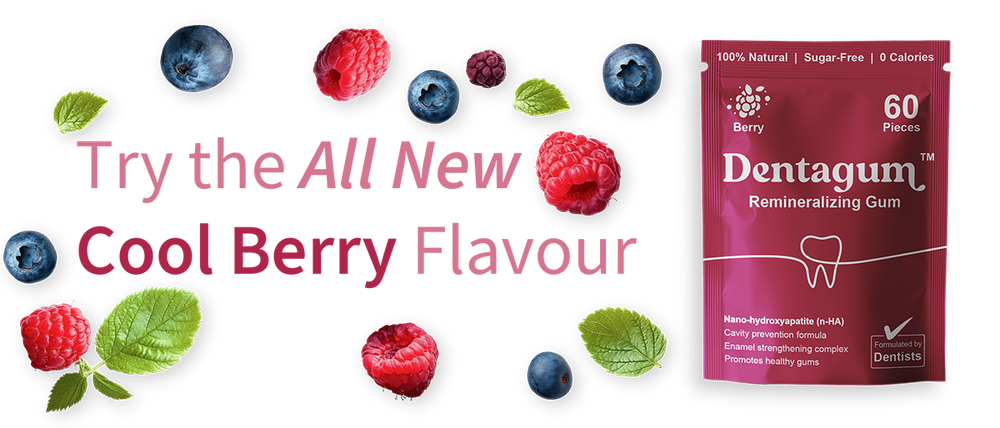
The post-coffee gum step is where Dentagum is most directly useful. Each piece is designed to be chewed for 10 to 20 minutes after meals and acidic drinks, which maps exactly to the post-coffee window this routine is built around.
Organic xylitol and organic erythritol reduce the bacterial component, particularly relevant for anyone who drinks sweetened coffee. Nano-hydroxyapatite delivers enamel mineral during the post-coffee recovery window when the surface has just lost mineral from coffee acid and is becoming more receptive to deposition. Organic mastic gum and natural propolis provide antibacterial support relevant for reducing S. mutans throughout the session. The chicle and mastic base stimulates the salivary surge that does the acid buffering.
At three coffees per day, one piece of Dentagum after each coffee plus one after lunch and one after dinner means five pieces daily: approximately 12 days per pouch. At $0.55 per piece, the post-coffee protection habit costs less per day than the coffee itself.
Try Dentagum risk-free — 30-day guaranteeFrequently Asked Questions
Should you brush your teeth before or after coffee in the morning?
Before. Brushing after coffee is one of the most counterproductive oral care habits for daily coffee drinkers. Coffee drops oral pH to 4.8 to 5.1, temporarily softening enamel. Brushing during this window abrades the softened surface and removes mineral that saliva would otherwise redeposit during natural remineralization. Multiple dental authorities including the British Dental Association recommend waiting at least 30 minutes after acidic exposure before brushing. Brush and floss before your first coffee. Follow coffee with a water rinse and remineralizing gum instead.
How do you protect your teeth when you drink coffee every day?
Four habits make the most material difference: brush before coffee rather than immediately after; drink coffee in a defined sitting rather than sipping slowly over extended periods; rinse with water immediately after finishing each cup; and chew xylitol and nano-HAp remineralizing gum for 10 to 20 minutes after each coffee. Together these address both of coffee's damage mechanisms, acid erosion and tannin staining, at each point in the exposure sequence. Adding milk also helps by raising pH slightly and binding tannins through casein proteins.
Does rinsing with water after coffee actually help?
Yes, meaningfully. An immediate water rinse after coffee clears residual tannins from tooth surfaces before they have time to bind to acid-softened enamel, and dilutes residual acid in the oral environment. The window immediately after finishing coffee is when tannin binding risk is highest because enamel is softened by the acid and more receptive to tannin adhesion. A five-second water rinse at this moment is more protective against staining than waiting 20 minutes and then rinsing.
Does drinking coffee through a straw reduce tooth staining?
Yes, for front teeth specifically. Drinking through a straw reduces the direct contact between coffee and the labial (front) surfaces of the teeth where staining is most visible. It doesn't eliminate tannin contact with rear teeth and inner surfaces, and it doesn't reduce the acid exposure to the entire oral environment. A straw is a partial protective measure against staining rather than a comprehensive solution. Combined with the post-coffee water rinse and gum habit, it provides meaningful additional protection for the front surfaces that matter most cosmetically.
Is adding milk to coffee better for your teeth than black coffee?
Yes, modestly. Milk raises the pH of coffee slightly, reducing the initial acid exposure. More significantly, casein proteins in dairy milk bind to coffee tannins and reduce their ability to adhere to enamel. Studies have found that coffee with dairy milk produces less tooth staining than black coffee. Non-dairy alternatives generally don't provide the same casein-tannin binding effect. For people concerned about both staining and acid erosion, dairy milk is the preferable addition. The post-coffee protocol remains the same regardless of whether you take milk.
How long after coffee can you brush your teeth?
Wait at least 30 minutes. After coffee, enamel is temporarily softened by acid exposure. Brushing during this window abrades the softened surface. The British Dental Association and Academy of General Dentistry both recommend waiting at least 30 minutes after acidic beverage consumption before brushing. During that 30-minute window, water rinse and remineralizing gum are the appropriate protective interventions. By 30 to 40 minutes post-coffee, saliva has recovered the pH to safe levels and enamel has begun rehardening to a state where brushing is appropriate.
The Bottom Line
The standard oral care routine was not designed for people who drink three cups of coffee a day. It misses the post-coffee acid recovery window, it doesn't account for tannin binding during the softened-enamel period, and brushing immediately after coffee does more harm than good.
The coffee drinker's routine is built around the actual chemistry: brush before coffee, not after. Drink in a defined sitting. Rinse with water immediately after. Chew remineralizing gum for 10 to 20 minutes. Stay hydrated between cups. Add milk if staining is a primary concern. Brush in the evening after the 30-minute post-last-coffee window has passed.
Each step targets a specific moment in the acid and tannin exposure sequence. Together they convert a daily habit that accumulates significant enamel damage over years into one that your teeth can handle without the compounding consequences that poor timing and sequencing create.
Try Dentagum risk-free — 30-day guarantee at dentagum.coResearch Summary
- National Coffee Association. Spring 2025 National Coffee Data Trends. 66% of US adults drink coffee daily, average 3 cups per day. Coffee is the most popular daily beverage in the US.
- American Dental Association. Coffee contains tannins (polyphenols) that bind to tooth enamel and leave visible stains. Stains surface-level initially, become persistent with repeated exposure. Sugar-free gum for 20 minutes after meals endorsed for cavity prevention.
- Rockland Dental Specialists, 2026. Coffee pH 4.8-5.1, below critical 5.5 enamel threshold. Effect worsens with extended exposure. Sipping over long periods creates higher risk than drinking in one sitting.
- British Dental Association / Academy of General Dentistry. Recommend waiting at least 30 minutes after acidic beverage consumption before brushing. Enamel is temporarily softened and brushing during this window removes mineral.
- Multiple dental sources, 2024-2026. Water rinse immediately after coffee clears tannins before binding. Adding milk raises pH slightly and casein proteins bind tannins, reducing staining vs black coffee. Straw reduces front-tooth tannin contact.
- Limeback H, Enax J, Meyer F. Biomimetics, 2023. 44 clinical trials. Contact time during chewing is key variable for nano-HAp clinical effectiveness. Post-acid-exposure window is optimal for mineral deposition.
- Söderling E et al. BMC Oral Health, 2025. Xylitol reduced S. mutans in 12/14 studies. Relevant for sweetened coffee which adds bacterial acid on top of dietary acid.
References
- National Coffee Association. "More Americans Drink Coffee Each Day Than Any Other Beverage." Spring 2025 National Coffee Data Trends. https://www.ncausa.org/Newsroom/
- American Dental Association. "Chewing Gum." Oral Health Topics. https://www.ada.org/resources/ada-library/oral-health-topics/chewing-gum
- "Coffee and Your Smile: How Long It Takes to Stain Your Teeth." Clinica Romero, August 2025. https://clinicaromero.com/health_and_wellness/
- "How to Get Rid of Coffee and Tea Teeth Stains." NewMouth, reviewed March 2026. https://www.newmouth.com/dentistry/cosmetic/whitening/coffee-tea-teeth-stains/
- "How Coffee Affects Your Teeth." Rockland Dental Specialists, 2026. https://www.rocklanddentalspecialists.com/the-effects-that-coffee-can-have-on-your-teeth/
- Limeback H, Enax J, Meyer F. "Clinical Evidence of Biomimetic Hydroxyapatite in Oral Care Products for Reducing Dentin Hypersensitivity." Biomimetics, 2023. https://pmc.ncbi.nlm.nih.gov/articles/PMC9844412/
- Söderling E et al. "Specific Effects of Xylitol Chewing Gum on Mutans Streptococci Levels." BMC Oral Health, 2025. https://link.springer.com/article/10.1186/s12903-025-06602-1
