
Ozempic Teeth: GLP-1 Oral Health Effects and What Helps
GLP-1 medications like Ozempic and Wegovy create a predictable cluster of oral health risks through three indirect mechanisms: reduced saliva production, acid exposure from nausea and vomiting, and dietary shifts. Dentists are now explicitly recommending sugar-free xylitol gum as the primary daily counter-measure. This guide covers the mechanisms, the ADA and Medscape clinical consensus, and the ingredients that address each specific risk.

Quick Answer
"Ozempic teeth" is not an official diagnosis, but it describes a real and predictable cluster of oral health problems that a subset of GLP-1 medication users experience: dry mouth, rapid-onset cavities, enamel erosion, gum inflammation, and sensitivity. The cause is not the drug directly damaging your teeth. It is a chain of indirect effects: GLP-1 medications act on receptors in the salivary glands, reducing saliva flow; nausea affects 16 to 20% of users and vomiting exposes teeth to highly corrosive stomach acid; appetite suppression shifts dietary patterns toward softer, sometimes sweeter foods; and reduced thirst leads to dehydration that compounds dryness. Dentists across the US are now proactively asking patients whether they are on GLP-1 medications because it changes the entire preventive care approach. The most widely recommended daily counter-measure: chewing sugar-free xylitol gum after meals to stimulate saliva, buffer acids, and reduce bacterial load.
Last updated: June 2026 | Reviewed against current dental clinical guidance, peer-reviewed GLP-1 pharmacology research, and ADA guidance on xerostomia
In 2025, approximately one in eight US adults had taken a GLP-1 receptor agonist. Prescriptions for semaglutide (Ozempic, Wegovy) and tirzepatide (Mounjaro, Zepbound) are on track to reach 24 million annually in the United States by 2035. That is a very large number of people with a changed oral health risk profile, most of whom have not been told what to watch for or what to do about it.
When the CEO of Hershey publicly credited GLP-1 users with a spike in sales of sugar-free mints and gum, it put a spotlight on something dental professionals had been quietly flagging for two years. This article covers the mechanisms, the evidence, what dentists are actually recommending, and the daily habits that address the specific risks GLP-1 medications create.
What Is "Ozempic Teeth"?

"Ozempic teeth" is not a clinical diagnosis. It is a phrase that emerged from patient reports and social media, then got picked up by dental professionals who started seeing the same pattern across multiple patients. The pattern includes dry mouth, rapid-onset cavities in patients who previously had healthy teeth, enamel erosion, inflamed gums, increased sensitivity, and in more severe cases, cracked or loose teeth.
As of early 2026, there is no published clinical trial directly confirming that GLP-1 medications cause dental damage. What exists is a well-characterized chain of indirect effects, each of which is individually understood, that combine into a "perfect storm" for oral health in a subset of GLP-1 users. The mechanisms are not speculative: they are predictable outcomes of how these medications work physiologically.
GoodRx, in a guide published in May 2026 and reviewed by both an MD medical editor and a licensed DDS, summarized the situation plainly: "Ozempic teeth" side effects often occur because the medication can reduce saliva or cause nausea and vomiting. The good news, per GoodRx, is that the problems are manageable and for most patients not permanent if caught and addressed early.
The "Ozempic Teeth" Symptom Cluster
- Dry mouth (xerostomia): Most commonly reported oral change in GLP-1 users; identified by the ADA Council on Dental Practice as the primary concern
- Rapid-onset cavities: New decay in patients with previously healthy teeth, driven by reduced saliva and changed oral environment
- Enamel erosion: From repeated acid exposure via nausea, vomiting, or reflux
- Gum inflammation: Worsened bacterial environment from reduced salivary antimicrobial proteins
- Sensitivity and cracking: In more severe or prolonged cases involving significant acid exposure
- Bad breath: Combination of dry mouth, altered microbiome, and reduced bacterial clearance
The Saliva Problem: Why GLP-1 Drugs Cause Dry Mouth
The dry mouth connection is the most clinically significant and the most mechanistically established part of the "Ozempic teeth" picture. Jennifer L. Thompson, DDS, chair of the American Dental Association Council on Dental Practice, stated directly in a Medscape interview published in June 2026: dry mouth is the most common oral change among GLP-1 users.
The mechanism was investigated in depth by Barać and Roganović of the University of Belgrade School of Dental Medicine in a narrative review published in Biology (MDPI, November 2025). Their review screened 183 records and synthesized 78 studies across five mechanistic domains. The key finding: GLP-1 receptors are expressed in the salivary glands, and semaglutide's pharmacological properties, specifically its strong albumin binding leading to prolonged receptor activation, may disturb the rhythmic calcium and cyclic AMP cross-talk essential for normal salivary secretion. Persistent receptor stimulation may cause desensitization, beta-arrestin-mediated internalization, and reduced gland responsiveness over time. In plain language: the drug may progressively reduce the salivary glands' ability to respond normally to secretion signals.
GLP-1 drugs reduce saliva through at least three separate pathways: direct receptor-mediated effects on salivary gland secretion, reduced oral fluid intake due to appetite suppression and diminished thirst sensation, and changes in autonomic control of the salivary glands through the drug's systemic neurological effects.
Why does this matter so much for teeth? Saliva performs multiple protective functions simultaneously. It neutralizes post-meal acids, delivers calcium and phosphate ions for enamel remineralization, mechanically clears bacteria and food debris from tooth surfaces, and contains antimicrobial proteins including lysozyme and secretory IgA that suppress pathogenic bacterial growth. When salivary flow drops, all of these protections are compromised at once. As one dental practice in Marietta, Georgia described the effect: the same physiological slowing that provides therapeutic benefits may inadvertently create conditions that favor bacterial growth and tooth decay.
The Acid Problem: Nausea, Vomiting, and Reflux

Dry mouth is the most common oral effect, but acid exposure is the most damaging. Nausea is one of the most frequently reported side effects of GLP-1 medications, affecting approximately 16 to 20% of Ozempic users according to FDA data. In a meaningful subset, nausea progresses to actual vomiting, particularly when first starting the medication or after dose increases. Gastroesophageal reflux disease (GERD) is a separately documented GLP-1 side effect that compounds the risk further.
The chemistry here is straightforward and severe. Stomach acid has a pH of approximately 1.5 to 3.5. Tooth enamel begins demineralizing at pH below 5.5. Every time stomach acid contacts teeth during vomiting or reflux, it softens and erodes enamel. Enamel does not regenerate. Once the protective outer layer is lost, the underlying dentin is exposed, sensitivity increases, structural integrity decreases, and cavity risk compounds significantly.
The timing of brushing after acid exposure is a critical and frequently misunderstood point. Brushing immediately after vomiting or acid reflux is counterproductive: the toothbrush physically scrubs the softened, acid-weakened enamel surface and accelerates the erosion. The correct protocol, as detailed by multiple dental sources and supported by ADA guidance, is to rinse first with water or a baking soda solution (one teaspoon per cup of water to neutralize acid), then wait at least 30 minutes before brushing.
The Diet Shift Problem
The third pathway is less obvious but adds meaningfully to overall risk. GLP-1 medications dramatically suppress appetite. The reduced food intake that drives weight loss also changes which foods people actually eat. Several patterns emerge in GLP-1 users that are relevant to oral health.
First, protein often becomes harder to eat for patients experiencing nausea, so they gravitate toward softer, more easily tolerated foods, which tend to be more refined and sometimes sweeter. Second, between-dose appetite suppression can give way to cravings, which some patients report skewing toward sweets. Third, reduced overall food intake can lead to lower calcium and vitamin D intake, both of which are essential for maintaining enamel and bone structure.
Rapid weight loss itself can affect the nutritional profile of saliva and alter the oral microbiome balance, creating further shifts in the bacterial environment that the reduced saliva is already less capable of managing.
The Scale of GLP-1 Use in the US
- 1 in 8 US adults has taken a GLP-1 drug as of 2024 (survey data)
- 24 million annual US prescriptions projected by 2035 (semaglutide alone)
- 16 to 20% of Ozempic users experience nausea (FDA data)
- 5 to 9% experience vomiting, with the highest rates early in treatment or after dose increases
- Dry mouth identified as the most common oral change, per the ADA Council on Dental Practice chair (Medscape, June 2026)
Who Is at Highest Risk
Not every GLP-1 user will experience significant dental problems. The risk is elevated significantly by certain pre-existing and concurrent conditions. A dental practice in Marietta, Georgia, summarized the highest-risk profile for GLP-1 patients in late 2025:
Patients who already have active periodontal disease or untreated cavities face accelerated progression. Those experiencing frequent nausea or vomiting have the highest acid exposure risk. People with a history of dry mouth from other medications or conditions find the GLP-1-related reduction in saliva compounds an already-compromised baseline. Diabetic patients on GLP-1 medications carry the dual burden of diabetes-related oral health risks covered in our article on oral health and diabetes plus the GLP-1-specific effects. People with existing nutritional deficiencies face faster enamel deterioration.
The consistent dental clinical guidance is that GLP-1 medication status should be disclosed to your dentist at the time you start the medication, not when problems appear. By the time dry mouth has produced visible new cavities or acid erosion has caused noticeable sensitivity, meaningful damage has already occurred.
Highest-Risk Profiles for GLP-1 Oral Health Effects
- Pre-existing gum disease or untreated cavities: Accelerated progression when saliva defense is compromised
- Frequent nausea or vomiting: Repeated stomach acid exposure is the fastest route to enamel erosion
- Prior dry mouth: GLP-1 effects compound an already-reduced salivary baseline
- Type 2 diabetes patients: GLP-1 effects stack on top of diabetes-related oral health vulnerabilities
- Patients delaying dental visits: Changes can be reversed or managed early; they are much harder to address once damage is established
What Dentists and the ADA Are Saying
Dental professionals are ahead of the general consumer conversation on this issue. Multiple dental practices across the US have established protocols specifically for GLP-1 patients, and the American Dental Association has been asked about it directly at the clinical practice level.
Jennifer L. Thompson, DDS, chair of the ADA Council on Dental Practice, identified dry mouth as the primary concern for GLP-1 users in a Medscape article published in June 2026, the same month as this article. That level of attention from the ADA's practice leadership signals that this is not a niche or speculative concern; it is a recognized clinical pattern requiring active management.
Catrise Austin, DDS, a cosmetic dentist and ADA member, told Healthline in 2025 that while not officially labeled a clinical diagnosis, "Ozempic teeth" is becoming a catch-all phrase for the sudden onset of dental decay, sensitivity, and tooth loss in patients on these medications, noting that dry mouth, enamel erosion, inflamed gums, and cracked teeth are all part of the picture.
Adam Taylor, anatomy professor at Lancaster University, explained in a piece for The Conversation that semaglutide's action on salivary glands, combined with patients drinking less water because they feel less thirsty, compounds the dry mouth risk significantly beyond what the drug alone would cause.
The clinical recommendations from dental professionals are consistent across sources: tell your dentist you are on a GLP-1 medication, increase visit frequency, hydrate intentionally throughout the day, and support saliva production naturally by chewing sugar-free xylitol gum after meals.
What Actually Helps: The Daily Protocol
The good news is that the risks created by GLP-1 medications are largely manageable if addressed proactively. The protocol that dental practices and clinical reviewers consistently recommend has several components.
Tell Your Dentist You Are on a GLP-1 Medication
This is the single most important step and the one most often delayed. Your oral health risk profile has changed. Your care plan needs to reflect that. Many practices are now increasing visit frequency to every three or four months for GLP-1 patients instead of the standard six-month schedule. Early-detected changes are reversible. Late-detected ones often are not.
Hydrate Intentionally
GLP-1 medications reduce the sensation of thirst alongside reducing appetite. Patients need to sip water consistently throughout the day, not just when they feel thirsty. Staying well-hydrated partially offsets the reduced salivary flow and helps maintain the oral environment. Small sips at regular intervals are more effective than infrequent large amounts.
Manage Acid Exposure Correctly
If you experience nausea, vomiting, or reflux, do not brush your teeth immediately afterward. Rinse with water or a baking soda solution first, wait at least 30 minutes, then brush. Avoid alcohol-based mouthwashes, which exacerbate dryness. If vomiting is frequent, discuss with your prescribing physician whether dose adjustments or anti-nausea measures are appropriate.
Chew Sugar-Free Xylitol Gum After Meals

This is explicitly recommended by multiple dental practices and clinical sources for GLP-1 patients specifically. The chewing motion stimulates saliva production, directly addressing the reduced salivary flow that is the primary driver of the cavity risk. The saliva stimulated by chewing delivers the acid-buffering capacity, remineralization ions, and antimicrobial activity that the medication is reducing. For more context on how saliva works and why its reduction creates such compounding risks, see our article on how saliva protects your teeth.
Why Xylitol Gum and Nano-HAp Are Particularly Relevant Here
The explicit recommendation of sugar-free xylitol gum by dental professionals for GLP-1 patients is notable because it goes beyond the general ADA endorsement of sugar-free gum after meals. It is a targeted recommendation for a specific mechanism: stimulating saliva to compensate for GLP-1-induced salivary reduction.
Xylitol adds a dimension beyond the mechanical saliva-stimulation benefit of any chewing gum. As a non-fermentable sweetener, it actively suppresses Streptococcus mutans and periodontopathic bacteria through a well-documented metabolic mechanism, reducing the bacterial populations that thrive in the less-defended oral environment created by reduced saliva. In a mouth where less saliva means less natural antimicrobial activity, an ingredient that directly addresses bacterial load is doubly useful.
Nano-hydroxyapatite adds a remineralization dimension that is directly relevant to the acid exposure risk. After acid contact from vomiting or reflux softens enamel, the window for remineralization is critically important. Nano-HAp particles, at 20 to 100 nanometres, are small enough to penetrate the microporosities of early acid-weakened enamel and deposit the same mineral that enamel is made of. A 2023 randomized controlled trial in Frontiers in Public Health (Paszynska et al.) found nano-HAp non-inferior to standard 1,450 ppm fluoride toothpaste for cavity prevention at 18 months. For GLP-1 patients managing repeated acid exposure, remineralizing support after meals is directly relevant.
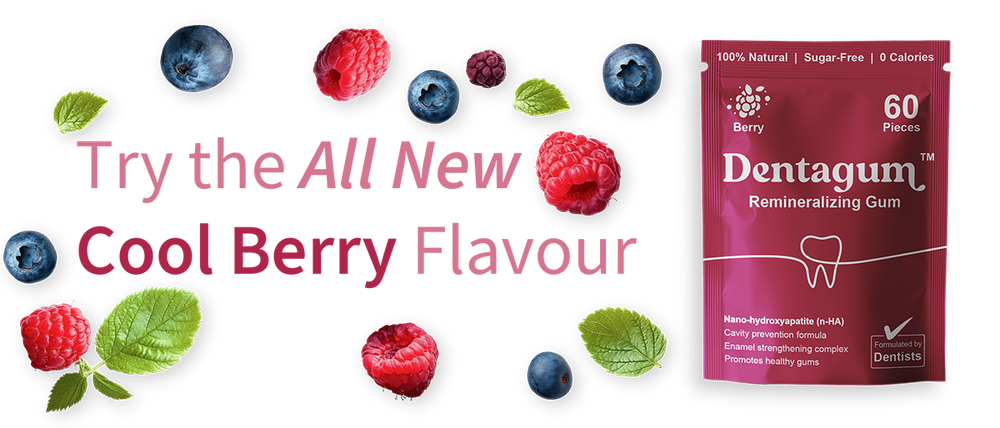
Dentagum combines organic xylitol as the primary sweetener (saliva stimulation plus antibacterial activity), nano-hydroxyapatite 5% at approximately 90mg per piece (remineralization support between meals), organic mastic gum (antibacterial and anti-inflammatory), and natural propolis (broad-spectrum antimicrobial that has shown bactericidal activity against P. gingivalis). For patients on GLP-1 medications managing the specific oral health risks those drugs create, this is not a general wellness product. It addresses the specific mechanisms: replacing saliva's buffering function, reducing bacteria in a less-defended oral environment, and supporting enamel between meals.
For more on how remineralization works and what nano-HAp does specifically, see our detailed guide on what remineralizing gum actually does.
Frequently Asked Questions
Does Ozempic directly damage your teeth?
No. As of early 2026, there is no published clinical trial confirming that GLP-1 medications directly damage tooth enamel or gum tissue. The dental problems associated with "Ozempic teeth" are indirect: they result from the drug's effects on saliva production, gastrointestinal side effects including nausea and vomiting that expose teeth to stomach acid, and dietary shifts that change the oral environment. The damage is real and predictable, but it comes through secondary mechanisms, not direct drug-to-tooth toxicity.
What causes dry mouth on Ozempic?
GLP-1 receptors are expressed in the salivary glands, and semaglutide's prolonged receptor activation may disrupt the calcium and cyclic AMP signaling required for normal salivary secretion. Persistent stimulation can lead to receptor desensitization and reduced gland responsiveness over time. Additionally, the reduced appetite and diminished thirst sensation caused by GLP-1 medications means patients drink less water, compounding the reduced salivary flow with mild dehydration. This was characterized in detail by Barać and Roganović, University of Belgrade, in a Biology (MDPI) review published in November 2025.
Is "Ozempic teeth" reversible?
Mostly yes, if caught early. GoodRx, with DDS review, noted that "Ozempic teeth" is not permanent for most patients and oral health can return to baseline if the underlying side effects are managed and good oral hygiene is maintained. The exception is significant enamel erosion from repeated acid exposure: once enamel is lost, it does not regenerate. The distinction between early-caught and late-caught problems is why dental professionals emphasize proactive disclosure and increased visit frequency from the start of GLP-1 therapy.
Should I tell my dentist I am taking Ozempic or another GLP-1 drug?
Yes, immediately and without waiting for problems to appear. Multiple dental professionals and the ADA Council on Dental Practice recommend that GLP-1 medication status be disclosed to dental teams because it changes the entire preventive care profile. Your dentist may recommend more frequent visits, fluoride or remineralization treatments, saliva substitutes, and dietary modifications specific to your medication's known oral health effects.
Does chewing gum actually help with Ozempic dry mouth?
Yes. Chewing sugar-free xylitol gum is explicitly recommended by multiple dental clinical sources for GLP-1 patients because it mechanically stimulates saliva production, partially compensating for the reduced salivary flow the medication causes. The ADA already endorses sugar-free gum after meals for its saliva-stimulating and acid-buffering effects; xylitol adds direct antibacterial activity that is particularly relevant in the less-defended oral environment created by reduced saliva. The key is sugar-free with xylitol as the primary sweetener, not sorbitol-based commercial gum.
What is the correct protocol after vomiting while on a GLP-1 medication?
Do not brush your teeth immediately. Stomach acid temporarily softens enamel, and brushing right after vomiting scrubs the softened surface and accelerates erosion. Instead, rinse your mouth with plain water or a baking soda solution (one teaspoon of baking soda dissolved in a cup of water) to neutralize the acid. Then wait at least 30 minutes before brushing. If vomiting is frequent, discuss anti-nausea interventions or dose adjustments with your prescribing physician.

Bottom Line
"Ozempic teeth" describes a real and predictable cluster of oral health risks created by GLP-1 medications through a chain of indirect effects: reduced saliva, acid exposure from nausea and vomiting, and dietary shifts that change the oral environment. None of this means patients should avoid GLP-1 medications. It means they need a proactive oral health plan from the moment they start, not after problems appear.
Dentists are already recommending sugar-free xylitol gum as a daily counter-measure for the saliva deficit that drives most of the risk. Combined with nano-hydroxyapatite for remineralization support after acid exposure and antibacterial ingredients to compensate for reduced salivary defense, a functional remineralizing gum formulated around these ingredients is a natural fit for anyone managing GLP-1 oral health risks daily.
Try Dentagum: Xylitol, Nano-HAp, and MoreResearch Summary
This article draws on peer-reviewed pharmacological research, ADA clinical guidance, and multiple dental professional clinical reviews published between 2025 and 2026. Primary mechanistic source: Barać and Roganović, "GLP-1 Receptor Signaling and Oral Dysfunction," Biology (MDPI), November 2025 (183 records screened, 78 synthesized across 5 mechanistic domains). Clinical guidance sources include ADA Council on Dental Practice chair Jennifer L. Thompson, DDS (Medscape, June 2026); Catrise Austin, DDS (Healthline, 2025); GoodRx guide reviewed by Karla Robinson, MD, and Shari L. Grigsby-Young, DDS (published May 2026); and Adam Taylor, Lancaster University (The Conversation). Acid data from FDA product labeling for semaglutide and multiple dental clinical reviews. Remineralization data: Paszynska et al., Frontiers in Public Health, 2023 (nano-HAp RCT). All Dentagum ingredient statistics are from ingredient-level published research and are not claims about the Dentagum product formula.
References
- Barać M, Roganović J. GLP-1 Receptor Signaling and Oral Dysfunction: A Narrative Review on the Mechanistic Basis of Semaglutide-Related Oral Adverse Effects. Biology. 2025;14(12):1650. DOI: 10.3390/biology14121650
- Thompson JL. How "Ozempic Mouth" Became a Thing and How to Treat It. Medscape. Published June 2026. [ADA Council on Dental Practice chair quoted on dry mouth as primary concern]
- Nahvi FA. What Is Ozempic Teeth? A Guide to Symptoms and Treatment. GoodRx. Published May 28, 2026. Reviewed by Robinson K, MD, and Grigsby-Young SL, DDS.
- Austin C, DDS. Ozempic teeth: Dentists warn of new GLP-1 side effect. Healthline. Published June 2025.
- Taylor A. Ozempic Teeth: Dentists warn they're seeing cases of something nicknamed "Ozempic teeth." The Hill / The Conversation, Lancaster University. August 2025.
- Ozempic Teeth: What GLP-1 Medications Actually Do to Your Oral Health. Dentistry.One. Published May 2026. [ADA-aligned clinical resource; sugar-free gum recommendation for GLP-1 patients]
- Khan FI. Otolaryngologic Side Effects of GLP-1 Receptor Agonists. 2025. [Three salivary reduction pathways cited]
- Smits MM, van Raalte DH. Safety of Semaglutide. Front Endocrinol (Lausanne). 2021;12:645563.
- American Dental Association. Xerostomia (Dry Mouth). ADA.org. Accessed 2025. [Endorses sugar-free gum after meals; clinical guidance on dry mouth management]
- Roswell Complete Dentistry. Impact of Weight-Loss Shots on Dental Health. 2025. [Nausea: 16-20% of users; vomiting 5-9%; stomach acid pH 1.5-3.5 data]
- Multiple dental practice clinical reviews: Central Park Dental (NY, May 2026); Southern Oaks Family Dental (LA, Dec 2025); Pure Smiles Marietta (GA, Dec 2025); Dr. Tejal Dental (GA, Dec 2025); Red Bud Dental (TX, Feb 2026)
- Paszynska E, Pawinska M, Gawriolek M et al. Efficacy and safety of nano-hydroxyapatite toothpaste for prevention of dental caries: An 18-month randomized controlled trial. Front Public Health. 2023. DOI: 10.3389/fpubh.2023.1199728
- Wu Y-F, Salamanca E, Chen I-W et al. Xylitol-Containing Chewing Gum Reduces Cariogenic and Periodontopathic Bacteria in Dental Plaque. Front Nutr. 2022;9:882636. DOI: 10.3389/fnut.2022.882636
- Limeback H, Enax J, Meyer F. Hydroxyapatite in oral care products: A systematic review and meta-analysis. Biomimetics. 2023. [44 clinical trials; 39.5% sensitivity reduction; nano particle size central to effect]
