
Can Better Oral Health Improve Your Confidence and Mental Wellbeing?
Smile satisfaction is one of the top three drivers of self confidence in the US, according to a national study commissioned by Cigna. Among people completely satisfied with their smile, 93 percent rate their confidence as excellent or very good, compared to just 30 percent among those who are not satisfied. A 2024 survey found 23 percent of Americans avoid showing their teeth when smiling due to insecurity. Even the physical act of smiling carries a small, genuine mood benefit on its own, according to a major Stanford led study. Both the health and appearance of your smile are things you can meaningfully act on, whether through daily habits or safe, gentle whitening.

Quick Answer
Yes, and the research behind this connection is more substantial than you might expect. A large scale study commissioned by Cigna found that smile satisfaction is one of the top three drivers of self confidence across the United States. Among people who say they are completely satisfied with their smile, 93 percent rate their self confidence as excellent or very good. Among people who are not at all satisfied, that number drops to just 30 percent. A similar pattern shows up around oral health more broadly: 91 percent of people who rate their oral health as excellent also rate their self confidence as excellent or very good, compared to only 37 percent among those who rate their oral health as fair or poor. A separate 2024 survey of 4,000 Americans found that 23 percent avoid showing their teeth when they smile because they feel insecure about them. This is not a small or fringe experience. It is common, well documented, and closely tied to how people show up socially, how often they smile openly, and how confident they feel in everyday interactions. The genuinely encouraging part is that both pieces of this, the underlying oral health and the visible appearance of your smile, are things you can meaningfully act on, whether through daily habits that support healthier teeth and gums or through safe cosmetic options that address how your smile looks.
Last updated: July 2026. Reviewed against Cigna's national oral health and confidence survey, psychosocial dental aesthetics research, and facial feedback hypothesis studies
It is easy to treat oral health as a purely physical concern, something that lives entirely in the world of cavities, gum inflammation, and dental checkups. But your mouth is also one of the most visible, socially active parts of your body. You smile in conversations, in photographs, at work, on dates, and in nearly every meaningful interaction you have with other people. What is happening with your teeth and gums, and how you feel about the way your smile looks, genuinely reaches into how confident you feel moving through the world. This article looks at what the research actually shows about that connection, and what a realistic, encouraging path forward looks like.
What the Cigna Research Actually Found
Cigna commissioned a specific study to understand how oral health connects to self esteem and confidence among Americans, motivated by the recognition that whole person health includes mental and emotional wellbeing, not just physical health in isolation. The findings were more striking than the researchers anticipated. Smile satisfaction turned out to be one of the top three drivers of self confidence across the population studied, a genuinely significant finding given how many factors could plausibly compete for that position.
The specific numbers are worth sitting with. Among people who describe themselves as completely satisfied with their smile, 93 percent rate their own self confidence as excellent or very good. Among people who are not at all satisfied with their smile, only 30 percent say the same. That is a difference of more than 60 percentage points, driven by one specific factor: how someone feels about their own smile.
The pattern holds when the question shifts from smile satisfaction to oral health more broadly. Among people who rate their oral health as excellent, 91 percent also rate their self confidence as excellent or very good. Among people who rate their oral health as fair or poor, that number drops to 37 percent. The research also found that people who maintain routine dental care, specifically two or more visits per year, report meaningfully higher self confidence than those who do not, suggesting the connection is not just about a single moment of satisfaction but about an ongoing relationship with one's own oral health over time.
Why So Many People Hide Their Smile
These confidence numbers translate into observable behavior, not just abstract survey ratings. A 2024 survey by Affordable Dentures and Implants, conducted with 4,000 Americans aged 18 and over, found that 23 percent of respondents said they do not show their teeth when they smile specifically because they feel insecure about them. Sixteen percent said they were simply unhappy with their teeth, and 7 percent went further, describing feelings that could be characterized as genuinely disliking their own smile.
Nearly a quarter of the population consciously modifying how they smile, in real social situations, because of how they feel about their teeth, is a meaningful behavioral finding. It suggests this is not a private insecurity that stays contained to how someone feels internally. It shows up in photographs, in conversations, in moments that would otherwise call for an open, natural smile, and it is visible to the people around that person even if the underlying reason is not spoken aloud.
What Academic Research Adds to the Picture
Beyond large scale consumer surveys, peer reviewed dental research has examined this relationship using validated psychological measurement tools, and the findings are consistent with the pattern above. Multiple studies using the Psychosocial Impact of Dental Aesthetics Questionnaire, a validated instrument specifically designed to measure how dental appearance affects psychological and social wellbeing, alongside the Rosenberg Self Esteem Scale, a widely used standard measure of self esteem, have found a significant positive correlation between satisfaction with dental aesthetics and overall self esteem scores.
One 2025 study specifically found that patients with a higher smile line, meaning more visible gum tissue and tooth structure when smiling, showed significantly lower self esteem and psychosocial scores than patients with a lower smile line, and the correlation between the psychosocial impact of dental aesthetics and general self esteem was both significant and positive across the study population. Separate research conducted among university students similarly found meaningful associations between smile self perception and broader personality and social confidence measures, and a campus based study specifically found that people highly satisfied with their smile were significantly more likely to show their teeth while smiling and to enjoy seeing their own teeth in photographs and videos, a pattern the researchers connected directly to broader self confidence and self expression.
The consistency across these different research approaches, large national consumer surveys, validated clinical psychology instruments, and academic studies in different countries, gives this connection genuine credibility rather than resting on a single study or a single population.
There Is Something to the Act of Smiling Itself

Separate from how someone feels about the appearance of their smile, there is research suggesting the physical act of smiling itself has a mild, genuine effect on mood, independent of whatever triggered the smile in the first place. This idea, known as the facial feedback hypothesis, proposes that facial expressions do not just reflect emotions but can actually help generate or amplify them.
The most rigorous recent test of this idea came from the Many Smiles Collaboration, a large, preregistered, multi lab study led by Stanford researcher Nicholas Coles and published in Nature Human Behaviour. The study involved nearly 4,000 participants across 19 countries, divided into different smiling conditions, and found that both mimicking the facial expressions of smiling actors and deliberately activating one's own smiling facial muscles produced a small but statistically consistent boost in reported happiness. The researchers were careful to note this effect is not strong enough to meaningfully treat something like clinical depression, but it does provide genuine evidence that the physical act of smiling carries a small, real mood benefit of its own.
Put together with the confidence research above, this suggests two layers working simultaneously. Feeling more confident about your smile likely makes you smile more often and more openly in social situations. And the physical act of smiling itself, independent of the reason behind it, appears to carry its own small, genuine mood lift. Neither effect is dramatic on its own, but they compound in a way that makes investing in both the health and appearance of your smile a genuinely reasonable, evidence supported piece of overall wellbeing, not just a cosmetic indulgence.
Two Separate Levers Worth Understanding
Given everything above, it is worth being precise about what is actually driving this connection, because there are two genuinely distinct components involved, and understanding the difference helps in choosing what actually to do about it.
The first lever is the underlying health of your teeth and gums: whether you have active cavities, gum inflammation, sensitivity, or bad breath. This is the physical, functional foundation, and it directly affects how comfortable you feel opening your mouth, speaking closely to someone, or eating in front of others, independent of how your teeth actually look.
The second lever is the visible appearance of your smile: the color, alignment, and brightness of your teeth as other people (and you, in photographs and mirrors) actually see them. This is a more aesthetic, cosmetic dimension, and it is the piece most directly connected to the smile satisfaction numbers in the Cigna research and the smile hiding behavior in the Affordable Dentures survey.
Both levers genuinely matter, and they are not the same thing. Someone can have excellent oral health with no cavities or gum disease and still feel self conscious about tooth color or alignment. Someone else might have a smile they are visually happy with, but underlying sensitivity or gum concerns that quietly affect their comfort day to day. A complete, realistic approach addresses both.
The Health Lever: Daily Habits That Support a Confident Foundation

Building genuine oral health confidence starts with the habits that keep your mouth comfortable and functional day to day: consistent brushing and flossing, regular dental checkups, and addressing the gaps most people's routines have, particularly the hours between meals when brushing is not practical but acid exposure and bacterial activity are still happening. Chewing sugar free gum after meals, specifically endorsed by the ADA for exactly this window, stimulates saliva flow to 10 to 12 times the resting rate, helping buffer acid and support the mouth's own natural defenses at the times a toothbrush is not an option.
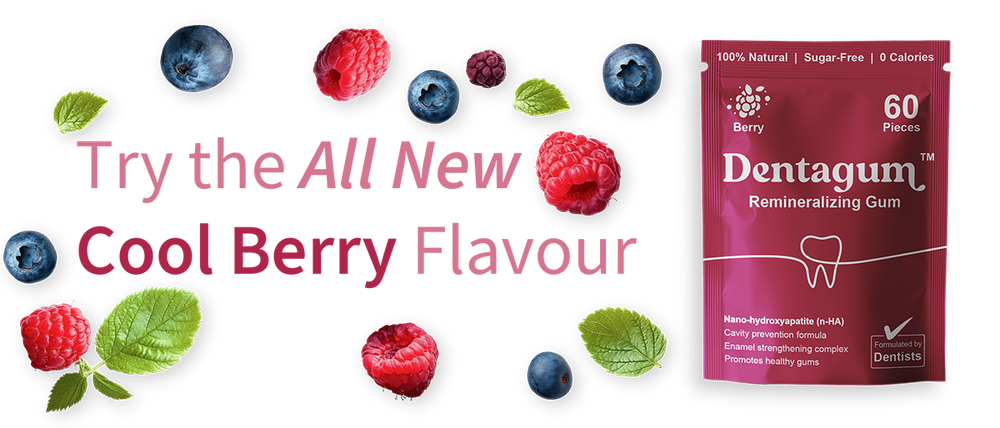
Functional gum with nano hydroxyapatite and xylitol adds a further layer here, supporting enamel mineral density and suppressing the bacteria responsible for both cavities and the kind of bad breath that can independently undermine confidence in close social situations. This is not about achieving a dramatic transformation. It is about building the kind of quiet, consistent oral health foundation that lets you stop thinking about your mouth in social situations altogether, which is itself a meaningful form of confidence.
The Aesthetic Lever: Addressing How Your Smile Looks
For the more visible, aesthetic side of this connection, teeth whitening is the most direct and accessible option most people consider, and the research on tooth color specifically as a smile dissatisfaction driver supports this: one campus based study found tooth color was the single most common smile component causing dissatisfaction among the surveyed population, ahead of alignment or any other factor.

Modern peroxide free whitening actives like PAP+ offer a genuinely gentler path toward this than traditional high concentration peroxide treatments, particularly relevant for anyone whose enamel may already be somewhat sensitive or who is hesitant about whitening because of past discomfort. Purple whitening strips built around PAP+ and nano hydroxyapatite work through complementary mechanisms: PAP+ oxidizes surface stains without the same depth of enamel penetration associated with peroxide sensitivity, while nano hydroxyapatite supports the enamel surface throughout the process. This gives people a way to address the specific aesthetic driver of smile dissatisfaction, tooth color, without the discomfort that has historically kept some people away from whitening altogether.
Two Levers, Two Approaches
- Health foundation: Consistent brushing, flossing, regular dental checkups, and chewing sugar free xylitol and nano hydroxyapatite gum after meals to fill the gap brushing cannot reach
- Aesthetic confidence: Addressing tooth color specifically, the most commonly cited smile dissatisfaction driver, through a gentle, peroxide free option like PAP+ whitening strips
- Both matter independently: Health supports day to day comfort and function; appearance supports how confident you feel in photographs, close conversations, and moments that call for an open smile
- Neither requires perfection: The research shows a gradient, not a binary. Meaningful improvement in either area tends to correspond with meaningful improvement in reported confidence, not just achieving some flawless ideal
A Realistic, Encouraging Approach
None of this research suggests that oral health or smile appearance is the only thing that matters for confidence and wellbeing, and it would be an overstatement to imply that whitening your teeth or improving your oral hygiene routine will resolve deeper self esteem concerns on its own. Self esteem and confidence are shaped by many factors, only some of which relate to appearance at all. What the research does support is something more modest and genuinely encouraging: for a meaningful share of people, dissatisfaction with their smile is a specific, addressable factor connected to lower reported confidence, and taking concrete steps toward a healthier, brighter smile is a reasonable, evidence supported way to address one real piece of that picture.
The most sustainable approach treats this as an ordinary act of self care rather than a dramatic transformation project: consistent daily habits that support genuine oral health, paired with a straightforward, low risk way to address tooth color if that is something you have noticed affecting how freely you smile. Small, consistent effort in both directions compounds over weeks and months, the same way the underlying research shows confidence tracking gradually with oral health and smile satisfaction rather than shifting overnight.
Frequently Asked Questions
Is there real research connecting oral health to confidence, or is this just marketing?
There is genuine, credible research behind this connection. A Cigna commissioned national study found smile satisfaction is one of the top three drivers of self confidence in the US, with 93 percent of people completely satisfied with their smile reporting excellent or very good self confidence, compared to only 30 percent among those not satisfied at all. Peer reviewed academic research using validated psychological measurement tools has found similar, statistically significant correlations between dental aesthetic satisfaction and self esteem across multiple independent studies.
How common is it for people to hide their smile because of insecurity?
Quite common. A 2024 survey of 4,000 Americans found that 23 percent said they do not show their teeth when smiling specifically because they feel insecure about them, with 16 percent describing general unhappiness with their teeth and 7 percent describing stronger negative feelings toward their smile.
Does the act of smiling itself actually improve mood, or is that just a saying?
There is genuine scientific evidence for this, known as the facial feedback hypothesis. A large, rigorous multi lab study called the Many Smiles Collaboration, involving nearly 4,000 participants across 19 countries and published in Nature Human Behaviour, found that both mimicking smiling expressions and deliberately activating smiling facial muscles produced a small but statistically consistent boost in reported happiness. The researchers noted the effect is modest and not a treatment for clinical depression, but it is a real, measurable finding.
Should I focus on my oral health or my smile's appearance first?
Both matter, but they address different things. Oral health, consistent brushing, flossing, checkups, and habits like chewing functional gum after meals, supports day to day comfort and function, letting you stop thinking about your mouth in social situations. Smile appearance, particularly tooth color, is the most commonly cited specific driver of smile dissatisfaction in research and connects more directly to how confident people feel in photographs and close conversations. Addressing both, starting with whichever feels more relevant to your own experience, is a reasonable approach.
What is the most common reason people are dissatisfied with their smile?
Tooth color. A campus based study using components from the Psychosocial Impact of Dental Aesthetics Questionnaire found tooth color was the single most common smile component causing dissatisfaction among the surveyed population, ahead of alignment or any other single factor.
Can whitening my teeth actually help with confidence, or is that overstating it?
The research supports a real, if modest, connection rather than a dramatic transformation claim. Since tooth color is the most commonly cited specific driver of smile dissatisfaction, and smile satisfaction correlates strongly with self reported confidence in national survey data, addressing tooth color through a safe, gentle option is a reasonable, evidence aligned step for someone whose smile dissatisfaction centers specifically on color. It is not a substitute for addressing broader self esteem concerns unrelated to appearance.

Bottom Line
The connection between oral health, smile appearance, and confidence is genuinely supported by research, not just an assumption. National survey data shows a striking gap in self reported confidence between people satisfied and dissatisfied with their smile, nearly a quarter of Americans consciously hide their smile due to insecurity, and peer reviewed academic research using validated psychological tools consistently finds the same pattern. Even the simple physical act of smiling appears to carry its own small, genuine mood benefit, independent of what prompted it.
None of this means appearance is the only thing that matters for how you feel about yourself. But it does mean that investing in both the health and the visible brightness of your smile is a reasonable, evidence aligned form of everyday self care, not a superficial indulgence. Consistent oral health habits build the comfortable, confident foundation that lets you stop thinking about your mouth altogether, and addressing tooth color, the single most commonly cited driver of smile dissatisfaction, through a gentle option gives you a direct way to address the aesthetic piece specifically.
Explore Dentagum: Gum for Daily Health, Strips for a Brighter SmileResearch Summary
This article draws on national survey data, peer reviewed dental psychology research, and facial feedback hypothesis studies. Key sources include: Cigna, Behind the Smile: Oral Health and Self Esteem, Cigna Dental DNA (commissioned national study; smile satisfaction as top three driver of self confidence; 93 percent excellent or very good self confidence among completely satisfied respondents versus 30 percent among not at all satisfied; 91 percent among excellent oral health raters versus 37 percent among fair or poor raters; routine dental care of two or more visits per year associated with higher self confidence); Affordable Dentures and Implants, Smile Survey, November 2024 (4,000 Americans surveyed; 23 percent avoid showing teeth when smiling due to insecurity; 16 percent unhappy with teeth; 7 percent describe stronger negative feelings toward their smile); Frontiers in Psychology 2026, Psychosocial impact and self esteem in patients seeking dental aesthetic treatment, cross sectional study using PIDAQ and RSES (significant positive correlation between psychosocial impact of dental aesthetics and self esteem; higher smile line associated with significantly lower self esteem and psychosocial scores; October 2024 to February 2025 data collection, Batman University ethics approval); Frontiers in Oral Health 2025, Dental confidence and subjective well being in young adults, mediating role of self esteem (association between self esteem and aesthetic component of smile among adolescents); PMC3792334, Dental Esthetics and Its Impact on Psycho Social Well Being and Dental Self Confidence, campus survey of 426 North Indian university students (tooth color most common smile dissatisfaction driver at 27.9 percent; highly satisfied respondents significantly more likely to show teeth while smiling and enjoy seeing teeth in photographs and videos); Coles N et al, A multi lab test of the facial feedback hypothesis by the Many Smiles Collaboration, Nature Human Behaviour, 2022 (nearly 4,000 participants across 19 countries; facial mimicry and voluntary facial action tasks both produced small but consistent boost in reported happiness; effect not strong enough to treat clinical depression); Stanford Report, Posing smiles can brighten our mood, October 2022 (summary of Many Smiles Collaboration findings led by Nicholas Coles). This article does not diagnose or treat any mental health condition; readers experiencing significant self esteem or mental health concerns unrelated to appearance are encouraged to consult a qualified professional.
References
- Cigna. Behind the Smile: Oral Health and Self Esteem. Cigna Dental DNA. dental-dna.cigna.com. [National commissioned study; smile satisfaction as top three driver of self confidence; 93 percent versus 30 percent self confidence gap by smile satisfaction; 91 percent versus 37 percent gap by oral health rating; routine dental care correlation with self confidence]
- Affordable Dentures and Implants. Smile Survey: New Data on How Americans Feel About Their Teeth. November 7, 2024. [4,000 Americans surveyed; 23 percent avoid showing teeth when smiling due to insecurity; 16 percent unhappy with teeth; 7 percent describe hating their smile]
- Psychosocial impact and self esteem in patients seeking dental aesthetic treatment: a cross sectional study using PIDAQ and RSES. Frontiers in Psychology. 2026. [Significant positive correlation between dental aesthetics psychosocial impact and self esteem; higher smile line associated with lower self esteem and psychosocial scores; data collected October 2024 to February 2025]
- Dental confidence and subjective well being in young adults: the mediating role of self esteem. Frontiers in Oral Health. 2025. [Association between self esteem and aesthetic component of smile among adolescents; smile aesthetics and psychosocial wellbeing correlation]
- Dental Esthetics and Its Impact on Psycho Social Well Being and Dental Self Confidence: A Campus Based Survey of North Indian University Students. PMC. PMC3792334. [426 students surveyed; tooth color most common smile dissatisfaction component at 27.9 percent; highly satisfied respondents significantly more likely to show teeth while smiling and enjoy seeing teeth in photographs]
- Coles NA, March DS, Marmolejo-Ramos F et al. A multi lab test of the facial feedback hypothesis by the Many Smiles Collaboration. Nature Human Behaviour. 2022. [3,878 participants across 19 countries; facial mimicry and voluntary facial action tasks produced small but consistent boost in happiness; effect not strong enough to treat clinical depression]
- Posing smiles can brighten our mood. Stanford Report. October 2022. [Summary of Many Smiles Collaboration findings led by Stanford research scientist Nicholas Coles]
