
Oral Care for Busy People: Protect Your Teeth Effortlessly
If your oral care routine is brush-in-the-morning-hope-for-the-best, this is for you. The good news: the gaps in most people's routines aren't fixed by doing more. They're fixed by doing different things at the moments that matter. Here's the minimum effective routine for people who don't have time for anything extra.

The minimum effective oral care routine for busy people is three things: brush for 2 minutes before bed (if you do nothing else, do this), chew xylitol and nano-HAp gum for 10 to 20 minutes after each main meal (passive, no extra time, no bathroom), and floss once a day using whatever interdental tool you'll actually use consistently. The ADA estimates this routine takes around 5 minutes of active attention per day, the rest happens passively. The most common gap in busy people's routines isn't insufficient brushing. It's zero post-meal coverage for the acid events that occur between brushing sessions, which is where most cavity formation actually happens.
Most oral care advice assumes you have time for an elaborate routine. You don't. Or more precisely: you have the same amount of time everyone has, and you've already allocated most of it to things that feel more urgent than your teeth.
The good news is that a well-designed minimal routine covers the clinically relevant bases without requiring any more time than your current one. The bad news is that most people's current routine has the wrong gaps. They brush in the morning. They skip the evening brush when tired. They floss sporadically. And they do absolutely nothing during the 8 to 12 hours between morning and evening brushing when most of the day's acid events occur.
This article reorganizes oral care around what actually matters and what requires no extra time at all.
What Busy People's Oral Care Gets Right (and Gets Wrong)
Most people who consider themselves too busy for a full oral care routine are already doing the basics. They brush, usually twice a day, usually for roughly the right amount of time. That foundation is solid.
What they're missing isn't more brushing. It's coverage of the period between brushing sessions. Every meal, snack, and acidic drink creates a 20 to 40 minute window where oral pH drops below the 5.5 enamel critical threshold and enamel begins losing mineral. Brushing at 7am doesn't protect you from the acid attack from your 12pm lunch. Brushing at 10pm doesn't undo the cumulative mineral loss from three or four uncovered acid events across the day.
The gap isn't time-based. It's habit-based. And the solution to the habit gap doesn't require more time. It requires a passive intervention that runs alongside your existing day.
The American Dental Association calculates that a person who visits the dentist twice a year spends approximately 2 hours per year in the dental chair. Following the core recommendation of twice-daily brushing and daily flossing takes around 30 hours per year of home care, roughly 5 minutes per day of active effort. The post-meal gum habit adds zero additional active time because it happens passively alongside other activities. Five minutes a day is the entire time budget for a clinically complete oral care routine.
The Minimum Effective Routine: Three Things
Strip oral care down to what's clinically necessary and you get three things. Everything else is optimization. These three are the non-negotiable minimum.
1. Brush before bed, every single night

If you had to choose one brushing session, it's the evening one. The overnight period has your teeth covered in whatever plaque and food debris accumulated across the day, with 7 to 8 hours of near-zero salivary flow ahead of it. Bacteria operate unchecked in that low-saliva overnight environment. Whatever is on your teeth when you fall asleep has the longest uninterrupted acid production window of the entire day.
Morning brushing removes overnight bacterial accumulation, which is important. Evening brushing prevents the most significant acid production window from starting with a full day's worth of plaque and residue. If you're choosing between them, evening wins.
The upgrade that costs nothing: spit but don't rinse. Rinsing after brushing washes away the fluoride or nano-HAp mineral that your toothpaste deposited on enamel. Not rinsing leaves that mineral in contact with your enamel overnight, doing protective work during the longest undisturbed contact window of the day. This one change to your existing routine, requiring zero extra time, meaningfully extends the benefit of every evening brushing session.
2. Chew remineralizing gum after meals (zero extra time)

This is where the "no extra time" claim is most literal. The American Dental Association says directly: "If you cannot brush your teeth immediately after a meal, then chewing gum can help." They endorse 20 minutes of sugar-free gum chewing after meals for cavity prevention, citing the saliva stimulation that buffers post-meal acid and delivers minerals to enamel.
For a busy person, the appeal is practical: chewing gum requires no dedicated time because it happens alongside whatever you're already doing after eating. You're at your desk answering emails, or on your commute, or clearing the kitchen after dinner. The gum runs in the background of those existing activities. The 20 minutes of protective work costs you zero minutes of productive time.
This is the gap-filler for every post-meal window that brushing doesn't cover. Breakfast, lunch, dinner, coffee, snacks: each one is an acid event. Covering them with gum after each one is the highest-leverage change available to someone who has no time to add anything to their day.
3. Floss once a day with whatever you'll actually use
Toothbrush bristles cannot clean between teeth. This is a physical impossibility, not a brushing technique problem. The spaces between teeth, where cavities most commonly form in adults, are only accessible to interdental tools. The ADA calls daily interdental cleaning essential.
The right interdental tool is whichever one you'll actually use. String floss is the gold standard but has an adoption rate of only 16% daily among US adults, partly because people find it difficult and time-consuming. Floss picks remove the dexterity barrier. Water flossers take 60 seconds and are significantly more comfortable for most people. If you've been skipping flossing because you dislike string floss, switching to a water flosser is not compromising on dental health. It's choosing the tool with the higher probability of being used consistently.
Where to fit floss into a busy day: Evening is best because it removes the day's full interdental accumulation before the overnight period. If evening is where your routine breaks down, floss in the morning. The best flossing time is whenever you'll reliably do it.
The Passive Habit: How Gum Does the Work While You Do Other Things
The post-meal gum habit is the most useful concept in this article for busy people specifically, because it's the only oral care intervention that requires genuinely no dedicated time.
Chewing gum stimulates salivary flow to 10 to 12 times the resting rate within the first few minutes, according to the ADA. That surge of saliva buffers the post-meal acid that would otherwise take 30 to 40 minutes to clear at resting flow rates. It delivers calcium and phosphate ions to enamel surfaces where mineral was lost during the acid exposure. And with xylitol, it actively kills S. mutans bacteria through a specific metabolic disruption, progressively reducing the bacterial population that produces the acid driving cavity formation in the first place.
None of this requires your attention. The mechanism runs during the 20 minutes you're already spending on something else after eating: answering messages, commuting, watching something, cleaning up the kitchen, or getting back to work. The habit lives inside existing time, not in addition to it.
The habit lives at the locations where you eat, not in the bathroom where you brush. Desk drawer for work lunches. Kitchen counter or dining table for home meals. Jacket pocket or bag for everything else. A pouch on the bathroom shelf will not remind you of this habit at 12:30pm. A pouch in the top desk drawer will. Location is the trigger. Get the tool to the right location and the habit fires automatically.
The Upgrades That Cost Nothing
Beyond the three essential habits, a few changes to things you're already doing produce meaningfully better outcomes with no additional time investment.
Brush before breakfast, not after
Brushing after breakfast when breakfast involved coffee or juice means brushing while enamel is softened from acid exposure. Brushing on softened enamel abrades the surface rather than cleaning it. Brushing before breakfast removes overnight plaque and positions fluoride on enamel surfaces before the first acid exposure of the day arrives. Changing the sequence of two things you're already doing costs nothing and produces a better outcome.
Drink your coffee in one sitting
A coffee consumed over 15 minutes creates one Stephan Curve with a defined endpoint. A coffee sipped over 90 minutes creates near-continuous acid exposure with no recovery window. Finishing your coffee rather than nursing it across the morning converts an extended acid event into a defined one that the post-coffee gum habit can meaningfully address. No behavior removed from your life. Just a sequence change.
Rinse with water before chewing gum
A 15-second water rinse before chewing gum after a meal clears easily dislodged food particles and dilutes residual acid before the gum step begins. Most people already have a water bottle nearby. This adds 15 seconds to a habit that otherwise takes zero extra time.
Floss picks in the shower
For people who consistently skip flossing because they forget or don't want to add time to their evening bathroom routine: floss picks in the shower. The time is already allocated. The activity happens while you're doing something else. A small container of floss picks on the shower shelf converts an existing daily shower into an interdental cleaning opportunity with no additional time commitment.
The Habits That Are Not Worth Your Time
For busy people, knowing what not to do is as useful as knowing what to do. Some oral care habits are commonly recommended but produce minimal incremental benefit for someone who already has the basics covered.
Mouthwash in addition to brushing: For someone who is brushing thoroughly twice a day and flossing daily, a separate mouthwash step provides limited incremental clinical benefit in most cases. If your quart bag is full on a flight, skip the mouthwash before the toothpaste. If your bathroom counter is cluttered, removing the mouthwash removes a friction point from your routine without meaningfully compromising your outcomes. Mouthwash belongs in the optional column for anyone with a solid brush-floss-gum routine.
Whitening products as a daily habit: Whitening strips, whitening mouthwashes, and whitening toothpastes address cosmetics rather than oral health. They're fine occasionally, but they consume routine real estate and budget without improving cavity prevention, gum health, or enamel mineral status. If you're going to add one product to a busy oral care routine, a remineralizing gum with nano-HAp addresses something your routine is actually missing. A whitening strip does not.
Brushing after every meal: Unless you're absolutely certain the meal wasn't acidic (and most meals have some acid component), brushing immediately after eating risks abrasion on softened enamel. The ADA and multiple dental authorities recommend waiting at least 30 minutes after acidic exposure before brushing. The post-meal window is where gum belongs, not a toothbrush.
When tired, the evening brush is the first thing to go. It's also the most important brushing session of the day. Whatever plaque and food debris is on your teeth when you fall asleep operates in a low-saliva overnight environment for 7 to 8 hours. If you're going to skip one session on a hard day, skip the morning brush, not the evening one. The morning brush removes overnight accumulation that has 8 hours to do damage. The evening brush prevents that 8-hour window from starting on a dirty surface. Prioritize accordingly.
If You Only Do One New Thing
For the busiest people: one change, maximum impact.
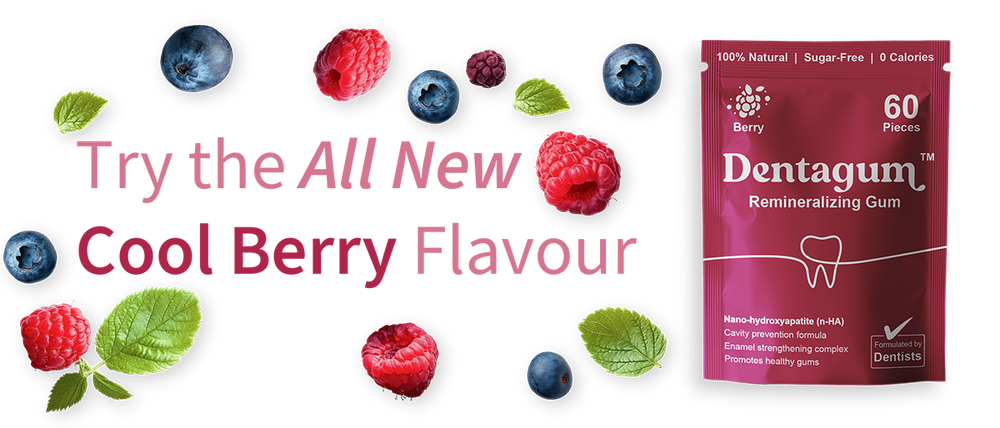
Put a pouch of xylitol and nano-HAp remineralizing gum in your desk drawer, on your kitchen counter, and in your bag. After every main meal, take one piece and chew for as long as you can before moving on to the next thing, aiming for 10 to 20 minutes. Do this every day for four weeks without changing anything else.
This covers the largest gap in most busy people's routines (zero post-meal coverage for 5 to 8 daily acid events) with zero additional time. It doesn't require remembering to do something extra. It requires putting the tool where the habit needs to happen and chewing for a few minutes while doing whatever you were already going to do after eating.
At 2 to 4 pieces per day, a 60-piece pouch of Dentagum lasts 15 to 30 days. At $0.55 per piece, covering your three main meals every weekday costs $2.75 per working week. That's less than the coffee you're probably having with lunch that creates its own acid event worth covering.
Try Dentagum risk-free — 30-day guaranteeFrequently Asked Questions
What is the most important oral care habit for busy people?
Evening brushing. If you had to choose one session, it's the one before bed. Whatever plaque and food residue is on your teeth at bedtime operates for 7 to 8 hours in a low-saliva overnight environment. The morning brush removes overnight accumulation, which matters. The evening brush prevents the worst-case overnight acid production window from starting on a full day's worth of unaddressed residue. If your routine is under pressure on a hard day, prioritize evening over morning, not the reverse.
What is the minimum oral care routine I can get away with?
Two brushings per day (2 minutes each), one flossing session daily, and post-meal chewing gum for 20 minutes after your main meals. The ADA's estimate is that this takes around 5 minutes of active daily attention in total. The post-meal gum habit adds zero extra time because it happens passively alongside existing post-meal activities. This is the clinically complete minimum: it covers overnight plaque, post-meal acid, and interproximal areas that brushing cannot reach.
Is chewing gum a good oral care habit for busy people?
Yes, specifically because of the zero added time cost. The ADA endorses sugar-free gum chewed for 20 minutes after meals as a cavity prevention tool, citing the saliva stimulation that buffers post-meal acid and delivers calcium and phosphate to enamel. For busy people, it covers the post-meal windows where most cavity formation actually happens, without requiring any dedicated time, any equipment, or any location other than wherever you happen to be after eating.
Is mouthwash necessary if you brush and floss?
Not for most people. For someone who brushes twice daily with fluoride toothpaste and flosses daily, mouthwash provides limited incremental clinical benefit in most circumstances. The cases where mouthwash adds meaningful value are specific: prescribed antiseptic rinses for active gum disease treatment, prescription fluoride rinses for high-caries-risk patients, or dry mouth management. As a routine addition for a busy person who brushes and flosses well, it's optional and low-priority compared to establishing the post-meal gum habit.
Can I floss in the morning instead of at night?
Yes. The ADA's guidance is that the best time to floss is whenever you'll reliably do it. Evening flossing removes the day's interdental accumulation before the overnight period, which is the clinical optimum. But a person who consistently flosses in the morning produces far better outcomes than someone who intends to floss at night and skips it regularly. Pick the time that produces the most consistent habit and stay with it.
What do I do if I forget to brush at night?
Do it when you remember, even if it's 2am. Teeth don't know what time it is, and the mechanical plaque removal from a late brushing session is meaningfully better than going until morning. More usefully: reduce the friction of the evening brush so forgetting becomes less likely. Keep your toothbrush visible on the counter rather than in a cabinet. Brush before you sit down on the couch for the evening rather than waiting until you're already in bed and too tired. Routine placement determines how often the habit fires automatically versus requiring a conscious decision.
The Bottom Line
You don't need a more time-consuming oral care routine. You need one that covers the right windows in the right order. Most busy people are covering morning and evening with brushing, skipping the interproximal spaces by not flossing, and leaving every post-meal acid event completely uncovered between sessions.
Fixing that doesn't require more time. It requires a 1 to 2 minute flossing step once a day, the sequence change of brushing before rather than after breakfast, and a passive 20-minute post-meal gum habit that runs alongside whatever you're already doing after eating. The active time addition is 1 to 2 minutes. The passive time addition is zero.
The ADA estimates the complete home care routine takes around 5 minutes of active attention per day. The people who spend that 5 minutes well are the ones who leave the dentist with no new cavities. The people who skip the flossing and leave the post-meal windows uncovered are the ones who keep getting filling appointments. The time difference between those two groups is 1 to 2 minutes per day and one pouch in a desk drawer.
Try Dentagum risk-free — 30-day guarantee at dentagum.coResearch Summary
- American Dental Association. Home Care Oral Health Topics. An individual who visits the dentist twice a year spends approximately 2 hours per year in the dental chair vs around 30 hours per year in home oral care. Home care is the primary driver of oral health outcomes. Twice-daily brushing for 2 minutes is the foundation.
- American Dental Association. Chewing Gum Oral Health Topics. "If you cannot brush your teeth immediately after a meal, then chewing gum can help." Sugar-free gum endorsed for 20 minutes after meals. Stimulates saliva to 10-12x resting rate. Neutralizes acids, delivers calcium and phosphate, washes food particles.
- American Dental Association. Floss Oral Health Topics. Only 16% of Americans floss daily. Toothbrush bristles cannot clean between teeth. Interdental cleaning is essential. The best time to floss is whenever you'll reliably do it.
- Söderling E et al. BMC Oral Health, 2025. Xylitol gum significantly reduced S. mutans in 12/14 studies vs sorbitol. Cumulative antibacterial effect with daily post-meal use.
- Limeback H, Enax J, Meyer F. Biomimetics, 2023. 44 clinical trials. Contact time during chewing is key variable for nano-HAp effectiveness. Post-meal recovery window is optimal for enamel mineral delivery.
References
- American Dental Association. "Home Oral Care." Oral Health Topics. https://www.ada.org/resources/ada-library/oral-health-topics/home-care
- American Dental Association. "Chewing Gum." Oral Health Topics. https://www.ada.org/resources/ada-library/oral-health-topics/chewing-gum
- American Dental Association. "Dental Floss/Interdental Cleaners." Oral Health Topics. https://www.ada.org/resources/ada-library/oral-health-topics/floss
- Söderling E et al. "Specific Effects of Xylitol Chewing Gum on Mutans Streptococci Levels." BMC Oral Health, 2025. https://link.springer.com/article/10.1186/s12903-025-06602-1
- Limeback H, Enax J, Meyer F. "Clinical Evidence of Biomimetic Hydroxyapatite in Oral Care Products for Reducing Dentin Hypersensitivity." Biomimetics, 2023. https://pmc.ncbi.nlm.nih.gov/articles/PMC9844412/
