
Morning vs Night: When Is the Best Time to Care for Your Teeth?
Brush before breakfast if you can, since overnight saliva reduction lets bacteria multiply for six to eight hours undisturbed, and brushing first coats enamel with fluoride before any morning acid exposure. If you brush after, wait 30 to 60 minutes to avoid brushing over temporarily softened enamel. Night brushing carries even more weight, clearing the plaque that would otherwise sit in a low-saliva environment for the entire night, the highest-risk window in the daily cycle. The gap missed in almost every timing conversation: the hours between meals, when brushing isn't an option. This is exactly the window the ADA specifically endorses sugar-free gum for.

Quick Answer
Brush before breakfast, not after, if you can build the habit. Overnight, saliva flow drops dramatically, allowing bacteria to multiply undisturbed for six to eight hours, so brushing first thing removes that overnight buildup and coats enamel with fluoride before it faces the acid in your coffee, juice, or fruit. If you prefer brushing after breakfast, wait 30 to 60 minutes, since acidic foods and drinks temporarily soften enamel, and brushing too soon can wear away that softened layer rather than simply cleaning it. Night brushing matters even more than morning brushing, since it clears the plaque and food debris that would otherwise sit undisturbed in a low-saliva environment for the entire night, which dentists and researchers consistently describe as the single highest-risk window in the daily cycle. The gap that gets missed in almost every conversation about brushing timing is everything in between, the hours after lunch, after coffee, after snacks, when brushing usually isn't an option at all. This is precisely the window the ADA specifically endorses sugar-free gum for, and it is where most people's oral care routine has a real, unaddressed hole in it.
Last updated: July 2026. Reviewed against dental research on brushing timing and acid erosion, overnight salivary flow studies, and ADA guidance on post-meal gum chewing
The brush-before-or-after-breakfast question is one of the most debated everyday dental topics, and the debate exists because both sides have a real point. This article works through the actual mechanism behind each recommendation, settles the morning timing question with the evidence, explains why nighttime brushing carries more weight than most people realize, and covers the daytime gap that brushing alone was never designed to fill.
The Brush Before or After Breakfast Debate
This debate persists because there are genuine arguments on both sides, and the right answer depends partly on what you plan to eat. The case for brushing before breakfast centers on what happens overnight. During sleep, saliva production drops substantially, creating hours of low protection during which bacteria multiply largely undisturbed. Brushing before breakfast clears this overnight buildup, coats enamel with a protective layer of fluoride, and stimulates fresh saliva flow right before you introduce food and drink into your mouth, meaning your teeth are already better defended by the time breakfast acids arrive.
The case for brushing after breakfast centers on removing the food particles and residue that a meal leaves behind, which is a legitimate goal in its own right, particularly if breakfast includes sticky or sugary foods that would otherwise sit on tooth surfaces for hours until the next brushing session. Some experts interviewed by the Washington Post on this exact question said they personally brush both before and after their morning meal, reflecting that both goals, clearing overnight bacteria and clearing meal residue, are legitimate and not mutually exclusive.
The consensus among dental sources leans toward brushing before breakfast as the generally safer default, particularly for children, older adults, and anyone with existing sensitivity, specifically because of what happens next: many common breakfast items are acidic, and that acidity interacts badly with a toothbrush.
Why Acidic Breakfast Foods Change the Answer
The core issue with brushing immediately after breakfast is not about cleanliness. It is about mechanical timing relative to a chemical process happening in your mouth. Coffee, orange juice, grapefruit, tomatoes, and many fruit-based smoothies are acidic enough to temporarily soften the mineral structure of enamel on contact. This softening is normal and, on its own, reversible: saliva neutralizes the acid and the enamel re-hardens over time. The problem arises specifically when a toothbrush is introduced during that softened window. Brushing mechanically abrades enamel that is temporarily weaker than usual, and dental sources describe this as functionally similar to sanding down a surface before it has had a chance to reset, increasing the risk of enamel erosion and sensitivity over repeated exposure, rather than simply cleaning the tooth as intended.
This is why the debate is not really about morning versus after-breakfast in the abstract. It is about the specific timing relative to acid exposure. Brushing before an acidic meal avoids this problem entirely, since the brushing happens before any acid has touched the enamel. Brushing after an acidic meal, without waiting, is the specific combination that dental research flags as worth avoiding.
The 30 to 60 Minute Rule for Brushing After Eating
If brushing after breakfast fits your routine better, or you simply forget to brush beforehand, the evidence-supported adjustment is straightforward: wait. Dental sources consistently recommend waiting at least 30 minutes after eating, and specifically after consuming acidic foods or drinks, before brushing. This waiting period gives saliva time to do its natural job, buffering the acid and beginning the re-hardening process on the enamel surface, so that by the time you do brush, you are cleaning a surface that has already returned closer to its normal, resilient state rather than one still in a softened, vulnerable window.
Some sources are more conservative and recommend closer to a full hour, particularly after distinctly sour or highly acidic foods like citrus fruit or orange juice consumed on their own rather than as part of a larger meal. The practical range worth remembering is 30 to 60 minutes: 30 minutes as a reasonable minimum for most breakfast combinations, and closer to 60 minutes if breakfast specifically included something distinctly acidic on its own.
A useful bridge habit during that waiting window: rinsing with plain water immediately after eating helps physically clear some food residue and dilute the acid without the mechanical abrasion risk of brushing, and some research has found this simple habit measurably reduces cavity-causing bacteria levels heading into the rest of the day.
The Morning Decision Tree
- Default recommendation: Brush before breakfast. This clears overnight bacterial buildup, applies protective fluoride, and avoids any risk of brushing over softened, acid-exposed enamel.
- Especially important for: Children, older adults, and anyone with existing tooth sensitivity, where the safer default matters more.
- If you prefer brushing after breakfast: Wait 30 to 60 minutes, longer if breakfast included something distinctly acidic like citrus juice or fruit on its own.
- In the waiting window: Rinse with plain water to help clear residue and dilute acid without the abrasion risk of brushing too soon.
- Either way: Brushing twice daily for two full minutes with fluoride toothpaste remains the non-negotiable baseline regardless of exact timing preference.
Why Night Brushing Matters Most

If forced to weight one brushing session over the other, dental sources are fairly consistent: nighttime brushing carries slightly more importance for long-term cavity and gum disease prevention, and the reasoning comes back to the same saliva mechanism discussed above, applied to a much longer, uninterrupted window.
Saliva flow follows a circadian pattern, dropping substantially during sleep, in some descriptions nearly to zero. This matters because saliva is actively working throughout the day: washing away food particles, neutralizing the acid produced when bacteria break down sugars, and delivering calcium and phosphate back to enamel surfaces. During the six to eight hours of typical sleep, none of that active defense is happening at anywhere near daytime levels, while any plaque or food debris left on the teeth at bedtime has an extended, completely undisturbed window to feed bacteria and drive the pH in the mouth down toward the level at which enamel begins to demineralize.
This is why skipping the nighttime brushing session is considered a meaningfully bigger miss than skipping the morning one. A study published in BMC Oral Health (Hassan et al., 2021) found that children who regularly brushed their teeth at night had significantly fewer cavities compared to those who did not, a finding consistent with the broader mechanism: the longest, lowest-saliva window of the day is also the highest-stakes window for whatever bacterial load was present on the teeth when that window began.
The practical implication is not that morning brushing is optional. It clears the overnight bacterial buildup and resets the mouth for the day. But if any single session in a day had to be protected without fail, the evidence points clearly toward the one right before bed.
The Gap Nobody Talks About: Daytime Hours

Almost every conversation about brushing timing, including most of the research and advice covered so far, focuses entirely on the two ends of the day: the morning session and the night session. What gets left out is the substantial stretch of hours in between, when the majority of actual eating and drinking happens, and when brushing is almost never realistically available.
Think through an ordinary day. You brush after waking, or before breakfast. Then comes coffee, a mid-morning snack, lunch at your desk or in a restaurant, an afternoon coffee or soda, maybe a snack before dinner, and dinner itself, all before you get anywhere near a toothbrush again at night. Each of these eating occasions is a fresh acid challenge for enamel, following the same basic mechanism discussed earlier: bacteria in plaque ferment whatever carbohydrate or sugar you just consumed, producing acid that drops the pH in your mouth below the threshold at which enamel begins to lose mineral. That challenge and recovery cycle, known to dental researchers as the Stephan curve, typically takes 20 to 40 minutes to resolve on its own through natural saliva buffering, assuming saliva flow is adequate.
The honest reality is that almost nobody brushes after lunch, after a coffee, or after an afternoon snack. Brushing twice a day, in the morning and at night, was never designed to address these in-between windows, and it structurally cannot, since a toothbrush is rarely available and brushing multiple times throughout a workday is not a realistic habit for the overwhelming majority of people.
Where Chewing Gum Fits Into the Timing Framework

This is precisely the gap the ADA has a specific, named answer for, and it is a genuinely useful piece of guidance that gets far less attention than the brush timing debate. The ADA's position states plainly that chewing sugarless gum for 20 minutes following meals has been shown in scientific studies to help prevent tooth decay, and separately, that if you cannot brush your teeth immediately after a meal, then chewing gum can help.
The mechanism lines up directly with everything discussed above about saliva's role in oral protection. Chewing stimulates salivary flow to 10 to 12 times the resting rate, well above what the mouth produces on its own between meals. That surge of stimulated saliva neutralizes the acid produced by post-meal bacterial activity, delivers calcium and phosphate back to enamel surfaces during the exact window when the Stephan curve shows demineralization risk is highest, and physically clears some food debris from tooth surfaces, all without needing a toothbrush, a sink, or two free minutes in a bathroom.
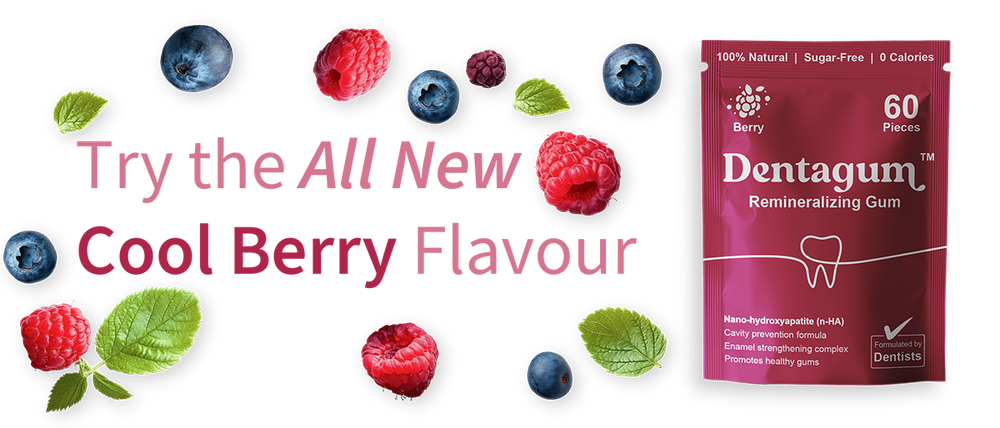
This does not compete with or replace the brushing timing guidance covered above. It fills the specific, structural gap that brushing timing advice cannot reach: the hours between the morning brush and the night brush, when eating happens repeatedly and brushing is not realistically available. Functional gum with nano-hydroxyapatite adds a further layer to this mechanism, since nano-HAp particles deposit mineral directly into early enamel microporosities during the extended 10 to 20 minute chewing window, a meaningfully longer contact time than the roughly two minutes of a typical brushing session. For the full mechanism behind this timing, see our article on the clinical evidence on gum timing and frequency.
A Practical Daily Timing Framework

Putting the full picture together produces a simple, complete framework rather than a single isolated rule. Brush before breakfast if you can build the habit, which clears overnight bacterial buildup and applies protective fluoride ahead of any morning acid exposure. If you brush after breakfast instead, wait 30 to 60 minutes, particularly if breakfast included anything distinctly acidic, and consider rinsing with water in the meantime. Throughout the day, after lunch, after coffee, after snacks, whenever brushing genuinely is not an option, chew sugar-free gum for 10 to 20 minutes, which is the ADA-endorsed way to address exactly this gap. At night, treat the pre-bed brushing session as non-negotiable, since this is the single highest-stakes window in the entire 24-hour cycle, given how far saliva flow drops during sleep and how long that low-protection window lasts.
None of these pieces replace the others. Morning brushing, nighttime brushing, and daytime gum chewing each address a different, specific window in the day's acid exposure pattern, and a complete oral care routine accounts for all three rather than relying on the two brushing sessions to somehow cover a sixteen-hour waking day on their own.
Frequently Asked Questions
Should I brush my teeth before or after breakfast?
Brushing before breakfast is the generally recommended default, since it clears overnight bacterial buildup and applies protective fluoride before any morning acid exposure from coffee, juice, or fruit. If you prefer brushing after breakfast, wait 30 to 60 minutes first, since acidic foods temporarily soften enamel, and brushing too soon can wear away that softened layer rather than simply cleaning it.
Why does night brushing matter more than morning brushing?
Saliva flow drops substantially during sleep, removing much of the mouth's natural defense against acid and bacteria for six to eight hours at a stretch, the longest continuous low-protection window in the day. Any plaque or food debris left on teeth at bedtime has an extended, undisturbed opportunity to feed bacteria and drive the mouth's pH down toward the point where enamel begins to demineralize. A study published in BMC Oral Health found that children who regularly brushed at night had significantly fewer cavities than those who did not, consistent with this mechanism.
How long should I wait to brush after eating?
Dental sources consistently recommend waiting at least 30 minutes after eating, particularly after acidic foods or drinks, before brushing. Some sources recommend closer to a full hour after distinctly acidic items like citrus fruit or juice consumed on their own. This waiting period allows saliva to neutralize the acid and begin re-hardening the temporarily softened enamel surface before a toothbrush is introduced.
What should I do about the hours between brushing sessions when I can't brush?
This is exactly the gap the ADA specifically addresses with its guidance on chewing sugar-free gum. The ADA states that chewing sugarless gum for 20 minutes following meals has been shown to help prevent tooth decay, and that if you cannot brush immediately after a meal, gum can help. Chewing stimulates saliva flow to 10 to 12 times the resting rate, neutralizing post-meal acid and delivering minerals back to enamel during the exact window when demineralization risk is highest, without requiring a toothbrush or sink.
Does rinsing with water help if I can't brush after a meal?
Yes, as a helpful bridge habit. Rinsing with plain water after eating helps physically clear some food residue and dilute acid without the mechanical abrasion risk that brushing carries when done too soon after an acidic meal. It is a reasonable interim step, though it does not deliver the same active saliva stimulation, mineral delivery, or extended contact time that chewing sugar-free gum provides.
Is twice-daily brushing enough if I eat multiple times throughout the day?
Twice-daily brushing for two full minutes with fluoride toothpaste remains the essential baseline and should never be skipped. However, it was never designed to address every eating occasion throughout the day, and for most people, brushing a third or fourth time during work hours is not realistic. The ADA-endorsed approach for these in-between windows is chewing sugar-free gum after meals, which addresses the acid-buffering and mineral-delivery functions that brushing provides, in a format that works anywhere, anytime, without a sink.
Bottom Line
Brush before breakfast when you can, and if you brush after, wait 30 to 60 minutes to let saliva neutralize any acid first. Treat the nighttime brushing session as the single most important one in your day, since overnight saliva reduction creates the longest, highest-risk window your teeth face in any 24-hour period. But the timing debate that gets all the attention, morning versus after breakfast, only covers two isolated moments in a day full of eating occasions that brushing structurally cannot reach.
The ADA has a specific, evidence-backed answer for everything in between: chewing sugar-free gum for 20 minutes after meals, whenever brushing isn't an option. This is not a workaround or a lesser substitute. It is a distinctly endorsed practice with its own mechanism, its own clinical evidence, and its own role in a complete daily framework, sitting alongside morning and night brushing rather than trying to replace either one.
Fill the Daytime Gap with DentagumResearch Summary
This article draws on dental research covering brushing timing, acid erosion, overnight salivary flow, and ADA gum chewing guidance. Key sources include: Medboundtimes.com, Brush Before or After Breakfast? What Dentists Really Recommend, November 2025 (waiting at least an hour after sour foods before brushing; rinsing with water before breakfast and brushing after found to lower cavity-causing germs by nearly 40 percent in one study; brushing before breakfast especially recommended for children, seniors, and sensitive teeth); Healthline, Should You Brush Your Teeth Before or After Breakfast, reviewed by Jennifer Archibald DDS, updated April 2024 (brushing before breakfast may better protect enamel; wait 30 to 60 minutes if brushing after meals; brushing stimulates saliva production for up to 5 minutes post-brush in a study of 21 older adults); ADA News, Brushing before or after breakfast (general consensus favors brushing before breakfast per Healthline reporting; wait 30 minutes and avoid acidic foods if brushing after); S4S Dental and Ameritas dental hygiene guidance (30 minute minimum wait after acidic foods before brushing; rinsing, flossing, or chewing sugar-free gum as interim options); Fernandez CE et al, Should We Wait to Brush Our Teeth? A Scoping Review Regarding Dental Caries and Erosive Tooth Wear, Caries Research 2024;58(4):454-467 (scoping review of timing studies relative to acid exposure and fluoride availability); Thorncrest Dental, Piedmont Oaks Dental, Schwimmer Dental, First Hill Dental Center, Clean Smiles Dental Clinic morning vs night brushing guidance (overnight saliva flow reduction significantly increases bacterial activity and demineralization risk; night brushing consistently described as carrying more weight for long-term cavity and gum disease prevention); Hassan et al, BMC Oral Health, 2021 (children who regularly brushed at night had significantly fewer cavities compared to those who did not); University of Iowa College of Dentistry, Why Brushing at Night Really Matters, May 2025 (CDC guidance on twice-daily brushing; nighttime plaque removal reduces inflammation and supports broader health outcomes); ADA Oral Health Topics, Chewing Gum (chewing sugarless gum 20 minutes after meals shown to help prevent tooth decay; gum recommended specifically when brushing immediately after a meal is not possible; saliva stimulated to 10 to 12 times resting rate through chewing). All Dentagum-specific guidance reflects the brand's recommended usage; broader research is cited at the ingredient and mechanism level.
References
- Brushing Before or After Breakfast? What Dentists Really Recommend. medboundtimes.com. November 15, 2025. [Wait at least an hour after sour foods before brushing; rinsing with water before breakfast and brushing after found to lower cavity-causing germs by nearly 40 percent in a cited study; brush before breakfast recommended especially for children, seniors, and sensitive teeth]
- Watson K. Should You Brush Your Teeth Before or After Breakfast? Medically reviewed by Archibald J, DDS. Healthline. Updated April 1, 2024. [Brushing before breakfast may better protect enamel and overall oral health; wait 30 to 60 minutes if brushing after meals; study of 21 older adults found saliva production increased for up to 5 minutes following brushing]
- Brushing before or after breakfast. ADA News. adanews.ada.org. [General consensus favors brushing before breakfast per expert reporting; those brushing after eating should wait 30 minutes and avoid acidic foods in that window]
- Should You Brush Teeth Before or After Breakfast? S4S Dental. July 9, 2025. [Wait at least 30 minutes before brushing after breakfast to allow saliva to neutralize acids; acidic breakfast items including fruit, smoothies, juices, and coffee can soften enamel temporarily]
- Brushing and Rinsing: Best dental hygiene practices. Ameritas. November 20, 2025. [Wait at least 30 minutes after meals, especially acidic foods, before brushing; rinsing, flossing, or chewing sugar-free gum recommended as interim options]
- Fernández CE, Silva-Acevedo CA, Padilla-Orellana F, Zero D, Carvalho TS, Lussi A. Should We Wait to Brush Our Teeth? A Scoping Review Regarding Dental Caries and Erosive Tooth Wear. Caries Research. 2024;58(4):454-467. [Scoping review of brushing timing studies relative to erosive tooth wear and dental caries risk; conflicting recommendations across studies regarding optimal timing after acid exposure]
- Morning vs Night Brushing: Why Nighttime Brushing Matters More for Preventing Cavities and Gum Disease. Thorncrest Dental. April 11, 2026. [Saliva flow decreases dramatically during sleep; nighttime described as the longest stretch teeth go without natural cleaning support]
- Morning vs. Evening Brushing. Dentist in Kalispell (Alpine Family Dental). November 20, 2025. [Evening brushing carries a slight edge for cavity prevention due to extended overnight low-saliva period; both sessions serve complementary purposes]
- Hassan et al. Cited in Why Brushing at Night Really Matters: What the Research Says, University of Iowa College of Dentistry and Dental Clinics. May 30, 2025. [Children who regularly brushed teeth at night had significantly fewer cavities compared to those who did not, BMC Oral Health, 2021]
- American Dental Association. Chewing Gum. Oral Health Topics. ada.org. [Chewing sugarless gum for 20 minutes following meals shown in scientific studies to help prevent tooth decay; gum recommended when brushing immediately after a meal is not possible; saliva stimulated to 10 to 12 times resting rate]
