
Mastic Gum: The Ancient Ingredient in Modern Oral Care
Mastic gum is a plant resin from the island of Chios that has been chewed for oral hygiene since ancient Greece. The English word masticate comes directly from it. A 2023 state-of-the-art review confirmed its antibacterial activity against the specific bacteria responsible for cavities and gum disease. Here's the full story on what mastic is, where it comes from, and why it's in modern oral care.

Mastic gum is a plant resin produced by Pistacia lentiscus trees on the Greek island of Chios, used as a natural chewing gum for over 2,500 years. The English word "masticate" derives from it. A 2023 state-of-the-art review published in the Journal of Natural Medicines and conducted across 13 databases found mastic gum displays antibacterial and antimicrobial properties, inhibits plaque accumulation, and provides effective antibacterial activity against periodontal bacteria alongside anti-inflammatory properties. A separate clinical study found mastic extract showed significantly higher inhibition of five major periodontal pathogens compared with 3% hydrogen peroxide, and produced a beneficial effect on epithelial cell viability that chlorhexidine did not. As a gum base material, mastic provides these properties throughout the entire chewing session with sustained contact across oral tissue surfaces.
Every time you chew gum, you're performing an act whose name comes directly from mastic. The English word "masticate" derives from the ancient Greek mastiché and Latin masticare, the words used to describe chewing the resin of Pistacia lentiscus. This resin was the original chewing gum, used across the ancient Mediterranean for oral hygiene, digestion, and breath freshening long before any synthetic gum base existed.
Mastic gum is not a wellness trend. It's an ingredient with 2,500 years of documented human use, an EU Protected Designation of Origin production status, and a growing modern clinical evidence base that is beginning to explain what ancient practitioners understood empirically. This article covers what mastic is, where it comes from, what the clinical research shows about its oral health effects, and why it belongs in a functional oral care product rather than just in history books.
What Mastic Gum Is and Where It Comes From

Mastic gum is the dried resinous sap of Pistacia lentiscus, a small evergreen tree in the pistachio family (Anacardiaceae) that grows across the Mediterranean basin. The variety that produces the medicinally relevant resin in meaningful quantities grows almost exclusively in the southern part of the Greek island of Chios, in the Aegean Sea.
The resin is harvested through a process called "kentos," where the tree bark is scored with a sharp tool and the exuded sap is collected as it hardens in the Aegean air. The hardened resin forms irregular teardrop-shaped pieces called "tears of Chios," ranging from white to pale yellow in color. Each tree produces only 60 to 180 grams of resin per year, and the harvesting season runs from July to September. Chios mastic holds EU Protected Designation of Origin (PDO) status, meaning authentic Chios mastic can only come from that specific region of Greece.
Chios mastic's EU PDO status reflects the reality that the specific chemical composition of Chios-grown Pistacia lentiscus resin differs from the same species grown elsewhere. The unique soil, climate, and tree varieties of southern Chios produce a mastic with a distinct terpenoid profile that has been the subject of medical research for decades. This is not a marketing distinction. Mastic resin grown in other Mediterranean regions has different compound compositions and a different research basis. When evaluating mastic as an oral care ingredient, the specific variety and sourcing matter for both efficacy and consistency.
The Etymology: Why the Word Masticate Comes From This Resin

Before exploring the clinical evidence, the linguistic history is worth understanding because it illustrates how central mastic chewing was to ancient Mediterranean oral culture.
The ancient Greek word mastiché referred specifically to the resin of Pistacia lentiscus. From mastiché came the Latin masticare, meaning to chew, which became the Middle English masticaten and eventually the English "masticate." Every English-language dental reference to chewing action, including terms like "masticatory muscles," "masticatory cycle," and the act of mastication itself in clinical dentistry, traces its etymology to a specific practice: chewing Chios mastic resin.
This is not coincidental. Mastic was so prevalent as the Mediterranean world's primary chewing material that the act of chewing the resin became the general word for the act of chewing. Greek physicians including Dioscorides and Galen documented its oral health uses in the first and second centuries CE. Arab physicians included it in medieval pharmacopeias. The Ottoman Empire considered Chios mastic valuable enough to designate the island's mastic-producing villages as the "mastichochoria" (mastic villages) with special tax and governance status to protect production.
The Active Compounds: What Makes Mastic Biologically Active
Mastic's biological activity comes primarily from its terpenoid fraction, which represents the largest proportion of its bioactive compounds. The key identified compounds include masticadienonic acid and isomasticadienonic acid (triterpenoids), oleanolic acid (a triterpene with documented antibacterial and anti-inflammatory properties), and a volatile fraction including alpha-pinene (a monoterpene), linalool, verbenone, terpineol, and myrtenol.
The terpenoid compounds drive the antimicrobial activity. Terpenoids disrupt bacterial cell membranes through a mechanism similar to some natural antimicrobials, compromising membrane integrity and affecting cellular function. Oleanolic acid specifically has documented activity against S. mutans and other oral pathogens. The combination of multiple active terpenoid compounds, acting through overlapping but slightly different mechanisms, makes adaptation by bacterial populations difficult in the same way it's difficult for multi-mechanism antimicrobials generally.
Mastic also contains a polymer fraction (poly-beta-myrcene) that makes up a significant portion of its mass and contributes to its physical properties as a chewing material, including its distinctive texture and lower adhesion compared to synthetic gum bases.
The Clinical Evidence: What the 2023 State-of-the-Art Review Found
The most comprehensive recent synthesis of mastic gum's oral health evidence was published in the Journal of Natural Medicines in 2023 by Alwadi, Sidhu, Khaled, and Aboul-Enein, with contributing authors affiliated with London School of Hygiene and Tropical Medicine. The review searched thirteen databases for all relevant publications through May 2022 in English, Arabic, and Greek, identifying 14 papers from an initial pool of 246 for inclusion based on quality criteria.
The review's key findings across three oral health domains were:
Caries prevention: Mastic gum displayed antibacterial and antimicrobial properties against cariogenic bacteria and inhibited plaque accumulation, constituting a beneficial adjuvant in caries prevention. Specifically, mastic gum and Pistacia lentiscus essential oil were found to reduce S. mutans and Lactobacillus counts in saliva.
Periodontal disease: Pistacia lentiscus essential oil provided effective antibacterial activity against a variety of periodontal bacteria and demonstrated anti-inflammatory properties relevant to periodontal disease treatment and prevention.
Safety: No notable toxic or side effects were reported in any of the 14 clinical trials reviewed. This is significant context: it means mastic gum's documented safety profile across all included studies was clean, with no concerning adverse events identified.
The 2023 Alwadi et al. state-of-the-art review of mastic gum and oral health is the most comprehensive synthesis of the evidence published to date. Across all 14 included clinical studies, no notable toxic or side effects were reported. This is the safety baseline for a natural ingredient that has been chewed continuously by Mediterranean populations for 2,500 years and is now being validated in modern clinical research.
The Periodontal Pathogen Study: Better Than Hydrogen Peroxide, Safer Than Chlorhexidine
The study most often cited in clinical discussions of mastic's oral health relevance is Koychev et al., published in the Journal of Periodontology. This study directly compared mastic extract's antimicrobial effectiveness against oral and periodontal pathogens with two common clinical antiseptic agents: 3% hydrogen peroxide and 0.2% chlorhexidine digluconate.
The pathogens tested were the five species most consistently associated with periodontal disease and related conditions: Porphyromonas gingivalis, Streptococcus oralis, Aggregatibacter actinomycetemcomitans, Fusobacterium nucleatum, and Prevotella intermedia.
The results were notable on two counts. First, mastic extract showed significantly higher inhibition of all five periodontal pathogens compared with 3% hydrogen peroxide (p ≤ 0.016). Second, and more clinically relevant for long-term use: the cytotoxicity assessment found that mastic extract had a beneficial effect on epithelial cell viability, while cells treated with 3% H2O2 or chlorhexidine digluconate showed significantly lower viability. The cells exposed to mastic extract survived better than cells exposed to either antiseptic comparator.
This finding directly addresses one of the practical limitations of chlorhexidine for oral care: while it is highly effective against periodontal pathogens, it is simultaneously toxic to the epithelial cells that form the gingival tissue lining. Mastic showed superior or comparable antimicrobial activity against the pathogenic bacteria while being actively beneficial to the tissue cells the bacteria threaten. That combination, effective against pathogens without harming host tissue, is precisely what makes a natural ingredient valuable as a daily-use oral care component rather than a short-course clinical treatment.
Mastic Gum Chewing Specifically: The Antiplaque Study
The oral health evidence for mastic isn't limited to extracts or essential oils. A pilot study by Takahashi et al. published in the Journal of Periodontology specifically investigated the antiplaque effects of mastic chewing gum in the oral cavity. The study found measurable antiplaque activity from chewing mastic gum, establishing that the beneficial compounds in mastic are active in the gum format rather than only in concentrated extracts.
This is clinically relevant because it validates the gum base delivery mechanism. The question for any oral health ingredient is whether it retains activity when delivered through a chewing gum over an extended session versus a short mouthwash rinse or concentrated extract application. The Takahashi et al. study confirms that mastic gum, chewed as a gum, produces measurable antiplaque effects in the oral cavity.
More recently, a 2025 randomized clinical trial (cited by Nathan and Sons in their mastic gum review) examined Chios mastic toothpaste in orthodontic patients and found reductions in hydrogen sulfide levels in oral breath (a primary measurable indicator of halitosis from VSC-producing bacteria) alongside improvements in plaque and gingival indices over a two-week period.
Why Mastic Works as a Gum Base (Not Just an Extract)
Most clinical research on natural antibacterial agents tests them as extracts, oils, or mouthwash solutions. Mastic has the unusual property of being naturally chewable in its raw form, which means it can function both as an active ingredient and as a gum base simultaneously. This dual function is what makes it particularly relevant in Dentagum's formulation context.
As a gum base, mastic provides properties that synthetic polymer bases (polyvinyl acetate, polyisobutylene) don't: sustained release of its active terpenoid compounds through the gum matrix during the entire chewing session, direct contact with gingival tissue and tooth surfaces throughout the session rather than only through the saliva, and significantly lower adhesion to dental surfaces and orthodontic hardware than synthetic polymer bases. Mastic has been chewed for millennia without the sticking-to-everything property that conventional synthetic gum bases are known for.
The active compound release profile during chewing is particularly relevant to the evidence base. Unlike a 30-second mouthwash rinse where contact time with periodontal tissue is brief, a mastic gum base in sustained 15 to 20 minute contact with oral tissue during chewing provides the terpenoid compounds extended contact time with exactly the surfaces where periodontal pathogens colonize.
The Bacterial Targets: Which Pathogens Mastic Specifically Addresses
Understanding which bacteria mastic targets is important for understanding where it contributes specifically within a comprehensive oral care formula.
The Koychev et al. study demonstrated significant activity against P. gingivalis, A. actinomycetemcomitans, F. nucleatum, and P. intermedia, which are the primary periodontal pathogens responsible for the tissue destruction of periodontitis. These same bacteria are the primary producers of the volatile sulfur compounds (hydrogen sulfide, methyl mercaptan) that cause chronic bad breath. And they're the species most responsible for gingival inflammation and the early-stage gingivitis that precedes irreversible periodontal bone loss.
These are not the same targets as xylitol. Xylitol's mechanism is highly specific to S. mutans, the primary cariogenic bacterium. Mastic's terpenoid antibacterial activity covers a broader spectrum of gram-negative anaerobes, the category of bacteria most responsible for gum disease and bad breath. Together, xylitol and mastic in the same formula address complementary bacterial populations: xylitol handles the cariogenic bacteria, mastic handles the periodontal and VSC-producing pathogens, with overlap in the middle where both have some activity.
Mastic as a Gum Base: Why It Matters for Oral Health Formulations

Most discussions of functional oral care gum focus on the active ingredients added to the gum: xylitol, nano-HAp, propolis. The gum base is treated as an inert carrier. Mastic challenges this assumption directly because the base material itself is biologically active.
Synthetic gum bases (the standard in commercial gum) are petrochemical-derived polymers with no documented biological activity against oral pathogens. They hold the formula together and provide the chewing texture. Mastic gum provides the chewing texture and is simultaneously one of the most studied naturally antibacterial chewing materials available.
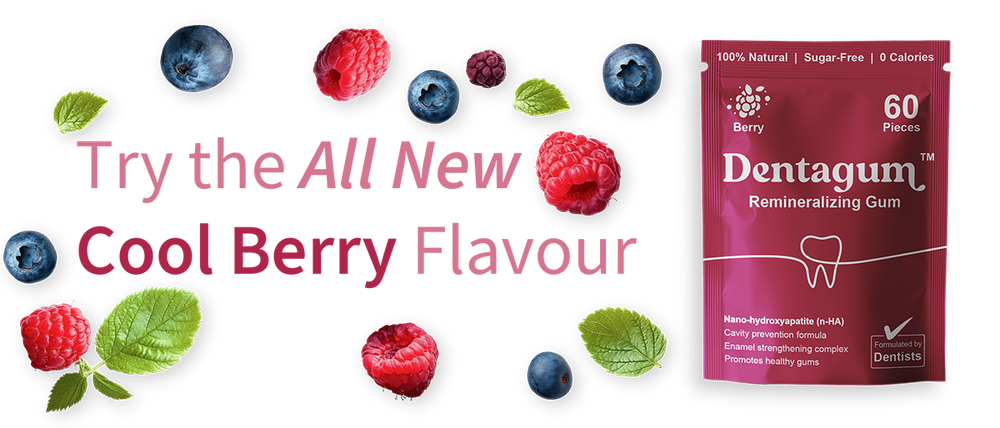
For Dentagum, using an organic mastic gum base means the substrate that maintains contact with oral tissue throughout the entire chewing session is itself contributing antibacterial activity against periodontal pathogens. The propolis incorporated into the formula adds a complementary antibacterial layer with a different active compound profile. Xylitol and erythritol handle the cariogenic bacteria. The result is a formula where the gum base, the sweeteners, and the added natural ingredients all contribute to the antibacterial coverage, rather than only the added ingredients being active while the base is passive.
Our article on Why Dentagum Uses a Natural Gum Base covers the specific comparison between chicle, mastic, and synthetic polymer bases in detail.
Try Dentagum risk-free — 30-day guaranteeFrequently Asked Questions
What is mastic gum?
Mastic gum is the dried resinous sap of Pistacia lentiscus trees grown primarily on the Greek island of Chios. It has been used as a natural chewing gum for over 2,500 years and holds EU Protected Designation of Origin status. The English word "masticate" derives from the ancient Greek term for this resin. Its complex composition of triterpenoids, monoterpenes, and a polymer fraction confers antibacterial, anti-inflammatory, and antiplaque properties documented across multiple clinical studies.
What are the oral health benefits of mastic gum?
A 2023 state-of-the-art review in the Journal of Natural Medicines found mastic gum displays antibacterial and antimicrobial properties, inhibits plaque accumulation (as a beneficial adjuvant in caries prevention), and provides effective antibacterial activity against periodontal bacteria alongside anti-inflammatory properties. A separate clinical study found mastic extract showed significantly higher inhibition of five major periodontal pathogens (P. gingivalis, S. oralis, A. actinomycetemcomitans, F. nucleatum, P. intermedia) compared with 3% hydrogen peroxide (p ≤ 0.016).
Is mastic gum antibacterial?
Yes, with documented clinical evidence. Mastic extract has been directly compared with pharmaceutical antiseptics in laboratory studies and found to have significant antimicrobial activity against both cariogenic bacteria (S. mutans) and the periodontal pathogens responsible for gum disease and bad breath. Its terpenoid compounds (masticadienonic acid, oleanolic acid, alpha-pinene, and others) disrupt bacterial membrane integrity through overlapping mechanisms. Notably, mastic extract was found to support rather than harm epithelial cell viability, unlike chlorhexidine which showed cytotoxic effects on the same cell lines.
Where does the word masticate come from?
From the ancient Greek mastiché, the word for Pistacia lentiscus resin, which became the Latin masticare (to chew) and eventually the English "masticate." The prevalence of mastic resin as the primary chewing material across the ancient Mediterranean world was so great that chewing the resin gave the English language its general word for the act of chewing. All clinical dental references to mastication, masticatory muscles, and masticatory function trace to this etymology.
How does mastic gum help with bad breath?
The bacteria that cause chronic bad breath (P. gingivalis, F. nucleatum, P. intermedia, and other VSC-producing gram-negative anaerobes) are the same bacteria mastic extract shows highest inhibitory activity against. A 2025 randomized clinical trial found Chios mastic toothpaste reduced hydrogen sulfide levels in oral breath (a primary measurable indicator of halitosis) alongside plaque and gingival index improvements in orthodontic patients over two weeks. By reducing the populations of VSC-producing bacteria, mastic addresses bad breath at the bacterial source rather than masking it through flavoring.
Why is mastic used as a gum base rather than just an added ingredient?
Because mastic is itself naturally chewable in its raw form, having been the world's original chewing material for over 2,500 years. Using it as the gum base rather than as an added extract means the biologically active material is in sustained direct contact with oral tissue throughout the entire chewing session, not just dissolved in saliva. This contact time advantage is significant for the delivery of its terpenoid antibacterial compounds to the periodontal tissue surfaces where the target bacteria colonize. No synthetic gum base provides comparable biological activity.

The Bottom Line
Mastic gum is not a trending wellness ingredient. It's the original chewing gum, the material whose practice of chewing gave English the word masticate, and a natural resin with over 2,500 years of documented use for exactly the oral health properties that modern clinical research is now quantifying.
The 2023 state-of-the-art review across 13 databases confirms antibacterial and antimicrobial properties, antiplaque effects, and antibacterial activity against periodontal bacteria with anti-inflammatory properties, across 14 clinical studies with no notable toxic or side effects. The Koychev et al. study confirms that mastic extract shows significantly higher inhibition of the five primary periodontal pathogens than hydrogen peroxide, and supports rather than harms the epithelial cells that chlorhexidine damages.
In Dentagum's formula, mastic functions as both the gum base and an active antibacterial ingredient, providing sustained contact with gingival tissue throughout each chewing session. The same terpenoid compounds that have been killing periodontal pathogens in Mediterranean mouths for two and a half millennia are working throughout your post-meal gum session.
Try Dentagum risk-free — 30-day guarantee at dentagum.coResearch Summary
- Alwadi MAM, Sidhu A, Khaled MB, Aboul-Enein BH. "Mastic (Pistacia lentiscus) Gum and Oral Health: A State-of-the-Art Review of the Literature." Journal of Natural Medicines, 2023. 13 databases, 14 papers from 246. Antibacterial and antimicrobial properties confirmed. Plaque inhibition. Periodontal pathogen antibacterial activity and anti-inflammatory properties. Zero notable toxic or side effects across all included studies.
- Koychev S, Dommisch H, Chen H, Pischon N. "Antimicrobial Effects of Mastic Extract Against Oral and Periodontal Pathogens." Journal of Periodontology, 2017. Mastic extract showed significantly higher inhibition of P. gingivalis, S. oralis, A. actinomycetemcomitans, F. nucleatum, P. intermedia vs 3% H2O2 (p ≤ 0.016). Mastic extract had beneficial effect on epithelial cell viability vs lower viability with H2O2 and chlorhexidine.
- Takahashi K et al. "A Pilot Study on Antiplaque Effects of Mastic Chewing Gum in the Oral Cavity." Journal of Periodontology, 2003. Measurable antiplaque activity from chewing mastic gum confirmed in the oral cavity.
- Nathan and Sons, 2025 review. 2025 randomized clinical trial cited: Chios mastic toothpaste in orthodontic patients showed reduction in hydrogen sulfide levels (halitosis indicator) alongside improvements in plaque and gingival indices over two weeks.
- EU PDO status for Chios mastic confirmed. Chios mastic holds EU Protected Designation of Origin status, designating its exclusive geographic production area on the island of Chios, Greece.
- Etymology confirmed. "Masticate" derives from Greek mastiché (Pistacia lentiscus resin) via Latin masticare. All clinical dental references to mastication and masticatory function trace this derivation.
References
- Alwadi MAM et al. "Mastic (Pistacia lentiscus) Gum and Oral Health: A State-of-the-Art Review of the Literature." Journal of Natural Medicines, 2023. https://pubmed.ncbi.nlm.nih.gov/37147480/
- Koychev S et al. "Antimicrobial Effects of Mastic Extract Against Oral and Periodontal Pathogens." Journal of Periodontology, 2017. https://pubmed.ncbi.nlm.nih.gov/28067105/
- "Recent Study Validates Cultural Use of Mastic Gum for Oral Health." Clinical Education. https://www.clinicaleducation.org/news/recent-study-validates-cultural-use-of-mastic-gum-for-oral-health/
- Takahashi K et al. "A Pilot Study on Antiplaque Effects of Mastic Chewing Gum in the Oral Cavity." Journal of Periodontology, 2003. https://pubmed.ncbi.nlm.nih.gov/12747455/
- European Commission. EU Protected Designation of Origin: Chios Mastiha. https://ec.europa.eu/agriculture/quality/door/
- LSHTM Research Online. Alwadi et al. 2023. https://researchonline.lshtm.ac.uk/id/eprint/4669593/
