
Is Chewing Gum Safe During Pregnancy? What Dentists Say
Pregnancy changes your oral environment in ways most expectant mothers aren't warned about. Hormonal shifts make gums more vulnerable, cavity risk rises, and the bacteria that cause tooth decay can even pass to your newborn. Here's what the evidence says about chewing gum during pregnancy and which ingredients are safe, recommended, and genuinely helpful.

Yes, sugar-free xylitol chewing gum is safe during pregnancy and is specifically recommended by the American College of Obstetricians and Gynecologists (ACOG) for decreasing oral bacteria without posing any risk to pregnant women. Nano-hydroxyapatite, the mineral enamel is made of, is non-toxic and non-systemic at the amounts present in functional gum. Pregnancy significantly raises cavity and gum disease risk through hormonal changes, making post-meal oral care habits more important than usual. A daily xylitol gum habit after meals is one of the most evidence-backed preventive steps a pregnant woman can take for her oral health, with research now also linking xylitol use in pregnancy to reduced rates of preterm birth.
Pregnancy is a period when most people are understandably cautious about what they put in their bodies. That caution extends to things as seemingly minor as chewing gum. Is it safe? Which ingredients should you avoid? Does it actually help? And why are dentists increasingly recommending xylitol gum specifically to pregnant patients?
The answers are clear in the clinical literature, even if they're not widely communicated. This article covers what pregnancy does to your oral health, which gum ingredients are safe and which to avoid, and what the research says about the specific benefits of xylitol gum during pregnancy.
This article is for educational purposes and covers the published evidence on oral health during pregnancy. It is not a substitute for advice from your obstetrician, midwife, or dentist. Always discuss any new supplements, products, or oral care changes with your healthcare provider during pregnancy.
What Pregnancy Does to Your Oral Health
Most expectant mothers know that pregnancy changes almost every system in the body. Fewer realize how significantly it changes the oral environment, and why those changes matter for both mother and baby.
During pregnancy, levels of estrogen and progesterone rise substantially. These hormones attach to receptors in gingival, salivary, and periodontal tissues and alter how those tissues respond to the bacterial biofilm that's always present in the mouth. Specifically, elevated progesterone enhances vascular permeability in gum tissue and increases blood flow, making gums more reactive to plaque. What would normally produce mild irritation can produce significant inflammation during pregnancy.
A 2024 prospective observational study published in Medicina found that elevated estrogen levels (p=0.001) and elevated progesterone levels (p=0.003) were both significantly linked to the severity of gingival inflammation in pregnant women. This isn't a risk that kicks in only if oral hygiene deteriorates. The hormonal environment of pregnancy makes gum tissue more susceptible to the bacteria that are always present, regardless of how carefully teeth are being cleaned.
Pregnancy gingivitis is extremely common
A 2025 narrative review published in Cureus covering data from 1960 to 2025 found that pregnancy gingivitis prevalence reaches as high as 60 to 75% among pregnant women across various racial groups. It can appear as early as the first trimester, is most common in the second trimester, and peaks in the third. For most women, it resolves after delivery. But "common" and "harmless" are not the same thing in this context.
Cavity risk rises significantly
Beyond gum disease, pregnancy raises cavity risk through several overlapping mechanisms. Saliva composition changes during pregnancy, with some studies finding reduced pH and altered buffering capacity, creating a more cariogenic oral environment. Morning sickness exposes enamel to stomach acid repeatedly, softening and eroding it. Food cravings and changes in eating habits often increase snacking frequency, which multiplies the number of daily Stephan Curve acid events. Nausea may make thorough brushing difficult, particularly in early pregnancy. And pregnancy fatigue means some oral hygiene routines slip.
Streptococcus mutans, the primary cavity-causing bacterium, is not present at birth. It is acquired from caregivers, most often the mother, through shared saliva contact in the first months of life. Mothers with high S. mutans counts are more likely to transmit it to their infants. Research cited by CariFree found that mothers who chewed xylitol gum regularly during pregnancy were significantly more likely to avoid passing high levels of cavity-causing bacteria to their children, with effects measurable at the 9 to 24 month check. Managing maternal S. mutans load during pregnancy is not just about the mother's teeth.
The Stakes: Why Oral Health in Pregnancy Matters Beyond Teeth
The connection between maternal oral health and pregnancy outcomes is one of the more significant and underappreciated findings in maternal-fetal medicine over the past two decades.
A 2025 case-control study published in PLOS One, using data from 78,166 pregnant women in the US Pregnancy Risk Assessment Monitoring System, found that mothers with gum disease during pregnancy were 2.42 times more likely to have babies classified as small for gestational age and 3.51 times more likely to have babies born below 2,500 grams. A 2025 narrative review published in Global Health, Epidemiology and Genomics confirmed that periodontal disease is associated with preterm birth, low birth weight, and preeclampsia, with systemic inflammation and bacterial translocation proposed as the linking mechanisms.
This doesn't mean gum disease causes these outcomes in every case. Correlation in observational data is not causation, and larger interventional trials have produced mixed results when periodontal treatment was applied during pregnancy. But the association is consistent enough across multiple studies that the FDI World Dental Federation (2025) lists preterm birth, gestational diabetes, and preeclampsia as conditions associated with periodontal disease in pregnancy, and both ACOG and the ADA strongly endorse oral health maintenance during pregnancy precisely because of these associations.
Is Chewing Gum Safe During Pregnancy?
The straightforward answer is yes, with important conditions depending on the ingredients.
What ACOG says about xylitol gum
The American College of Obstetricians and Gynecologists explicitly references xylitol-containing chewing gum in its clinical guidance on oral health care during pregnancy and through the lifespan. ACOG states that dental providers often recommend the use of xylitol-containing chewing gum to decrease oral bacteria, and that xylitol-containing chewing gum has been shown to improve oral health by reducing bacteria in the mouth without posing any risk to pregnant women.
That is not a tentative endorsement hedged with "more research is needed." It is a direct statement from the leading US obstetrics authority that xylitol gum is safe and beneficial for pregnant women's oral health.
Is nano-hydroxyapatite safe during pregnancy?
Nano-hydroxyapatite is the mineral that enamel is already made of, produced at the nanoscale for better uptake into enamel microporosities. It is not absorbed systemically through the oral mucosa in meaningful amounts at the concentrations present in functional gum. Any nano-HAp not deposited into enamel is swallowed and treated by the body as ordinary calcium phosphate. The same calcium phosphate that is in food, dairy, and supplements that are routinely recommended during pregnancy.
No safety concerns specific to nano-hydroxyapatite during pregnancy appear in the clinical literature. Multiple European regulatory bodies have reviewed nano-HAp for oral care applications and confirmed its safety profile. For pregnant women already taking calcium supplements or consuming dairy, the additional calcium phosphate from nano-HAp gum is negligible.
What to avoid in gum during pregnancy
Not all gum ingredients carry the same safety profile in pregnancy. A few warrant specific attention.
Aspartame: The WHO's International Agency for Research on Cancer classified aspartame as "possibly carcinogenic to humans" in July 2023, based on limited evidence. Most regulatory bodies maintain it's safe at typical consumption levels. But for pregnant women who are understandably cautious about any potentially concerning exposure, it's reasonable to choose a gum that uses xylitol, erythritol, or monk fruit instead. There's no reason to use aspartame-containing gum when better-evidenced alternatives exist.
Sugar: Sugary gum feeds S. mutans directly during pregnancy when cavity risk is already elevated. Not a safety concern for the pregnancy itself, but a direct contributor to the cavity risk that pregnancy already amplifies.
Artificial colours and flavourings: No specific evidence links standard artificial flavourings in gum to pregnancy harm, but pregnant women who prefer to minimise artificial additives may reasonably choose naturally flavoured options.
Why Xylitol Is Particularly Valuable During Pregnancy

ACOG's endorsement of xylitol gum during pregnancy reflects a body of evidence that goes well beyond general cavity prevention.
The largest study ever conducted on xylitol and pregnancy outcomes was the PPaX trial: a cluster randomized trial of 10,069 women in Malawi, conducted over ten years and published in the American Journal of Obstetrics and Gynecology in 2026. The researchers found that daily use of xylitol chewing gum starting pre- or early pregnancy significantly reduced the number of preterm births. Specifically, the reduction was 24% in a country where preterm birth rates are among the highest in the world. The reduction was linked to improvement in oral health through reduction in periodontal disease. The study's lead researcher, Dr. Kjersti Aagaard, stated directly: "Xylitol chewing gum in early or pre-pregnancy improved oral health by reducing periodontal disease in pregnancy, which was strongly associated with our observed reduction of preterm and low birthweight birth."
The PPaX cluster randomized trial of 10,069 pregnant women, published in the American Journal of Obstetrics and Gynecology in 2026, found daily xylitol chewing gum starting before or in early pregnancy was associated with a 24% reduction in preterm births. The mechanism: xylitol reduced periodontal disease during pregnancy, which is strongly associated with adverse birth outcomes. This is the largest trial of its kind ever conducted.
Research also indicates that xylitol gum use during pregnancy can reduce the transmission of S. mutans from mother to infant. A study cited by CariFree found that mothers with high cavity-causing bacteria who chewed xylitol gum during pregnancy were significantly less likely to have high S. mutans counts in their infants at 9 to 24 months. The bacteria that cause tooth decay in children have to come from somewhere. Managing the maternal reservoir during and after pregnancy is a practical intervention with measurable infant oral health effects.
How to Use Gum Effectively During Pregnancy

The oral health case for chewing xylitol gum during pregnancy is strong. The timing and context of use determines how much benefit it delivers.
Pregnancy cravings and changing eating patterns often mean more frequent snacking, which means more Stephan Curve acid events per day and more bacterial activity. Chewing xylitol gum after every meal and substantial snack compounds the antibacterial benefit rather than delivering it sporadically. For pregnant women, consistency matters more than it does for non-pregnant users because the hormonal environment is already working against gum tissue health.
Vomiting exposes enamel to stomach acid at pH 1 to 3, far below the 5.5 enamel critical threshold. Brushing immediately after vomiting abrades already softened enamel. Chewing xylitol gum first stimulates saliva to buffer the acid, helps wash acid from surfaces, and supports pH recovery before the mechanical action of brushing. This is one of the most practical oral health tips for pregnancy that almost no one receives.
The sustained chewing duration is what allows xylitol's antibacterial effect to accumulate against S. mutans and allows nano-HAp to deposit on enamel surfaces. A piece chewed for two minutes and discarded delivers significantly less benefit than the full recommended duration. This is especially important in pregnancy, where both cavity protection and gum health support require sustained contact time.
Gum is a post-meal support tool, not a replacement for brushing and flossing. During pregnancy, dental visits should be maintained and are confirmed safe by ACOG, including routine cleanings, X-rays with abdominal shielding, and treatment of any active decay. Delaying dental treatment during pregnancy can result in more complex problems. The second trimester is generally considered the most comfortable period for non-emergency dental work.
How Dentagum Specifically Supports Pregnancy Oral Health

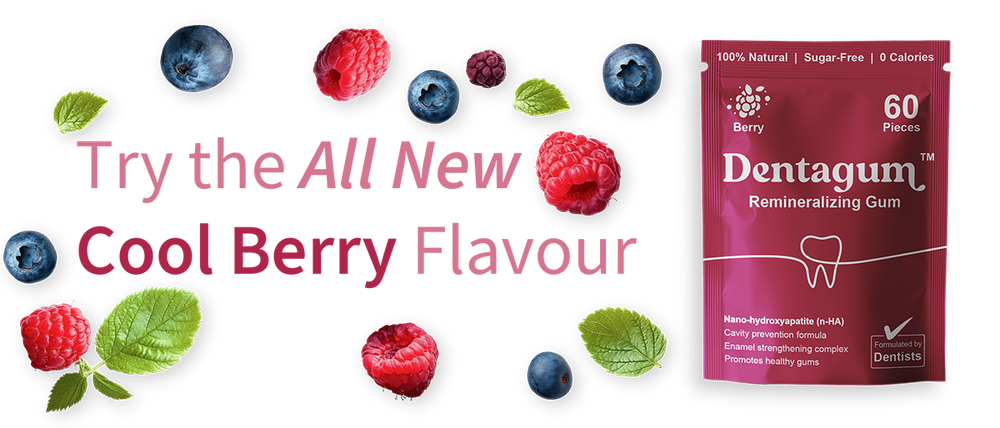
Dentagum's formula is built around the post-meal window that matters most for oral health, combining the specific ingredients with the clearest evidence for pregnancy-relevant outcomes.
Organic xylitol is the active antibacterial sweetener endorsed by ACOG for use during pregnancy. It reduces S. mutans, supporting both maternal cavity prevention and reducing the bacterial reservoir that could transfer to a newborn. Organic erythritol adds a complementary antibacterial polyol with a different mechanism and is well-tolerated. Nano-hydroxyapatite provides enamel mineral support, compensating for the elevated acid exposure from morning sickness and changed eating patterns. Organic mastic gum base contributes antibacterial and anti-inflammatory support to gum tissue at a time when gum tissue is hormonally more vulnerable. Natural propolis adds further gingival anti-inflammatory support, relevant to the pregnancy gingivitis risk. The organic chicle base means no petroleum-derived synthetic polymers.
Dentagum is Prop 65 tested through Lightlabs, with publicly verifiable results at lightlabs.com. Prop 65 sets the strictest heavy metal thresholds in the US, up to twenty times more stringent than standard FDA limits. For pregnant women, independent third-party safety verification matters more than at any other life stage.
One note: Dentagum contains organic eggshell powder as a natural calcium source and is therefore not suitable for vegans or people avoiding animal products. As always, discuss any new product use during pregnancy with your healthcare provider.
Try Dentagum risk-free — 30-day guaranteeFrequently Asked Questions
Is chewing gum safe during pregnancy?
Sugar-free xylitol gum is safe during pregnancy and is specifically endorsed by ACOG, which states that xylitol-containing chewing gum has been shown to improve oral health by reducing bacteria in the mouth without posing any risk to pregnant women. Avoid gum containing sugar, which feeds cavity-causing bacteria, and aspartame, where safer alternatives exist. Natural gum bases (chicle, mastic) avoid the petroleum-derived synthetic polymers in conventional gum.
Is xylitol safe during pregnancy?
Yes. ACOG explicitly recommends xylitol-containing chewing gum during pregnancy for oral health benefits. The PPaX cluster randomized trial of 10,069 women published in 2026 found daily xylitol gum starting before or in early pregnancy was associated with a 24% reduction in preterm births through improvement in periodontal health. Xylitol is a naturally occurring polyol found in fruits and vegetables and is metabolized normally by the human body at the quantities present in chewing gum.
Why does pregnancy increase the risk of cavities?
Several mechanisms work together. Elevated hormones make gum tissue more reactive to plaque bacteria, creating a more cariogenic oral environment. Morning sickness exposes enamel to stomach acid repeatedly, softening and eroding it. Pregnancy cravings and changed eating patterns often mean more frequent snacking, which multiplies daily acid exposure events. Nausea may make thorough brushing difficult. Saliva composition changes during pregnancy, with some studies finding reduced pH and altered buffering capacity. Together these factors create meaningfully elevated cavity risk compared to the pre-pregnancy baseline.
Can my oral health during pregnancy affect my baby?
Yes, in two documented ways. First, research consistently associates periodontal disease during pregnancy with increased risk of preterm birth and low birth weight. A 2025 PLOS One study using data from 78,166 US women found mothers with gum disease were 3.51 times more likely to have babies below 2,500 grams. Second, S. mutans, the primary cavity-causing bacterium, can transfer from mother to infant through shared saliva in the first months of life. Mothers with high S. mutans counts are more likely to transmit it to their children. Reducing maternal bacterial load through xylitol gum during pregnancy may meaningfully reduce this transmission.
Is nano-hydroxyapatite safe during pregnancy?
Yes. Nano-hydroxyapatite is the mineral that enamel is already made of. It is not absorbed systemically through the oral mucosa in meaningful amounts at the concentrations in functional gum. Any nano-HAp not deposited into enamel is swallowed and metabolized by the body as ordinary calcium phosphate, the same mineral in dairy foods and calcium supplements routinely recommended during pregnancy. No safety concerns specific to nano-hydroxyapatite during pregnancy appear in the clinical literature. Multiple European regulatory bodies have reviewed nano-HAp for oral care and confirmed its safety profile.
Should I go to the dentist while pregnant?
Yes. ACOG confirms that preventive, diagnostic, and treatment dental care is safe throughout pregnancy. Routine cleanings, dental X-rays with abdominal and thyroid shielding, and local anesthesia are all confirmed safe. The second trimester is generally considered the most comfortable window for non-emergency dental work. Delaying treatment for active decay can result in more complex problems. Given that pregnancy gingivitis affects 60 to 75% of pregnant women and that periodontal disease is associated with adverse birth outcomes, maintaining regular dental visits during pregnancy is particularly important.
The Bottom Line
Pregnancy significantly raises oral health risk through hormonal changes that make gum tissue more vulnerable, combined with morning sickness acid exposure, changed eating patterns, and altered saliva composition. Pregnancy gingivitis affects the majority of expectant women. And the evidence linking maternal periodontal disease to adverse birth outcomes, including preterm birth and low birth weight, is consistent enough that both ACOG and the ADA strongly endorse oral health maintenance during pregnancy.
Sugar-free xylitol gum is not just safe during pregnancy. It is specifically recommended by ACOG for reducing oral bacteria without any risk to pregnant women. And the PPaX trial's finding of a 24% reduction in preterm births associated with xylitol gum use during pregnancy elevates this from a dental hygiene tip to a meaningful maternal-fetal health intervention.
For pregnant women looking to protect both their oral health and support a healthy pregnancy, a daily xylitol gum habit after meals is one of the most evidence-backed and lowest-barrier steps available. Dentagum combines ACOG-endorsed xylitol with nano-hydroxyapatite, mastic gum, and propolis in a Prop 65 verified formula, designed for the post-meal window when protection matters most.
Try Dentagum risk-free — 30-day guarantee at dentagum.coResearch Summary
- ACOG Committee Opinion. "Oral Health Care During Pregnancy and Through the Lifespan." Dental providers often recommend xylitol-containing chewing gum to decrease oral bacteria. Confirmed safe for pregnant women. Routine dental care confirmed safe throughout pregnancy.
- Aagaard KM et al. PPaX cluster randomized trial. American Journal of Obstetrics and Gynecology, 2026. 10,069 women in Malawi over 10 years. Xylitol gum starting pre- or early pregnancy improved oral health by reducing periodontal disease, associated with 24% reduction in preterm births. Largest trial of its kind.
- Javaid et al. "Exploring the Influence of Oral Health on Pregnancy Outcomes." Global Health, Epidemiology and Genomics, 2025. Pregnancy hormonal changes significantly increase susceptibility to gingivitis, periodontitis, dental caries. Periodontal disease associated with preterm birth, low birth weight, and preeclampsia.
- Cureus narrative review, 2025. Pregnancy gingivitis prevalence as high as 60-75% across various racial groups. Can appear in first trimester, peaks in third.
- PLOS One, 2025. Using PRAMS dataset from 78,166 US pregnant women. Gum disease during pregnancy: 2.42x higher risk of small-for-gestational-age baby; 3.51x higher risk of low birth weight.
- Medicina, 2024. Prospective observational study. Elevated estrogen (p=0.001) and progesterone (p=0.003) significantly linked to severity of gingival inflammation in pregnant women.
- CariFree. Xylitol gum use during pregnancy helped mothers with high S. mutans avoid passing high bacterial counts to children at 9-24 months.
- FDI World Dental Federation, 2025. Periodontal disease during pregnancy associated with preterm birth, gestational diabetes, and preeclampsia.
References
- ACOG Committee Opinion. "Oral Health Care During Pregnancy and Through the Lifespan." Obstetrics and Gynecology, 2013 (reviewed 2023). https://www.acog.org/clinical/clinical-guidance/committee-opinion/
- Aagaard KM et al. "PPaX: Cluster Randomized Trial of Xylitol Chewing Gum on Prevention of Preterm Birth in Malawi." American Journal of Obstetrics and Gynecology, 2026. https://www.ajog.org/article/S0002-9378(21)02658-2/fulltext
- Society for Maternal-Fetal Medicine. "Chewing Sugar-Free Gum Reduced Preterm Births." Press release. https://www.smfm.org/news/chewing-sugar-free-gum-reduced-preterm-births
- Javaid et al. "Exploring the Influence of Oral Health on Pregnancy Outcomes." Global Health, Epidemiology and Genomics, 2025. https://onlinelibrary.wiley.com/doi/10.1155/ghe3/9304496
- "Effects of Pregnancy on Oral Health: A Narrative Review." Cureus, 2025. https://pmc.ncbi.nlm.nih.gov/articles/PMC12626342/
- "The Impact of Maternal Gum Disease on Pregnancy Outcomes." PLOS One, 2025. https://journals.plos.org/plosone/article?id=10.1371/journal.pone.0325588
- "Impact of Hormones and Lifestyle on Oral Health During Pregnancy." Medicina, 2024. https://www.mdpi.com/1648-9144/60/11/1773
- FDI World Dental Federation. "Oral Health and Pregnancy Fact Sheet." 2025. https://www.fdiworlddental.org/sites/default/files/2025-04/FDI-Oral-Health-and-Pregnancy-Fact-Sheet.pdf
- American Dental Association. "Oral Health Topics: Pregnancy." https://www.ada.org/resources/ada-library/oral-health-topics/pregnancy
