
Is Chewing Gum Actually Good for You? Myth vs Science
Most people have been told that chewing gum is bad for teeth. The actual answer is more specific: sugar gum is genuinely harmful, sugar-free gum is endorsed by the American Dental Association for cavity prevention, and functional remineralizing gum does things no other chewable product can. Here's the complete science on what gum does for your health, myth by myth.

Sugar-free gum is genuinely good for your teeth. The American Dental Association explicitly endorses chewing sugar-free gum for 20 minutes after meals as a documented cavity prevention tool. Sugar-containing gum is actively harmful: it feeds the bacteria that produce the acid driving tooth decay. The distinction matters enormously. A gum with xylitol as the primary sweetener goes further: it actively kills S. mutans, the primary cavity-causing bacterium, through a mechanism that 12 of 14 clinical studies confirmed reduces bacterial populations with consistent use. A gum that also contains nano-hydroxyapatite directly deposits enamel mineral during the chewing session. The blanket claim that "gum is bad for teeth" is wrong. The more accurate claim is that the type of gum, and specifically what sweetens it, determines whether it prevents cavities or causes them.
At some point, most people were told that chewing gum is bad for their teeth. Maybe a parent said it. Maybe a dentist mentioned it in passing. Maybe it just seemed like the logical conclusion from all the "sugar is bad for teeth" messaging absorbed across a lifetime.
The actual picture is more interesting and more specific than that. Some gum is genuinely harmful. Some gum is good enough that the ADA endorses it. Some gum actively kills cavity-causing bacteria. And the difference between these outcomes comes down almost entirely to one question: what is it sweetened with?
This article addresses the most common myths and misconceptions about gum and teeth, with the actual evidence behind each claim.

Myth 1: "All Chewing Gum Is Bad for Your Teeth"
False for sugar-free gum. True for sugar gum.
The American Dental Association states directly: "Chewing sugarless gum for 20 minutes following meals has been shown in scientific studies to help prevent tooth decay." The ADA Seal of Acceptance is available for sugar-free gum products that meet their criteria. The ADA doesn't grant this seal to products that harm teeth.
The mechanism behind the ADA endorsement is saliva. Chewing any gum stimulates salivary flow to 10 to 12 times the resting rate. That saliva buffers the post-meal acid that drives enamel demineralization, delivers calcium and phosphate to enamel surfaces for remineralization, and mechanically washes food debris from tooth surfaces. These are the same functions that toothbrushing performs, through a different mechanism, and they are clinically meaningful when applied in the post-meal window when enamel is most vulnerable.
Sugar gum, by contrast, feeds the bacteria that produce acid. S. mutans and other cariogenic bacteria metabolize sucrose into lactic acid. Every piece of sugary gum consumed extends the bacterial acid attack on enamel. The net effect of sugary gum is negative even accounting for the saliva stimulation, because the sugar substrate actively makes the bacterial acid problem worse while the saliva tries to buffer it.
The ADA grants its Seal of Acceptance only to products that have submitted evidence of safety and efficacy and had that evidence reviewed by the ADA Council on Scientific Affairs. For chewing gum, the Seal is available exclusively to sugar-free products. Any gum displaying the ADA Seal has demonstrated that it meets the criteria for a product that helps, rather than harms, oral health. Products without the Seal have not met or submitted to this standard, but the absence doesn't necessarily indicate harm. Many smaller manufacturers don't pursue the Seal process.
Myth 2: "Sugar-Free Gum Is Just a Breath Freshener"
Significantly understating what the evidence shows.
Breath freshening is a side effect of the flavor compounds. The actual oral health benefit is the saliva stimulation, and that benefit is clinically meaningful in ways that go far beyond the breath.
A study found that consistent post-meal sugar-free gum use produced a 32 to 37% improvement in plaque index and gingival inflammation measures over a 14-day trial. That's not a breath freshening statistic. That's a clinical outcome reflecting reduced bacterial biofilm and reduced gum inflammation from consistent post-meal saliva stimulation.
The 2025 systematic review (Pienihäkkinen et al.) of 10 xylitol chewing gum RCTs found all 10 showed statistically significant preventive effects against cavities compared to control. Nine of ten showed clinically significant preventive outcomes. The evidence base for sugar-free xylitol gum as a cavity prevention tool, not just a breath freshener, spans decades and dozens of clinical trials.
Myth 3: "Xylitol in Gum Is Just Another Sweetener"

Wrong. Xylitol has a specific antibacterial mechanism that sorbitol doesn't.
This is the most important distinction in the gum category for anyone who cares about their teeth. Sorbitol and xylitol are both sugar alcohols. Both sweeten gum without feeding the acid-producing pathway that sucrose triggers. But xylitol has an additional property: it actively kills S. mutans.
S. mutans transports xylitol into its cells the same way it transports sucrose, expecting to metabolize it. It can't. The xylitol creates a futile energy cycle that kills the bacterium. Over weeks of consistent daily xylitol exposure, S. mutans populations in plaque and saliva are measurably reduced. The 2025 systematic review (Söderling et al.) found xylitol gum significantly reduced S. mutans in 12 of 14 clinical studies versus sorbitol gum controls.
Sorbitol gum provides the saliva stimulation benefit. Xylitol gum provides saliva stimulation plus active bacterial killing. That's a meaningful clinical difference, not just a marketing one.
Myth 4: "Chewing Gum Can Replace Brushing"
No, and the ADA is clear about this.
The ADA explicitly states that gum is not a substitute for brushing and flossing. The mechanical plaque removal that a toothbrush provides, physically disrupting the biofilm that adheres to tooth surfaces and is not dislodged by saliva alone, cannot be replicated by chewing. Gum also cannot reach the interdental spaces where toothbrush bristles can't reach and where flossing is essential.
What gum can do is cover the post-meal windows between brushing sessions. The twice-daily brushing schedule leaves 12 to 16 waking hours per day where multiple eating events occur with no brushing coverage. Gum after meals addresses the post-meal acid windows during those hours. That makes gum and brushing complementary tools covering different parts of the day, not competitors.
Myth 5: "Chewing Gum Causes Jaw Problems"
Only for people who already have temporomandibular joint (TMJ) disorders, and only with excessive use.
For people without pre-existing TMJ disorders, normal gum chewing (20 minutes after meals, the clinically recommended duration) does not cause jaw problems. The mandibular joint is designed for sustained chewing activity and handles normal daily use without pathological consequence.
For people with existing TMJ disorders, temporomandibular joint pain, or bruxism, dentists may advise against or limit gum chewing because the additional repetitive jaw loading can exacerbate symptoms. This is a specific population concern, not a general warning. Most people can chew gum for 20 minutes after meals without any jaw-related concern.
Excessive gum chewing, defined as many hours of continuous chewing per day well beyond the post-meal protocol, can cause jaw fatigue and muscle soreness in anyone. But this is the kind of excessive use that isn't what the post-meal 20-minute recommendation describes.
Myth 6: "Gum Wrecks Your Stomach"
Mostly false, with a specific nuance about large amounts of sugar alcohols.
Swallowing gum occasionally is not harmful. The gum base itself is indigestible and passes through the digestive system unchanged, but it doesn't cause the blockages that the childhood myth suggests. The digestive system handles indigestible materials routinely.
The relevant digestive nuance is sugar alcohols. Sorbitol and xylitol are fermented by bacteria in the large intestine and can cause gas, bloating, or loose stools in some people, particularly those new to them and at high intake levels. Xylitol is generally well-tolerated at the amounts used in a few pieces of gum daily. Building up gradually from one to two pieces per day when first using xylitol gum avoids the digestive adjustment period most people experience.
Large amounts of sorbitol specifically (over 10 to 15 grams per day, roughly 10 to 20 pieces of sorbitol-heavy gum) are associated with diarrhea in sensitive individuals. At typical use levels for post-meal oral health purposes, this isn't a practical concern.
Myth 7: "All Functional Gum Is the Same"

Significantly wrong. The active ingredient gap is large.
The mass market sugar-free gum category is dominated by products sweetened primarily with sorbitol, flavored with synthetic mint compounds, built on a synthetic polymer gum base, and containing no active ingredients beyond the incidental saliva stimulation from chewing. These provide the ADA-endorsed baseline saliva benefit but nothing more.
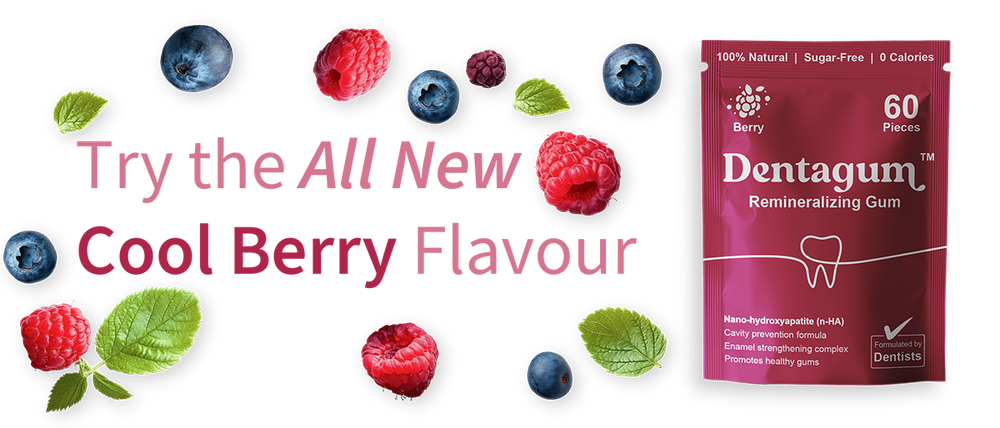
At the other end of the spectrum, a remineralizing gum with xylitol as the primary sweetener, nano-hydroxyapatite for direct enamel mineral delivery, propolis for broad-spectrum antibacterial coverage, mastic for periodontal pathogen antibacterial activity, and organic essential oils for the full terpene antimicrobial complex is doing something categorically different from a standard stick of sugar-free gum. It's addressing the post-meal acid window with multiple simultaneous mechanisms: acid buffering through saliva stimulation, bacterial killing through xylitol, direct mineral delivery through nano-HAp, and additional antibacterial support through plant-derived compounds.
The clinical outcomes documented for xylitol gum and nano-HAp are not generic to "sugar-free gum." They're specific to gums containing those active ingredients at meaningful concentrations.
What Good Chewing Gum Actually Does for Your Health

Beyond the myth-busting, here's the positive case for what evidence-backed sugar-free gum does across multiple health dimensions when used appropriately.
Cavity prevention: The ADA-endorsed post-meal mechanism is real. Sugar-free gum after meals stimulates saliva that buffers post-meal acid, delivers calcium and phosphate to enamel, and washes food debris from tooth surfaces. 10 xylitol gum RCTs showed statistically significant cavity preventive effects. A 2025 clinical trial of 518 children found 74% of early lesions arrested using hydroxyapatite-fluoride gum over 24 months.
Sensitivity reduction: Nano-hydroxyapatite in remineralizing gum progressively occludes the exposed dentinal tubules responsible for sensitivity pain. The 2023 Biomimetics meta-analysis of 44 clinical trials documented sensitivity reduction in the range of 6 to 80% with consistent use. For people with coffee or temperature sensitivity, this is a clinically meaningful benefit that accumulates with daily use over weeks.
Bad breath: The bacterial species responsible for chronic bad breath (VSC-producing anaerobes including P. gingivalis and F. nucleatum) are inhibited by xylitol, mastic, propolis, and the terpene compounds in natural mint essential oils. The fresh breath from good functional gum addresses malodor at the bacterial source rather than only masking it through flavoring.
Cognitive benefits of chewing: Several studies suggest that the act of chewing itself (independent of gum type) may provide modest cognitive benefits, including improved alertness, reaction time, and short-term memory, attributed to increased cerebral blood flow and arousal from the rhythmic jaw movement. This is a secondary benefit with a more modest evidence base than the oral health evidence, but worth noting in the complete picture of what chewing gum does.
Stress and anxiety: Some research suggests chewing gum reduces cortisol levels and self-reported stress and anxiety in some populations. The proposed mechanism involves the soothing, rhythmic nature of chewing affecting the hypothalamic-pituitary-adrenal axis. As with cognitive benefits, this evidence is interesting but less robust than the oral health data.
The Specific Concerns Worth Knowing About
Being honest about gum's benefits requires being equally honest about the legitimate concerns.
TMJ disorders: If you have an existing TMJ diagnosis, jaw pain, or bruxism, consult your dentist before adding regular gum chewing to your routine. Extended or forceful chewing can exacerbate these conditions.
Xylitol and pets: Xylitol is highly toxic to dogs and potentially other animals. Even small amounts cause rapid insulin release in dogs that can be fatal. Any xylitol-containing gum must be kept completely away from pets. This is a serious safety concern and worth noting for any household with dogs.
Digestive adjustment with xylitol: New users of xylitol gum occasionally experience digestive discomfort if they start at high daily amounts. Starting with one piece per day and building up over a week avoids this entirely for most people.
Not a replacement for professional dental care: Post-meal gum is a daily preventive habit, not a treatment for existing decay or gum disease. A dentist is required for assessment and treatment of existing oral health problems.
So: Is Chewing Gum Good for You?
Sugar-free xylitol gum, used for 20 minutes after meals: yes, meaningfully and specifically. It covers the post-meal window that brushing doesn't, reduces the bacteria driving cavity formation, and with the right formula, directly delivers enamel mineral during the window when enamel needs it most. The ADA endorses the mechanism. The clinical evidence supports the active ingredients. The habit costs zero additional time because it runs passively alongside whatever you're already doing after eating.
Regular sugar gum: no. It feeds the bacteria it claims to freshen your breath past. Whatever saliva benefit it provides is offset by the acid-producing substrate it delivers.
Standard sugar-free sorbitol gum: better than sugar gum, provides the baseline ADA-endorsed saliva benefit, but misses the active antibacterial and mineral delivery components that make functional remineralizing gum a meaningfully more complete post-meal oral health tool.
Frequently Asked Questions
Is chewing gum bad for your teeth?
Sugar gum is bad for your teeth: it feeds the bacteria that produce cavity-causing acid. Sugar-free gum is not bad for your teeth and is endorsed by the American Dental Association for 20 minutes after meals to help prevent tooth decay. The blanket claim that gum is bad for teeth conflates these two very different products. The type of gum, specifically what sweetens it, determines whether it harms or helps oral health.
Does the ADA recommend chewing gum?
Yes, specifically sugar-free gum. The ADA states that chewing sugarless gum for 20 minutes following meals has been shown in scientific studies to help prevent tooth decay. The ADA also states: "If you cannot brush your teeth immediately after a meal, then chewing gum can help." The ADA grants its Seal of Acceptance to sugar-free gum products that meet its criteria for oral health safety and efficacy.
Is xylitol gum better than regular sugar-free gum?
Yes, meaningfully. Regular sugar-free gum is typically sweetened with sorbitol, which provides the saliva stimulation benefit but has no active antibacterial mechanism against the bacteria that cause cavities. Xylitol actively kills S. mutans (the primary cavity-causing bacterium) through a specific metabolic disruption. A 2025 systematic review found xylitol gum significantly reduced S. mutans in 12 of 14 clinical studies compared to sorbitol gum controls. Xylitol gum provides the same saliva benefit as sorbitol gum plus this additional layer of active bacterial reduction.
Can chewing gum replace brushing?
No. The ADA explicitly states that gum is not a substitute for twice-daily brushing and daily flossing. Brushing provides mechanical plaque removal that gum cannot replicate. Gum covers the post-meal windows between brushing sessions when brushing isn't possible, making gum and brushing complementary tools rather than alternatives. The right framing is that gum fills the midday gap that brushing doesn't cover, not that it replaces brushing.
Is it okay to chew gum every day?
Yes, and it's specifically recommended to do so. The ADA endorses 20 minutes of sugar-free gum after meals as a daily cavity prevention habit. Most people eat three meals and two to three snacks per day, so three to five pieces of sugar-free xylitol gum daily is both safe and clinically recommended. The xylitol amount in this range (typically 3 to 7 grams) is within the well-tolerated daily threshold for most people. New users should build up gradually over the first week to allow digestive adjustment.
Does chewing gum cause cavities?
Sugar gum does: the sucrose it contains feeds cariogenic bacteria that produce lactic acid and drive enamel demineralization. Sugar-free gum does not cause cavities and is specifically endorsed for preventing them. The common belief that "gum causes cavities" originated when essentially all commercial gum was sugar-sweetened. The modern sugar-free gum category has a fundamentally different oral health profile from the gum that formed the original concern.
The Bottom Line
The question "is chewing gum good for you" has a specific, evidence-based answer that depends on one variable: the sweetener. Sugar gum is bad for your teeth. Sugar-free gum is endorsed by the ADA and provides genuine cavity prevention benefit. Xylitol gum adds active bacterial reduction. Remineralizing gum with nano-hydroxyapatite adds direct enamel mineral delivery. The evidence base behind these distinctions is robust and specific.
The habit the evidence supports is simple: after every meal, 20 minutes of sugar-free xylitol gum, with remineralizing active ingredients if you want to cover the maximum number of oral health dimensions simultaneously. Zero additional time, clinically meaningful impact, ADA endorsement for the core mechanism. Most people who grew up hearing that gum was bad for teeth never got the update that the story changed entirely the moment the sugar was removed.
Try Dentagum risk-free — 30-day guarantee at dentagum.coResearch Summary
- American Dental Association. Chewing Gum Oral Health Topics. "Chewing sugarless gum for 20 minutes following meals has been shown in scientific studies to help prevent tooth decay." ADA Seal available for sugar-free gum. Gum not a substitute for brushing and flossing. Saliva stimulation to 10-12x resting rate endorsed mechanism.
- Pienihäkkinen K et al. European Archives of Paediatric Dentistry, 2024. Systematic review: all 10 xylitol chewing gum RCTs showed statistically significant preventive effect vs control. 9 of 10 showed clinically significant preventive fraction.
- Söderling E et al. BMC Oral Health, 2025. Xylitol gum significantly reduced S. mutans in 12/14 studies vs sorbitol gum controls. Confirmed xylitol's specific antibacterial mechanism against cariogenic bacteria independent of saliva stimulation benefit.
- Limeback H, Enax J, Meyer F. Biomimetics, 2023. 44 clinical trials. Nano-HAp sensitivity reduction 6-80% with consistent use. Contact time during chewing is key variable. Direct mineral delivery mechanism confirmed across extensive clinical literature.
- 2025 clinical trial, 518 children. 74% of active early lesions arrested over 24 months using hydroxyapatite-fluoride combination. Cocco F et al. Int Dent J. 2025.
- WHO, 2023. Aspartame classified as possibly carcinogenic (Group 2B) by IARC. Relevant for gum consumers evaluating sweetener choice in functional oral care products.
References
- American Dental Association. "Chewing Gum." Oral Health Topics. https://www.ada.org/resources/ada-library/oral-health-topics/chewing-gum
- Pienihäkkinen K et al. "The Effect of Xylitol Chewing Gums and Candies on Caries Occurrence in Children: A Systematic Review." European Archives of Paediatric Dentistry, 2024. https://www.nature.com/articles/s41432-024-01018-2
- Söderling E et al. "Specific Effects of Xylitol Chewing Gum on Mutans Streptococci Levels." BMC Oral Health, 2025. https://link.springer.com/article/10.1186/s12903-025-06602-1
- Limeback H, Enax J, Meyer F. "Clinical Evidence of Biomimetic Hydroxyapatite in Oral Care Products for Reducing Dentin Hypersensitivity." Biomimetics, 2023. https://pmc.ncbi.nlm.nih.gov/articles/PMC9844412/
- IARC/WHO. "IARC Monographs Volume 134: Aspartame and Other Sweeteners." 2023. Aspartame classified as possibly carcinogenic to humans (Group 2B). https://www.iarc.who.int/featured-news/iarc-monographs-volume-134-aspartame/
