
How to Get Your Family to Take Oral Health More Seriously
You already know the brushing and flossing routine. Getting your partner or kids to care as much as you do is a different project entirely. Here's what actually works, why the post-meal gum habit is the best entry point for a whole household, and how to make better oral health feel like something the family does together rather than a lecture you deliver alone.

The most effective way to improve a partner's or family's oral health habits is to start with the easiest change, not the most important one. Starting with flossing or changing brushing technique is ambitious and immediately meets resistance because it requires effort and behavior change in an existing routine. Starting with post-meal gum is different: it adds something new in a low-friction moment (after eating), doesn't ask anyone to change what they're already doing, has an immediate sensory reward (fresh breath, clean feeling), and is genuinely evidence-backed. Once the gum habit is established as a shared household routine, it creates an opening to revisit the harder conversations about brushing timing, flossing frequency, and everything else.
If you're the person in your household who reads about oral health, schedules dental appointments, and genuinely understands why xylitol matters, you've probably also experienced the particular frustration of watching someone you care about brush for 30 seconds and call it done.
The information gap isn't the problem. You can send them a link to a study. You can explain the Stephan Curve at dinner. You can point out that they haven't flossed in three weeks. None of it changes much, because the problem isn't information. It's habit formation in someone who wasn't the one who decided to form a habit.
This article is about what actually works. Not what should work in theory, but what works in practice when you're trying to nudge another adult (or a child) toward caring about their teeth without turning every bathroom visit into a lesson.
Why Oral Health Motivation Is Harder to Transfer Than You Think
The person who cares about oral health in a household usually got there through a motivating event: a bad dentist appointment, a cavity that cost real money, a sensitivity that got annoying enough to do something about. That event created motivation. The habits followed the motivation.
The person you're trying to persuade hasn't had that event yet. Or they've had it and it wore off. Telling someone about what could happen doesn't create the same motivation as something that already happened. And nagging, however well-intentioned, usually creates resistance rather than behavior change. The person being nagged starts associating oral care with the nag rather than with their own decision, which makes the behavior less likely to be self-sustaining.
Habit formation research consistently finds that habits formed through external pressure are less durable than habits formed through internal motivation or habit stacking (attaching a new habit to an existing trigger). The most effective approach for introducing oral health habits to a partner or family member isn't persuasion. It's making the habit so easy, so low-friction, and so immediately rewarding that it doesn't require persuasion. The habit that happens without a decision being made is more durable than the habit that requires effort every time.
Start With the Easiest Habit, Not the Most Important One
Every oral health professional's instinct is to prioritize the highest-impact interventions: flossing, brushing technique, brushing duration. These are the right things to focus on for someone who is already motivated. For someone who isn't, leading with the hardest changes produces immediate resistance and often no change at all.
The post-meal gum habit is the right entry point for a household because it has properties that no other oral health habit has:
It doesn't require changing anything they're already doing. It adds something after eating, which requires no modification to an existing routine.
It has an immediate, tangible, pleasant reward: fresh breath and a clean feeling after eating. That reward is what makes a habit self-sustaining over time. The reward doesn't require understanding the clinical mechanism. It just feels good, and feeling good after doing something is what makes you do it again.
It's completely non-judgmental. Offering someone a piece of gum after dinner is not the same as telling them their oral hygiene is inadequate. It's sharing a snack-adjacent habit. The social dynamic is entirely different from the lecture-and-comply dynamic that "you need to floss more" creates.
And it works. The American Dental Association endorses sugar-free gum for 20 minutes after meals as a documented cavity prevention intervention. The mechanism is real: salivary stimulation to 10 to 12 times the resting rate, acid buffering, enamel mineral delivery. A family that adopts the post-meal gum habit is genuinely doing something protective for their teeth, not just going through a ritual to satisfy the household's oral health advocate.
For Your Partner: What Works and What Doesn't

What doesn't work
Mentioning what you read about dental health at dinner. Commenting on their brushing duration. Leaving dental health articles open on a shared device. Telling them about your own great dentist appointment as a subtle contrast. All of these create the dynamic of one person being the authority on the other person's hygiene, which adults find grating regardless of how justified the information is.
The dynamic problem is that oral health nagging, like all nagging, tends to produce the opposite of its intended effect over time. The nagged person starts to resist the habit because it's associated with the nag, not with their own motivation. Even if they do what's asked, the habit is fragile because it's maintained by external pressure rather than internal preference.
What does work
Normalize the habit by doing it yourself, visibly. You're already chewing remineralizing gum after meals. You don't explain it or announce it. You just do it at the dinner table, offer the person across from you a piece, and let the habit be visible without making it a lesson. After enough meals where this happens naturally, the offer becomes a cue they associate with finishing eating.
Make it a shared purchase, not a prescription. "I ordered something I think we'd both like" lands differently than "I got you this gum because you need to take better care of your teeth." The former is sharing something you like. The latter is a critique wrapped in a gift.
Point to their own motivation, not yours. If they've mentioned tooth sensitivity, that's an opening. If they've mentioned coffee staining, that's an opening. If they have a dentist appointment coming up that they're anxious about, that's an opening. People take action on their own concerns, not on someone else's concerns about them. When the conversation comes from their stated discomfort rather than your knowledge, it lands completely differently.
Remove the effort entirely where you can. Keeping gum on the dining table means they encounter it without any decision required. The barrier to trying it is zero. A habit that starts because the tool was right there is just as good as a habit that starts from a motivated decision, and it's often more durable because it requires no ongoing effort to maintain once established.
For Kids: Making Oral Care Habitual Rather Than Adversarial

Children's oral health habits are shaped almost entirely by two things: routine and reward. The routine provides the automatic trigger. The reward provides the reason to do it without a battle. Both of these are within a parent's control in ways that an adult partner's habits are not.
The morning and evening routine
For children, oral care habits form most reliably when they're embedded in an existing sequence that already happens automatically: the morning getting-ready routine and the bedtime routine. "Brush after you put your pajamas on" or "brush before you come and say goodnight" ties oral care to a sequence that happens regardless of whether the child remembers or feels like it. The habit becomes part of the bedtime sequence, not a separate thing to remember.
The two minutes of brushing standard is real and important, but fighting with a child about duration every night is exhausting for everyone and ultimately counterproductive. An electric toothbrush with a built-in two-minute timer removes the negotiation about how long. A brushing app that provides a visual timer or game is another option that has worked for many families. Making the two-minute standard automatic rather than negotiated is the goal.
Most dental and pediatric guidelines suggest sugar-free gum is appropriate from around age 5 or 6, when children are old enough to understand they should not swallow it. Swallowing small amounts of gum is not medically harmful (it passes through the digestive system), but the habit of swallowing gum is worth avoiding. Supervise younger children when introducing gum until the concept is established. The xylitol in sugar-free gum has been used in numerous clinical studies specifically in children aged 5 and older and is well-tolerated at appropriate amounts.
Gum as a post-meal reward (that's also protective)
For children who are old enough to chew gum, the post-meal gum habit is one of the few oral health habits that a child will genuinely want to do without any prompting. Gum is fun. It tastes good. It's a treat. The fact that it's also protective for their enamel is a bonus that doesn't need to be the selling point.
"You can have a piece of gum after dinner" requires no battle, no timer, no negotiation. It happens because the child wants it to happen. And 20 minutes of chewing xylitol gum after a meal is genuinely doing protective work, covering the post-meal acid window with the ADA-endorsed saliva stimulation mechanism and actively reducing the S. mutans bacteria that cause childhood cavities.
The research on xylitol gum in children is particularly strong. Multiple clinical studies, including school-based xylitol gum programs, have shown significant caries reduction in children who use xylitol gum consistently. One systematic review found all 10 xylitol chewing gum RCTs showed statistically significant preventive effect versus control. For parents whose children are cavity-prone, this is the highest-return child-accessible oral health intervention available.
Making brushing less of a battle
For children who resist brushing: the electric toothbrush is the single most reliable upgrade. Children who resist a manual toothbrush often happily accept an electric one because it feels different (buzzing, vibrating), looks like a "grown-up" device, and has a timer that makes the duration automatic rather than parent-enforced. The toothbrush that actually gets used every night is infinitely more valuable than the technically superior toothbrush that requires a 10-minute argument.
Letting children choose their toothbrush (within appropriate options) and their toothpaste flavor also significantly reduces resistance. Control over small choices makes compliance with the surrounding routine significantly easier. This isn't permissive parenting. It's practical habit design.
For Teenagers: Different Motivation, Same Habits
Teenagers are the most resistant demographic to oral health messaging from parents, and for completely understandable developmental reasons. Any habit a parent insists on becomes associated with parental authority rather than personal choice, and teenagers are actively in the process of separating from parental authority.
The approach that works here is cosmetic motivation, which is entirely legitimate and clinically connected. Teenagers care deeply about how their teeth look and how their breath smells. These are real and appropriate concerns. Coffee and soda staining, morning breath, and the appearance of their smile are things they'll respond to because they care about them, not because you do.
The post-meal gum habit frames easily around these concerns. "This gum helps with staining from coffee/soda" is a more effective entry point with a teenager than "this gum has nano-hydroxyapatite for enamel remineralization." The mechanism is the same. The framing is theirs.
Leaving gum available in shared spaces (kitchen counter, family car) rather than presenting it as a prescribed oral health product removes the parent-mandate dynamic entirely. A teenager who reaches for gum because it's there and it tastes good is building exactly the same habit as one who was told to take it for their teeth.
Making It a Shared Family Habit

The strongest predictor of a household oral health habit lasting is whether the whole household does it, not whether one member does it consistently. Habits that happen in social context, that are reinforced by the people around you doing the same thing, are significantly more robust than individual habits maintained in isolation.
The post-meal gum habit is particularly well suited to family adoption because it has a natural shared trigger: the end of a meal everyone ate together. Putting gum on the table as part of the dinner setting, in the same way bread, salt, and water are on the table, normalizes the habit without making it a health program. It's just what this family does after dinner.
That normalization is what makes the habit self-sustaining across generations. Children who grow up in households where gum after meals is normal don't need to be convinced of anything. The habit is part of their baseline understanding of what meals look like. That's genuinely one of the highest-impact oral health interventions available to a parent: making the protective habit the default rather than the exception.
Rather than the ongoing low-level nagging that erodes goodwill without changing behavior, consider one clear conversation, once, about the specific thing you want to change and why. "I've been reading about how the period right after eating is when teeth lose the most mineral. This gum is specifically for that window. I ordered some for all of us." Then drop it. Put the gum where it needs to be and let the habit form from availability and social modeling rather than sustained pressure. One clear conversation, followed by doing the habit yourself visibly, is more effective than months of repeated smaller mentions.
How Dentagum Works as a Family Habit

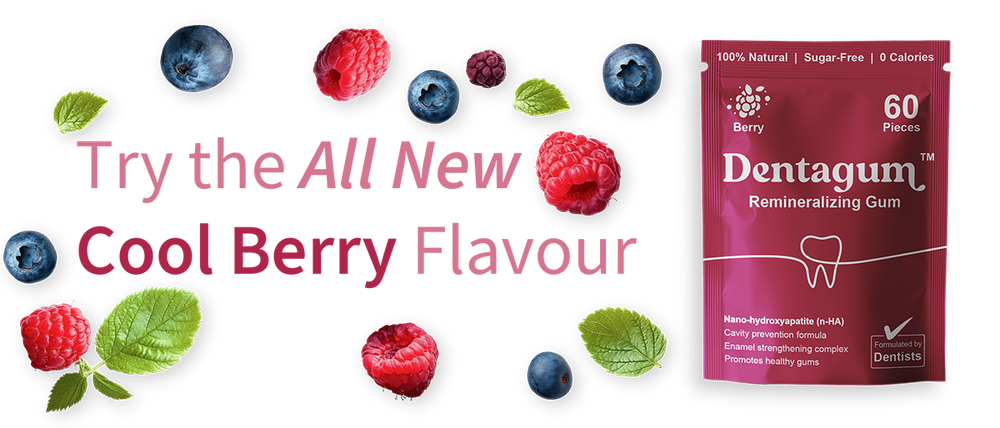
Dentagum's flavors were selected with a range of palates in mind. Spearmint is milder than peppermint, making it more comfortable for children and adults who find strong mint flavors sharp on sensitive gum tissue. The Cool Berry flavor provides a fruit-adjacent sweetness that children respond well to. The variety pack is a practical choice for households where different family members have different preferences, removing the "I don't like that one" friction that can derail a new habit before it forms.
The ingredients are relevant for family use: organic xylitol and erythritol rather than aspartame (the WHO classified aspartame as possibly carcinogenic in 2023), no artificial colors, and Prop 65 heavy metal testing through Lightlabs with publicly verifiable results. For families making a shared oral health habit, the safety profile of what everyone is chewing daily matters.
One note for households with pets: xylitol is toxic to dogs (and some other animals). Keep Dentagum out of reach of pets and do not offer it to animals. This is important and worth knowing before making it a household staple.
At 60 pieces per pouch and $0.55 per piece, covering the after-dinner gum habit for a family of four (one piece each, five evenings a week) costs around $22 per month. Compared to the per-filling cost of a cavity, the math on prevention is strongly favorable at any household size.
Try Dentagum risk-free — 30-day guaranteeFrequently Asked Questions
How do I get my partner to floss more without nagging?
Reduce the friction of flossing rather than increasing the pressure. A water flosser on the bathroom counter rather than string floss in a drawer removes the most common barriers: dexterity difficulty, time perception, and the small decision of getting it out. Mention it once: "I switched to this water flosser and it's so much easier, worth trying." Then leave it there, visible. A habit that starts because the tool is right there is often more sustainable than one that requires a new daily decision. If they try it and it becomes their habit, don't reference the conversation again.
At what age can children chew xylitol gum?
Most dental and pediatric guidelines consider sugar-free gum appropriate from around age 5 or 6, when children are reliably old enough to understand not to swallow it. Supervise younger children when first introducing gum until the concept is established. Xylitol is well-tolerated in children at appropriate amounts and has been used in numerous pediatric clinical studies specifically targeting childhood caries prevention. Keep xylitol gum away from pets, as it is toxic to dogs and some other animals.
How do I make kids brush their teeth without a fight?
Three changes make the biggest practical difference. An electric toothbrush with a built-in two-minute timer removes the negotiation about duration and makes brushing feel different and more interesting. Letting children choose their toothbrush and toothpaste flavor gives them ownership over the ritual, which reduces resistance significantly. And embedding brushing in an automatic sequence (after pajamas, before goodnight) makes it part of a routine that happens regardless, rather than a separate thing that requires motivation every evening.
Is xylitol gum safe for children?
Yes, for children old enough to understand they should not swallow it (generally around 5 to 6 years old). Xylitol is a naturally occurring sugar alcohol found in many fruits and vegetables. It has been used in pediatric clinical trials specifically for childhood caries prevention with a strong safety profile. The key concerns are: supervise younger children, ensure they're chewing rather than swallowing, and keep xylitol gum away from dogs and other pets where it is toxic. Dentagum is not vegan (contains eggshell powder) which is worth noting for families with dietary restrictions.
What is the easiest oral health habit to introduce to a reluctant family member?
Post-meal remineralizing gum. It adds something new without requiring any change to an existing routine, has an immediate pleasant reward (fresh breath, clean feeling), is ADA-endorsed for cavity prevention when brushing isn't possible after meals, and can be introduced as sharing something you enjoy rather than prescribing a health habit. For children, gum is inherently appealing without any selling required. For partners, offering a piece after dinner is a social gesture rather than a health lecture. The habit that starts effortlessly is more likely to become a lasting family routine than the one that requires ongoing effort to maintain.
The Bottom Line
You cannot directly change another person's oral care habits. You can reduce the friction of the right habits, model them yourself, connect them to motivations the other person already has, and make the best tools easily available at the moments when the habits should happen.
The post-meal gum habit is the best entry point for a household because it asks the least of anyone. It adds something enjoyable after a moment that already happens. It works while doing other things. It has an immediate reward. And it's genuinely effective, endorsed by the ADA, and clinically documented to reduce cavity risk and bacterial load with consistent daily use. A family that does it together after dinner is building one of the most valuable shared oral health habits available, without anyone having to be lectured into it.
Start with the table. Put the gum where the habit needs to happen. Offer it, use it yourself, and let the habit normalize. The brushing conversations get easier once there's already a positive shared oral health habit in the household.
Try Dentagum risk-free — 30-day guarantee at dentagum.coResearch Summary
- American Dental Association. Chewing Gum Oral Health Topics. "If you cannot brush your teeth immediately after a meal, then chewing gum can help." Sugar-free gum endorsed for 20 minutes after meals. Stimulates saliva to 10-12x resting rate.
- American Dental Association. Floss Oral Health Topics. Only 16% of Americans floss daily. Over half who don't cite "too time consuming." Water flossers and interdental picks are appropriate alternatives to string floss.
- Pienihäkkinen K et al. European Archives of Paediatric Dentistry, 2024. Systematic review. All 10 xylitol chewing gum RCTs showed statistically significant preventive effect vs control in children. 9 of 10 showed clinically significant preventive fraction.
- Söderling E et al. BMC Oral Health, 2025. Xylitol gum significantly reduced S. mutans in 12/14 studies. Cumulative antibacterial effect with consistent daily use relevant for family household adoption.
- Habit formation research. Habits formed through social modeling and environmental design (tool availability at trigger location) are more durable than habits formed through information provision or external pressure. Internal motivation and immediate reward are key predictors of habit sustainability.
References
- American Dental Association. "Chewing Gum." Oral Health Topics. https://www.ada.org/resources/ada-library/oral-health-topics/chewing-gum
- American Dental Association. "Dental Floss/Interdental Cleaners." Oral Health Topics. https://www.ada.org/resources/ada-library/oral-health-topics/floss
- Pienihäkkinen K et al. "The Effect of Xylitol Chewing Gums and Candies on Caries Occurrence in Children: A Systematic Review." European Archives of Paediatric Dentistry, 2024. https://www.nature.com/articles/s41432-024-01018-2
- Söderling E et al. "Specific Effects of Xylitol Chewing Gum on Mutans Streptococci Levels." BMC Oral Health, 2025. https://link.springer.com/article/10.1186/s12903-025-06602-1
- American Academy of Pediatric Dentistry. "Policy on the Use of Xylitol in Caries Prevention." https://www.aapd.org/research/oral-health-policies--recommendations/use-of-xylitol-in-caries-prevention/
