
Coconut Oil and Oral Health: What the Science Actually Says
Coconut oil is one of the most searched-about natural oral care ingredients. The oil pulling evidence is more complicated than most articles admit. Lauric acid's antimicrobial mechanism against S. mutans is real and documented. Here's the honest picture on both, and why coconut oil as a gum ingredient is a different proposition from 20 minutes of swishing.

Coconut oil contains approximately 50% lauric acid, a medium-chain fatty acid with documented antimicrobial activity against S. mutans and other oral bacteria. Multiple meta-analyses of oil pulling with coconut oil show significant improvements in plaque index and gingival inflammation measures, but study quality is consistently noted as mixed, with small sample sizes and high risk of bias. The 2024 Jong et al. meta-analysis compared oil pulling to chlorhexidine and other mouthwashes and found comparable effects in some measures, but called for more rigorous trials. A 2025 triple-blind RCT found coconut oil significantly modulated the oral microbiome toward a healthier profile and reduced inflammatory markers in periodontitis patients, but had a small sample size. As a gum ingredient, coconut oil's lauric acid content provides antimicrobial contact with oral tissue throughout the chewing session through a different mechanism from oil pulling, without the 15 to 20 minute active swishing commitment.
Coconut oil may be the most discussed natural ingredient in oral care. It has enthusiastic advocates who credit oil pulling with transforming their oral health, and skeptical dental professionals who point to methodologically weak research and the absence of ADA endorsement. Both camps tend to overstate their position.
The honest picture is more nuanced than either side presents. Lauric acid's antimicrobial mechanism is real and mechanistically well-understood. The oil pulling evidence is positive in direction but weak in quality. And coconut oil as an ingredient in a chewing gum formula is a meaningfully different proposition from 20 minutes of daily oil swishing. This article addresses all three of those realities directly.
What Coconut Oil Actually Is and Why It's Different From Other Oils
Coconut oil's relevance to oral health comes almost entirely from one specific component: lauric acid. While most dietary oils are composed predominantly of long-chain fatty acids (C16-C18), coconut oil is unusual in that approximately 50% of its fatty acid content is lauric acid, a medium-chain saturated fatty acid (C12:0). This composition makes coconut oil chemically distinct from olive oil, sesame oil, sunflower oil, and most other plant oils.
Medium-chain fatty acids have structural properties that long-chain fatty acids don't. Their shorter carbon chain gives them an amphipathic character (both hydrophilic and lipophilic regions) that allows them to interact directly with bacterial cell membranes in a way that longer-chain fatty acids cannot. This membrane interaction is the basis of lauric acid's antimicrobial activity.
When lauric acid contacts bacterial cell membranes, it inserts into the lipid bilayer and disrupts membrane integrity, causing leakage of intracellular contents and impairing the membrane's ability to maintain the electrochemical gradients essential for bacterial function. In vivo, lauric acid is also partially converted to monolaurin, a monoglyceride derivative with broader antimicrobial activity. Both lauric acid and monolaurin have been studied for activity against gram-positive bacteria including S. mutans and Streptococcus pyogenes, gram-negative bacteria, and some fungi and viruses.
Not all fatty acids have meaningful antimicrobial activity. Research on the relationship between chain length and antimicrobial activity has found that C12 (lauric acid) and C10 (capric acid) show the strongest antimicrobial effects among the fatty acids studied, with activity falling off significantly at shorter and longer chain lengths. This explains why coconut oil, with its 50% lauric acid composition, has a notably different antimicrobial profile from other edible oils with predominantly long-chain fatty acids.
Oil Pulling: What It Is and What the Evidence Actually Shows

Oil pulling is an ancient Ayurvedic practice dating back to Charaka Samhita texts in approximately 700 BCE. The practice involves swishing 1 to 2 tablespoons of vegetable oil around the mouth for 15 to 20 minutes, then spitting it out. Traditional practice used sesame oil; modern recommendations often suggest coconut oil based on its lauric acid content.
The proposed mechanisms during oil pulling are threefold. The mechanical action of sustained, vigorous swishing disrupts dental biofilm from tooth surfaces. The oil saponifies in contact with salivary enzymes and alkaline saliva to form soap-like substances that facilitate mechanical removal of plaque. And the lauric acid's inherent antimicrobial activity works directly against bacteria in the oral environment during the session.
The clinical evidence for oil pulling is positive in direction and contested in quality. A 2026 literature review published in Quality in Sport surveyed the clinical literature from 2016 to 2025 and confirmed that clinical trials show statistically significant reductions in Plaque Index and Gingival Index with regular coconut oil pulling, achieving effects in some studies comparable to chlorhexidine mouthwash.
However, the same literature consistently notes the methodological limitations. A 2024 systematic review and meta-analysis by Peng et al. in the Journal of Clinical Medicine analyzed RCTs on coconut oil pulling and found positive effects on plaque and gingival inflammation, but noted heterogeneity across studies. The 2024 Jong et al. meta-analysis in the International Journal of Dental Hygiene, which compared oil pulling to chlorhexidine and other mouthwashes, found comparable effects in some measures but concluded more rigorous trials were needed. A 2020 systematic review published in PMC found oil pulling may have beneficial effects but characterized the data as "insufficient for conclusive findings, the quality of studies was mixed and risk of bias was high."
Why the Oil Pulling Evidence Is Complicated
Understanding why oil pulling evidence is methodologically weak despite showing positive signals requires looking at what makes oral hygiene studies hard to conduct well. Several compounding problems affect the oil pulling literature specifically.
Blinding is nearly impossible. Clinical trials of oral care products ideally blind participants to what they're using. Oil pulling is a distinctive, perceptible experience that cannot be disguised as a standard mouthwash. Participants know they're oil pulling. This creates measurement expectation bias that is very difficult to control for.
The practice is not standardized. Studies vary in the oil used (sesame, coconut, sunflower, or mixed), the volume used (5ml to 15ml), the swishing duration (5 minutes to 20 minutes), and the frequency (once daily to three times daily). Pooling these studies in a meta-analysis requires treating very different interventions as equivalent. The resulting heterogeneity inflates uncertainty around the pooled estimate.
Concurrent oral hygiene is often not controlled. Many oil pulling studies allow participants to continue their normal brushing and flossing routines, making it impossible to attribute improvements specifically to oil pulling rather than to whatever concurrent hygiene changes participants made.
Most studies are short-term and small. The existing evidence base is dominated by 2 to 4 week studies with 10 to 30 participants per arm. Effects that appear in short studies may not persist, and effects that don't appear in small studies may become significant with larger samples.
The honest summary is that oil pulling with coconut oil probably provides some benefit for plaque and gingival health as an adjunct to regular oral hygiene, and the lauric acid mechanism is pharmacologically real. But the evidence isn't robust enough to recommend it with the confidence warranted for practices with higher-quality clinical support. The ADA doesn't endorse oil pulling as a replacement for or equivalent to brushing, flossing, or clinically proven adjunctive treatments. If you want to add it to your routine, the evidence suggests it's unlikely to harm and may help. The more important oral health priorities described throughout this blog series should come first.
The 2025 Microbiome Study: The Strongest Recent Evidence

The most methodologically rigorous recent study on coconut oil and oral health was a triple-blind randomized clinical trial published in Clinical Oral Investigations in March 2025. This study was the first RCT specifically designed to investigate coconut oil's effects on the oral microbiome (using next-generation 16S rRNA gene sequencing) and inflammatory response in periodontitis patients.
The study found that coconut oil treatment significantly modulated the oral microbiome, promoting a shift toward a healthier microbial profile, while also reducing key inflammatory markers including interleukin-6 (IL-6) and tumor necrosis factor-alpha (TNF-alpha) in gingival crevicular fluid. These are meaningful clinical outcomes: IL-6 and TNF-alpha are direct markers of periodontal tissue inflammation, not proxy measures. Their reduction indicates genuine anti-inflammatory effect in the periodontal environment.
The study's limitation is its sample size, which the authors explicitly note calls for larger-scale research to obtain more conclusive results. But the methodology is stronger than most prior oil pulling research, and the direction of findings is consistent with the mechanistic predictions from lauric acid's known properties.
Coconut Oil in a Chewing Gum: Why It's Different From Oil Pulling
This distinction is the core of why coconut oil's evidence base from oil pulling studies doesn't directly translate to its role as a gum ingredient, and why the two should be evaluated separately.
Oil pulling works through three simultaneous mechanisms: the mechanical disruption of biofilm from sustained vigorous swishing, the saponification reaction that creates soap-like cleaning agents from the oil and saliva, and the direct antimicrobial activity of lauric acid and monolaurin. In a gum, the first mechanism (sustained mechanical swishing) is absent. The oil is present in the gum matrix in smaller quantities, released during chewing through contact with saliva.
What remains in a gum format is the direct lauric acid antimicrobial mechanism: contact of lauric acid-containing gum matrix with oral tissue surfaces during chewing, releasing lauric acid into the oral fluid where it can interact with bacterial cell membranes. This is a more modest mechanism than oil pulling at its theoretical best, but it's one that operates throughout the entire 10 to 20 minute chewing session with sustained contact rather than a practice most people never adopt because it requires 15 to 20 minutes of active swishing.
The benefit of coconut oil as a gum ingredient rather than as an oil pulling practice is primarily pragmatic: it delivers lauric acid's known antimicrobial properties in a format that requires no behavior change beyond chewing gum after meals. The dose is lower than in oil pulling, the mechanical component is absent, and the magnitude of effect from this specific format hasn't been studied in isolation. It's a supporting antimicrobial ingredient in a formula that already has stronger primary antibacterial agents (xylitol, mastic, propolis), not the headline active ingredient.
What Coconut Oil Doesn't Do (Setting the Record Straight)
Several claims circulate about coconut oil and teeth that the evidence doesn't support well.
Coconut oil does not chemically whiten teeth. No clinical evidence supports a bleaching or whitening mechanism from lauric acid or any other coconut oil component. Any brightening effect from oil pulling would come from the mechanical removal of surface staining through sustained swishing, not from a chemical whitening action. This is a very different mechanism from peroxide-based whitening products.
Coconut oil does not "detoxify" in any meaningful clinical sense. The "toxin pulling" narrative around oil pulling has no clinical evidence and reflects a pre-scientific understanding of how pathogens work. The actual mechanism, mechanical disruption of biofilm and lauric acid's direct antimicrobial action, is more modest and more evidence-based than the detoxification framing suggests.
Coconut oil pulling is not equivalent to brushing or flossing. No dental authority endorses oil pulling as a replacement for mechanical plaque removal through brushing or interdental cleaning through flossing. Its potential role is as an adjunct that may provide additional antimicrobial support alongside a complete oral care routine, not as a standalone practice that substitutes for the evidence-based foundation.
Coconut Oil in the Context of Dentagum's Formula

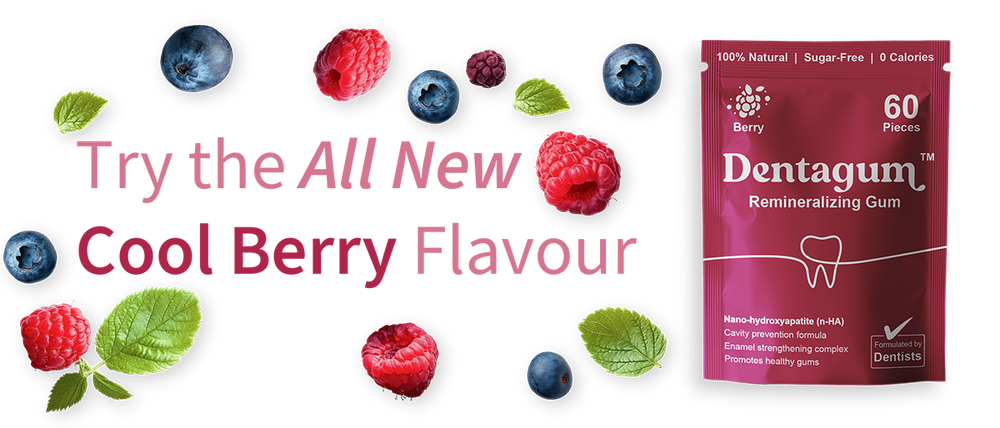
Dentagum contains coconut oil as one component in a multi-ingredient formula. Its contribution is the sustained contact of lauric acid with oral tissue surfaces during the chewing session, providing a supporting antimicrobial layer alongside the formula's primary antibacterial ingredients.
Xylitol is the formula's primary anti-caries antibacterial, targeting S. mutans through a specific metabolic mechanism supported by decades of clinical trials. Mastic gum provides broad-spectrum antibacterial activity against periodontal pathogens, confirmed across 14 studies in the 2023 Journal of Natural Medicines state-of-the-art review. Propolis provides broad-spectrum antibacterial and anti-inflammatory coverage comparable to chlorhexidine in a 21-day RCT. Coconut oil contributes lauric acid's membrane-disruption antimicrobial mechanism as an additional supporting layer against gram-positive bacteria during the chewing session.
The honest framing: coconut oil is not the headline ingredient in this formula. Its contribution is real (lauric acid's antimicrobial mechanism is pharmacologically documented) but supporting rather than primary. In a formula where the other antibacterial ingredients have more extensive clinical evidence, coconut oil adds breadth of mechanism rather than primary antibacterial strength.
Try Dentagum risk-free — 30-day guaranteeFrequently Asked Questions
Does coconut oil actually help your teeth?
Yes, modestly, through two mechanisms. Lauric acid, which makes up approximately 50% of coconut oil's fatty acid content, has documented antimicrobial activity against S. mutans and other oral bacteria through membrane disruption. Multiple meta-analyses of coconut oil pulling show statistically significant improvements in plaque index and gingival index measures. However, the oil pulling research has consistent methodological limitations including small sample sizes, high risk of bias, and heterogeneous study designs. The honest summary is that coconut oil provides real but modest antimicrobial benefit as an adjunct oral care ingredient, not as a replacement for evidence-based oral care practices.
Is oil pulling with coconut oil evidence-based?
Partially. Multiple meta-analyses exist, including the Peng et al. 2024 analysis of RCTs in the Journal of Clinical Medicine and the Jong et al. 2024 comparison with chlorhexidine in the International Journal of Dental Hygiene. Both found positive effects on plaque and gingival inflammation. Both also noted methodological limitations including study heterogeneity, blinding difficulties, and the need for more rigorous trials. A 2025 triple-blind RCT found significant microbiome improvement and inflammatory marker reduction. The evidence is real but weaker than for established oral care practices. The ADA endorses twice-daily brushing, daily flossing, and sugar-free gum after meals; it does not formally endorse oil pulling.
What does lauric acid do for oral health?
Lauric acid (C12:0), the primary fatty acid in coconut oil, disrupts bacterial cell membranes through its amphipathic structure, impairing membrane integrity and cellular function. It is particularly active against gram-positive bacteria including S. mutans, the primary cavity-causing bacterium. In vivo it is partially converted to monolaurin, which has broader antimicrobial activity. Research has confirmed lauric acid's antimicrobial activity against oral bacteria in in vitro models, and clinical studies of coconut oil pulling suggest some translation to clinical outcomes, though with study quality limitations.
Does coconut oil whiten teeth?
Not through a chemical whitening mechanism. No clinical evidence supports a bleaching action from lauric acid or any other coconut oil component. Any brightening effect from oil pulling would come from the mechanical removal of surface staining through sustained swishing action, which is different from the chemical oxidation mechanism of peroxide-based whitening products. For coffee and dietary staining specifically, the mechanical component of oil pulling may remove some surface staining, but this effect hasn't been well quantified in clinical trials and would not address deeper or structural discoloration.
Is coconut oil safe for teeth and gums?
Yes, coconut oil is generally safe for oral use. The relevant safety considerations are: it should be spat out rather than swallowed after oil pulling (it contains bacteria collected from the oral environment during the session); it should not be spit into sinks where it can solidify and clog drains (bin disposal recommended); and it is not a replacement for standard oral hygiene practices. There are no documented adverse effects from coconut oil use in the oral environment at typical amounts used for oil pulling or as an ingredient in oral care products.
Why is coconut oil in a chewing gum rather than as oil pulling?
Because a chewing gum format delivers lauric acid's antimicrobial properties through sustained contact during chewing without requiring 15 to 20 minutes of active swishing. Oil pulling requires significant behavior change: a new 15 to 20 minute practice, typically done on an empty stomach in the morning, with specific technique. Most people never adopt it consistently. A gum containing coconut oil delivers the lauric acid mechanism passively during a post-meal chewing session that's already part of the routine. The dose is lower and the mechanical disruption mechanism of oil pulling is absent, but the antimicrobial contact mechanism is present throughout each chewing session.
The Bottom Line
Coconut oil's oral health story is more honest and more complicated than most articles present it. Lauric acid's antimicrobial mechanism against S. mutans is pharmacologically real and well-documented. Oil pulling with coconut oil shows positive effects on plaque and gingival health in multiple meta-analyses. The evidence quality is consistently noted as mixed, with small samples, blinding difficulties, and high heterogeneity.
The 2025 triple-blind RCT showing significant microbiome improvement and inflammatory marker reduction in periodontitis patients represents the strongest recent evidence. It also had a small sample size and calls for larger trials. This is where the coconut oil evidence stands: directionally positive, mechanistically credible, methodologically underpowered, and appropriately positioned as an adjunct rather than a primary oral health intervention.
In Dentagum's formula, coconut oil's lauric acid contributes sustained antimicrobial contact during each chewing session alongside stronger-evidenced antibacterial ingredients. It adds to the formula's antibacterial coverage without doing the primary heavy lifting. That's an honest description of what it does, and for a real ingredient with a real mechanism and a growing evidence base, that's a credible and appropriate role.
Try Dentagum risk-free — 30-day guarantee at dentagum.coResearch Summary
- Smyczynska et al. "The Use of Coconut Oil Pulling in the Prevention and Treatment of Periodontal Diseases and Dental Caries: A Literature Review." Quality in Sport, April 2026. Literature review 2016-2025. Confirmed statistically significant plaque index and gingival index reductions in clinical trials; lauric acid antimicrobial mechanism against S. mutans confirmed.
- Peng TR et al. "Effect of Oil Pulling with Coconut Oil on Dental Plaque and Gingival Inflammation: A Systematic Review and Meta-Analysis of Randomized Controlled Trials." J Clin Med, 2024. Positive effects on plaque and gingival inflammation from coconut oil pulling RCTs; study heterogeneity noted.
- Jong FJX, Ooi J, Teoh SL. "The Effect of Oil Pulling in Comparison with Chlorhexidine and Other Mouthwash Interventions in Promoting Oral Health: A Systematic Review and Meta-Analysis." Int J Dental Hygiene, 2024. Oil pulling comparable to CHX in some measures; more rigorous trials called for.
- Triple-blind RCT. "Anti-inflammatory and Antimicrobial Efficacy of Coconut Oil for Periodontal Pathogens." Clinical Oral Investigations, March 2025. First RCT to assess coconut oil on oral microbiome and inflammatory response in periodontitis patients. Significant microbiome shift toward healthier profile, IL-6 and TNF-alpha reduced. Small sample size limitation.
- PMC Systematic Review, 2020. "The Effect of Oil Pulling with Coconut Oil to Improve Dental Hygiene and Oral Health." Evidence suggesting beneficial effect but "data insufficient for conclusive findings, quality of studies was mixed and risk of bias was high."
- Lauric acid antimicrobial mechanism. C12:0 medium-chain fatty acid. Disrupts bacterial cell membranes through amphipathic structure. Particularly active against gram-positive bacteria. Converted in vivo to monolaurin with broader antimicrobial spectrum. Documented activity against S. mutans, S. pyogenes, S. aureus in in vitro studies. Stronger antimicrobial activity than shorter or longer chain fatty acids.
References
- Smyczynska N et al. "The Use of Coconut Oil Pulling in the Prevention and Treatment of Periodontal Diseases and Dental Caries." Quality in Sport, April 2026. https://apcz.umk.pl/QS/article/view/70698
- Peng TR et al. "Effect of Oil Pulling with Coconut Oil on Dental Plaque and Gingival Inflammation: A Systematic Review and Meta-Analysis of Randomized Controlled Trials." J Clin Med, 2024. https://doi.org/10.3390/jcm13237381
- Jong FJX, Ooi J, Teoh SL. "The effect of oil pulling in comparison with chlorhexidine and other mouthwash interventions in promoting oral health." Int J Dental Hygiene, 2024. https://onlinelibrary.wiley.com/doi/10.1111/idh.12725
- "Anti-inflammatory and Antimicrobial Efficacy of Coconut Oil for Periodontal Pathogens: A Triple-Blind Randomized Clinical Trial." Clinical Oral Investigations, March 2025. https://link.springer.com/article/10.1007/s00784-025-06267-8
- "The Effect of Oil Pulling with Coconut Oil to Improve Dental Hygiene and Oral Health: A Systematic Review." PMC, 2020. https://www.ncbi.nlm.nih.gov/pmc/articles/PMC7475120/
- Nitbani FO et al. "Antimicrobial Properties of Lauric Acid and Monolaurin in Virgin Coconut Oil: A Review." ChemBioEng Reviews, 2022. Documenting lauric acid and monolaurin antimicrobial mechanisms and spectrum.
