
Can Chewing Gum Really Help Prevent Cavities?
Chewing the right gum after meals can stimulate saliva, neutralise acids, and deliver remineralising ingredients to your enamel. But not all gum is created equal.

Yes, chewing sugar-free gum can genuinely support cavity prevention, but only under the right conditions. The type of gum matters enormously, and it works best as a complement to brushing and flossing, not a substitute for them.
So what's actually happening in your mouth when you chew, and which ingredients are worth looking for? Here's the full breakdown.
How Chewing Gum Affects Your Teeth
Every time you chew, your salivary glands kick into gear. This isn't just a comfort response. Saliva is your mouth's built-in defence system.
After you eat, the bacteria in your mouth metabolise leftover sugars and release acids as a byproduct. Those acids lower your oral pH and begin attacking the mineral surface of your enamel, a process called demineralisation. Saliva works to buffer those acids, wash away food particles, and deliver calcium and phosphate ions back to weakened enamel.
Chewing gum amplifies this process. Studies have found that chewing sugar-free gum for 20 minutes after a meal can increase saliva flow by up to ten times the resting rate, helping to restore a neutral pH more quickly than doing nothing at all.
The ADA (American Dental Association) recognises this benefit and grants its Seal of Acceptance to sugar-free gums that demonstrate they can reduce plaque acids, help remineralise enamel, or reduce cavities in clinical trials.
Why Sugar-Free Is Non-Negotiable
This one's simple. Gum sweetened with sugar is essentially feeding the cariogenic (cavity-causing) bacteria you're trying to fight. Streptococcus mutans and Lactobacillus species thrive on fermentable sugars and will produce acids right through any temporary saliva benefit.
Sugar-free gum uses non-fermentable sweeteners, meaning bacteria can't metabolise them into acid. That shifts the equation entirely.
The most well-researched sugar-free sweetener for oral health is xylitol.
What Xylitol Actually Does in Your Mouth
Xylitol is a naturally occurring sugar alcohol found in birch trees, corn fibre, and some fruits. It's sweet enough to make gum palatable, but bacteria can't use it for energy.
That's helpful on its own. But xylitol goes further.
Research published in the Journal of the American Dental Association shows that xylitol actively disrupts the ability of S. mutans to adhere to tooth surfaces. Bacteria that consume xylitol produce a non-acidic compound they can't use, which gradually starves the bacterial colony and reduces its population over time with consistent use.
Clinical data suggests that chewing xylitol gum (at least 6 grams per day, spread across three to five sessions) can reduce cavity incidence by up to 60% in high-risk populations. That's a meaningful number, and it's earned xylitol a strong reputation among dentists.
To get a therapeutic effect, look for xylitol listed as the first ingredient in the gum's sweetener list.
The Emerging Role of Nano-Hydroxyapatite Chewing Gum
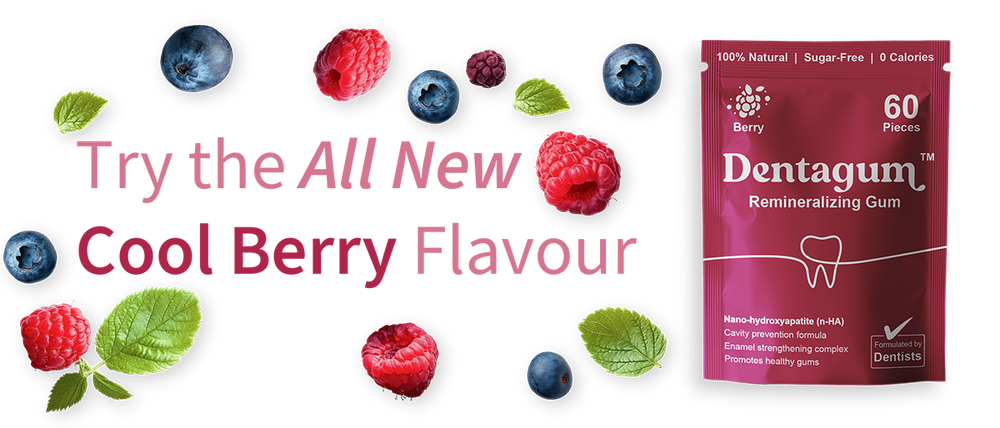
Nano-hydroxyapatite is where the science gets especially interesting. Hydroxyapatite is the primary mineral that makes up your tooth enamel, about 97% of it, in fact. Nano-hydroxyapatite (nHa) is a synthetic, biocompatible form of this compound engineered into microscopic particles that can integrate directly into the enamel surface.
Applied topically (in toothpaste, mouthwash, or increasingly in gum), nHa fills in micro-cracks and demineralised zones on the enamel surface and can make teeth measurably harder and more resistant to acid attack over time.
As an ingredient in gum, nano-hydroxyapatite is released through chewing and distributed across all tooth surfaces via saliva. It's a relatively new delivery format, but early research is promising. A 2019 study in Odontology found that nHa-releasing materials significantly reduced enamel solubility compared to control groups.
For people looking to go beyond xylitol alone, nano-hydroxyapatite chewing gum represents a meaningful step up in remineralisation potential.
If you're already using a nano-hydroxyapatite toothpaste as your foundation, a compatible gum can reinforce that protection throughout the day, especially in the hours between brushing.
[INTERNAL LINK: nano-hydroxyapatite benefits → "what is nano-hydroxyapatite and how does it remineralise enamel"]
What Makes a Gum Actually Good for Your Teeth
Not all sugar-free gum delivers the same benefit. Here's what to look for:
Xylitol as the primary sweetener. Some gums list xylitol but include it in tiny amounts alongside other sweeteners. Check that it appears first, or look for a product with a stated xylitol content of at least 1–1.3 grams per piece.
No aspartame or acesulfame potassium if you prefer clean ingredients. These are common sugar-free sweeteners with no known harm at typical doses, but some people prefer to avoid them. Gums sweetened entirely with xylitol, erythritol, or sorbitol are widely available.
Nano-hydroxyapatite as an added active ingredient. If enamel remineralisation is your goal, look for nHa listed in the active or functional ingredients.
No artificial dyes or unnecessary additives. A gum doing a job this specific doesn't need to be bright blue or packed with mystery "flavour enhancers."
ADA Seal or equivalent certification. Third-party validation matters, especially for a health claim.
When to Chew Gum for Maximum Benefit
Timing is everything here. Chewing gum is most effective as a post-meal intervention, not a passive habit.
The ideal window is within 5 to 10 minutes of finishing a meal or snack. This is when oral pH is lowest and bacteria are most active. Getting saliva flowing quickly in that window helps neutralise acids before they have a chance to work on enamel.
Chew for at least 20 minutes. That's the duration most clinical studies use when measuring salivary stimulation and pH recovery.
It's not a replacement for brushing. The standard recommendation from the ADA is to wait 30 minutes after eating before brushing (to let enamel reharden after acid exposure), which makes gum a genuinely useful interim tool. Chew gum now, brush properly later.
What Gum Can't Do
Let's be honest about the limits.
Gum doesn't remove plaque biofilm. Plaque is a sticky, organised bacterial community that adheres to tooth surfaces and can only be mechanically disrupted by brushing and flossing. Saliva and xylitol can inhibit plaque formation and reduce bacterial load, but they don't scrub it away.
Gum won't reverse an existing cavity. Once decay has progressed through enamel into dentine, only a dentist can address it. Remineralisation works on early-stage, surface-level demineralisation, not established cavities.
And not everyone is a candidate. People with TMJ disorders, jaw pain, or certain dental restorations should check with their dentist before adding regular gum chewing to their routine.
Building a Complete Cavity-Prevention Routine
Gum works best inside a layered strategy. Think of it this way:
- Brush twice daily with a remineralising toothpaste (fluoride, nano-hydroxyapatite, or both)
- Floss daily to disrupt plaque in the areas a brush can't reach
- Chew sugar-free gum for 20 minutes after meals when brushing isn't practical
- Limit snacking frequency to reduce the number of acid attacks your enamel weathers each day
- Stay hydrated: water supports saliva production
- Visit your dentist regularly for professional cleaning and early detection
Explore our range of nano-hydroxyapatite oral care products if you're building this kind of routine and want ingredients that work across multiple steps in your day.
FAQ
Does chewing gum actually prevent cavities? Sugar-free gum can contribute to cavity prevention by stimulating saliva flow, neutralising acids after meals, and delivering active ingredients like xylitol or nano-hydroxyapatite to tooth surfaces. It's a useful tool in a broader oral care routine, but it doesn't replace brushing or flossing.
What is the best gum for cavities? Gums with a high xylitol content (at least 1 gram per piece, listed as the primary sweetener) have the most clinical support for reducing cavity-causing bacteria. Newer gums that also include nano-hydroxyapatite offer additional remineralisation benefits.
Is nano-hydroxyapatite chewing gum effective? Early research suggests nano-hydroxyapatite in chewing gum can help remineralise early enamel lesions by releasing bioavailable calcium and phosphate particles through saliva. It's a newer delivery format but builds on a strong body of evidence supporting nHa in toothpastes and other topical applications.
How much xylitol do I need in gum to see a benefit? Most studies showing a meaningful reduction in cavity risk used between 6 and 10 grams of xylitol per day, spread across three to five chewing sessions. That typically means two to three pieces of high-xylitol gum per session after meals.
Can I chew gum instead of brushing? No. Gum is a supplement, not a substitute. It doesn't mechanically remove plaque or clean along the gumline. Twice-daily brushing and daily flossing remain essential, and gum works best in the hours between those.
Is sugar-free gum safe for teeth? Yes, provided it doesn't contain fermentable sugars. Sugar-free gums use sweeteners like xylitol, sorbitol, and erythritol that bacteria can't convert into enamel-damaging acids. Many are explicitly endorsed by dental associations for this reason.
