
Building an Oral Care Routine That Actually Fits Your Life
Most people's oral care routine has the same two gaps: the midday window between meals is completely uncovered, and the evening routine gets skipped when life gets in the way. Here's a practical morning, midday, and evening framework that covers every high-risk window in your day without requiring any additional time you don't already have.

A complete oral care routine has three windows: morning (brush before breakfast, or floss then brush after breakfast if you prefer), midday (chew xylitol and nano-HAp gum for 10 to 20 minutes after each meal and snack when brushing isn't possible), and evening (floss then brush before bed). The ADA estimates that following the core recommendation of twice-daily brushing and daily flossing takes around 30 hours per year, roughly 5 minutes per day. The midday gum habit adds zero time because it replaces the nothing you were already doing between meals. The challenge isn't information. It's building the three anchors into your existing day so they happen automatically rather than requiring willpower to remember.
Most oral care advice is technically correct and practically useless. Brush twice a day. Floss daily. See your dentist every six months. Avoid sugar. Everyone has heard it. And according to an ADA survey, only 16% of Americans floss daily, 20% floss only when something is stuck in their teeth, and 8% never floss at all. The problem isn't lack of information. It's that the advice was never attached to the specific moments in a real day when it should happen.
This article approaches oral care the way habit formation science approaches any behavior change: anchor new habits to existing ones, reduce friction at the decision point, and build a complete system rather than a list of aspirations. The clinical outcomes improve when the routine does, and the routine improves when it fits the day rather than requiring the day to be reorganized around it.
The Framework: Three Windows, Three Habits
Every oral care routine, regardless of how elaborate or simple, needs to cover three daily windows to be clinically complete. Missing any one of them leaves a meaningful gap.
Morning: Remove overnight bacterial accumulation before it gets a full day to work with. This is the highest-value brushing session of the day because plaque has been building undisturbed for 7 to 8 hours without salivary washing.
Midday: Address the post-meal acid attacks from every eating event across the day. This is the most neglected window in most people's routines and the one that creates the most cumulative daily enamel exposure.
Evening: Remove the day's full plaque accumulation and food debris before an overnight period when saliva flow drops significantly and bacteria operate without the natural washing and antimicrobial action of waking hours.
The morning and evening brushing sessions are the ones most people have. The midday window is the one most people are completely missing, and it's where the gum habit lives.
The Morning Window: What the Sequence Should Actually Look Like

Most people brush in the morning. The question is when and in what order relative to breakfast, and whether flossing belongs in the morning routine or the evening one.
Before or after breakfast?
The evidence supports brushing before breakfast for most people, with one important exception. Brushing before breakfast removes overnight plaque accumulation and gives fluoride or nano-HAp a chance to settle on enamel surfaces before the first acidic food or drink of the day arrives. If you have coffee or juice for breakfast, brushing before means those acids aren't hitting a surface that just had abrasive contact.
The exception: if your morning starts with coffee or orange juice before any other food, the acid exposure from the drink has already started. In this case, rinsing with water after your coffee or juice, then chewing gum for 10 to 20 minutes, then brushing (after the 30-minute post-acid window) is the more protective sequence. For most people who have breakfast foods first and coffee with or after, brush before eating.
Wake. Tongue scrape. Brush 2 minutes. Floss (if you prefer morning over evening). Breakfast. Chew remineralizing gum for 10 to 20 minutes. Continue your day.
Wake. Coffee. Water rinse. Chew remineralizing gum 10 to 20 minutes. Brush (at least 30 min after coffee). Floss if doing mornings. Continue your day.
Floss in the morning or the evening?

The ADA's position: it doesn't matter, as long as you do it once daily. A 2024 study confirmed that flossing before or after brushing has no significant effect on reducing the dental plaque index. A 2018 study in the Journal of Periodontology found a modest advantage for flossing before brushing (debris loosened by flossing, then cleared by brushing), but the ADA's guidance is that thorough daily flossing at any time beats inconsistent or skipped flossing at the optimal time.
The practical recommendation: floss when you're most likely to do it. For most people that's evening, when there's less time pressure than morning. If flossing before bed is where it consistently happens, that's the right time for you. If flossing in the morning is what works, do that. The habit that happens is worth more than the theoretically optimal habit that gets skipped.
Toothbrush bristles cannot clean between teeth effectively. This is an anatomical fact, not a limitation of brushing technique. The tight contact areas between teeth, the gumline crevices in those spaces, and the proximal surfaces of teeth are physically inaccessible to brush heads. This is where cavities most commonly form in adults. Interdental cleaning removes plaque from surfaces that no amount of brushing can reach. The ADA cites US Department of Health and Human Services reaffirmation of flossing as "an important oral hygiene practice." Only 16% of Americans do it daily. That gap is where a significant proportion of adult cavities come from.
The Midday Window: The Missing Piece for Most People
Between morning brushing and evening brushing, most people's oral care routine is completely empty. Yet this is when the majority of the day's acid events occur. Three meals, two snacks, multiple drinks: each one drops oral pH below the 5.5 critical enamel threshold and starts a 20 to 40 minute recovery window where enamel is losing mineral rather than gaining it.
The ADA is direct on this: "If you cannot brush your teeth immediately after a meal, then chewing gum can help." Chewing sugar-free gum for 20 minutes after meals stimulates salivary flow to 10 to 12 times the resting rate, neutralizing post-meal acid and delivering calcium and phosphate to recovering enamel. Xylitol specifically reduces the S. mutans bacteria metabolizing food residue into additional acid. Nano-HAp delivers enamel mineral directly during the post-meal window when the surface is most receptive to mineral deposition.
The midday habit is the one that costs zero additional time because it happens passively. You've finished lunch. You would otherwise do nothing. Instead, you chew gum for the 10 to 20 minutes you're already spending doing something else. No time added to your day. No equipment needed. No private space required.
The ADA survey finding that only 16% of Americans floss daily reflects a compliance gap in the evening routine. The midday gap is even larger: essentially nobody is doing any intentional post-meal oral care during the workday. The combined effect of a missing midday habit and inconsistent flossing means most adults are only covering one of the three daily windows reliably. Adding gum after lunch closes the most commonly missing window with the least friction of any oral care habit available.
Finish meal. Rinse with water briefly. Chew remineralizing gum for 10 to 20 minutes while doing whatever you'd otherwise be doing. That's it. Repeat after any significant snack or acidic drink during the afternoon. The habit lives wherever you eat, not wherever you brush.
The Evening Window: The Most Important Brushing Session

If you're going to prioritize one brushing session, make it the evening one. During sleep, salivary flow drops to near zero and bacteria operate without the continuous washing, buffering, and antimicrobial action that saliva provides during waking hours. Whatever plaque and food debris is on your teeth when you fall asleep has 7 to 8 hours to operate in a low-saliva environment. The evening brush is the last opportunity to remove that substrate before the longest uncovered period of every day.
Flossing in the evening means the interdental spaces, where toothbrush bristles cannot reach, are cleaned before that overnight period. The combination of floss and brush before bed is the highest-leverage pair of the entire daily routine.
After dinner, chew remineralizing gum for 10 to 20 minutes (this covers the post-dinner acid window). Later, before bed: floss all interdental spaces, then brush for 2 minutes. Spit, don't rinse, so fluoride or nano-HAp toothpaste residue stays on tooth surfaces overnight. Done.
Rinsing with water after brushing washes away the mineral content of your toothpaste from enamel surfaces. Not rinsing allows fluoride (or nano-HAp) to remain in contact with enamel overnight, providing continuous mineral delivery during the longest undisturbed period of the day. This is one of the single highest-value changes most people can make to their existing brushing routine without adding any time.
Building the Habits So They Actually Stick
Knowing what to do is the easy part. The gap between knowing and doing is where most oral care routines fail. Two principles from habit formation research are particularly relevant here.
Habit stacking
Attaching a new habit to an existing anchor habit dramatically improves adoption and maintenance. The morning brush already has a trigger: waking up, entering the bathroom, seeing the toothbrush. The evening brush already has a trigger: the end-of-day bathroom routine. The gum habit needs a trigger: finishing eating.
The most reliable trigger for post-meal gum is the physical act of clearing your plate or closing your food container. That moment is the anchor. Gum goes in as soon as the meal ends, not 20 minutes later when you might remember it. Keep gum at the table, your desk, or wherever you finish eating. Not in your bathroom cabinet where it's associated with brushing rather than eating.
Friction reduction
The ADA survey finding that over half of non-flossers cite "too time consuming" as their reason is a friction problem, not a motivation problem. The answer isn't to want to floss more. It's to make flossing easier. Floss picks or disposable flossers take less manual dexterity than string floss. A water flosser takes 60 seconds and many people find it significantly more comfortable than string floss. Having floss or a water flosser on the bathroom counter rather than in a drawer removes the small decision barrier that makes the difference between doing it and not on a tired evening.
The same applies to gum. A pouch on your desk, in your bag, in your car, and in your kitchen means the tool is always where the need is. A pouch only in the bathroom means you'll remember it in the wrong place.
If your current routine is morning brush plus occasional evening brush with no consistent flossing and no midday coverage, trying to fix all of it at once usually results in fixing none of it. Start with the midday gum habit because it has the lowest friction of the three windows: it requires no dedicated time, no equipment beyond a pouch in your bag, and no change to anything you're already doing. Build that for one week until it's automatic. Then add consistent evening flossing. Then refine the morning sequence. Layering works better than overhauling.
Where Dentagum Fits in the Routine

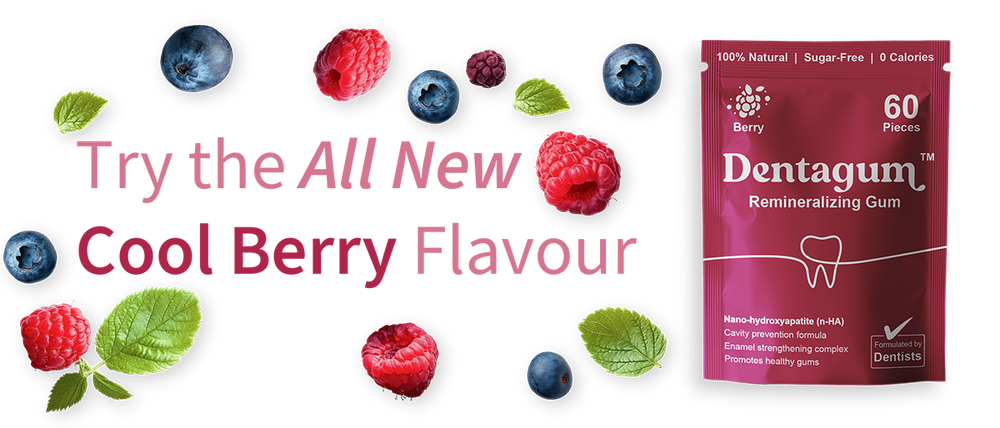
Dentagum's role is specifically the midday and post-meal windows that brushing doesn't cover. One piece after breakfast, one after lunch, one after dinner covers the three primary meal acid events of the day. Add a piece after any significant snack or acidic drink (coffee, juice, wine) and you're covering the additional events that most people don't think about as oral care moments.
The formula combines what those three daily windows specifically need: organic xylitol and organic erythritol for the antibacterial effect against S. mutans that peaks after eating, nano-hydroxyapatite for enamel mineral delivery during the post-meal recovery window, organic mastic gum and natural propolis for additional antibacterial and anti-inflammatory coverage, and a natural chicle and mastic base that provides the sustained saliva stimulation the ADA's mechanism relies on.
In Dentagum's own clinical data, 87% of participants were less susceptible to cavities with consistent daily use, and 83% showed notable gains in enamel quality and mineral quantity. These outcomes reflect consistent use across the post-meal windows this article is built around, not occasional use.
For the complete protocol behind the post-meal habit specifically, our article on How Often Should You Chew Remineralizing Gum for Best Results covers the clinical evidence on frequency, timing, and duration in full detail.
Try Dentagum risk-free — 30-day guaranteeFrequently Asked Questions
What is the best daily oral care routine for adults?
A complete routine covers three daily windows. Morning: brush for 2 minutes with fluoride toothpaste, ideally before breakfast. Midday: chew sugar-free xylitol and nano-HAp gum for 10 to 20 minutes after each meal and snack. Evening: floss all interdental spaces, then brush for 2 minutes, spit but don't rinse. The midday gum habit covers the post-meal acid windows that the twice-daily brushing schedule leaves unaddressed. Adding tongue scraping on waking completes the morning routine for the highest-impact scenarios.
Should you brush before or after breakfast?
Before, for most people. Brushing before breakfast removes overnight plaque accumulation and positions fluoride or nano-HAp on enamel surfaces before breakfast's acid exposure begins. Brushing immediately after breakfast risks abrasion on enamel softened by any acidic foods or drinks. If your first morning item is something acidic (coffee, juice), rinsing with water and chewing remineralizing gum first, then brushing 30 minutes later, is the more protective sequence.
Should you floss before or after brushing?
Either is effective. The ADA states: "Either way is acceptable as long as you do a thorough job." A 2024 study confirmed that flossing before or after brushing has no significant effect on reducing the dental plaque index. A 2018 study found a modest advantage for flossing first, as dislodged debris is then cleared by brushing. The most important factor is consistency: flossing once daily at whichever time you'll reliably do it matters more than the theoretically optimal sequence.
Why should you spit but not rinse after brushing?
Rinsing with water after brushing washes the fluoride or other mineral content of your toothpaste off enamel surfaces before it has time to act. Not rinsing allows the mineral-rich toothpaste residue to remain in contact with enamel and continue its protective work. This is particularly valuable for the evening brush, where the overnight period provides the longest contact time with no food or drink to dilute it. Spitting out excess toothpaste is still recommended; leaving a thin residue is what delivers the extended mineral benefit.
What is the easiest oral care habit to add if you only add one?
Post-meal chewing gum. It requires zero added time because it happens passively during the period you're already spending doing something else after eating. It requires no equipment beyond a small pouch in your bag or desk drawer. It requires no private space or bathroom access. And it covers the midday window (the single largest gap in most adults' oral care routines) with the ADA-endorsed mechanism of saliva stimulation that actively buffers post-meal acid, delivers minerals to enamel, and (with xylitol) reduces the bacteria producing additional acid from meal residue.
How many times a day should you brush your teeth?
Twice daily, for 2 minutes each session, is the ADA's core recommendation. The ADA notes that a person who brushes and flosses twice daily spends approximately 30 hours per year on home oral care versus roughly 2 hours per year in the dental chair. Home care is the primary driver of oral health outcomes. Brushing more than twice daily provides diminishing returns and can cause gum irritation if done with excessive pressure. The morning and evening sessions, done thoroughly with proper technique, cover the two primary plaque accumulation cycles of the day.
The Bottom Line
A complete daily oral care routine covers three windows: morning, midday, and evening. Most people have morning and evening brushing partially covered. Almost nobody has the midday window covered. And the evening routine most commonly skips flossing, which is the only tool that addresses the surfaces where a significant proportion of adult cavities form.
The good news is that fixing all three gaps requires less than 5 minutes of additional active time per day. The morning and evening brushing sessions you likely already have. Flossing adds 2 minutes to the evening routine. The midday gum habit adds no active time at all because it's passive. The total active oral care time for a complete routine is around 6 to 7 minutes per day, which is what the ADA's 30 hours per year estimate reflects.
Build the habits by anchoring them to existing triggers. Gum after eating (not in the bathroom). Floss before brushing in the evening, so brushing is the reward after flossing. Brush before breakfast in the morning, not after. Spit but don't rinse after evening brushing. These small sequencing and location choices determine whether the habits happen automatically or require willpower to remember, and automatic habits are the only habits that actually work long-term.
Try Dentagum risk-free — 30-day guarantee at dentagum.coResearch Summary
- ADA Home Care guidance. Brushing twice daily for 2 minutes is the foundation of preventive care. An individual visiting the dentist twice a year spends approximately 2 hours per year in the dental chair versus around 30 hours per year in home oral care. Home care is the primary driver of oral health outcomes.
- ADA Floss guidance. Only 16% of Americans floss daily. 20% floss only when food is stuck. 8% never floss. Over half of non-flossers cite "too time consuming." Toothbrush bristles cannot clean between teeth effectively. Interdental cleaning is essential. US Department of Health and Human Services reaffirmed flossing as an important oral hygiene practice.
- ADA Chewing Gum guidance. "If you cannot brush your teeth immediately after a meal, then chewing gum can help." Sugar-free gum endorsed for 20 minutes after meals. Stimulates saliva to neutralize acids, deliver calcium and phosphate, wash food particles.
- 2024 study cited by Care.DentalCenter.com. Flossing before or after brushing has no significant effect on reducing dental plaque index. Order doesn't matter; consistency does.
- Gallione et al. Nursing and Health Sciences, 2025. Systematic review of clinical practice guidelines. Brushing frequency and adherence are key variables. Consistent oral hygiene practices yield similar results regardless of toothbrush type.
- Söderling E et al. BMC Oral Health, 2025. Xylitol gum significantly reduced S. mutans in 12/14 studies. Active antibacterial benefit over passive saliva stimulation for post-meal protection.
- Limeback H, Enax J, Meyer F. Biomimetics, 2023. 44 clinical trials. Contact time during chewing is key variable for nano-HAp clinical effectiveness. Post-meal window is optimal for enamel mineral delivery.
References
- American Dental Association. "Home Oral Care." Oral Health Topics. https://www.ada.org/resources/ada-library/oral-health-topics/home-care
- American Dental Association. "Dental Floss/Interdental Cleaners." Oral Health Topics. https://www.ada.org/resources/ada-library/oral-health-topics/floss
- American Dental Association. "Chewing Gum." Oral Health Topics. https://www.ada.org/resources/ada-library/oral-health-topics/chewing-gum
- "Should You Floss Before or After Brushing?" Oral-B, reviewed December 2025. https://oralb.com/en-us/oral-health/why-oral-b/floss/should-floss-before-or-after-flossing
- Gallione A et al. "Oral Health Care: A Systematic Review of Clinical Practice Guidelines." Nursing and Health Sciences, 2025. https://pmc.ncbi.nlm.nih.gov/articles/PMC11707404/
- Söderling E et al. "Specific Effects of Xylitol Chewing Gum on Mutans Streptococci Levels." BMC Oral Health, 2025. https://link.springer.com/article/10.1186/s12903-025-06602-1
- Limeback H, Enax J, Meyer F. "Clinical Evidence of Biomimetic Hydroxyapatite in Oral Care Products for Reducing Dentin Hypersensitivity." Biomimetics, 2023. https://pmc.ncbi.nlm.nih.gov/articles/PMC9844412/
