
What Is Remineralizing Gum and Does It Actually Work?
Discover how remineralizing gum works, the science behind xylitol and nano hydroxyapatite, and whether functional chewing gum can actually help support enamel health, saliva production, and cavity prevention naturally.

Why More People Are Searching for Remineralizing Gum
Oral health consumers are becoming far more educated about what goes into their toothpaste, mouthwash, and chewing gum. Over the past few years, there has been a major rise in searches for terms like “remineralizing gum,” “nano hydroxyapatite gum,” “xylitol gum for teeth,” and “healthy chewing gum.”
People are starting to realize that many traditional chewing gums are little more than flavored synthetic gum bases filled with artificial sweeteners, colors, and preservatives.
At the same time, interest in functional oral care products has exploded.
Instead of simply masking bad breath for a few minutes, consumers now want chewing gum that actively supports oral health. That is where remineralizing gum enters the conversation.
But what exactly is remineralizing gum?
And more importantly, does it actually work?
The answer is more nuanced than many brands make it sound.
While no chewing gum should replace brushing, flossing, or professional dental care, research suggests that certain ingredients commonly used in remineralizing gum may help support enamel health, saliva production, cavity prevention, and overall oral wellness when used consistently as part of a healthy oral care routine.
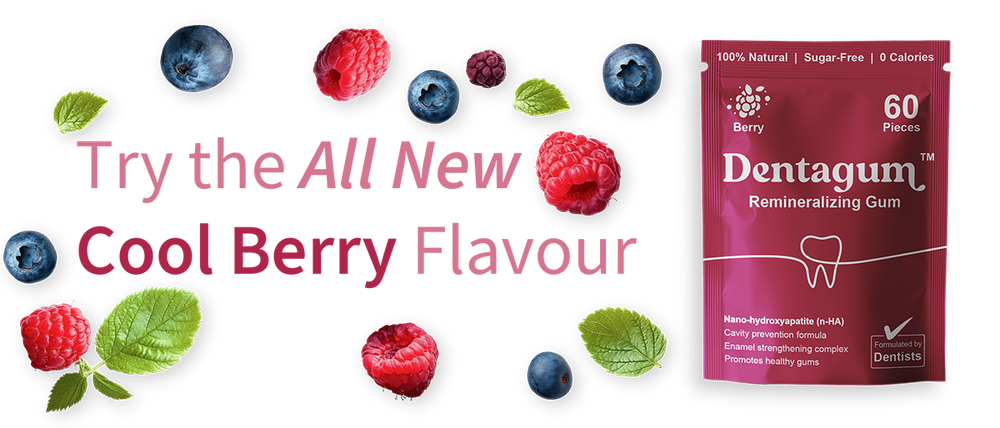
This article breaks down the science behind remineralizing gum, how ingredients like xylitol and nano hydroxyapatite work, and why products like Dentagum are becoming increasingly popular among consumers looking for healthier chewing gum alternatives.
What Is Remineralization?
To understand remineralizing gum, it helps to first understand what remineralization actually means.
Your tooth enamel is made primarily from minerals, especially calcium and phosphate.
Throughout the day, your teeth are constantly going through two opposing processes:
Demineralization
This occurs when acids produced by oral bacteria, acidic foods, sugary drinks, or low saliva levels begin pulling minerals away from the enamel surface.
Remineralization
This is the natural repair process where minerals are redeposited back into the enamel.
Healthy saliva plays a major role in this process because it naturally contains calcium and phosphate ions that help maintain enamel strength.
The problem is that modern diets often create an environment where demineralization happens faster than remineralization.
Frequent snacking, sugary beverages, acidic foods, dry mouth, stress, medications, and poor oral hygiene can all shift the balance toward enamel breakdown.
Over time, this may contribute to:
- Tooth sensitivity
- Weak enamel
- Increased cavity risk
- Surface roughness
- White spot lesions
- Tooth discoloration
That is why many modern oral care products now focus on supporting the remineralization process.
What Is Remineralizing Gum?
Remineralizing gum is a category of functional chewing gum formulated with ingredients designed to support enamel health and oral wellness.
Unlike conventional chewing gum, remineralizing gum often includes ingredients such as:
- Xylitol
- Nano hydroxyapatite
- Erythritol
- Calcium compounds
- Natural gum bases
- Saliva-supporting ingredients
The goal is not simply fresh breath.
The purpose is to create a healthier oral environment that may help support enamel protection and reduce conditions that contribute to cavities.
Most remineralizing gums work through multiple mechanisms at once.
These typically include:
- Stimulating saliva production
- Reducing acid-producing bacteria activity
- Supporting mineral balance on the enamel surface
- Avoiding sugar and harmful sweeteners
- Helping neutralize oral acids after meals
Some formulations also include ingredients specifically intended to support sensitive teeth or reduce enamel erosion.
Does Remineralizing Gum Actually Work?
The short answer is that certain ingredients used in remineralizing gum are backed by promising scientific research.
However, it is important to understand what gum can realistically do.
No chewing gum can regrow severely damaged enamel or replace professional dental treatment.
But studies suggest that ingredients commonly found in remineralizing gum may help support the mouth’s natural protective processes.
The strongest evidence currently centers around:
- Xylitol
- Saliva stimulation
- Nano hydroxyapatite
- Sugar-free chewing gum use after meals
Let’s break these down individually.
Xylitol Gum and Oral Health
One of the most researched ingredients in modern oral care gum is xylitol.
Xylitol is a naturally occurring sugar alcohol found in small amounts in fruits and vegetables. Unlike regular sugar, many oral bacteria cannot properly metabolize xylitol.
This matters because cavity-causing bacteria normally feed on fermentable carbohydrates and produce acids that weaken enamel.
Research suggests that xylitol may help reduce acid production and support a healthier oral environment.
Several systematic reviews have found that chewing xylitol gum regularly may help reduce cavity risk and plaque accumulation. (pmc.ncbi.nlm.nih.gov)
One of the major advantages of xylitol gum is that it combines two oral health mechanisms at once:
1. Saliva Stimulation
The act of chewing naturally increases saliva flow.
Saliva is critical for:
- Neutralizing acids
- Washing away food particles
- Delivering minerals to enamel
- Maintaining oral pH balance
- Supporting the mouth’s natural remineralization process
2. Reduced Acid Production
Because xylitol is not fermented the same way sugar is, it may help reduce conditions that contribute to acid attacks on enamel.
This is one reason why many dentists recommend sugar-free gum after meals.
According to multiple reviews, chewing sugar-free gum, especially xylitol gum, may contribute to lower plaque accumulation and reduced caries risk compared to not chewing gum at all. (pubmed.ncbi.nlm.nih.gov)
What Is Nano Hydroxyapatite?
Another ingredient increasingly found in remineralizing gum is nano hydroxyapatite.
Hydroxyapatite is not a foreign material.
It is actually the primary mineral component naturally found in human enamel and bones.
Nano hydroxyapatite refers to hydroxyapatite particles engineered at an extremely small size.
Because these particles are tiny, researchers believe they may interact more effectively with microscopic enamel irregularities.
Nano hydroxyapatite has become increasingly popular in:
- Toothpaste
- Oral rinses
- Whitening products
- Sensitive teeth products
- Remineralizing gum
Research over the past decade has shown promising results regarding hydroxyapatite’s ability to support enamel remineralization and reduce sensitivity.
Several reviews have concluded that nano hydroxyapatite demonstrates strong remineralizing potential on early enamel lesions. (pmc.ncbi.nlm.nih.gov)
Some studies have even suggested comparable or superior remineralization outcomes relative to lower fluoride formulations under certain testing conditions. (pmc.ncbi.nlm.nih.gov)
Researchers believe nano hydroxyapatite may work by:
- Depositing minerals onto the enamel surface
- Filling microscopic surface defects
- Supporting smoother enamel surfaces
- Helping reduce sensitivity by interacting with exposed dentin tubules
That said, it is important to remain scientifically balanced.
While evidence surrounding hydroxyapatite is highly promising, research is still evolving, and some experts note that more long-term clinical data is needed before drawing stronger conclusions. (todaysrdh.com)
Still, nano hydroxyapatite remains one of the most exciting developments in modern oral care.
Why Saliva Matters More Than Most People Realize
One of the most underrated benefits of healthy chewing gum is saliva stimulation.
Many people focus entirely on toothpaste ingredients while overlooking saliva’s critical role in oral health.
Healthy saliva helps:
- Neutralize harmful acids
- Wash away food debris
- Lubricate oral tissues
- Maintain oral pH
- Deliver minerals to enamel
- Support the mouth’s natural defense systems
Dry mouth is strongly associated with:
- Increased cavity risk
- Bad breath
- Tooth sensitivity
- Plaque accumulation
- Oral discomfort
This is why chewing sugar-free gum after meals is commonly recommended in many dental settings.
The simple act of chewing can increase saliva flow significantly.
When you combine saliva stimulation with ingredients like xylitol and nano hydroxyapatite, the result is a much more functional form of chewing gum.
Why More Consumers Want Natural Chewing Gum
Another reason remineralizing gum has gained traction is growing consumer frustration with conventional chewing gum ingredients.
Many mainstream gum products contain:
- Artificial sweeteners
- Synthetic gum bases
- Aspartame
- Artificial colors
- Petroleum-derived ingredients
- Titanium dioxide
- Preservatives
As a result, more consumers are now searching for:
- Natural chewing gum
- Gum without aspartame
- Healthy chewing gum
- Fluoride free gum
- Sugar free gum for teeth
Natural gum products often use traditional gum bases like:
- Chicle gum
- Mastic gum
- Spruce gum
These ingredients have been used historically long before modern synthetic gum bases became standard.
This clean-label movement is one reason products like Dentagum have attracted attention.
What Makes Dentagum Different?
Dentagum was designed specifically around the idea of functional oral wellness.
Instead of functioning like conventional chewing gum, Dentagum combines multiple oral-care-focused ingredients into a single formula.
The formula includes:
- Nano hydroxyapatite
- Xylitol
- Erythritol
- Natural gum bases
- Mastic gum
- Chicle gum
- Spruce gum
- Natural flavorings
Dentagum is also:
- Sugar free
- Aspartame free
- Fluoride free
- Vegan
- Designed for daily use
Rather than focusing only on flavor or breath masking, the formula was created to support:
- Saliva production
- Oral freshness
- Enamel support
- Cleaner ingredients
- Everyday oral wellness habits
This aligns with a much broader consumer shift toward functional wellness products.
Can Remineralizing Gum Replace Brushing?
No.
Even the best gum for teeth should never replace:
- Brushing twice daily
- Flossing
- Professional cleanings
- Regular dental checkups
- Healthy nutrition
Remineralizing gum works best as a supplemental habit.
For many people, it may be most useful:
- After meals
- Between brushings
- During travel
- After coffee
- After acidic foods
- During work hours
- When dry mouth occurs
Think of remineralizing gum as an additional layer of oral support rather than a complete oral care solution.
Who May Benefit From Remineralizing Gum?
People often search for remineralizing gum because they are dealing with concerns like:
- Sensitive teeth
- Dry mouth
- Frequent snacking
- Early enamel wear
- Coffee staining
- High sugar intake
- Bad breath
- Frequent acidic beverages
- Desire for fluoride-free alternatives
Functional chewing gum may be particularly attractive for people looking for convenient oral support throughout the day.
The Future of Functional Oral Care
The oral care category is changing rapidly.
Consumers are no longer satisfied with products that simply mask symptoms.
They increasingly want:
- Functional ingredients
- Cleaner formulas
- Multi-purpose products
- Evidence-backed ingredients
- Convenient oral wellness habits
That is exactly why searches for terms like “remineralizing gum,” “nano hydroxyapatite gum,” and “best xylitol gum” continue growing.
The future of oral care likely involves a much greater focus on prevention, mineral support, saliva optimization, and cleaner ingredient formulations.
Functional chewing gum is becoming part of that conversation.
Final Thoughts
So, does remineralizing gum actually work?
The current research suggests that ingredients commonly found in remineralizing gum, especially xylitol and nano hydroxyapatite, may support healthier oral conditions when used consistently as part of a complete oral hygiene routine.
The biggest benefits likely come from combining multiple mechanisms together:
- Saliva stimulation
- Sugar-free chewing
- Reduced acid production
- Mineral-supporting ingredients
- Cleaner formulations
While no chewing gum is a magic solution, the science behind functional oral care gum is far more legitimate than many people initially assume.
As interest in healthier chewing gum continues to grow, products like Dentagum are helping push the category toward a more modern, wellness-focused direction.
For consumers looking for a healthier chewing gum designed specifically around oral wellness, remineralization support, and clean ingredients, functional gum may be worth exploring.
References
-
Xylitol in Preventing Dental Caries: A Systematic Review and Meta-Analysis. PMC.
-
Do chewing gums and sweets containing xylitol prevent dental caries? Evidence-Based Dentistry.
-
Nano-hydroxyapatite and its applications in preventive, restorative and regenerative dentistry.
-
Enamel and dentine remineralization by nano-hydroxyapatite toothpastes.
-
Comparative efficacy of a hydroxyapatite and fluoride toothpaste for prevention and remineralization of dental caries.
-
A Systematic Review and Meta-Analysis of the Role of Sugar-Free Chewing Gum on Plaque Quantity in the Oral Cavity.
